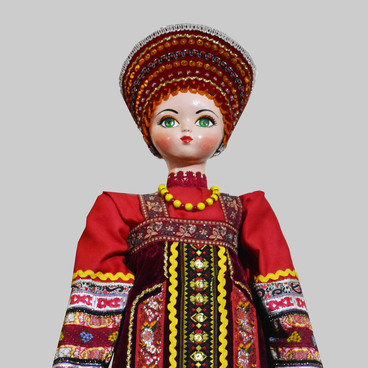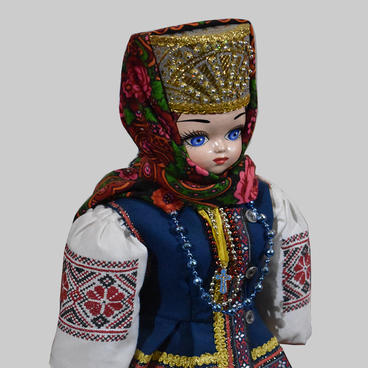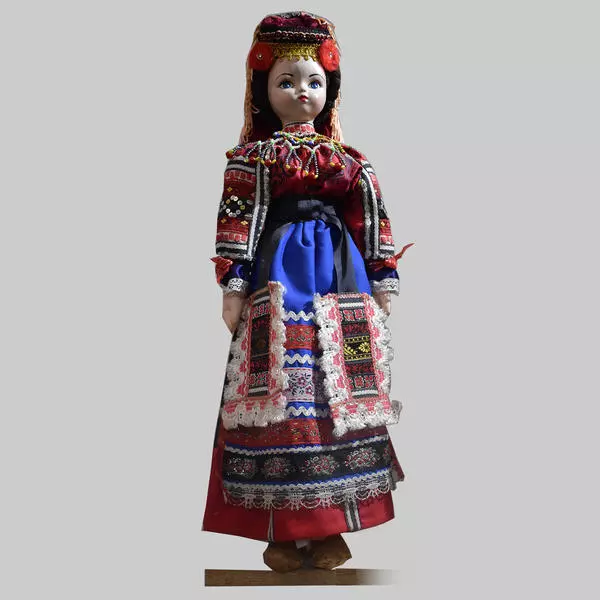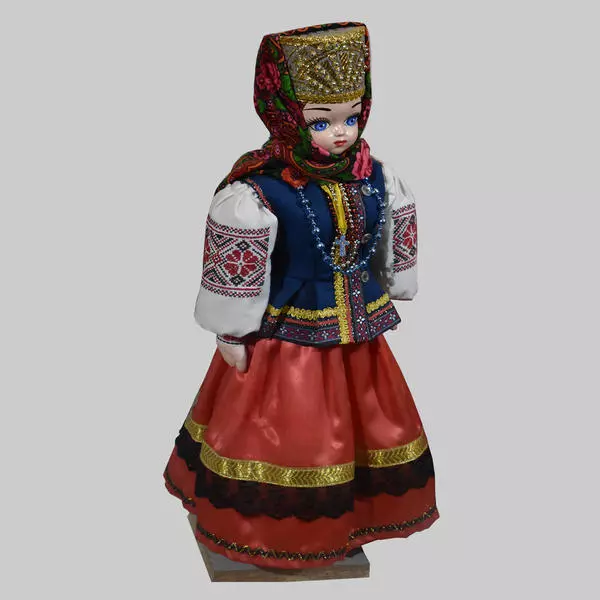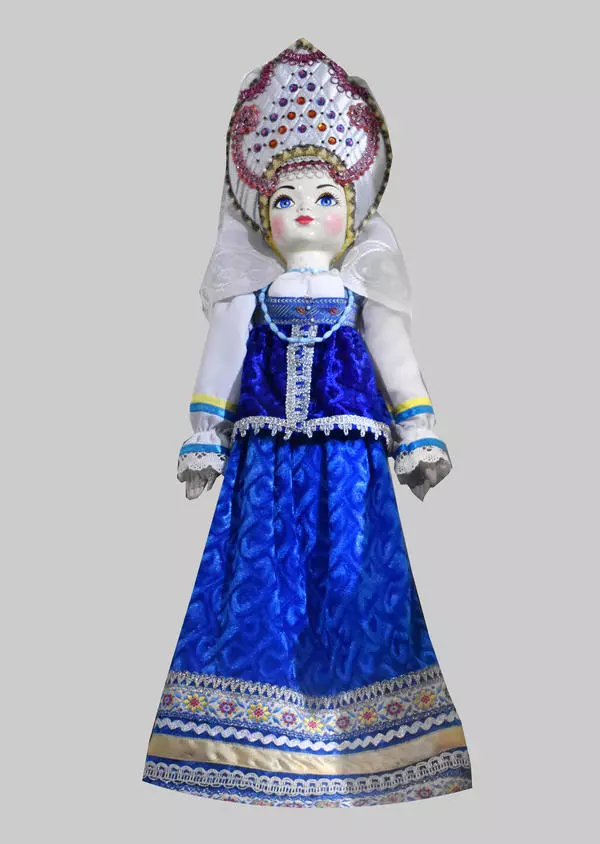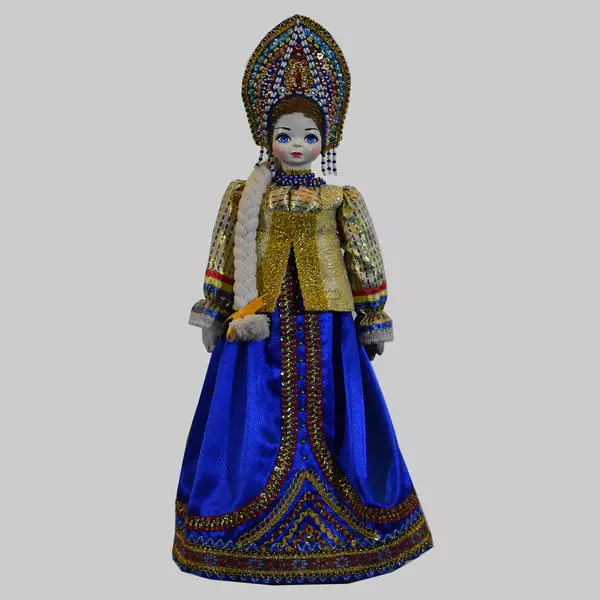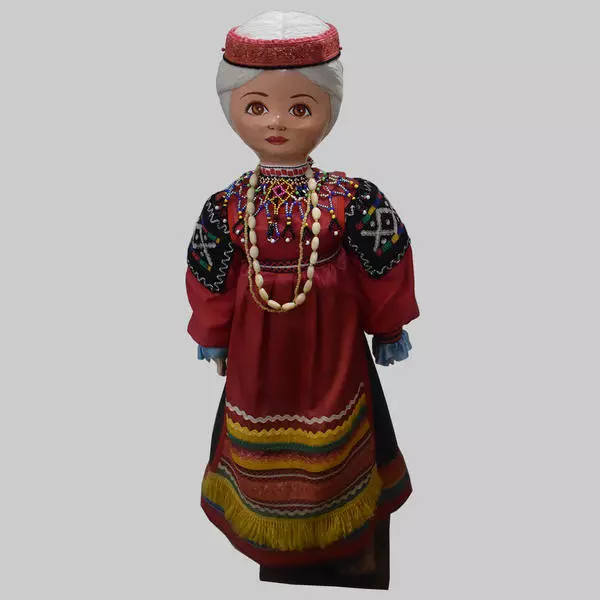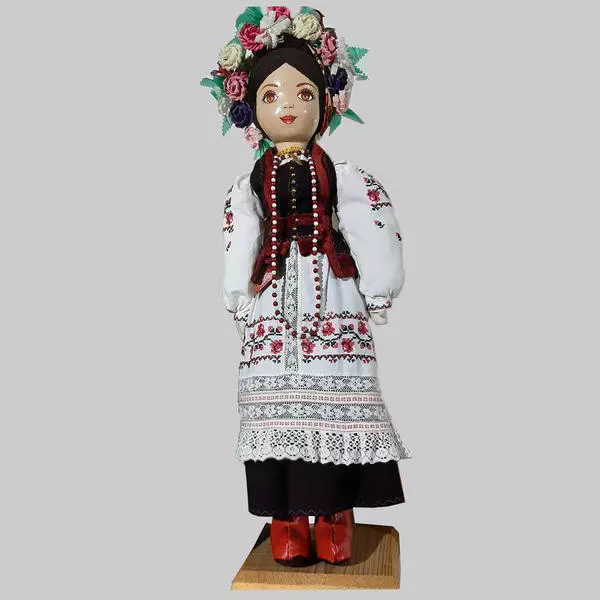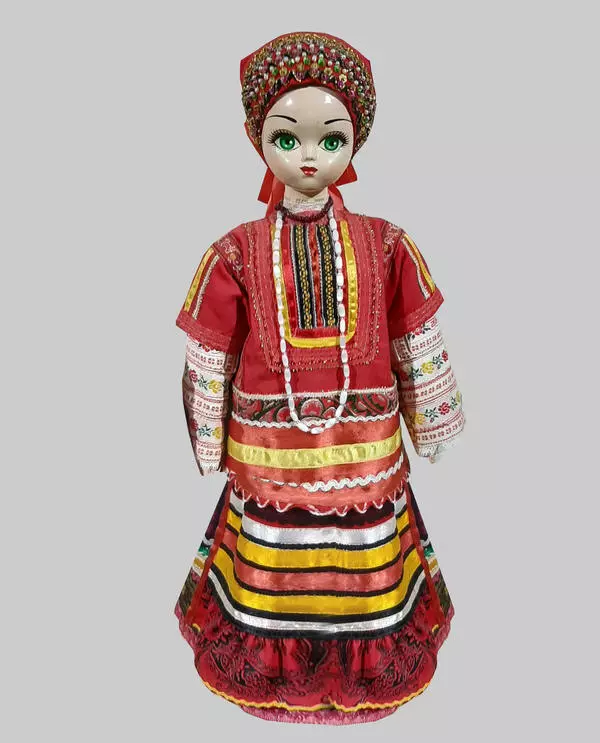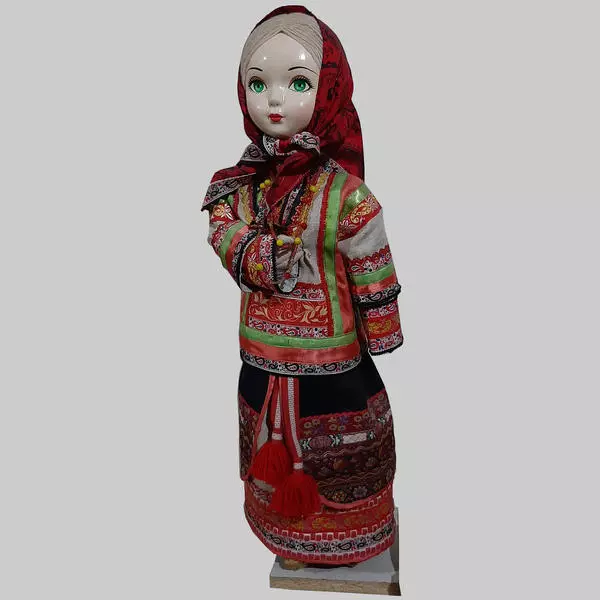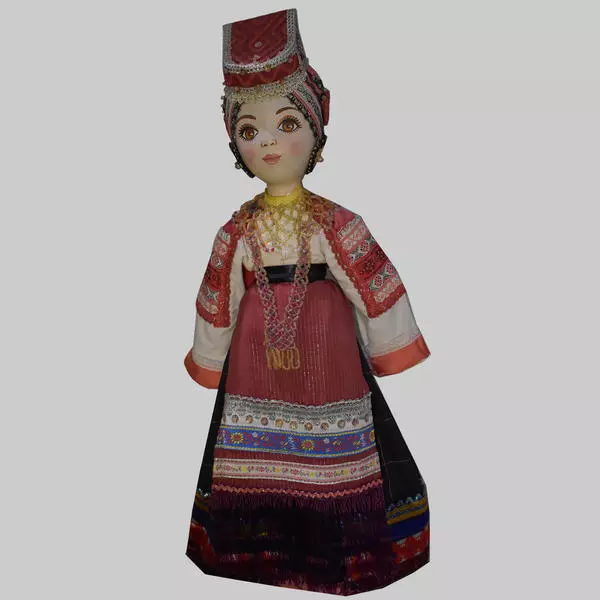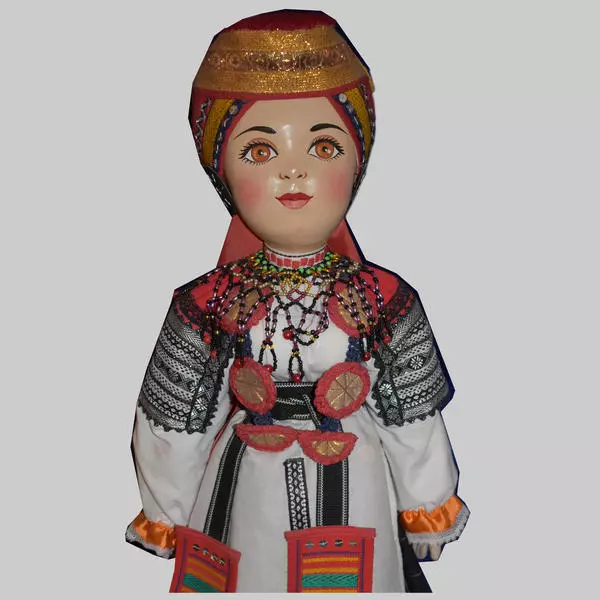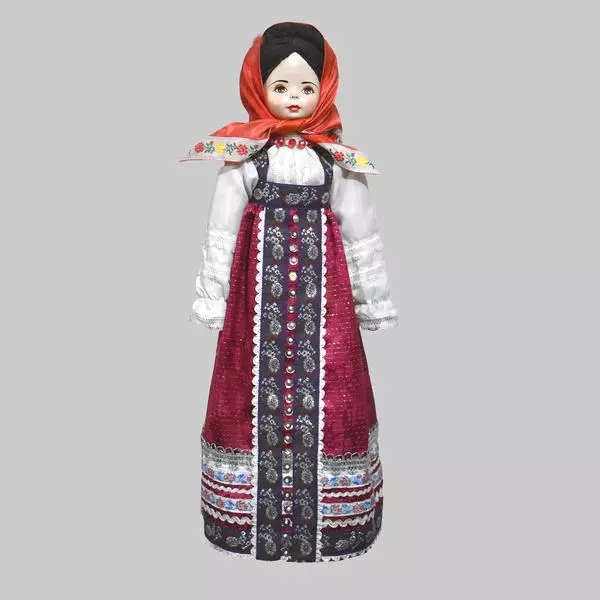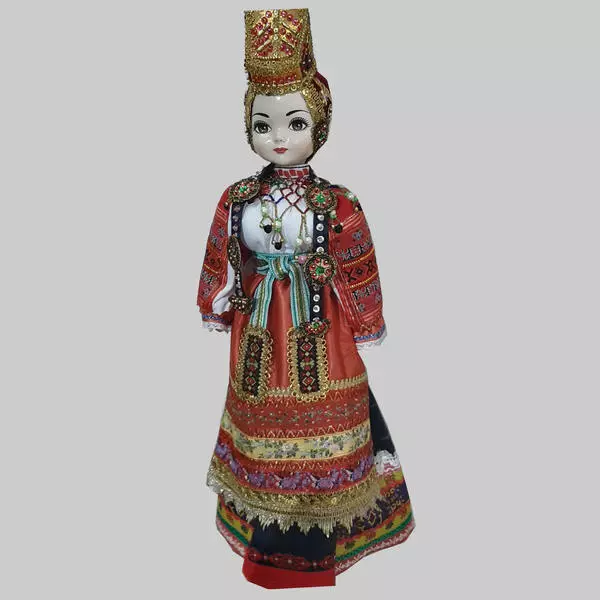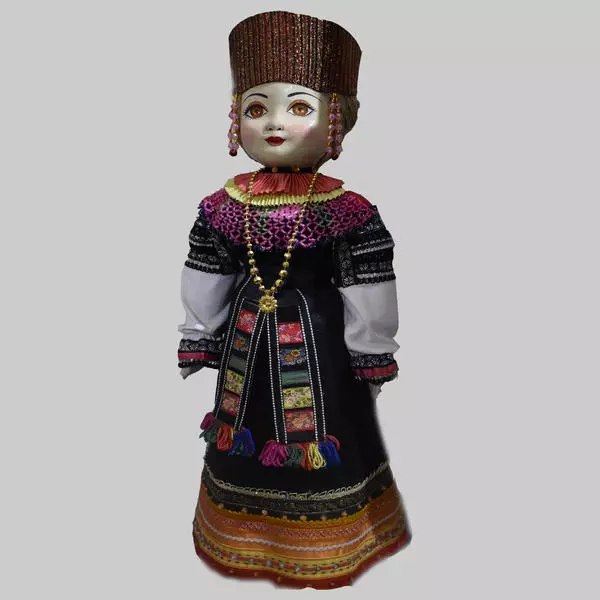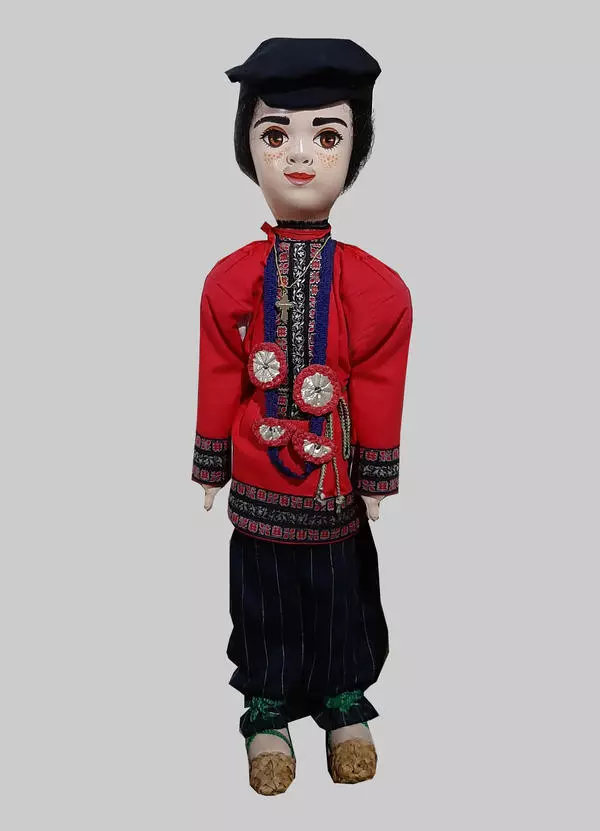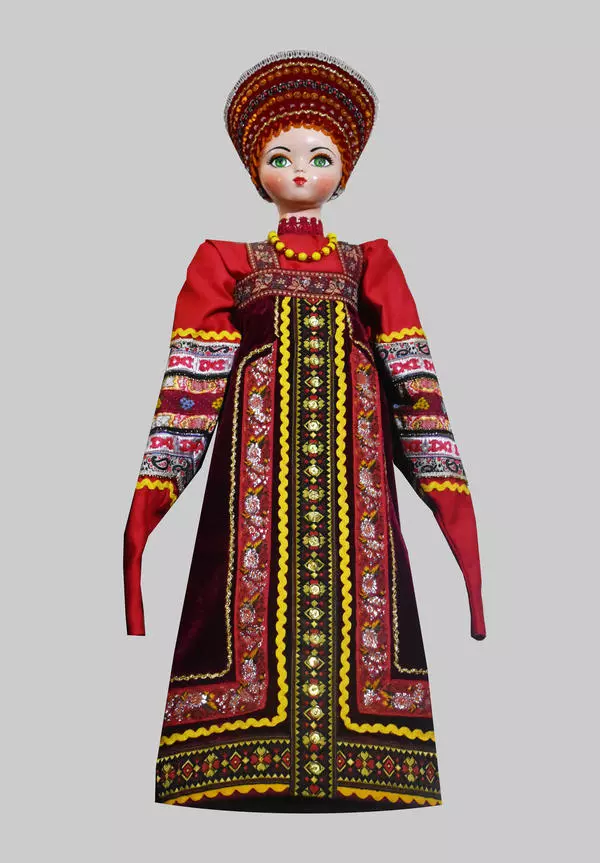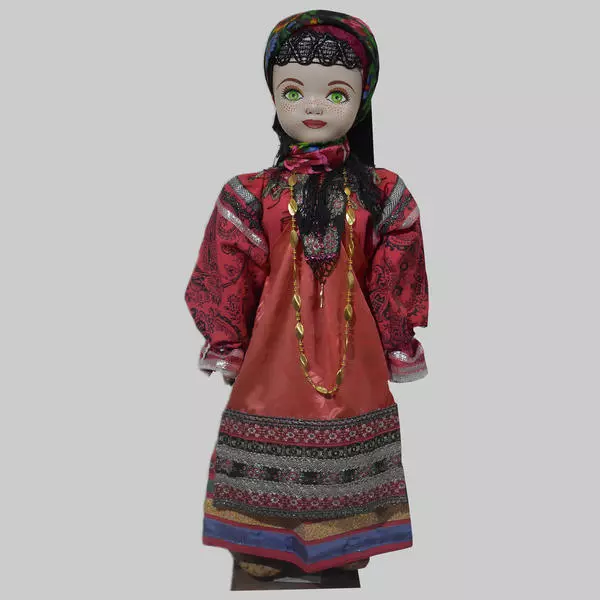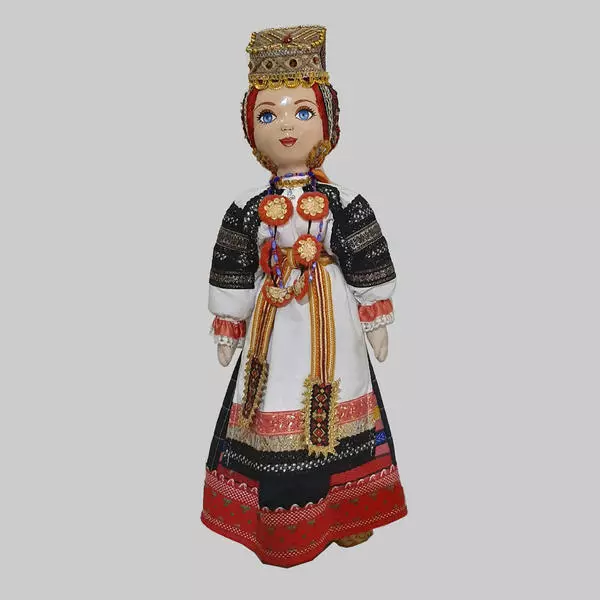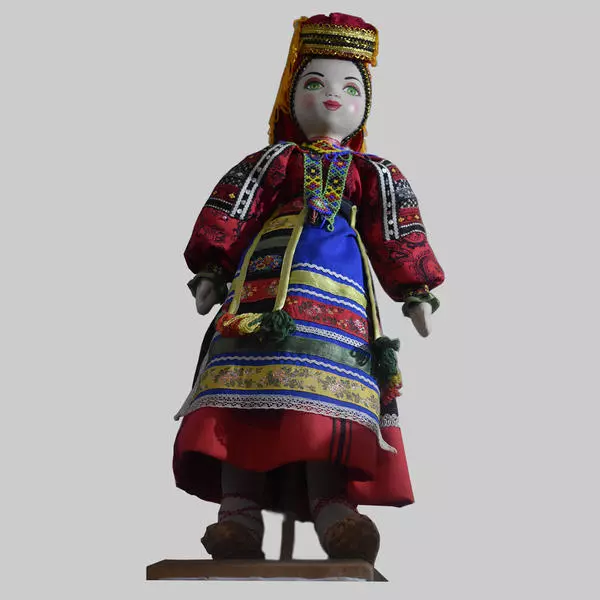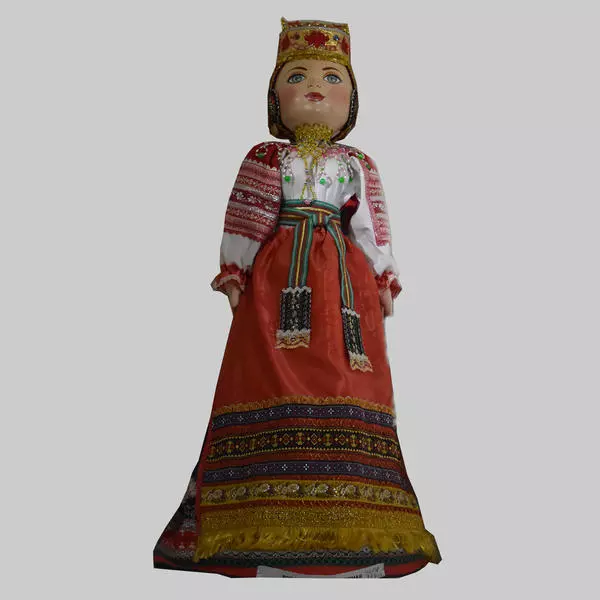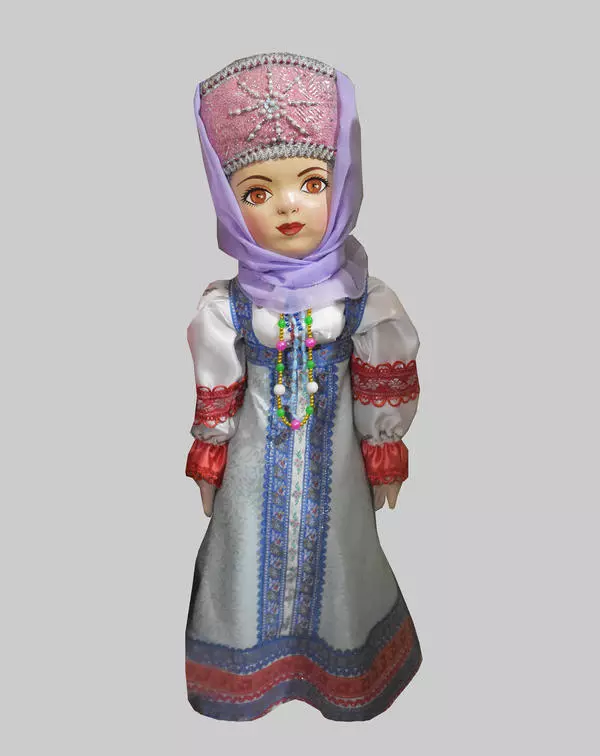


The traditional costume was formed over the centuries and reflected the people’s worldview, religion and life. The history of the ethnos’ development, the ways of its resettlement and foreign influence – all these factors impacted the way the folk costumes looked. Researchers distinguish the costumes of northern and southern regions of Russia. The Ryazan land belongs to the latter. It was a sparsely populated territory with forest and steppe areas, with the hardly accessible Meshchera Region among them. All those natural factors contributed to shaping a kind of outfit that differed from that of other regions.
Women’s costume of the Ryazan Region consisted of a gown, a poneva (wrap skirt), an apron, a navershnik (a long, wide, short- sleeved dress, which looked like a tunic) and a headdress. Bead decorations - necklaces and others - complemented the outfit. The Ryazan peasant women’s clothing is distinguished for a broad variety of cuts. Gowns came in many variations - they were made with straight and slanting ‘polikas’ (shoulder inserts between the collar and the sleeves) or without them, with square or triangular underarm gores. The fabric was usually pulled together at the neck, but there were gowns of the early periods with a regular straight collar.
Women’s costume of the Ryazan Region consisted of a gown, a poneva (wrap skirt), an apron, a navershnik (a long, wide, short- sleeved dress, which looked like a tunic) and a headdress. Bead decorations - necklaces and others - complemented the outfit. The Ryazan peasant women’s clothing is distinguished for a broad variety of cuts. Gowns came in many variations - they were made with straight and slanting ‘polikas’ (shoulder inserts between the collar and the sleeves) or without them, with square or triangular underarm gores. The fabric was usually pulled together at the neck, but there were gowns of the early periods with a regular straight collar.
The costume had a sacral character, and the collar, the chest, the hem and sleeves were the most important details of clothes from this point of view. They were decorated with embroidery which featured geometric motifs and served as a protective shield. People borrowed patterns from nature, which was reflected in their names – ‘axes’, ‘mouse paths’, ‘fir trees’ and ‘burdocks’. Patchwork weaving was less widespread. The ancient beliefs have gradually disappeared from everyday life, while the tradition of rich decorative finishing has been preserved.
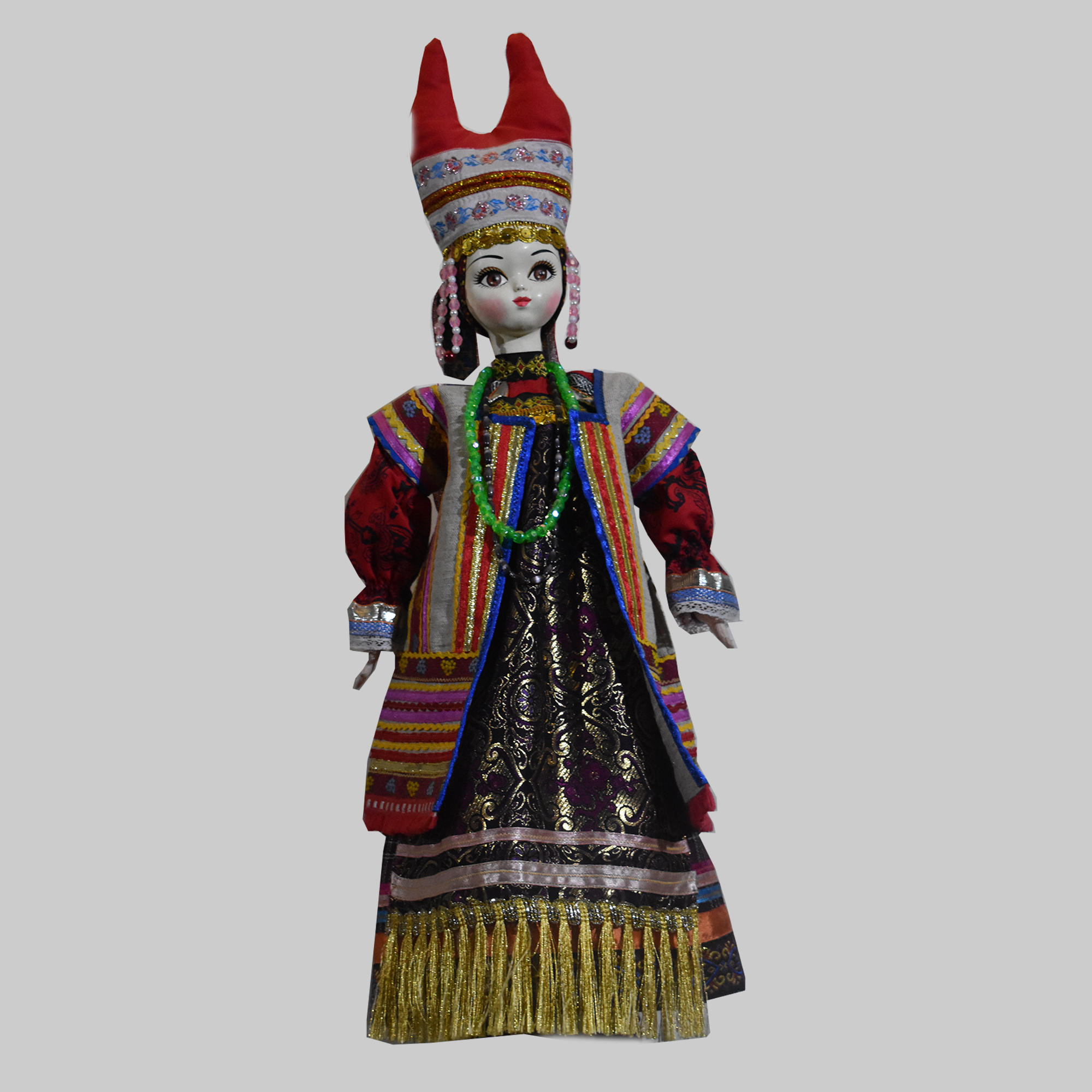
The girl in the photo is dressed in a black checkered poneva (wrap shirt) and a navershnik (top): that was the name of the upper tunica-like clothing without clasps, similar to a kaftan, made from homespun semi-wool fabric. It was made of four cloths with wedges on the sides and long sleeves on a canvas lining. The tops were embroidered with colorful ribbons and worsted yarn. One of their varieties was a semi –caftan called shushpun (shushun, shugai).
A horned kika (headdress) completed the female image. It symbolized fecundity and was worn only by young married women. Elderly peasant women exchanged horned kikas for hornless ones. The sophisticated headdress completely covered the woman’s hair.
It is, in fact, a multi-element headdress with various details typical of the region’s culture of the time.