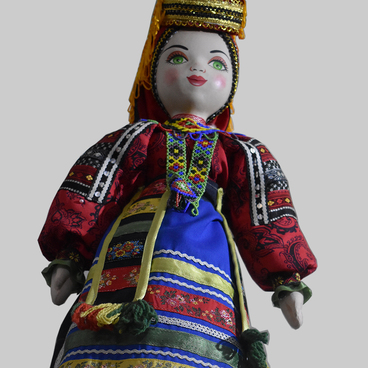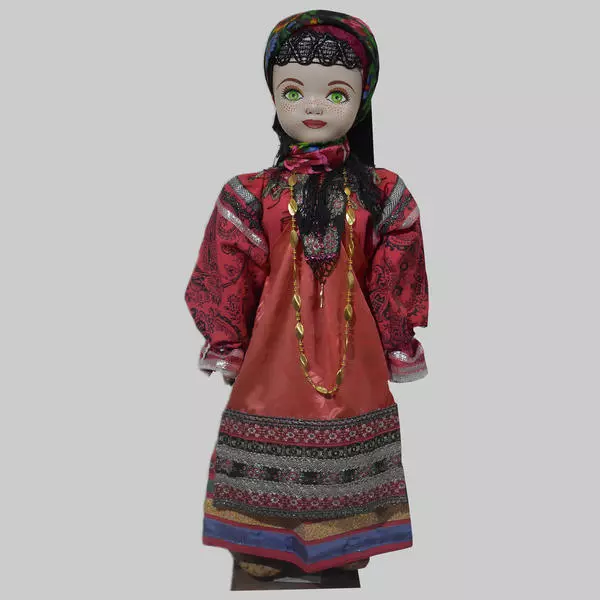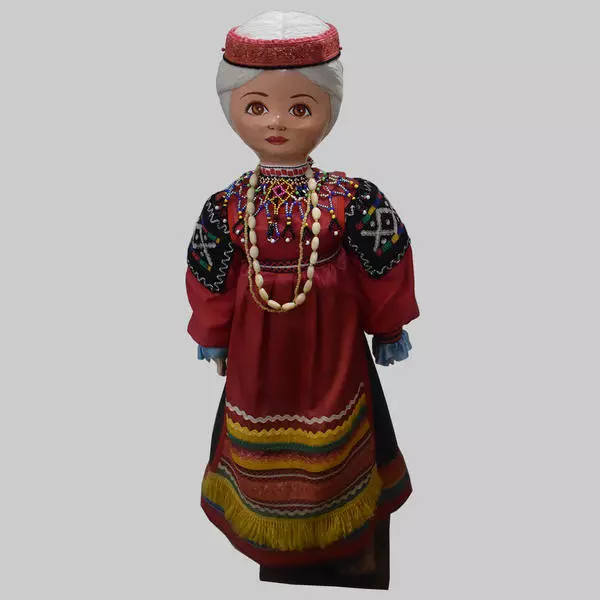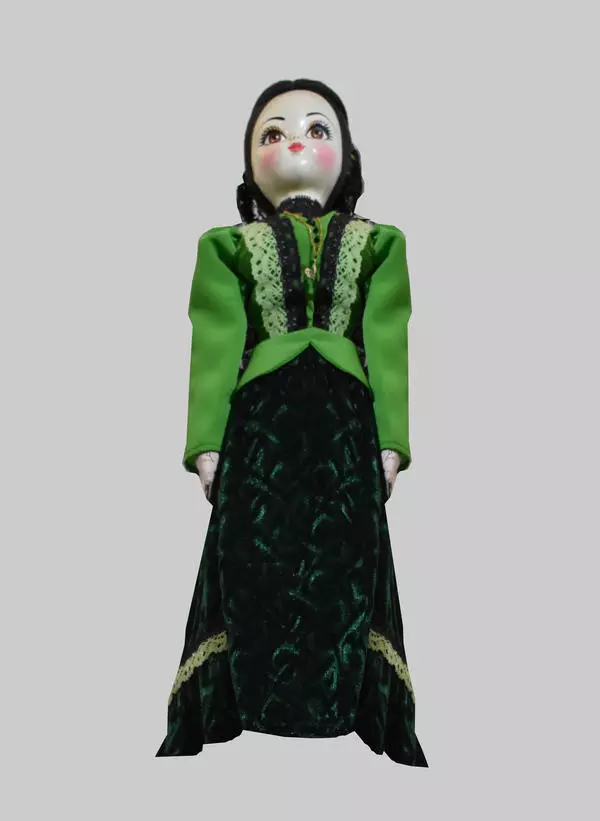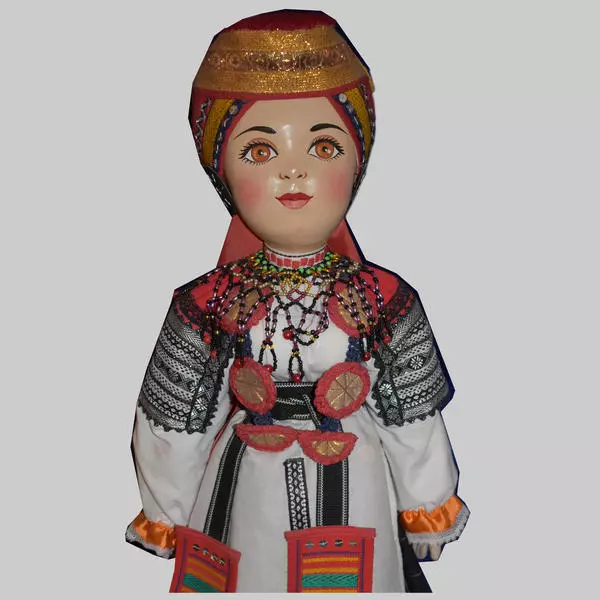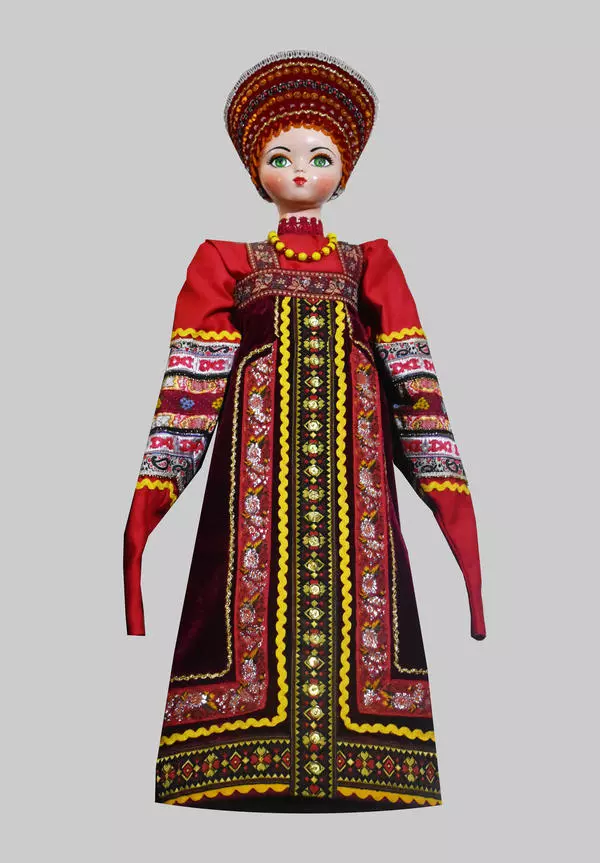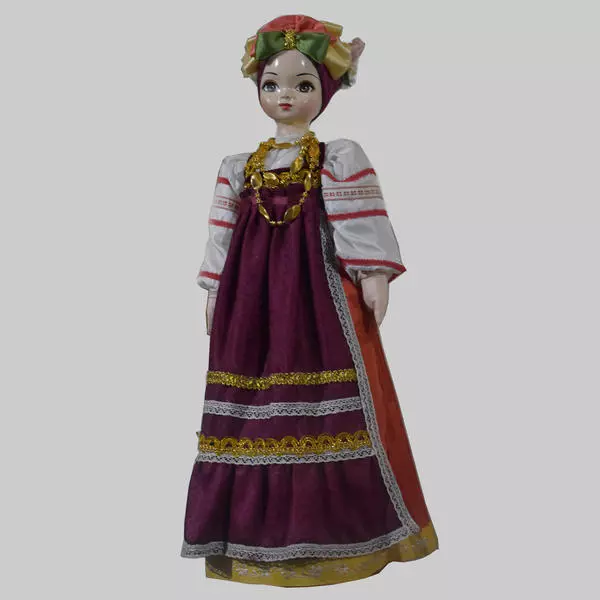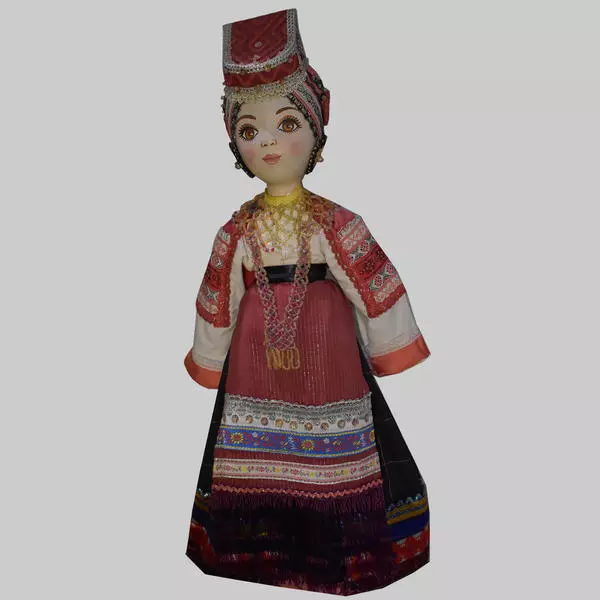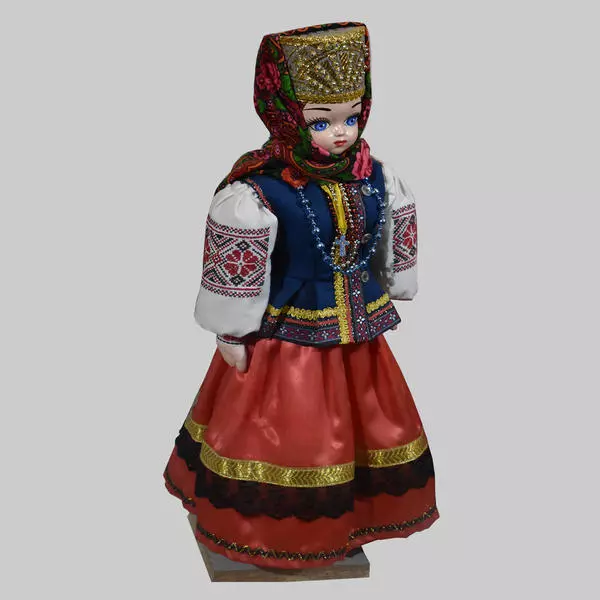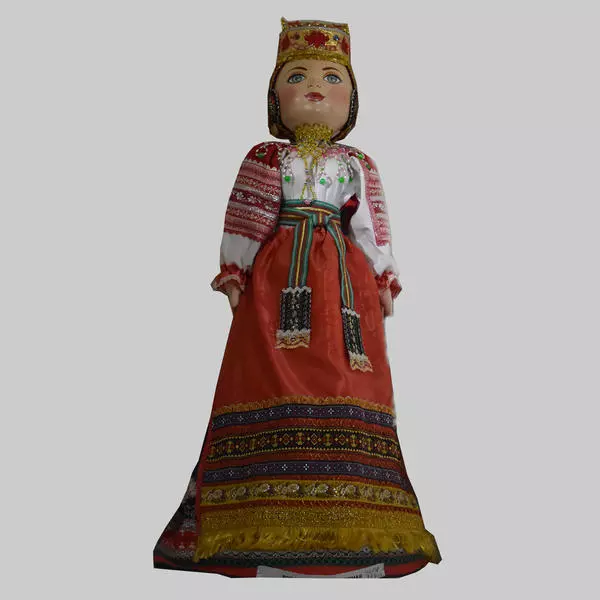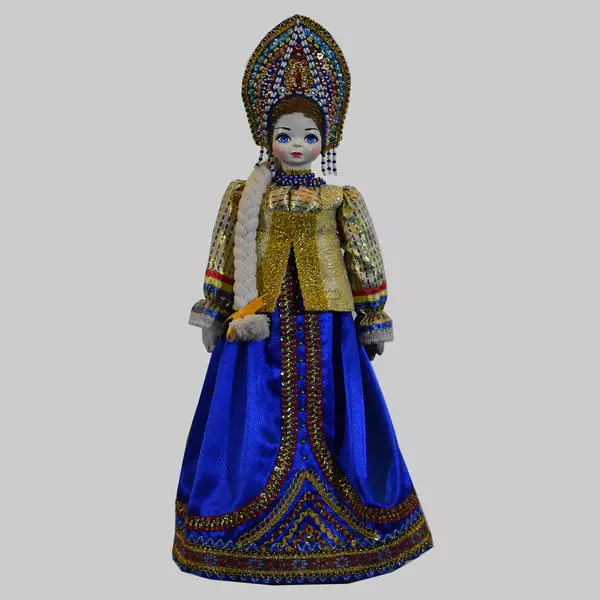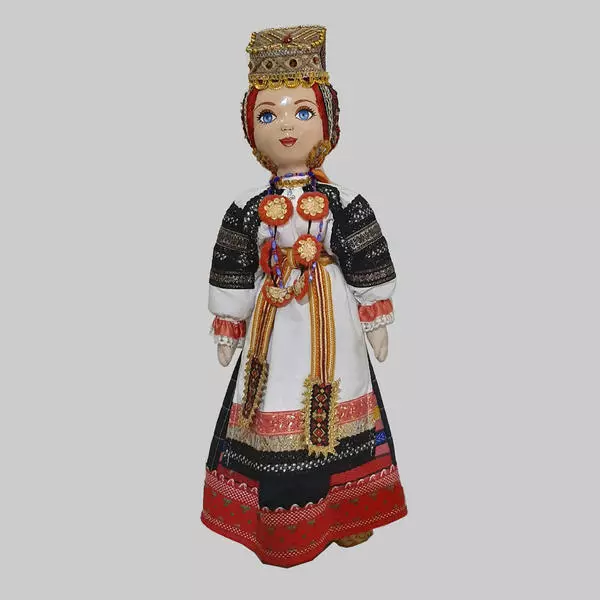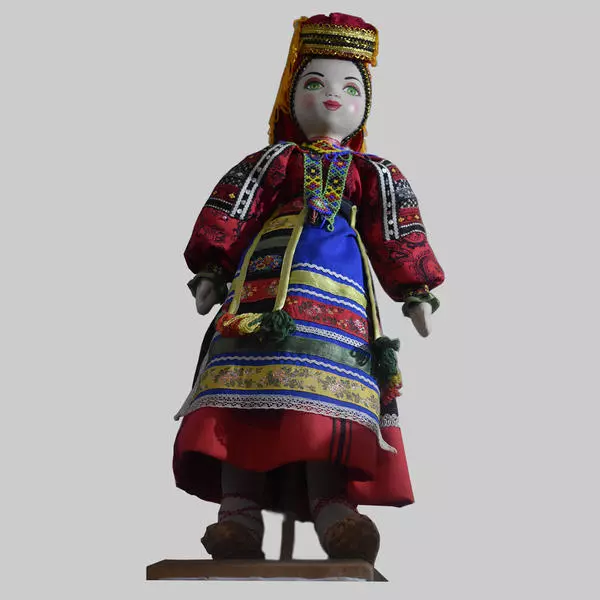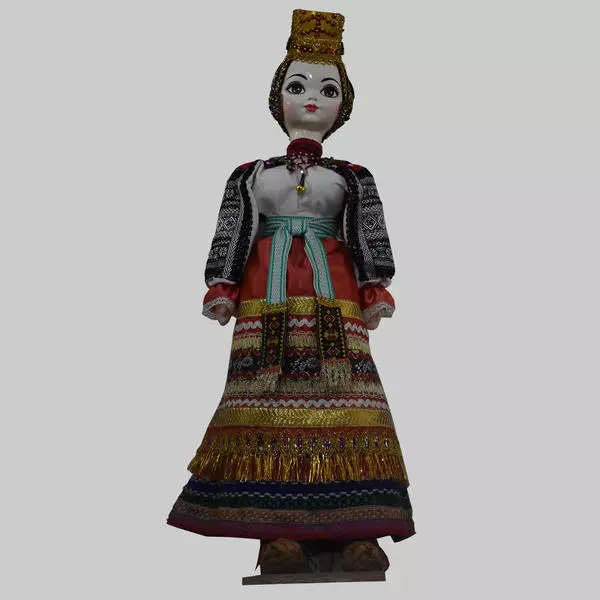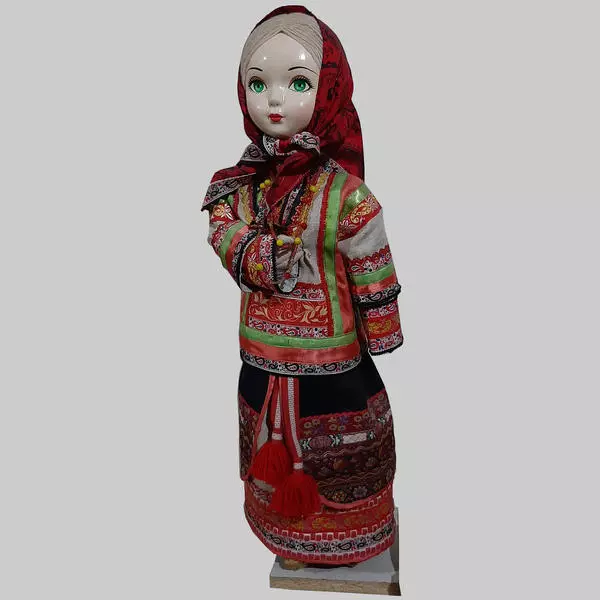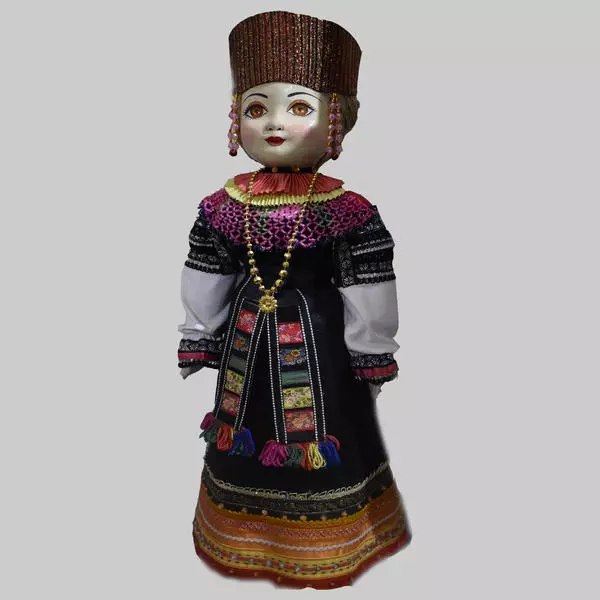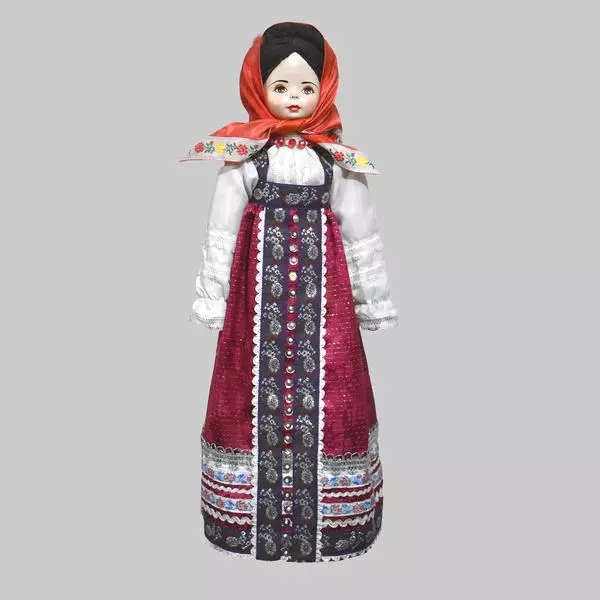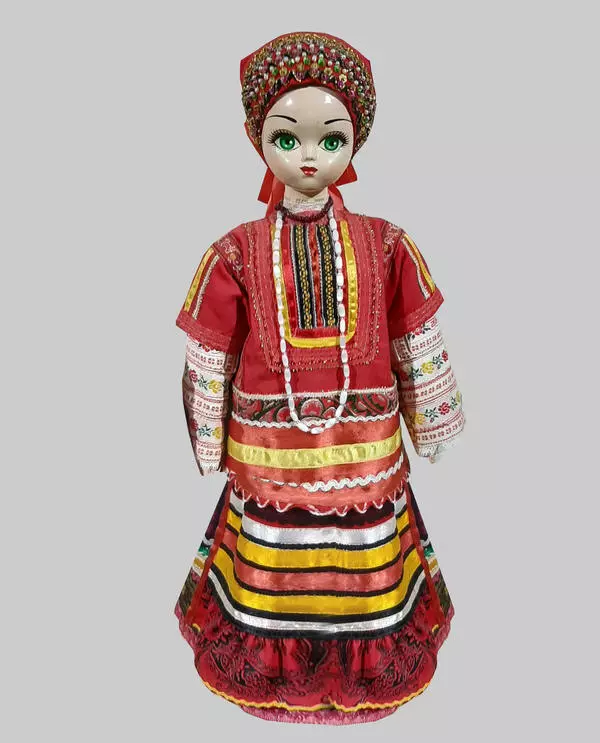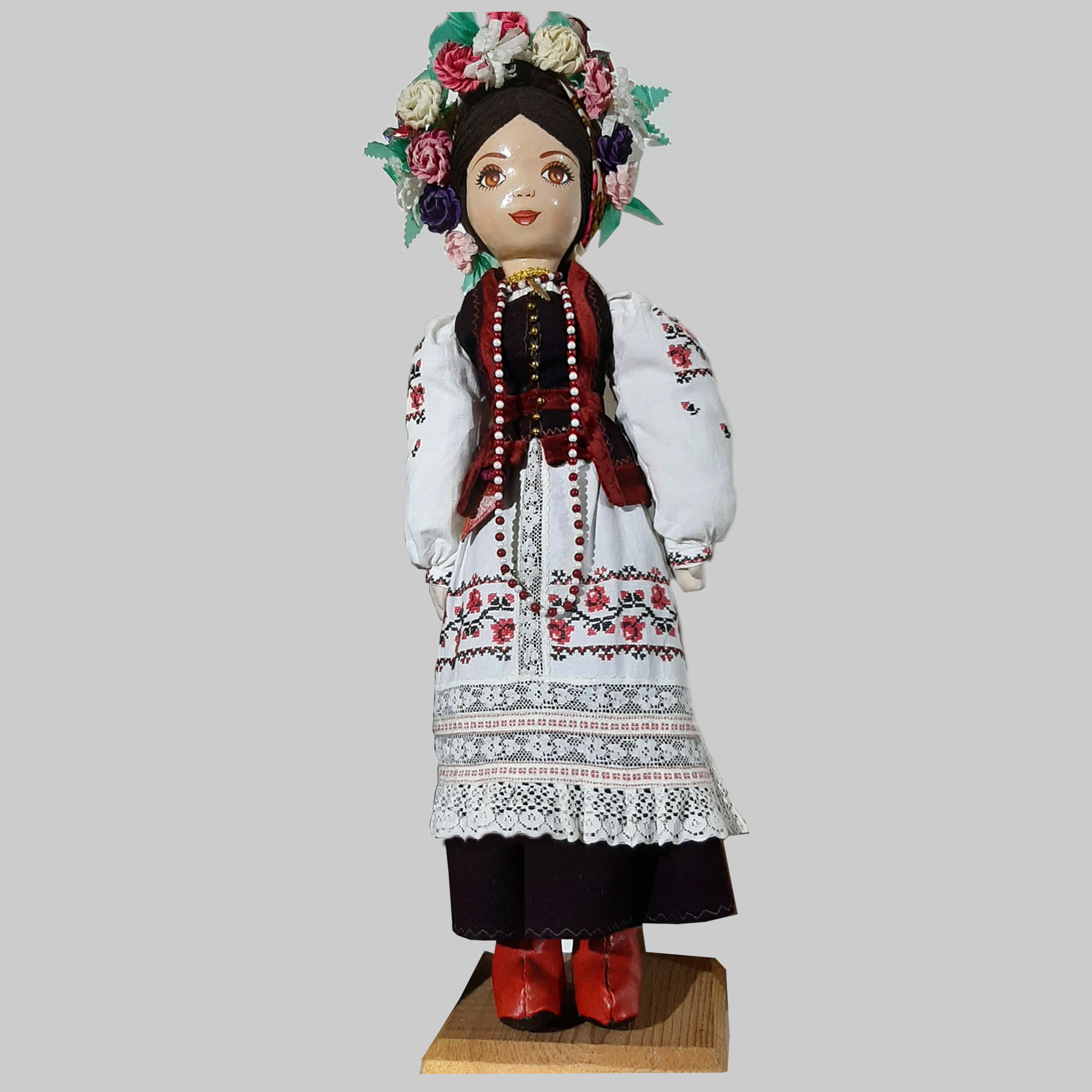


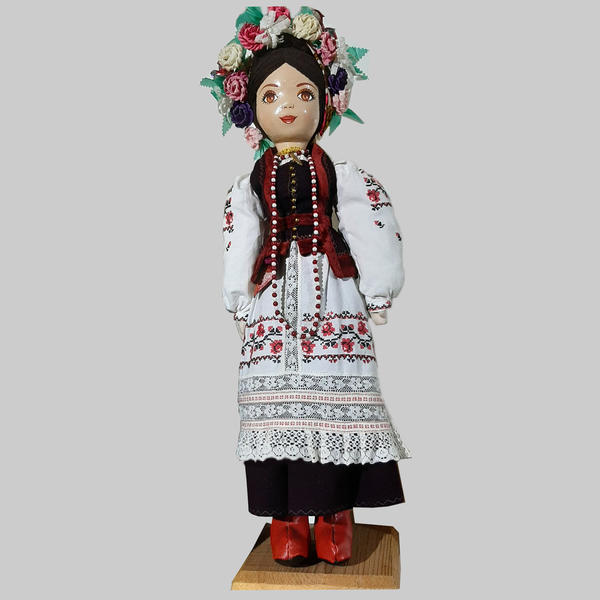
The Boguchar District was one of the Voronezh Province Southern territories. Same as many South Russian regions, the Boguchar land gave shelter to emigrants from Ukraine. In the Boguchar traditional costume, one can trace Ukrainian garment motives – wreaths, bands, floral embroidery. Intermingling of the Russian and Ukrainian traditions is especially evident in one version of the traditional costume – Boguchar Khokhlushka (Ukrainian Woman). A brown swing skirt from woolen factory-made fabric gathered at the waist was combined with a tight fit waistcoat decorated with crinkled basque which formed a pair set. At the hem, the skirt was bordered with braid with metal decorations. The waistcoat (sleeveless blouse) was worn on top of the shirt and was buttoned or hooked at the front with closely set buttons or hooks.
On the shirt sleeves and hem, traditional geometric patterns of Russian costumes were intertwined with floral patterns coming from Ukrainian garments. Normally, in South Russian costumes, the shirt sleeves were decorated with embroidery without clear outlines – the patterns were scattered all over the sleeve cloth. While Boguchar garments could be distinguished and differentiated from all others by the clear border formed by male and female figures embroidered on the sleeve with black and red threads.
On top of the skirt, an apron richly decorated with multilayer floral embroidery was worn. Embroidered stripes on the fabric were interspersed with lace inserts, with lace ruche sewn onto the apron rim. The apron was one of the most important elements of the Voronezh woman’s costume. In the olden days, it was called zapan, zaveska, zanaveska (“curtain”). There were a few versions of apron in women’s costumes – wait-high, chest-type, and tunic-shaped.
In the Boguchar traditional costume, instead of bast shoes (lapty), red leather boots predominated which were also borrowed from Ukrainian national garments. Women covered their heads with a soft woolen shawl of light shades, usually Cashmere, with a floral pattern. Over the shawl, a wreath from artificial flowers with white and pink buds was worn. In the absence of a wreath, in accordance with the Ukrainian tradition, the ends of the shawl could be twisted and wrapped over the head. Boguchar maidens’ neck was decorated with a long necklace of large beads.
On the shirt sleeves and hem, traditional geometric patterns of Russian costumes were intertwined with floral patterns coming from Ukrainian garments. Normally, in South Russian costumes, the shirt sleeves were decorated with embroidery without clear outlines – the patterns were scattered all over the sleeve cloth. While Boguchar garments could be distinguished and differentiated from all others by the clear border formed by male and female figures embroidered on the sleeve with black and red threads.
On top of the skirt, an apron richly decorated with multilayer floral embroidery was worn. Embroidered stripes on the fabric were interspersed with lace inserts, with lace ruche sewn onto the apron rim. The apron was one of the most important elements of the Voronezh woman’s costume. In the olden days, it was called zapan, zaveska, zanaveska (“curtain”). There were a few versions of apron in women’s costumes – wait-high, chest-type, and tunic-shaped.
In the Boguchar traditional costume, instead of bast shoes (lapty), red leather boots predominated which were also borrowed from Ukrainian national garments. Women covered their heads with a soft woolen shawl of light shades, usually Cashmere, with a floral pattern. Over the shawl, a wreath from artificial flowers with white and pink buds was worn. In the absence of a wreath, in accordance with the Ukrainian tradition, the ends of the shawl could be twisted and wrapped over the head. Boguchar maidens’ neck was decorated with a long necklace of large beads.
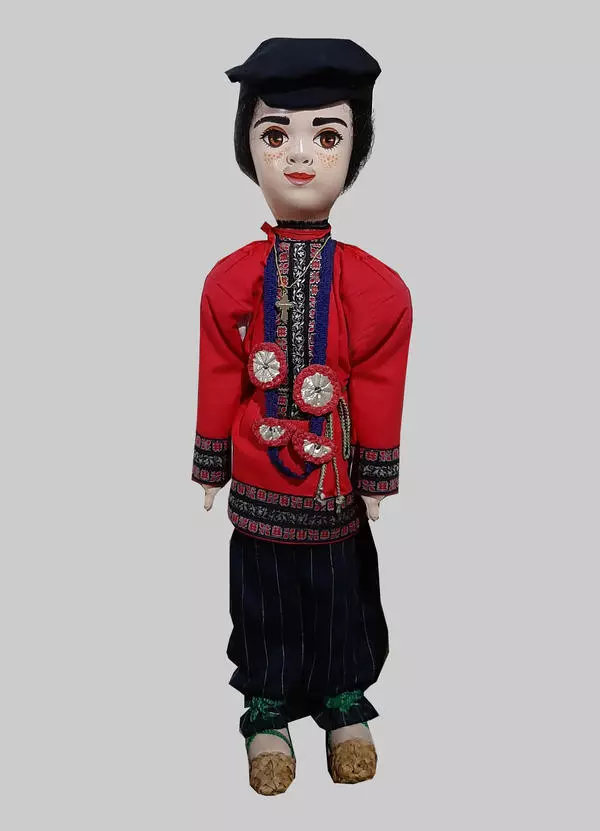
Men’s garments were not so diverse, but also consisted of a few mandatory pieces: a long girded Kosovorotka (skewed-collared) shirt, pants, bast shoes (lapty), peak cap. On holidays, bridegrooms and suitors decorated the peak cap with a romantic red rosebud, put on chest decorations – garus or gribatka (monisto necklace). In cold time, the costume was completed with a fur coat or a half-length fur coat, malakhai (fur cap), bashlyk (pointed cloth hood). On the feet, they wore valenki (felt snow boots) or boots. By silhouette, men’s shirts could be divided into three types: tunic-shaped loose fit shirt; shirt with straight poliks (shoulder inserts); shirt decorated with a yoke.
A shirt played an important role in the men’s traditional costume. It was not only a piece of clothes, but was also considered a strong talisman. They put it on a newly born baby, a festal shirt was worn at weddings and rituals, the same item was put on a deceased man when he was laid into the coffin. In a secret place of the shirt collar of soldiers defending the Russian land, a magic protective symbol was embroidered.