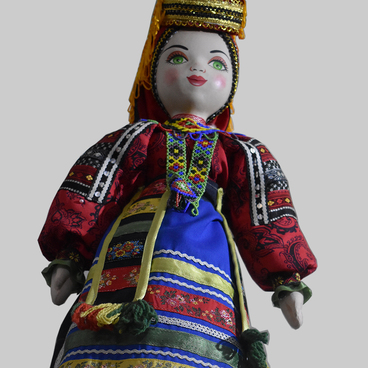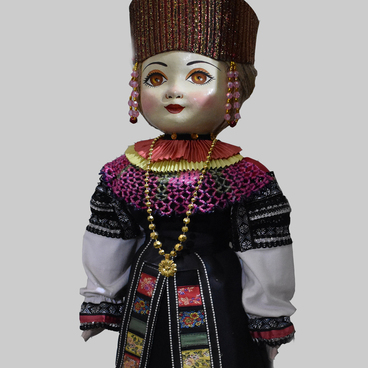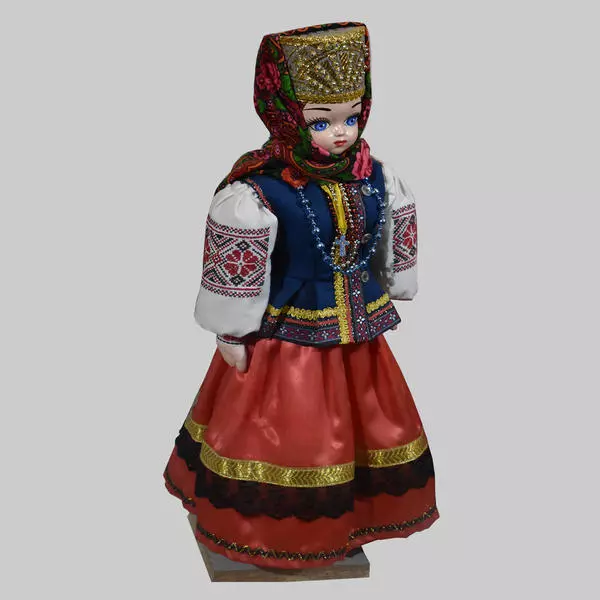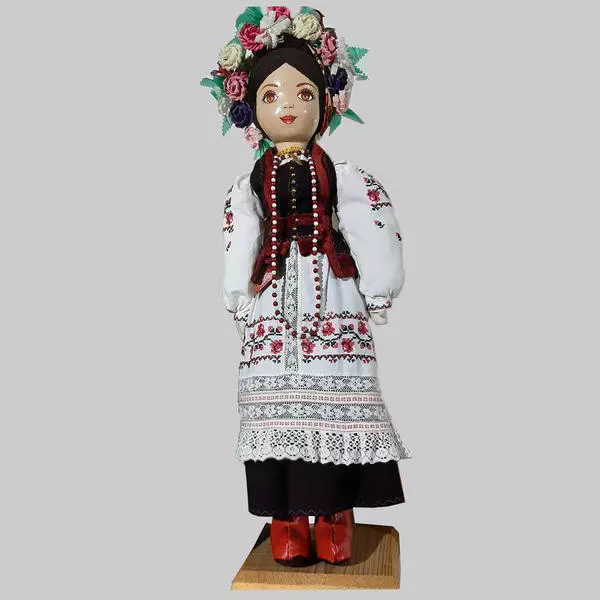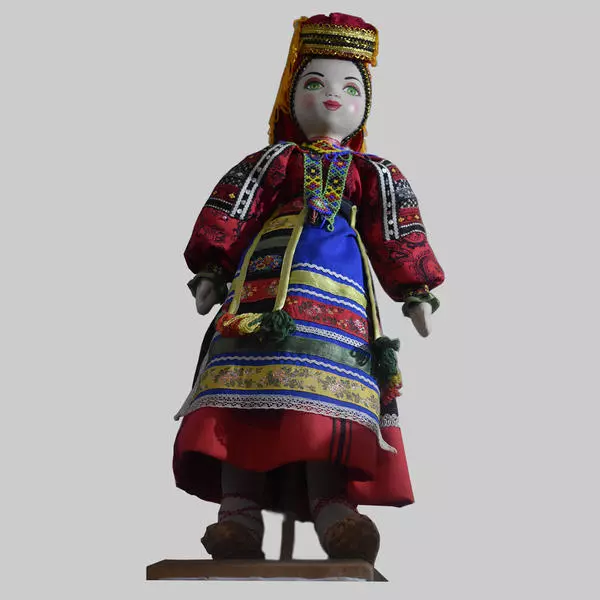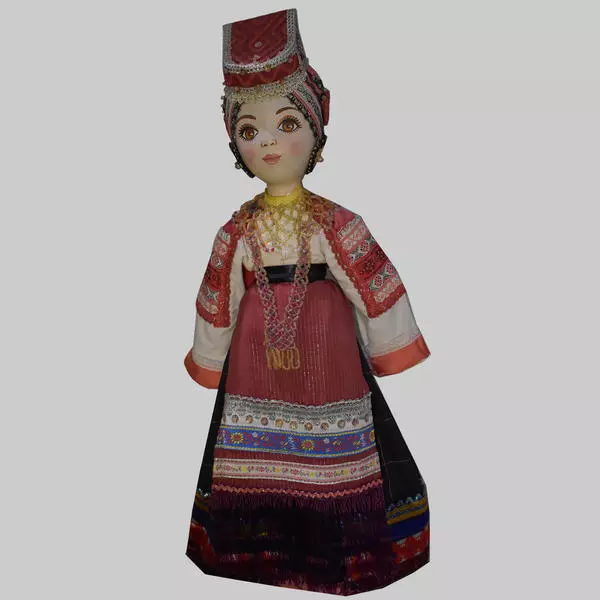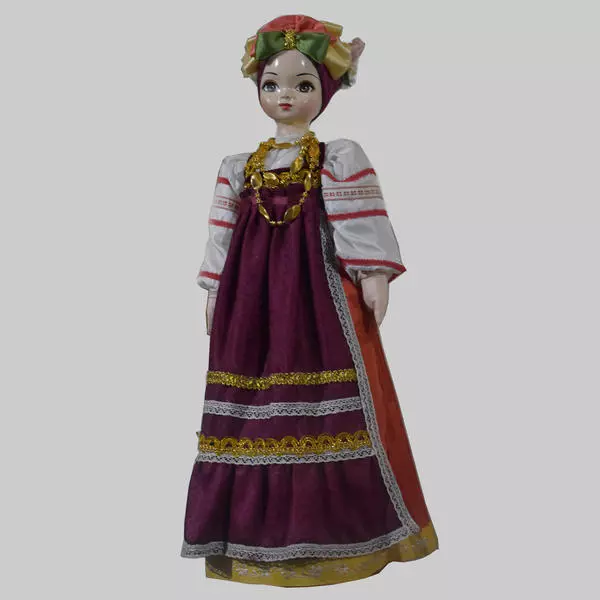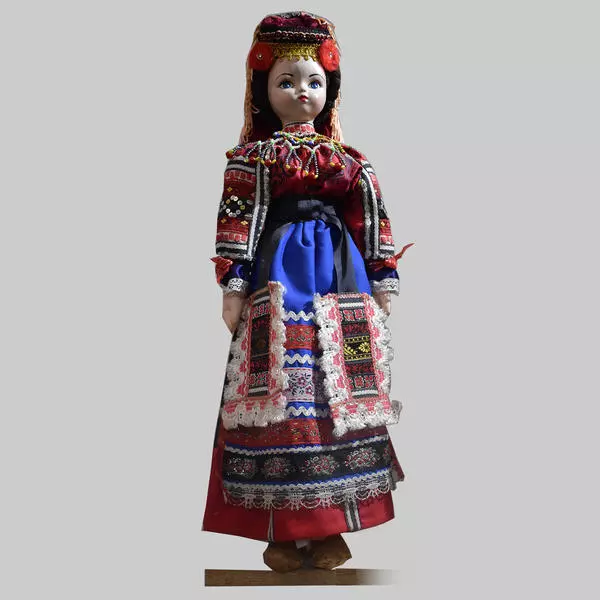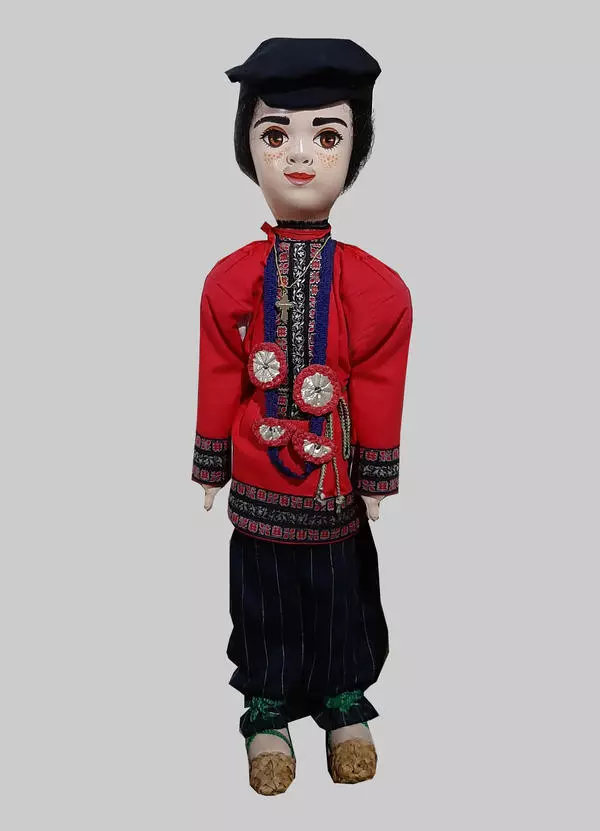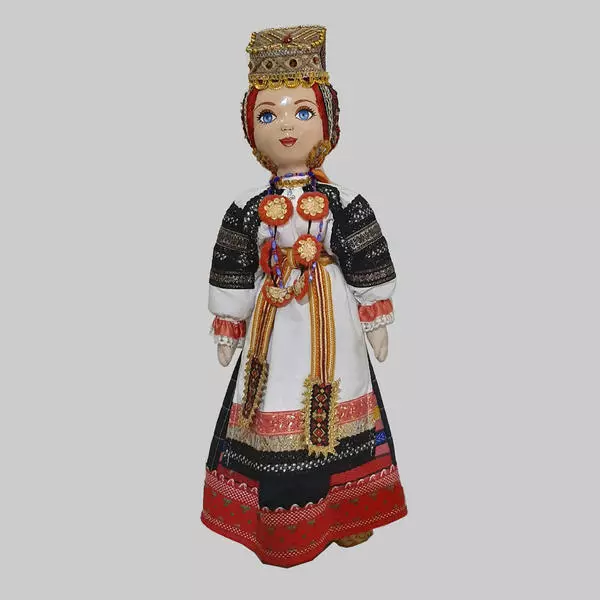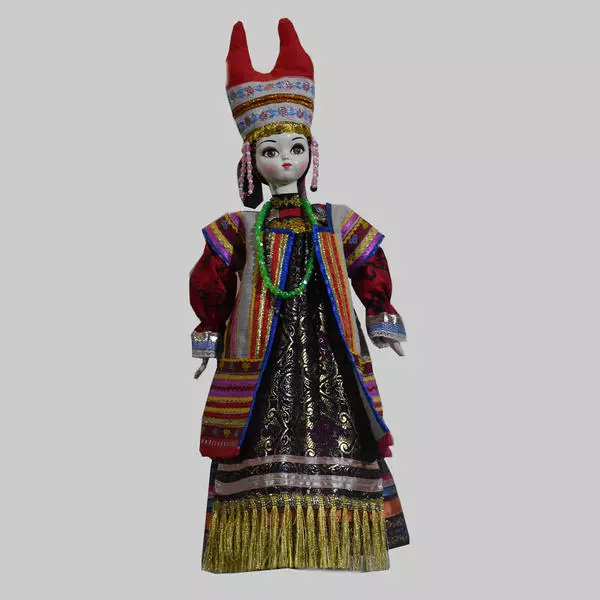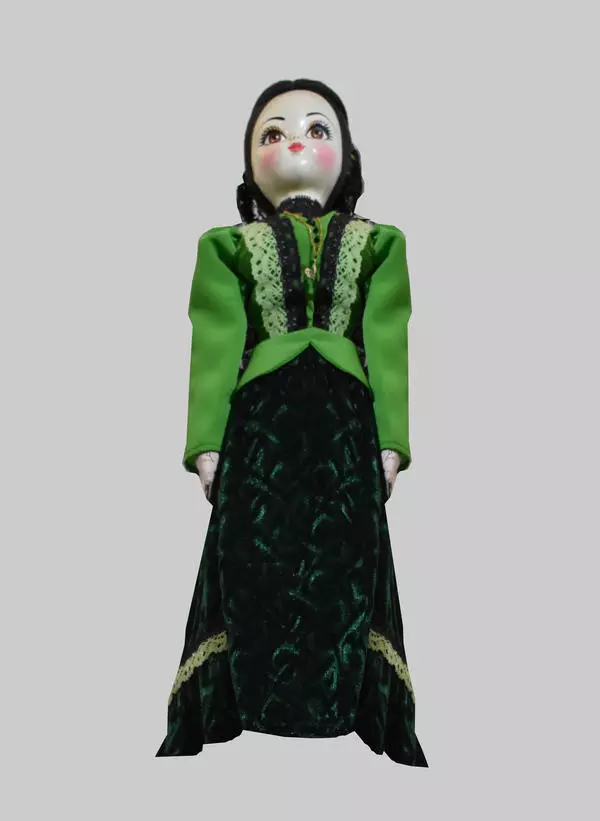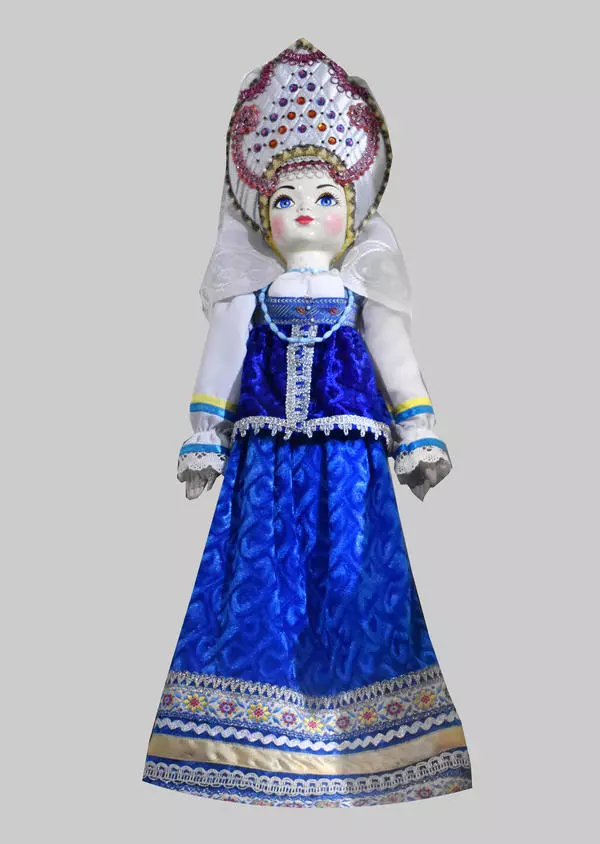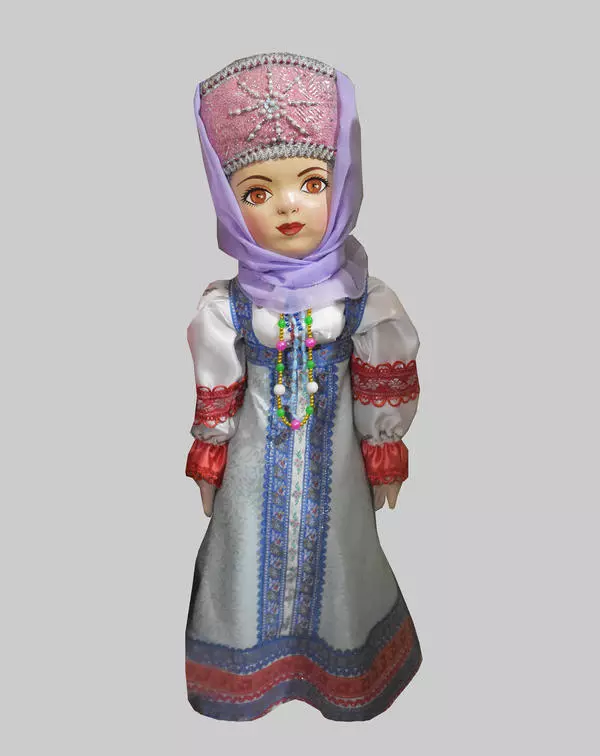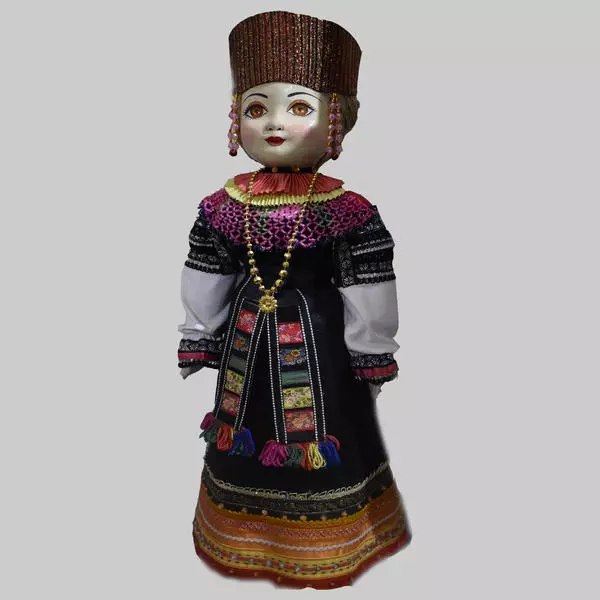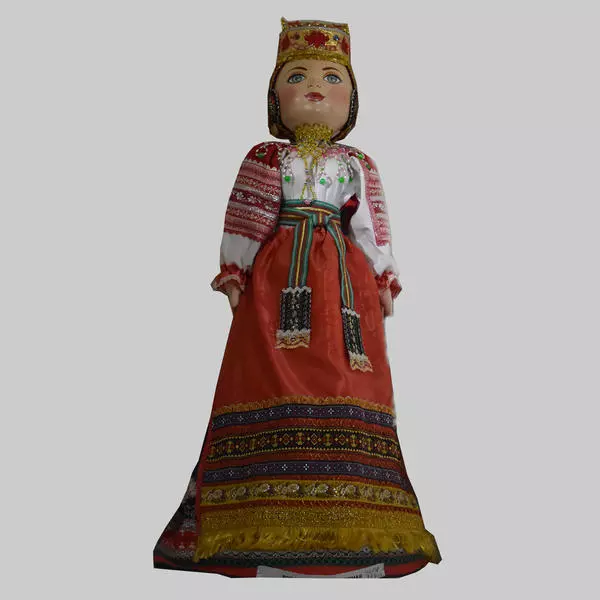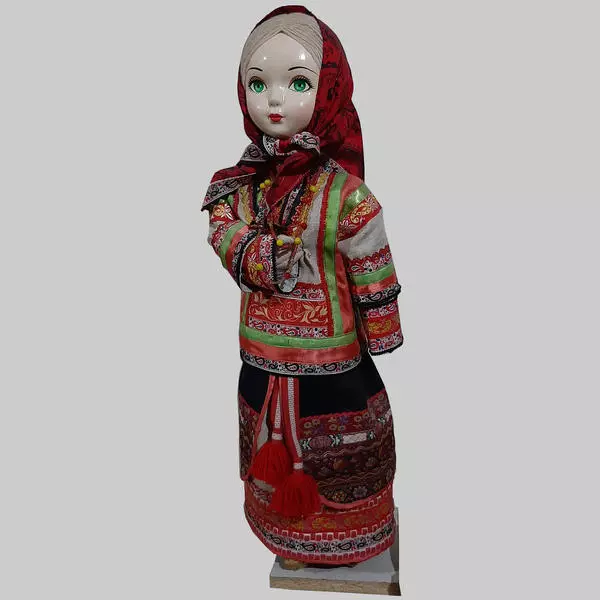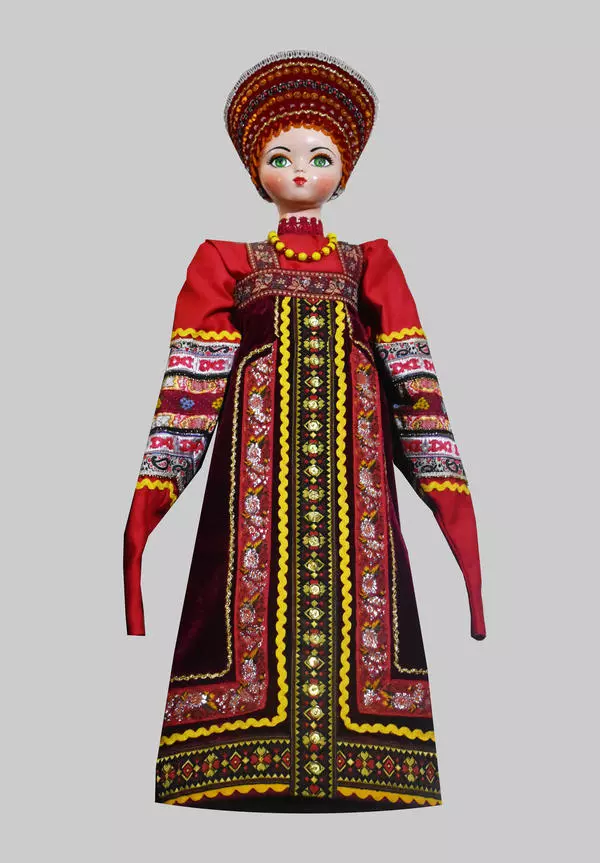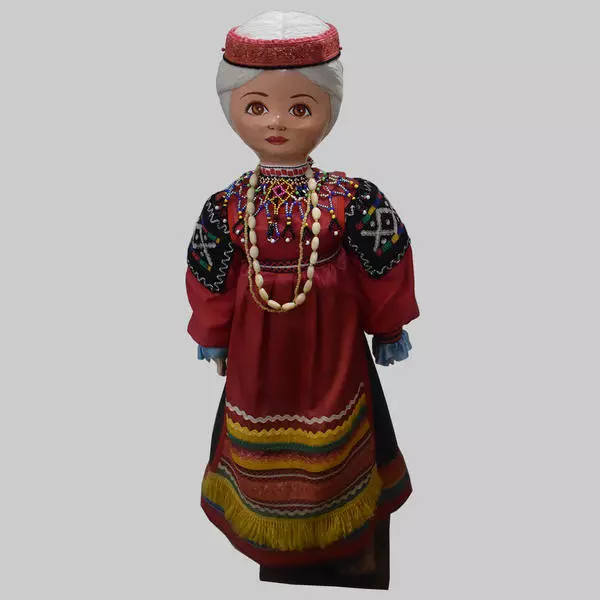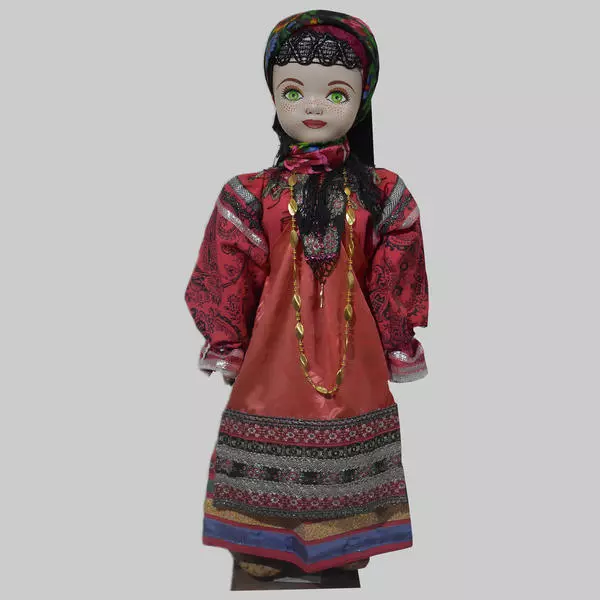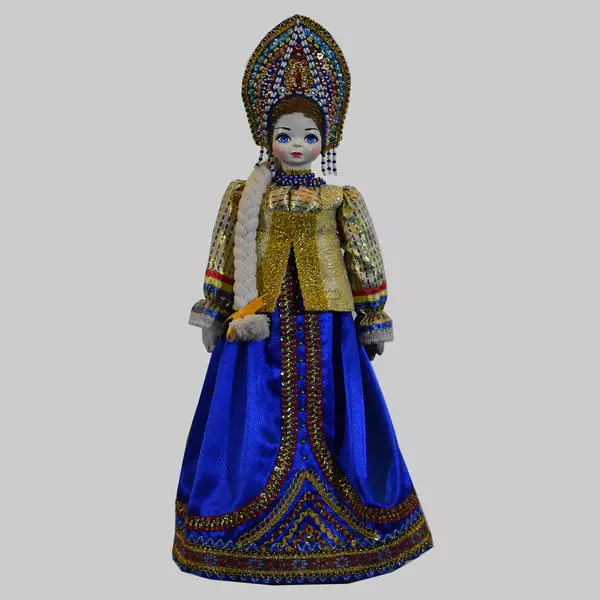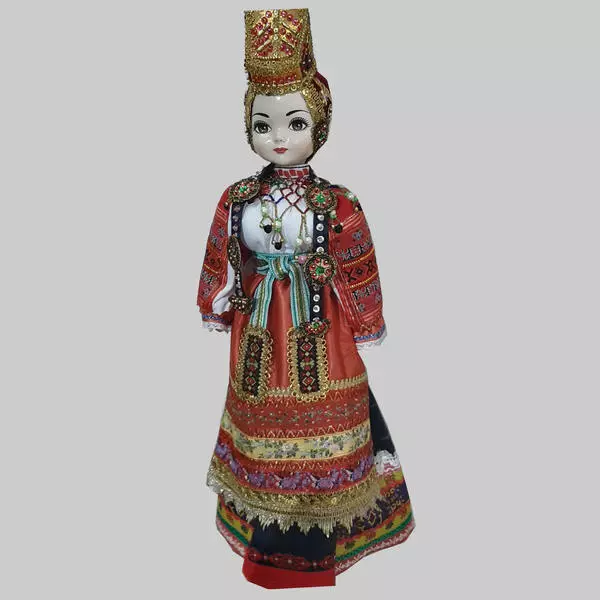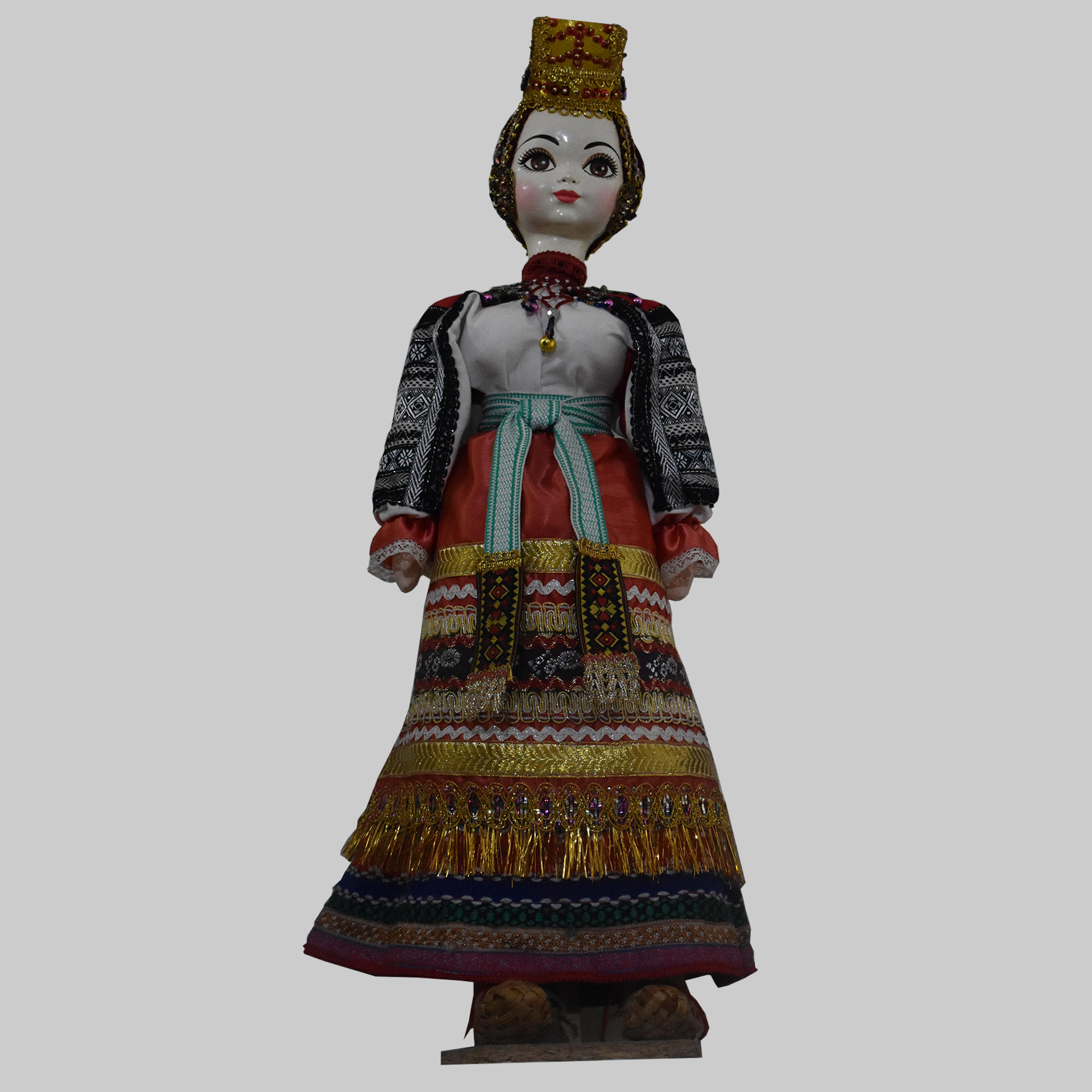


The Repyevsky district folk costumes combined traditions and characteristics of various ethnic groups whose representatives lived in its territory. The Repyevsky district inhabitants stand out from other Voronezh residents by their dialect, customs, and clothing. All the variety of national costume elements is presented in Repyevka festive outfits.
Repyevsky fashionistas preferred to sew clothes not from homespun canvas, but from expensive factory fabrics: wool, brocade, silk, chintz, satin. Vegetable dyes with unified shades were gradually replaced by aniline-based paints with a wide range of colours.
In the Repyevsky district villages, the peculiarity of clothes decoration was in using rhombic and square cross-embroidered ornaments. Clothing elements with shiny accessories, beads and embroidery gave the festive clothes a bright and spectacular look. The costume was complemented by colorful edging belts, beads, and in the village of Rossoshki woven beads monists were also worn over clothing.
The village men’s casual and festive costumes practically did not differ. Men’s national attire included ''sharovary'' (wide trousers), boots and a ''kosovorotka'' with an embroidered collar (a shirt with a collar fastening at side). Girls and boys until adolescence ran in the same homespun shirts as long as they touched the ankles.
In most villages in the Repyevsky district, women’s costumes included a ''ponyova'' - a kind of homespun woolen skirt. In different villages, ponyovas differed in colour. Most often, they were made of a dark blue checkered fabric. By the color of the strips dividing the tissue into cells, one could understand in which village the item was sewn. At the Ivanovsky farm, women wore plain black ponyovas with multi-coloured cross-stitch embroidery.
Repyevsky fashionistas preferred to sew clothes not from homespun canvas, but from expensive factory fabrics: wool, brocade, silk, chintz, satin. Vegetable dyes with unified shades were gradually replaced by aniline-based paints with a wide range of colours.
In the Repyevsky district villages, the peculiarity of clothes decoration was in using rhombic and square cross-embroidered ornaments. Clothing elements with shiny accessories, beads and embroidery gave the festive clothes a bright and spectacular look. The costume was complemented by colorful edging belts, beads, and in the village of Rossoshki woven beads monists were also worn over clothing.
The village men’s casual and festive costumes practically did not differ. Men’s national attire included ''sharovary'' (wide trousers), boots and a ''kosovorotka'' with an embroidered collar (a shirt with a collar fastening at side). Girls and boys until adolescence ran in the same homespun shirts as long as they touched the ankles.
In most villages in the Repyevsky district, women’s costumes included a ''ponyova'' - a kind of homespun woolen skirt. In different villages, ponyovas differed in colour. Most often, they were made of a dark blue checkered fabric. By the color of the strips dividing the tissue into cells, one could understand in which village the item was sewn. At the Ivanovsky farm, women wore plain black ponyovas with multi-coloured cross-stitch embroidery.
In the last century, national costumes began to be widely used in folk song concerts. In this regard, traditional clothing was enriched with brighter colours: intense red, crimson, burgundy. Particular attention was paid to the appearance of women’s headdresses. Massive ''sorokas'' (magpies) of bizarre shapes, decorated with embroidery, beads, shiny details, attracted attention, looked expensive and spectacular.
At the beginning of the 20th century, in the village of Rossoshki, traditional clothes with ponyovas were gradually replaced by more modern outfits. Embroidery continued to be used, but plant patterns replaced geometric ornaments. Leaves, flowers, stems, buds were also embroidered with a cross. Floral ornaments adorned shirts and sweatshirts.
Young girls began to wear checkered skirts and after marriage they no longer put on a ponyova. In the Voronezh and the neighboring Belgorod regions, the black colour of skirts and aprons, practical for everyday wear, firmly entered into fashion.
Ponyovas were completely absent in the costumes of the villages Butyrki and Ust-Muravlyanka. In these villages they preferred to wear skirts made of heavy cloth. Their appearance resembled homespun items, but they were sewn from purchased factory-made threads. Such skirts were commonly called ‘Kursk’.