Font
Color
Graphics
Изображение точки

To see AR mode in action:

1. Install ARTEFACT app for iOS or Android;

2. Find the exhibition «Dolls in traditional costumes»

3. Push the «Augmented reality» button and point your phone's camera at the exhibit;

Скрыть точки интересаПоказать точки интереса
Показать в высоком качестве

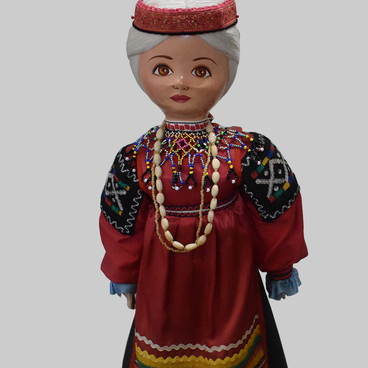
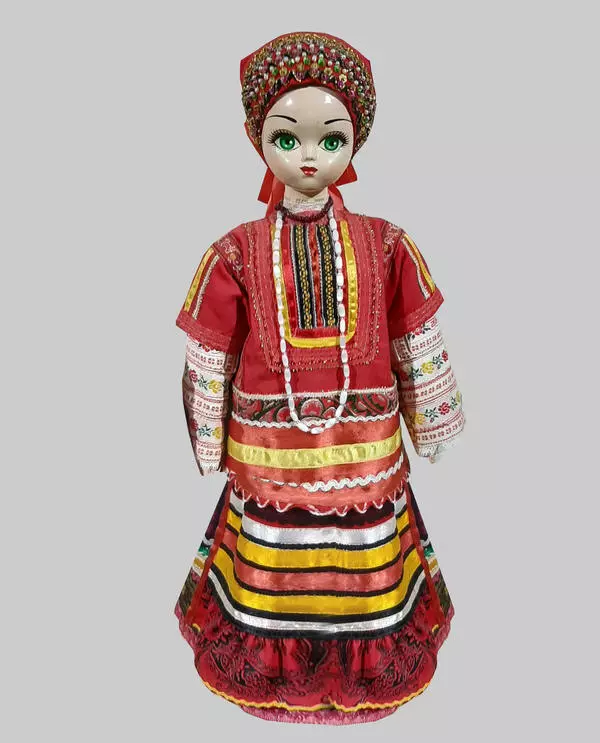
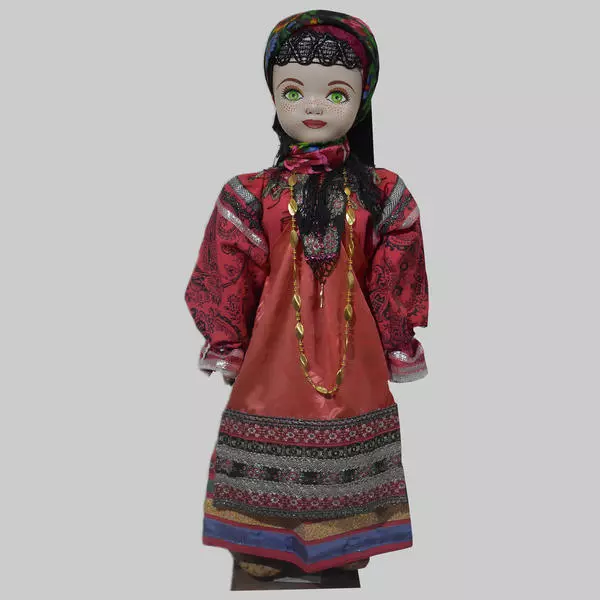
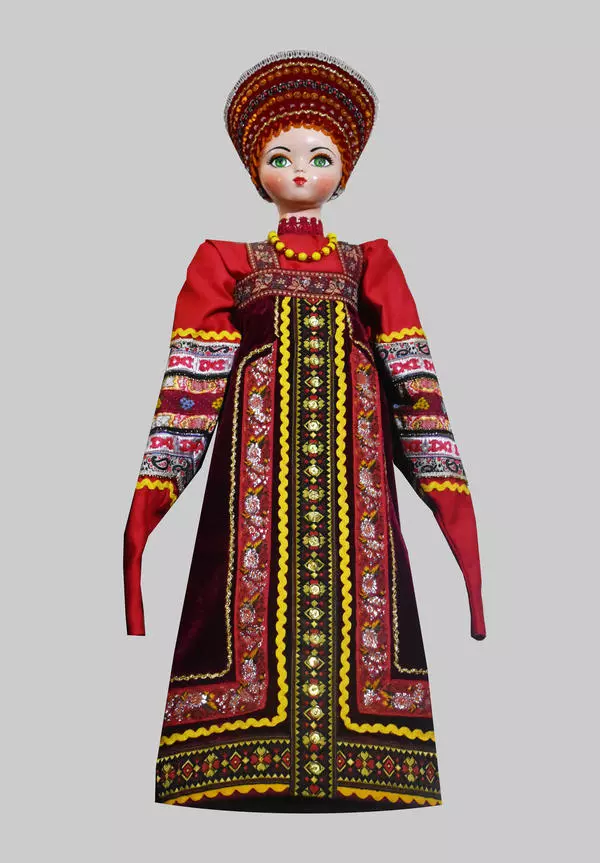
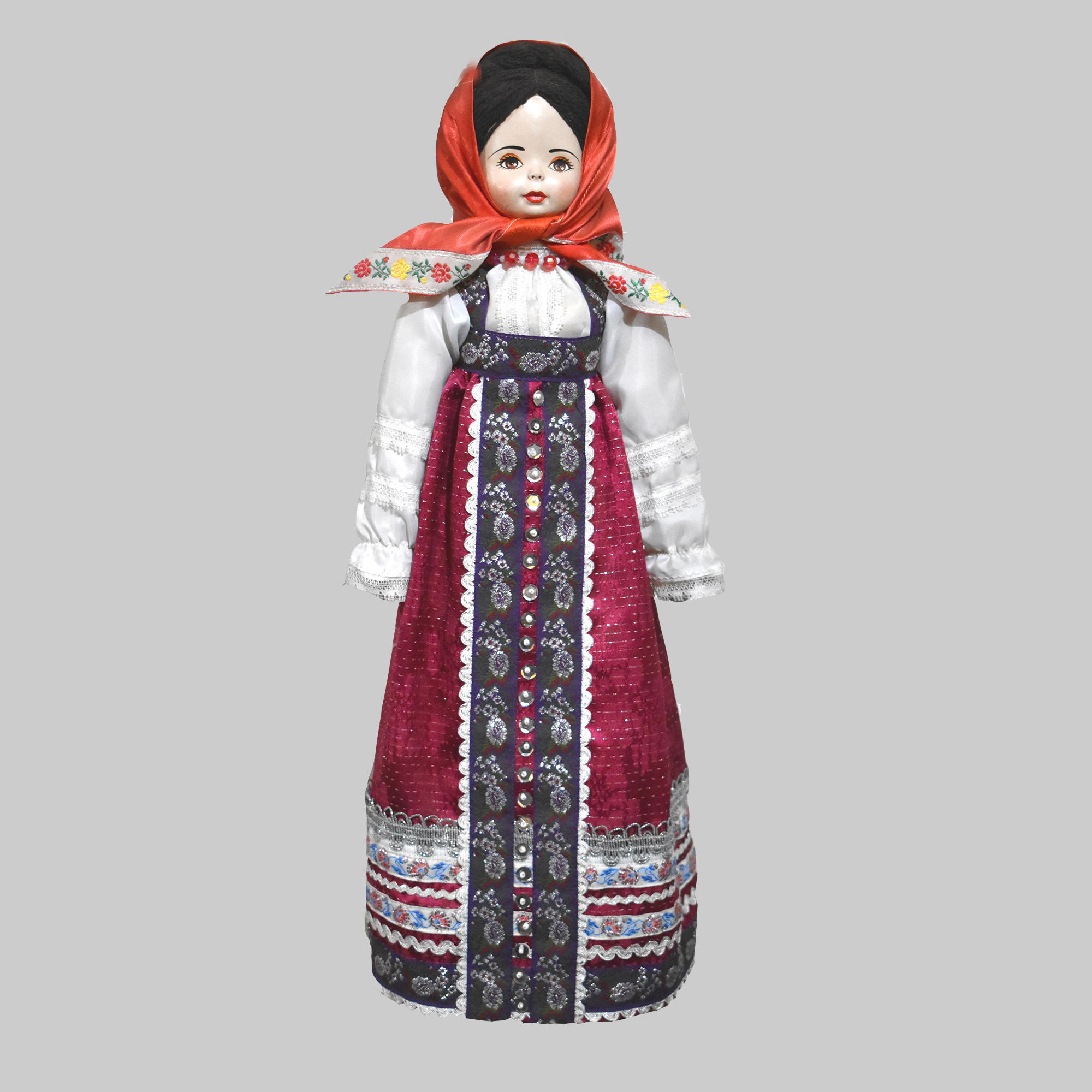
Doll, a Girl with a Braid

Creation period
20th century
Dimensions
50 cm
2
Open in app
#1
Valentina Gorbacheva 
Doll, a Girl with a Braid
#2
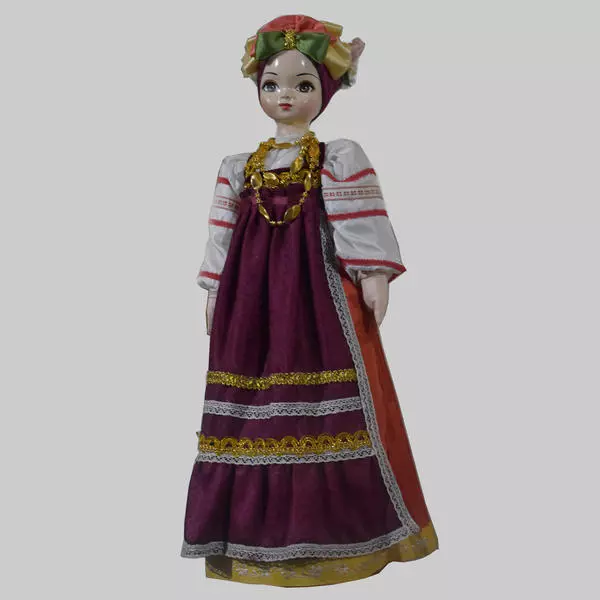
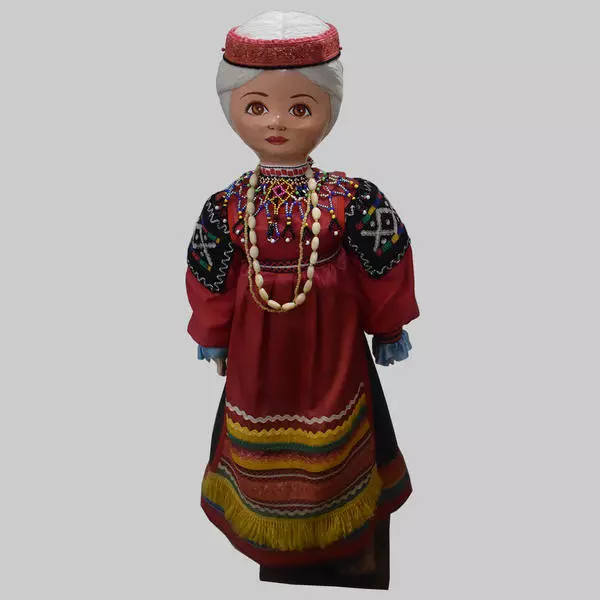
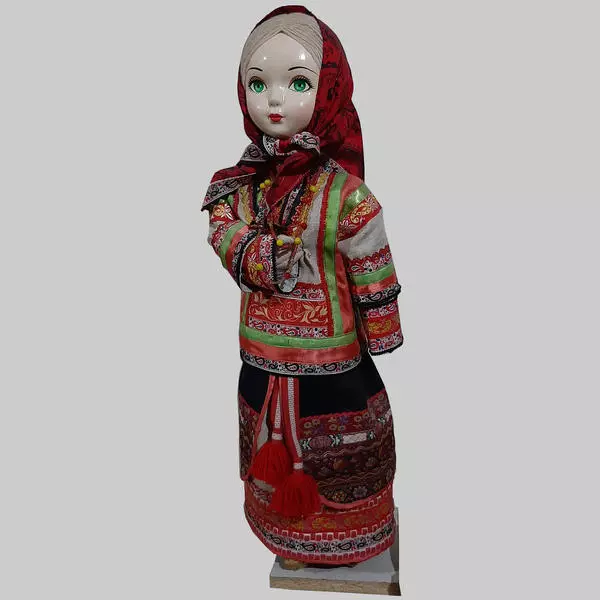
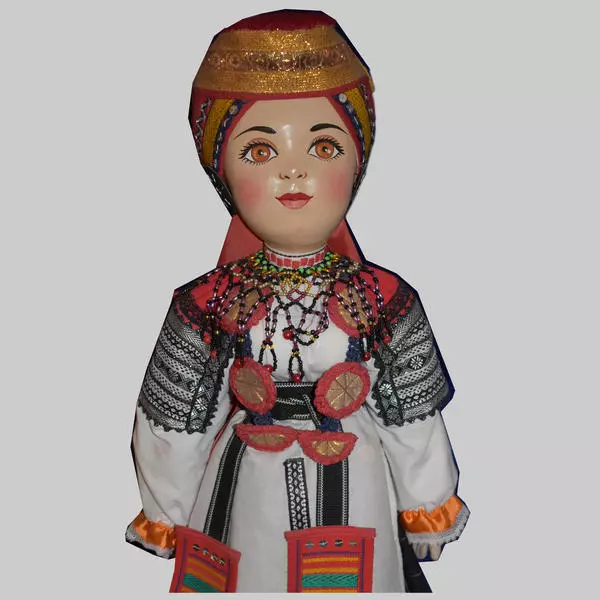
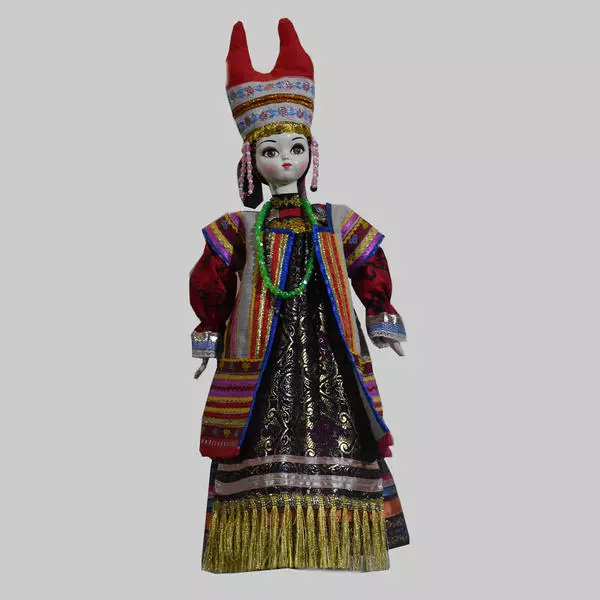
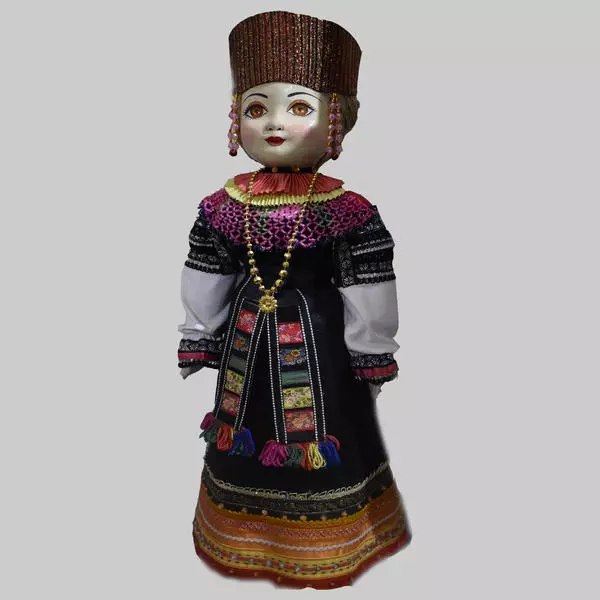
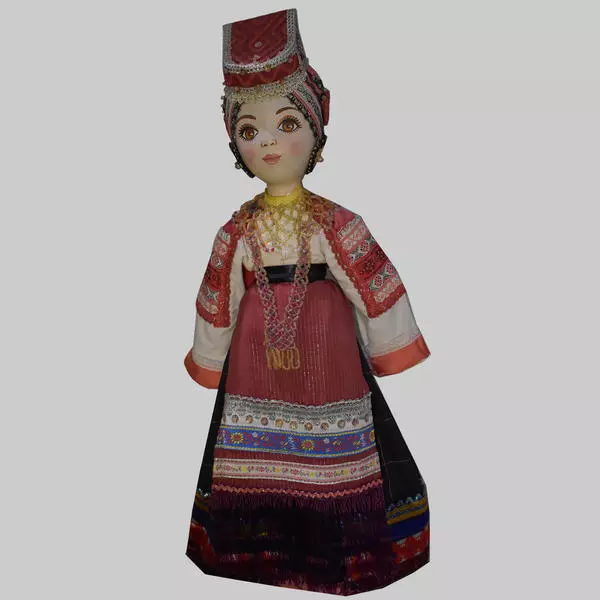
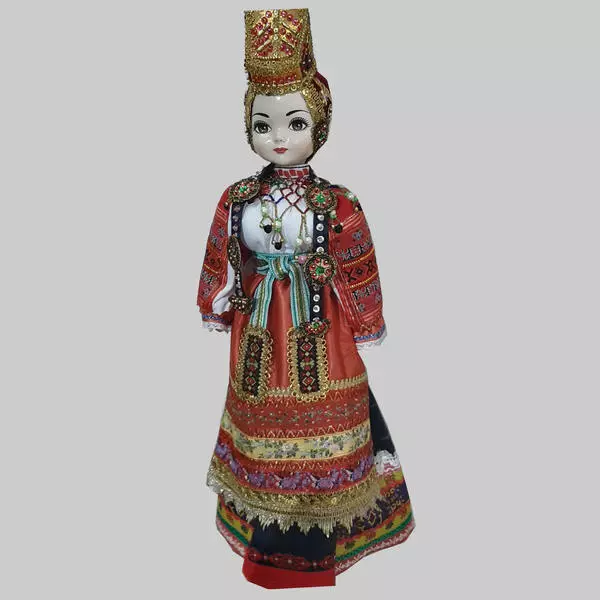
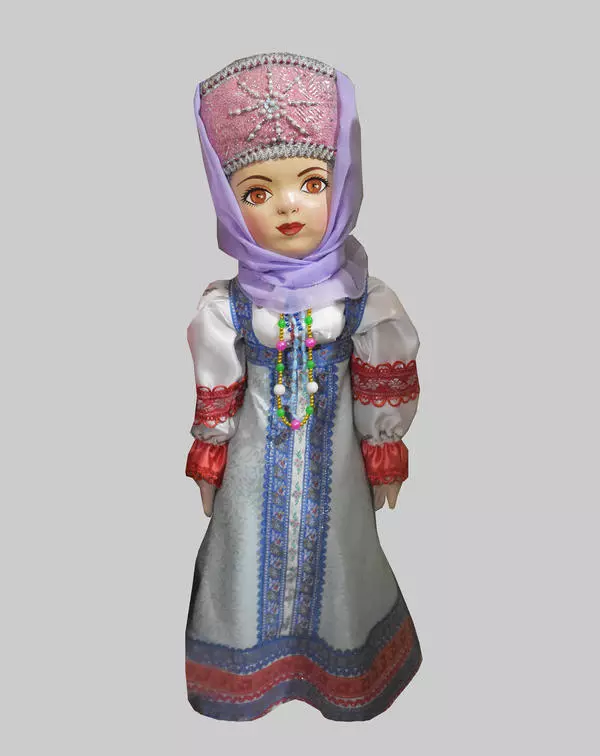
The everyday outfit of Tambov peasant women consisted of a shirt made of homespun cloth with trapezoid (polikami) inserts on the shoulders and a checkered poneva. The latter differed from a simple skirt in stitching — a dark piece of plain fabric. Ponevas were worn so that the seam was at the front or slightly on the side as it wasn’t noticeable behind the apron.

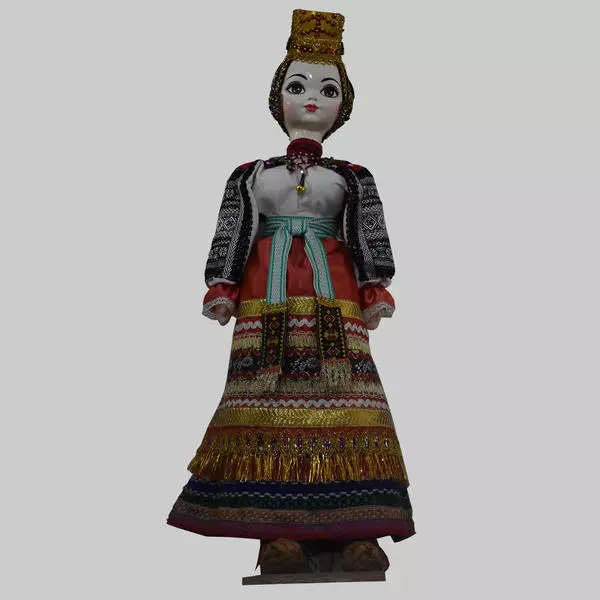
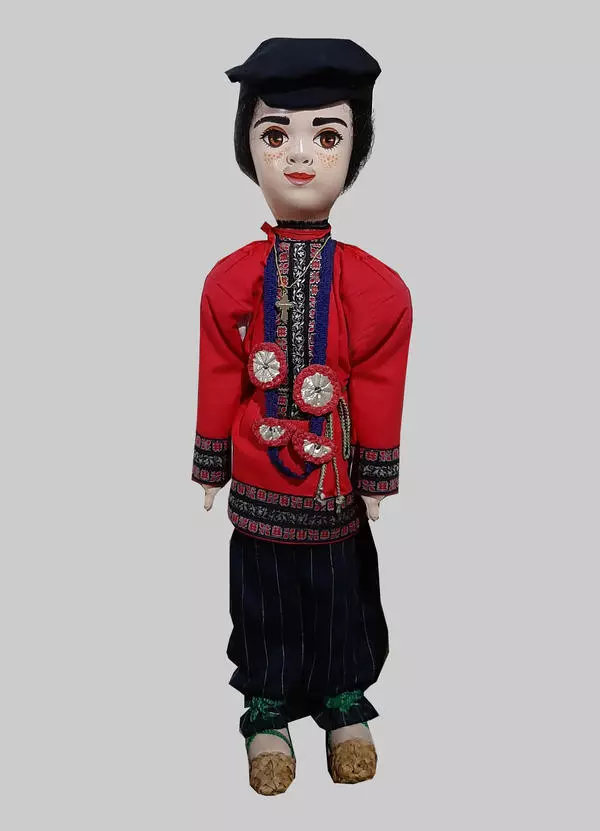
Sashes were worn by both men and women. These multi-colored belts were wrapped several times around the waist and tied in a knot. Its ends drooped freely. These sashes not only supported loose trousers, ponevas or shirts, but also played a role of one of the main pieces of decoration of the outfit. 

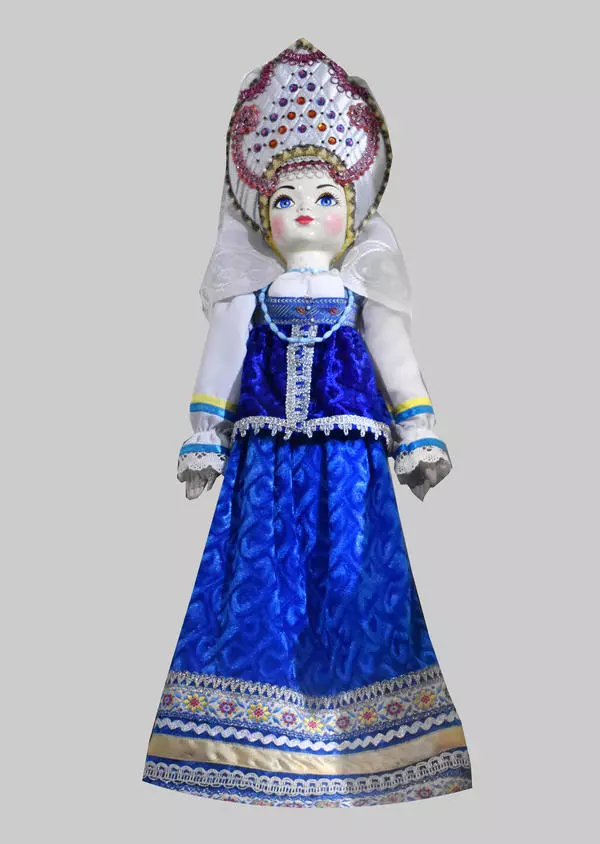
Children of both sexes wore shirts from homespun cloth girdled with narrow sashes. Girls dressed like that until the age of 15-16. Then the outfit was complemented by bright skirts or sundresses. This is what was worn at girls’ gatherings and dances during celebrations. It was believed that if a girl put on a skirt over a shirt, you could send marriage proposals to her family.

The fabric for sewing shirts was woven by the people themselves. The manufacturing process of linen, hemp and wool was long and laborious. Throughout autumn, winter and early spring, all women in the house participated in it. Textile production continued until the start of sowing. 
 
Seven-year-old girls performed simple work — unwinding threads, and after five years of that became experienced spinners. From the age of 15 they were sent to whitewash canvas. Weaving was considered the most important and difficult work. This was done by older women, 20-40 years old. The process began after the harvest: hemp was soaked in the river for two to three weeks, dried, then freed from the shives, carded and spun on long winter evenings.

Finished yarn was dyed black, red, blue or orange. In homes, people mostly could make only black threads. To make dye, hot kvass was poured on iron scrap. Most of the time, yarn was given to professional dyers.

Weaving began in early spring, during Lent. At that time, a weaving mill was brought into the house and put close to the window. Simple weaving techniques were usually used, although from time to time people resorted to more complex techniques. In addition to hemp and linen, woolen and semi-woolen materials could also be made at home. Ponevas and outerwear were then sewn from them.

Women also engaged in sewing using hemp thread. The styles of their outfits depended on the size of available fabrics. Casual clothes, such as sundresses and skirts, did not have wide hems.

#3
View in the State Catalogue
read morehide
00:00
00:00
1x

Doll, a Girl with a Braid

Creation period
20th century
Dimensions
50 cm
2
Point your smartphone camera to open in the app
Share
VkontakteOdnoklassnikiTelegram
Share on my website
Copy linkCopied
Copy
Open in app

Горбачева В.Я. Collection of works

Doll of Smolensk Governorate
The Boguchar District Museum of Local History
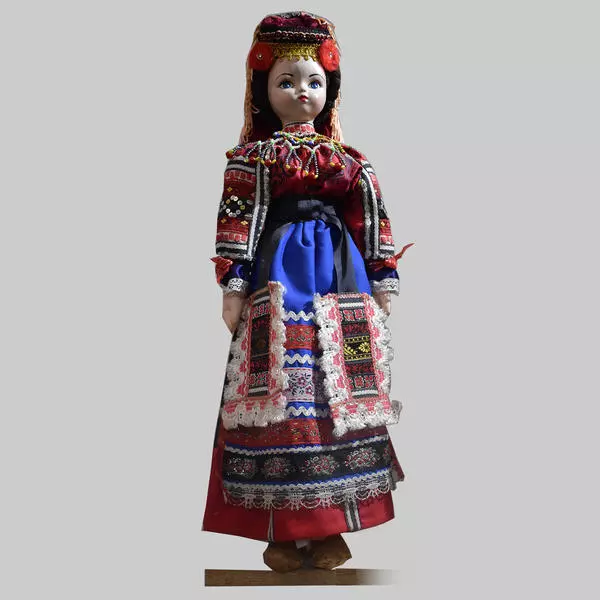
Doll in old folk costume from Tambov province
The Boguchar District Museum of Local History
Doll in Ostrogozhsk Costume
The Boguchar District Museum of Local History
Doll in Dress of Ostorogozhsky District
The Boguchar District Museum of Local History
Doll in Gvazda Village Traditional Costume
The Boguchar District Museum of Local History
Doll in a Costume from Ostrogozhskiy Parish
The Boguchar District Museum of Local History
Doll in a vintage costume of Klepovka village
The Boguchar District Museum of Local History
Kursk Region Doll
Kursk Region Doll
The Boguchar District Museum of Local History
Philipp Doll
Philipp Doll
The Boguchar District Museum of Local History
Doll in old costume from Rossoshki village
The Boguchar District Museum of Local History
Doll in a Folk Costume Girl of Marriageable Age
The Boguchar District Museum of Local History
Cossack Woman Doll
Cossack Woman Doll
The Boguchar District Museum of Local History
Doll in old costume from village Gvazda
The Boguchar District Museum of Local History
A doll in a Nizhnedevitsky old costume
The Boguchar District Museum of Local History
Souvenir Voronezh Doll in Soroka
The Boguchar District Museum of Local History
Ryazan Region Doll
Ryazan Region Doll
The Boguchar District Museum of Local History
Mamon Doll in Kokoshnik
The Boguchar District Museum of Local History
Doll in Boguchar Traditional Costume
The Boguchar District Museum of Local History
Doll in Ryazan Province Traditional Costume
The Boguchar District Museum of Local History
Doll in Wedding Valdai Costume
The Boguchar District Museum of Local History
To see AR mode in action:
  1. Install ARTEFACT app for 
  2. iOS or Android;
  3. Find and download the «Paintings in Details» exhibition
  4. Push the «Augmented reality» button and point your phone's camera at the painting;
  5. Watch what happens on your phone screen whilst you flip through the pictures.
 
We use Cookies
Cookies on the Artefact Website. We use cookies to ensure that we give you the best experience on our website. If you continue without changing your settings, we'll assume that you are happy to receive all cookies on the Artefact website. However, if you would like to, you can change your cookie settings at any time.
Learn more about useHide
Content is available only in Russian

X

Нашли опечатку?...

%title%%type%