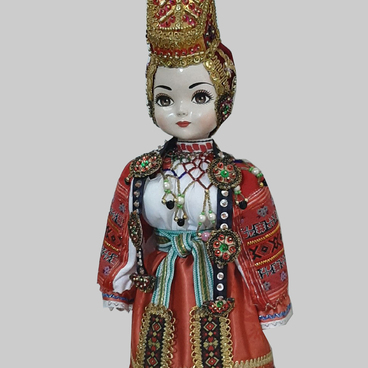
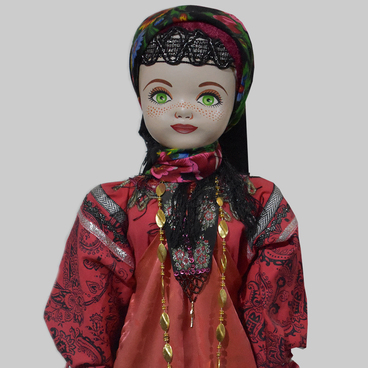
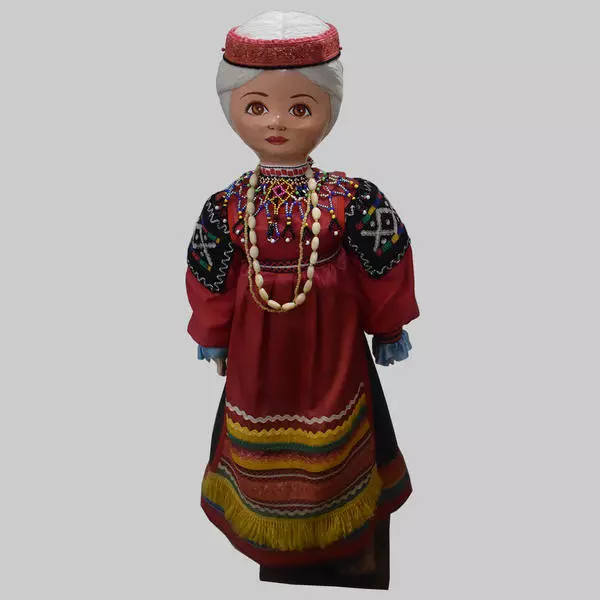
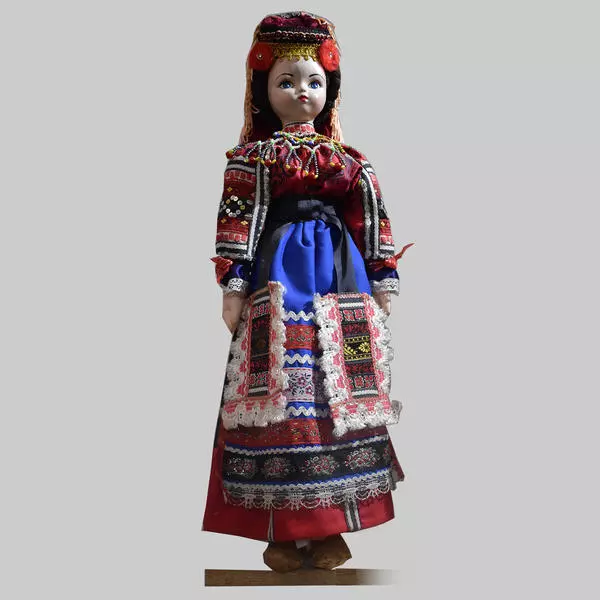
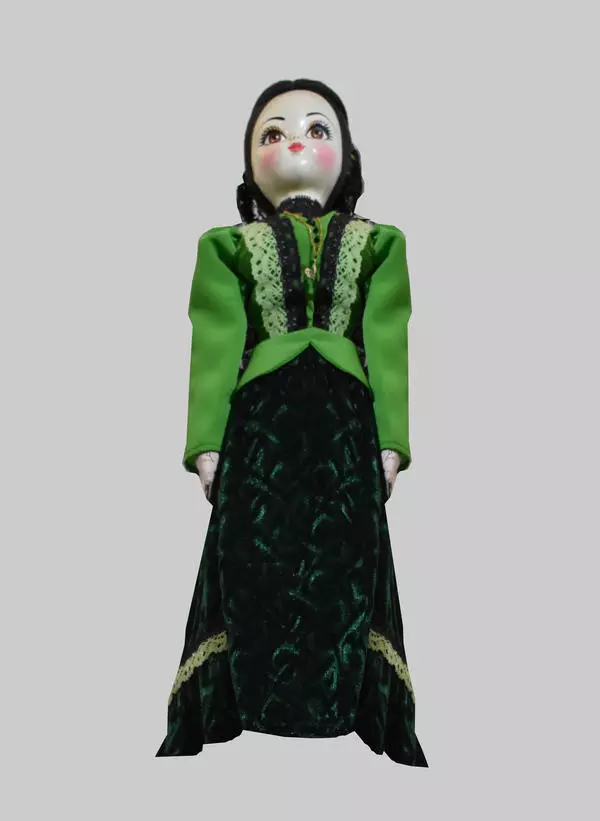
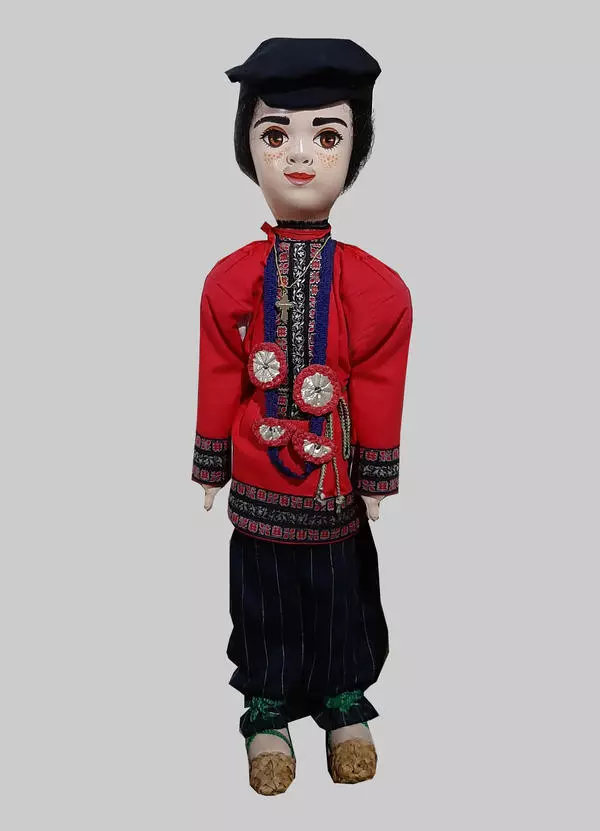
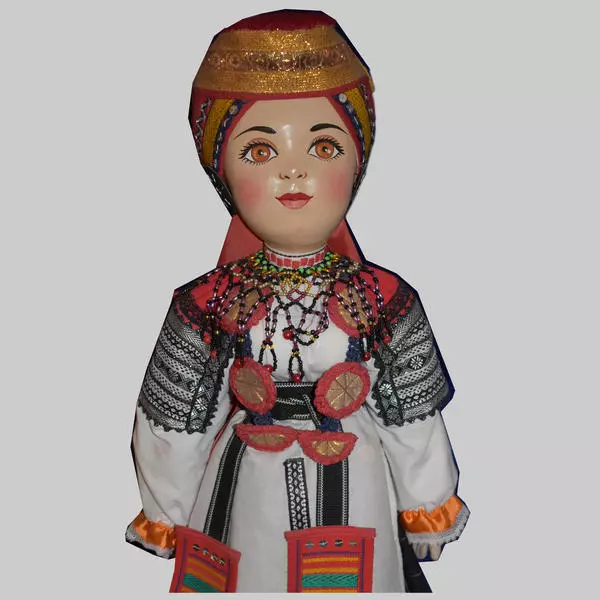
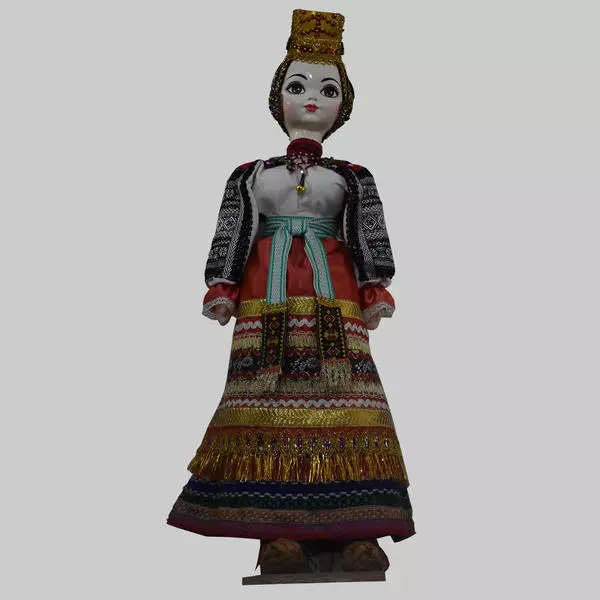
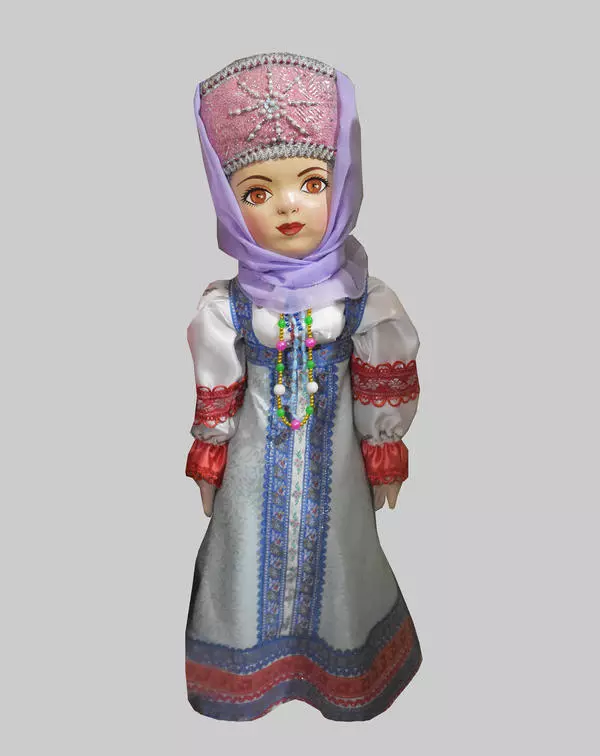
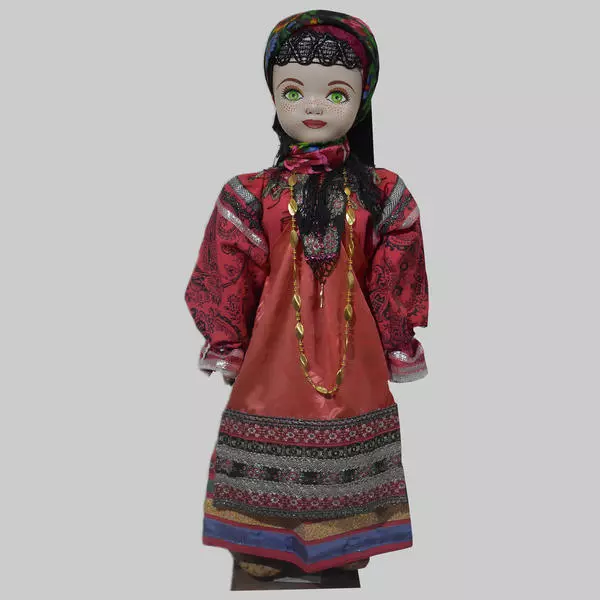
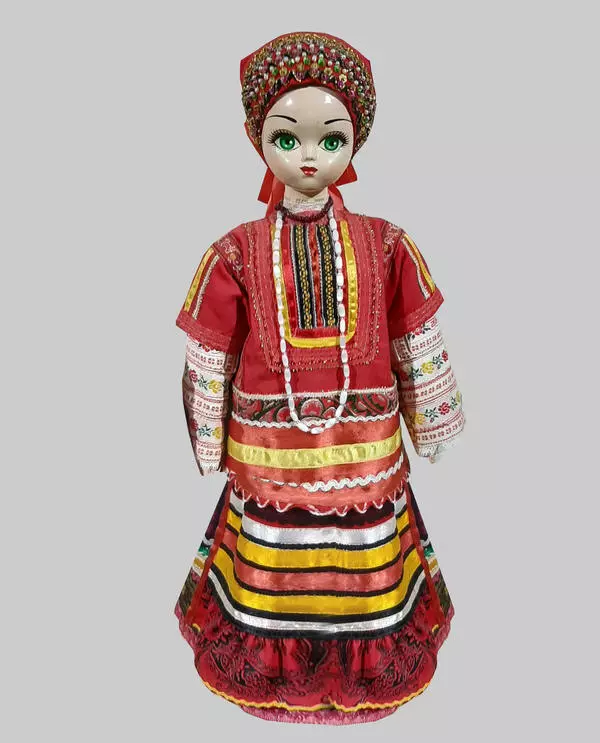
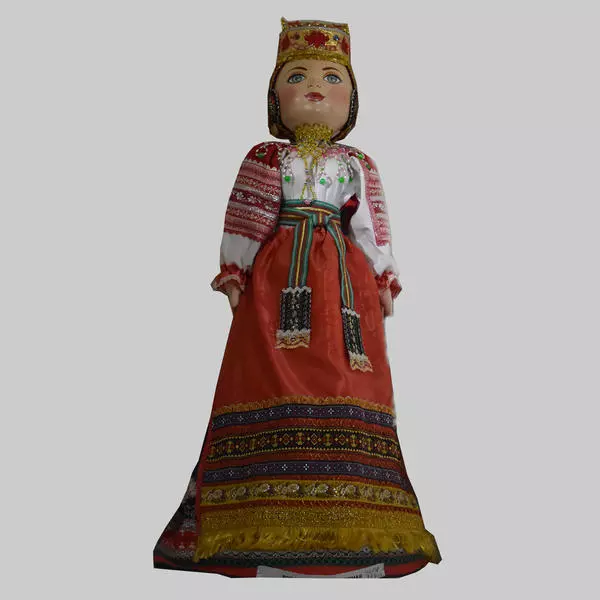
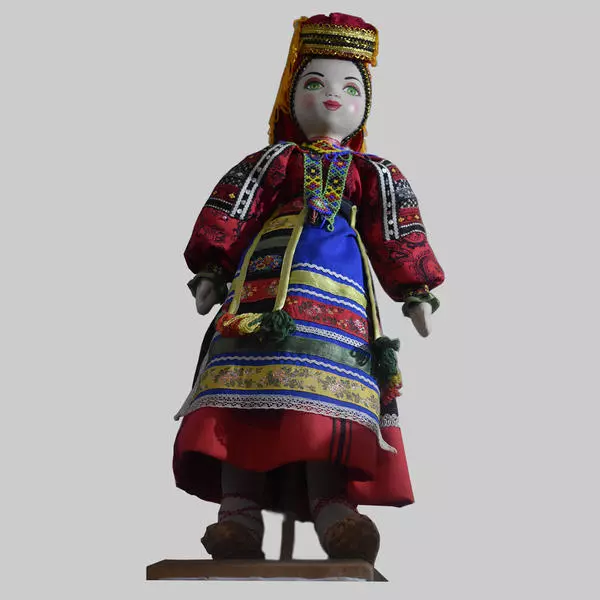
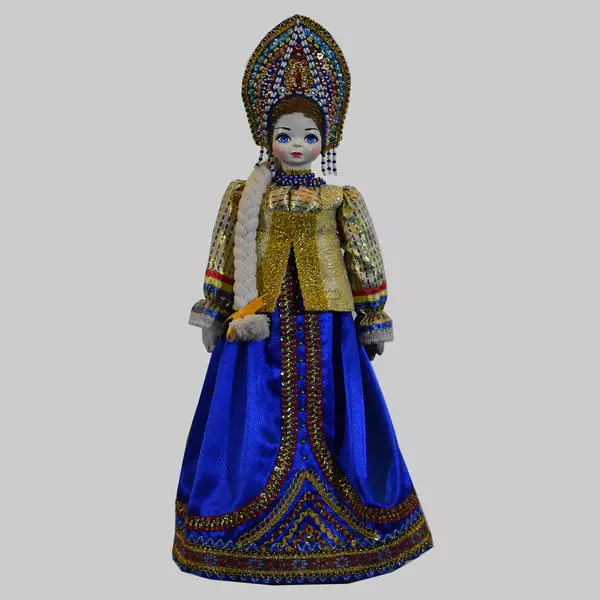
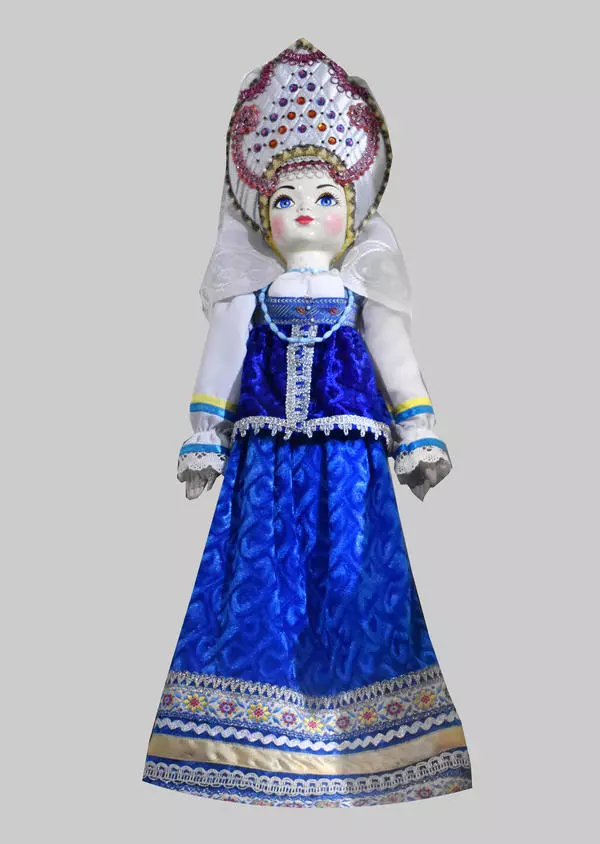
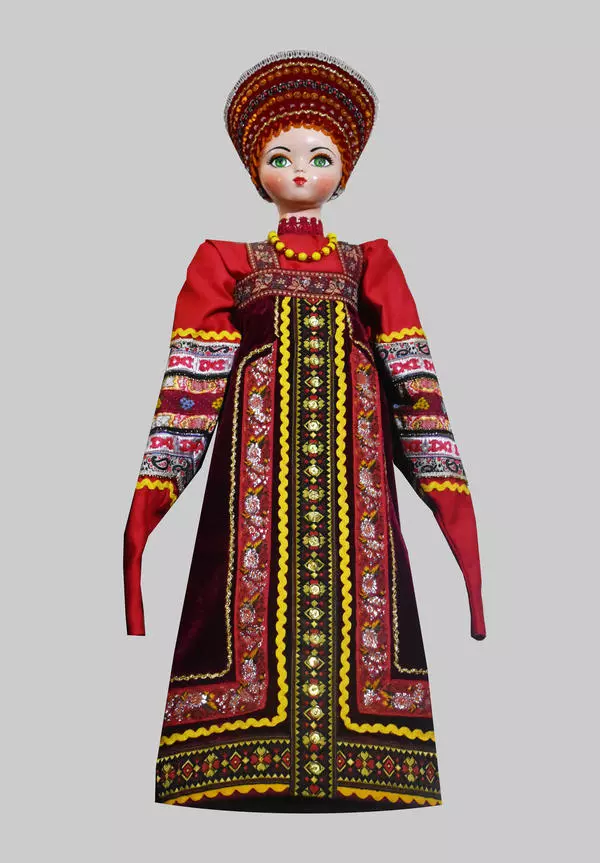
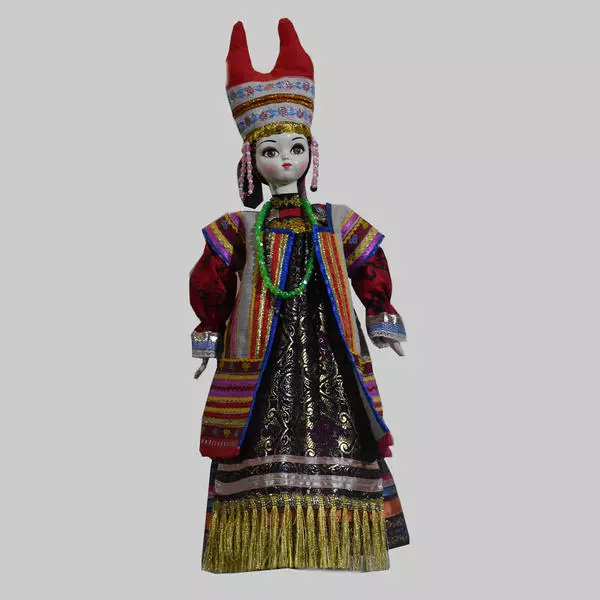
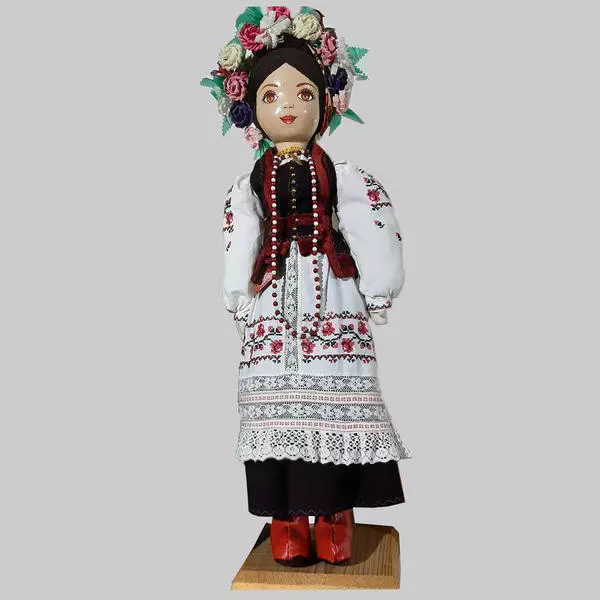
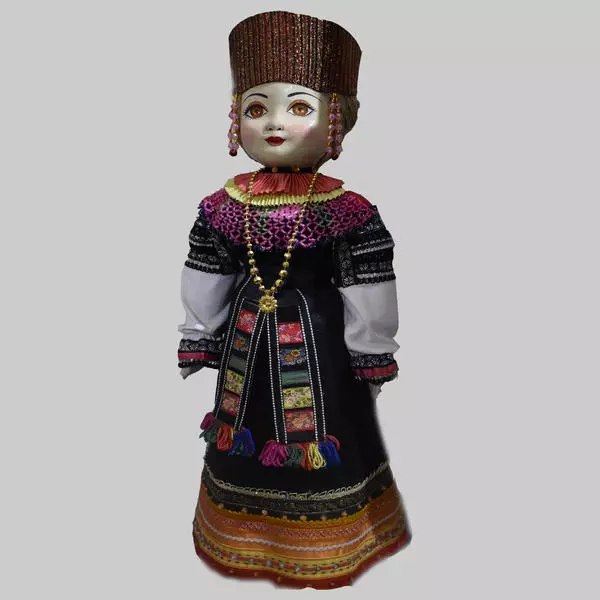
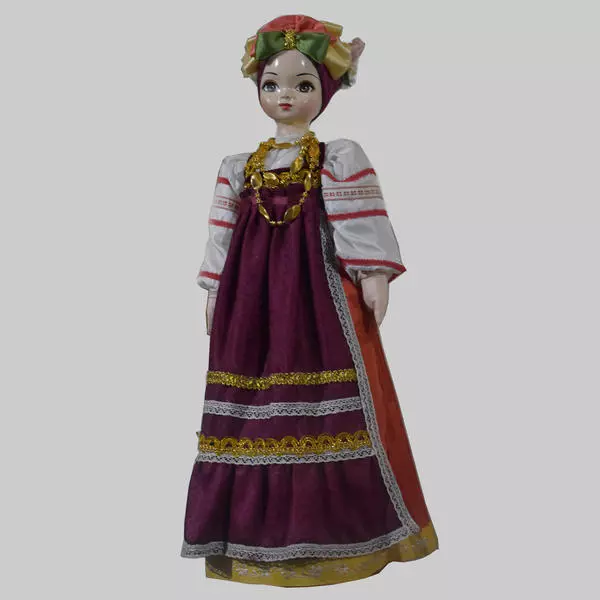
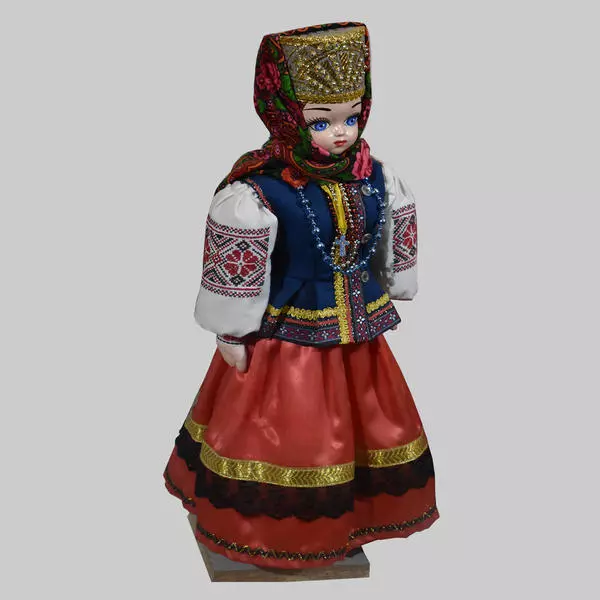
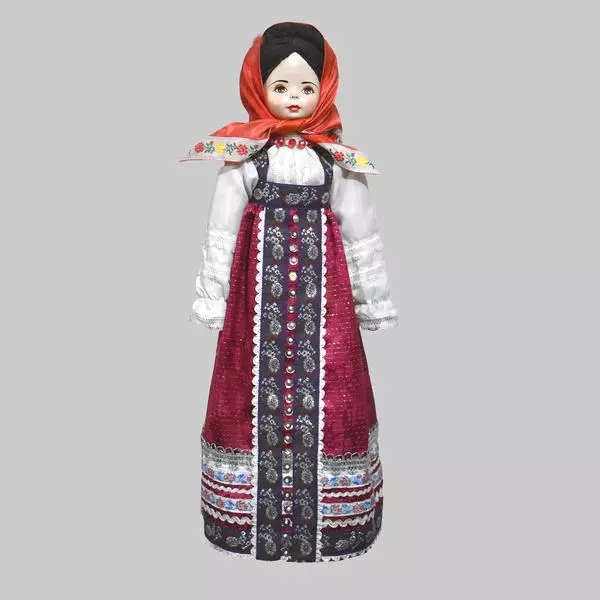
Folk costumes of Ostrogozhsky District in Smolensk province have their own characteristics. Some elements are not found in clothes of women from other areas and are rightfully considered the cultural heritage of Ostrogozhsky villages. Using the example of a doll made by master Valentina Gorbacheva, one can see that local women in the 18th and 19th centuries dressed with special chic and grace, which were also characteristic of everyday dresses.
Ostrogozhsky women paid special attention to accessories and certainly complemented their wardrobe with long beads made of glass or wood, massive earrings and woven belts. For their manufacture, multi-coloured braid was usually used, but in some cases - ribbons or trimmings of fabrics, from which wide festive sashes were created.
The traditional dress of women from Shubnoy village in Ostrogozhsky District, consisted of a homespun red striped woolen skirt, a white shirt with lace trim and a white curtain (apron) with lace trim. The outfit was complemented by a belt made of braid, the edges of which were decorated with embroidery and beads.
Even in the festive version, the Ostrogozhsky women used white shirts made of dense canvas, the sleeves of which were picked up and decorated with wide black ornaments. It could be embroidery, but braids were most often used to create elaborate patterns. The richer the decoration of the sleeves and the whiter the shirt, the higher that woman’s place was in the hierarchy of wardrobes. Casual shirts, as a rule, had minimal decoration and were sewn from a greyish rather than snow-white fabric. It is worth noting that the sleeves on such shirts were often short so that the clothes did not hinder movement and did not interfere with work.
In general, in the 18th century in the Ostrogozhsky district, there were more than 10 different styles of women’s shirts. The most common option is a ‘flea fleece’ made of grey coarse fabric without decoration with long sleeves and a long hem, which simultaneously served as a dressing gown or nightgown.
Depending on the status of the woman, the shirt was complemented with a sundress or poneva - a woolen skirt. Sundresses were mainly worn by unmarried girls or widows, but married women had to wear ponevas. They were sewn from a very dense homespun cloth, mainly woolen. In a festive performance a scarlet with yellow or white checkered skirt was worn, and dark woollen with red checkered ponevas were worn casually.
But any skirt, both festive and casual, was always complemented by a curtain (apron). It was embroidered with special care on the bottom edge, using braid, beads or coloured threads. Embroidery was considered to be the most complex and time-consuming decoration and had a sacred meaning. Young women used symbols such as the tree of life, earth, flowers, so that as many children as possible could be born in the family. Older women decorated the curtains with stylized animals and plants - a symbol of fertility. More often, rhomboid patterns representing the pagan god of the sun were used.
Ostrogozhsky women paid special attention to accessories and certainly complemented their wardrobe with long beads made of glass or wood, massive earrings and woven belts. For their manufacture, multi-coloured braid was usually used, but in some cases - ribbons or trimmings of fabrics, from which wide festive sashes were created.