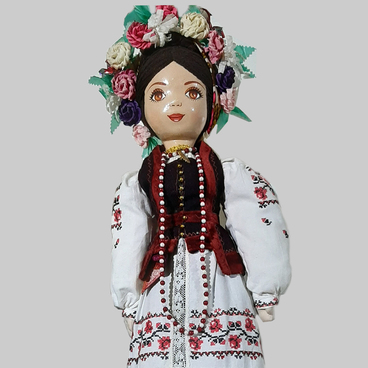
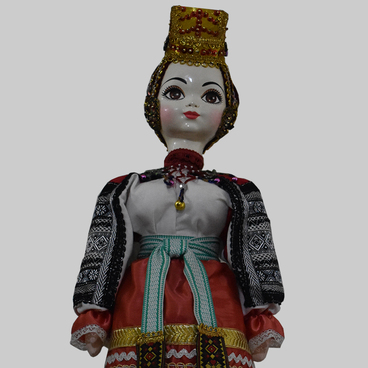
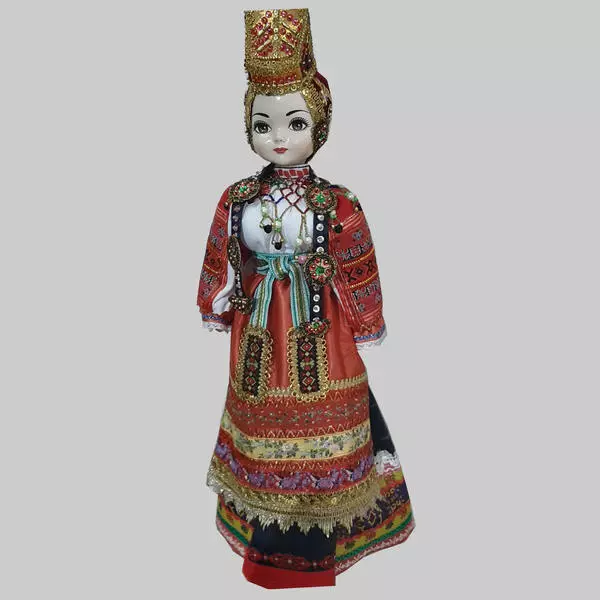
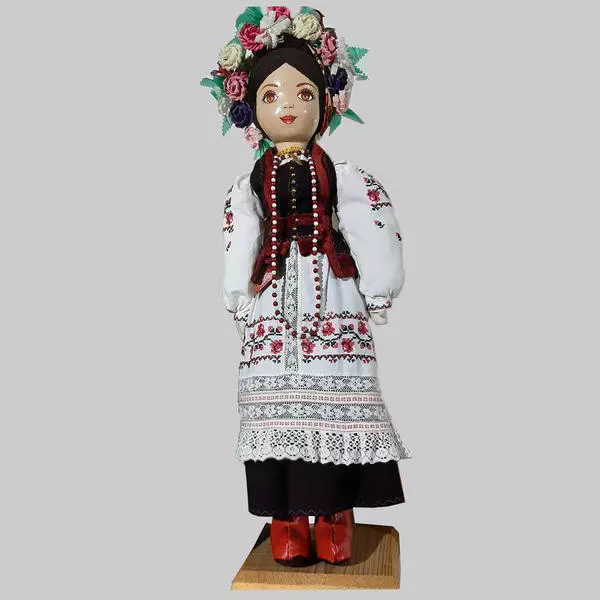
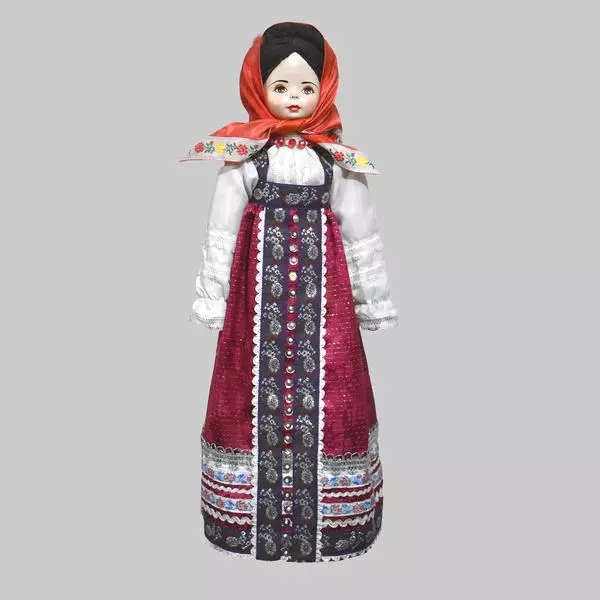
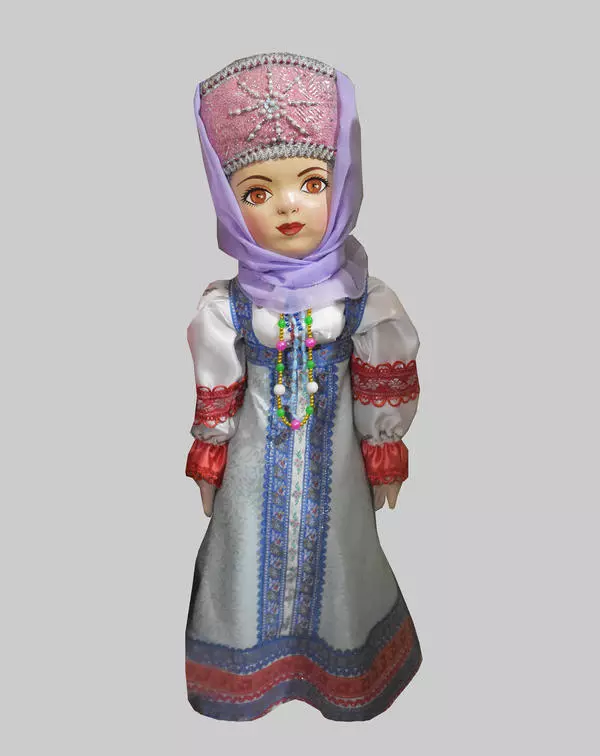
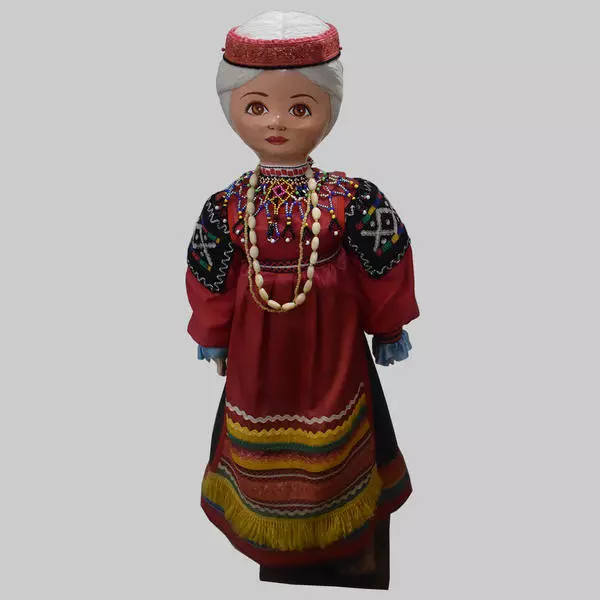
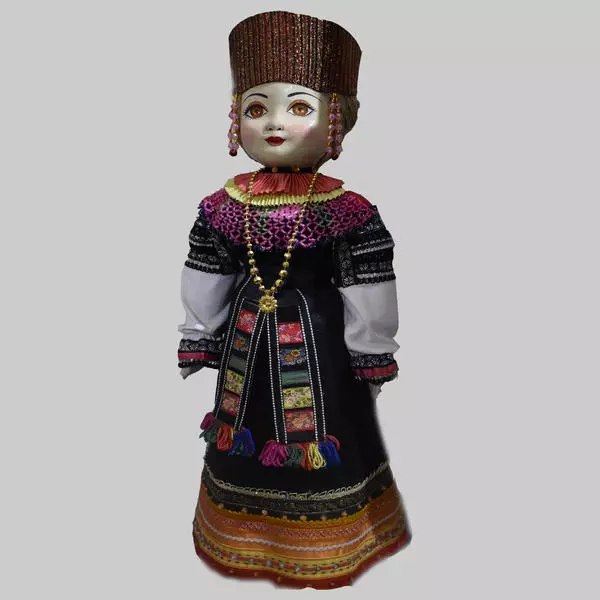
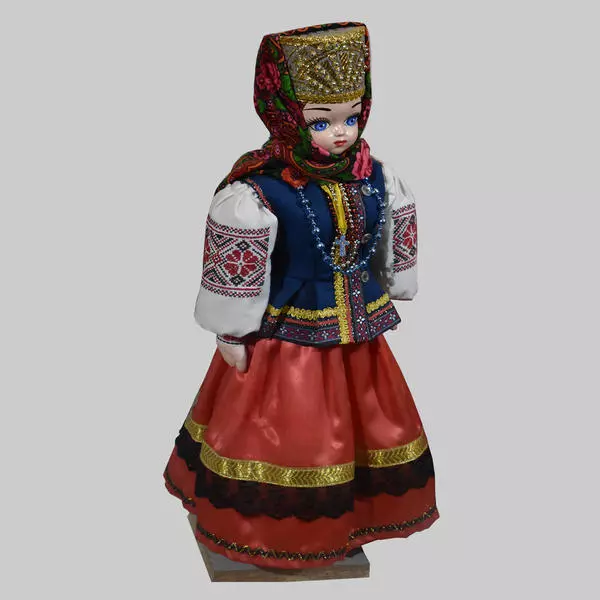
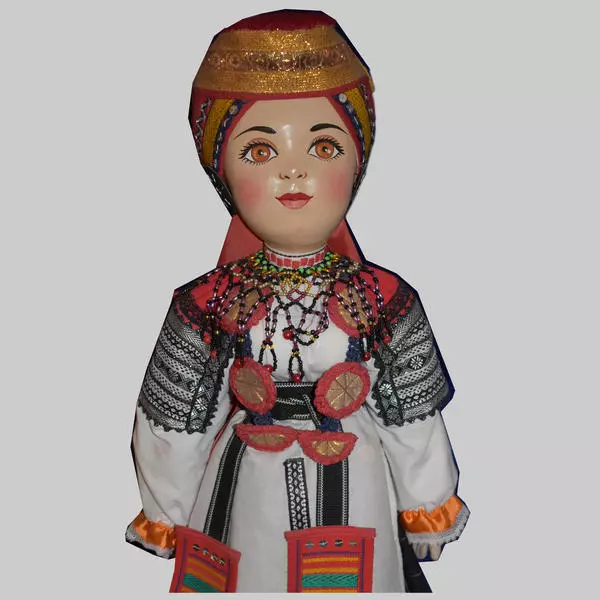
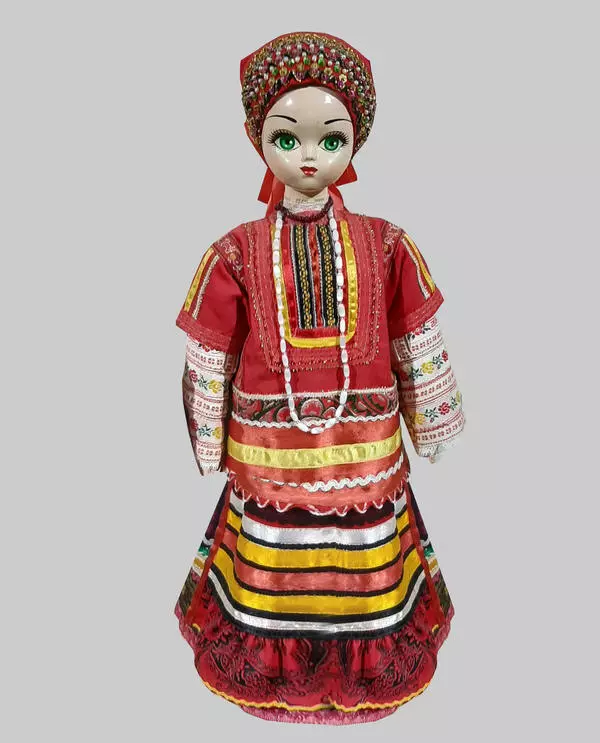
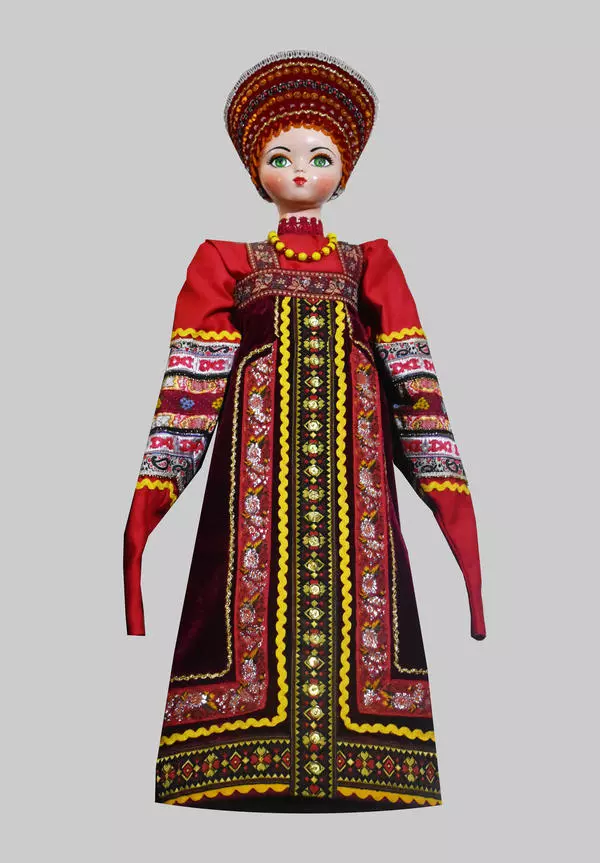
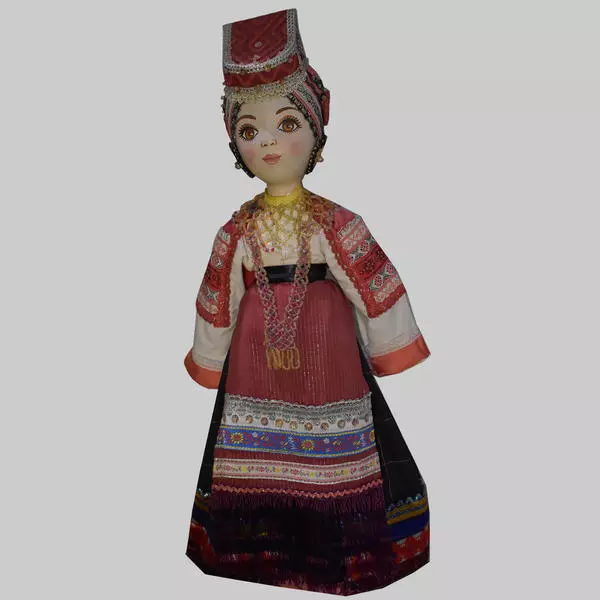
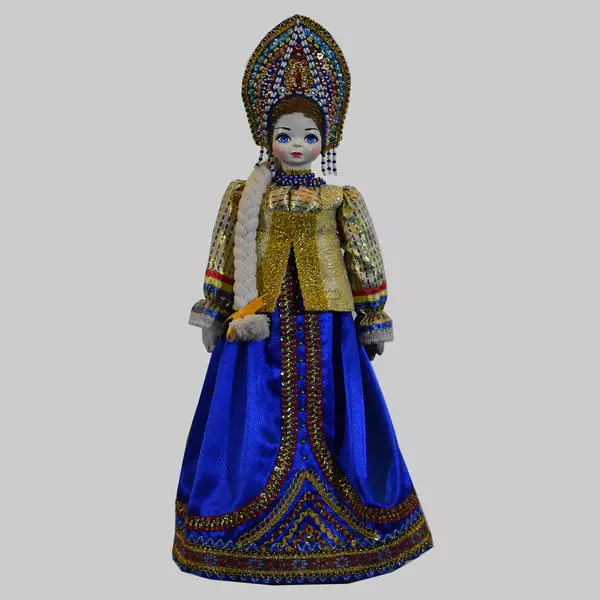
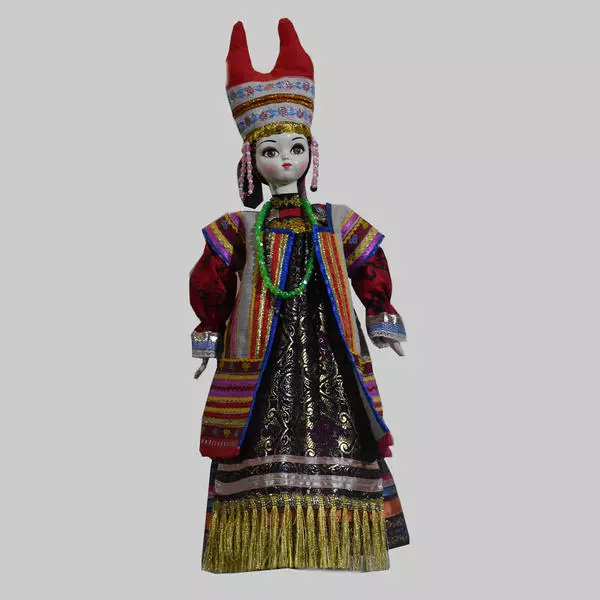
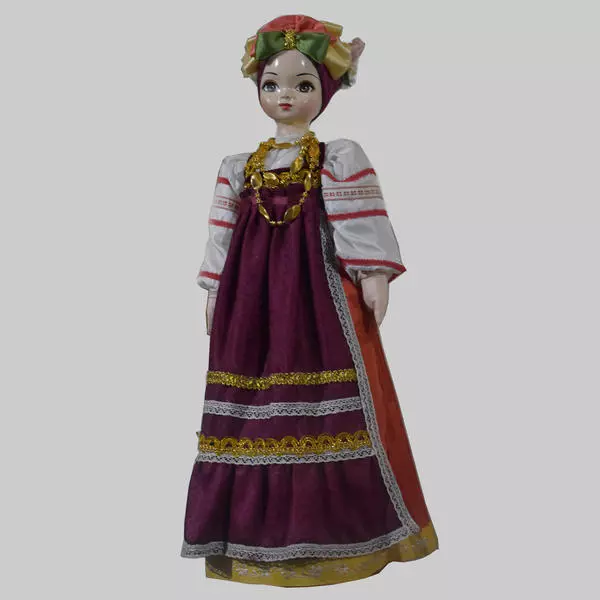
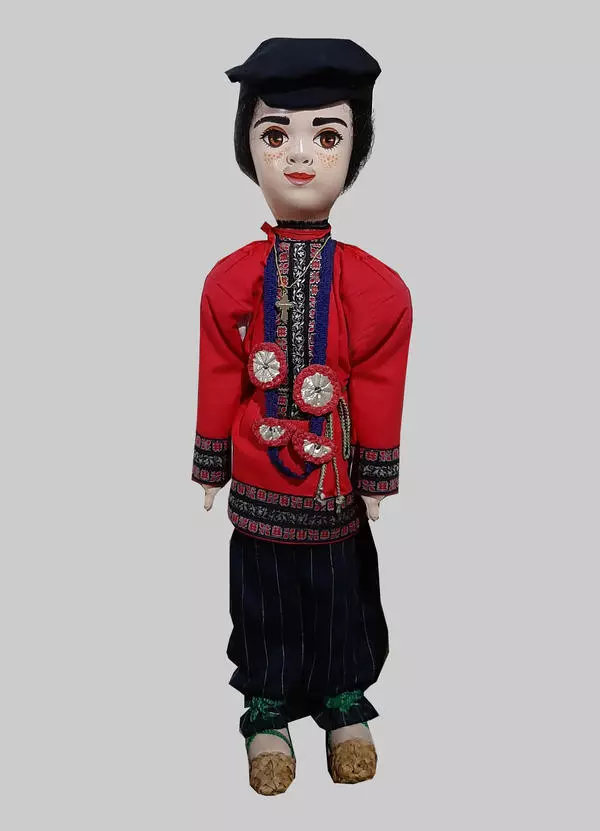
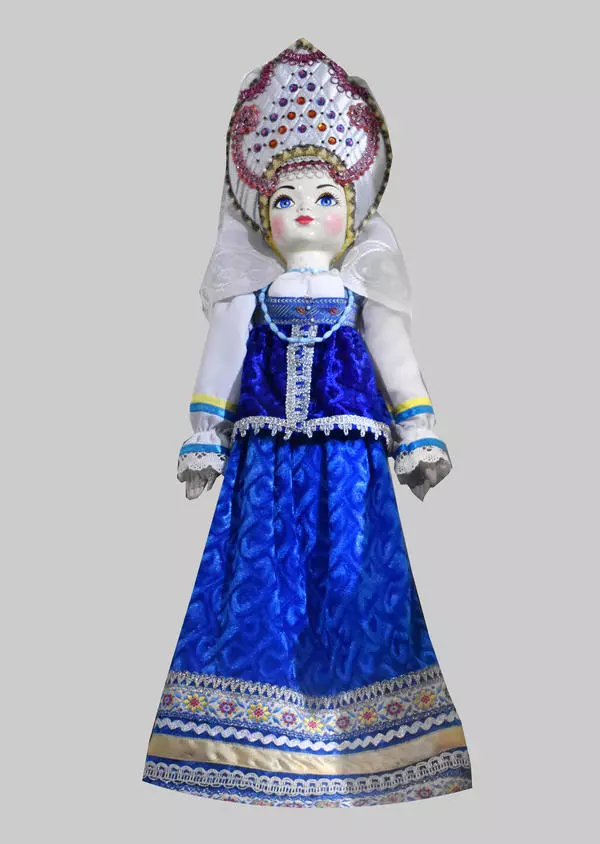
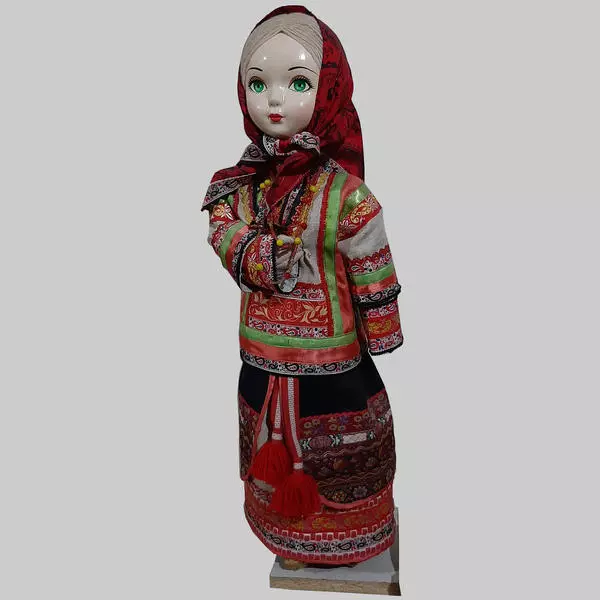
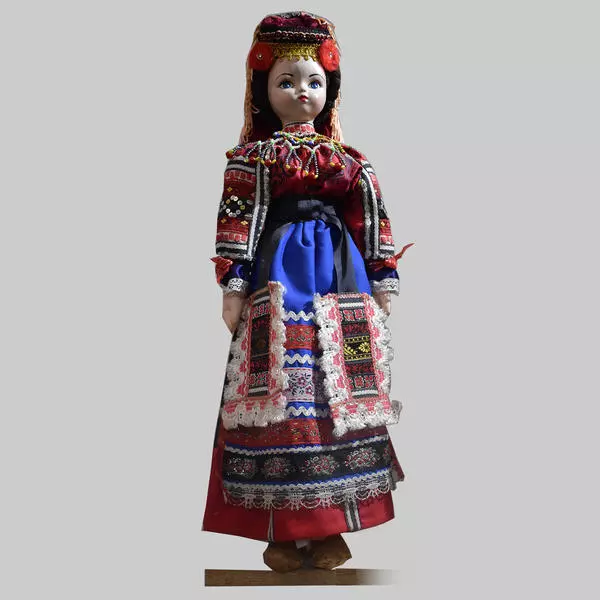
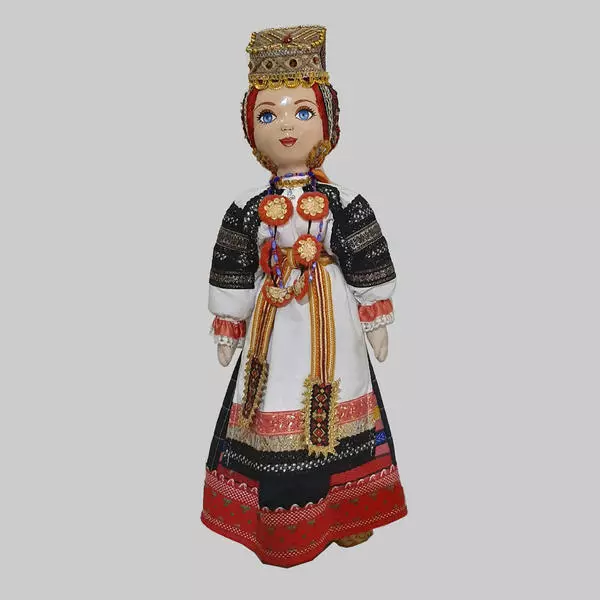
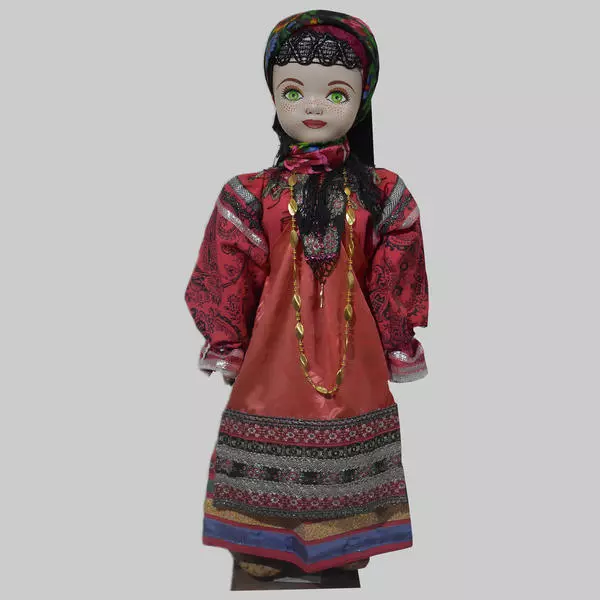
The doll in traditional costume of the Buturlino District Gvazda Village as if takes us back to the late 19th – early 20th centuries, to the time when, by the woman’s clothes, one could say a lot about her social status, age, mood, and the territory where she lived.
As the common folk say, Gvazda Village derived its name from the word gvozd (“nail”). They made nails for vessels here; in the nearby village of Puzevo, hulls were made, and in Klepovka, hulls were plated. Peter the First visited these parts, and even, in his own person, gave the name to the nearby Shipov Forest (from the word “ship, vessel”). But there is an opinion that Gvazda got its name much earlier and it has nothing to do with nails. In Dal’s dictionary, this word means ‘mud, swampland’.
The Buturlino District traditional costume combines elements of South Russian and Ryazan garments. Women wore a shirt and poneva – homespun woolen skirt from medley representing a piece of cloth tied at the waist. On top of the poneva, an apron was worn. Women decorated themselves with a few layers of beads and earrings, putting on the head a kichka, soroka, or shawl, and, on holidays, quite often, a richly embroidered kokoshnik which could be passed from one generation over to another. In the winter, a fur coat or a shawl was added to this set.
Unlike many other regions where women’s shirts were usually white, in Buturlino District, people were keen on the red color. Very often, shirts were made from the red cloth, this color was associated with beauty. Another color mandatorily present in each traditional costume was black – the color of the earth and fertility.
In all cases, garments were decorated, the shirt sleeves and poneva were ornamented with embroidery, with absolutely different meanings encoded in different embroidered symbols. Thus, a rhomb is an ancient symbol of the sun, a sign of strength and power. A cross in a circle is another symbol of the sun which can protect from evil. A wavy line is a symbol of water, a grid – a symbol of fire.
The doll in the traditional costume is created by Valentina Y. Gorbacheva specifically for the Boguchar District Museum of Local History. The collection of authentic traditional costumes of the Voronezh Province formed the basis for the doll creation. Boguchar dolls were exhibited in the Central Exhibition Hall of Applied Arts, in the Olympic Sports Complex in Moscow, are kept in museums and private collections of different countries.
As the common folk say, Gvazda Village derived its name from the word gvozd (“nail”). They made nails for vessels here; in the nearby village of Puzevo, hulls were made, and in Klepovka, hulls were plated. Peter the First visited these parts, and even, in his own person, gave the name to the nearby Shipov Forest (from the word “ship, vessel”). But there is an opinion that Gvazda got its name much earlier and it has nothing to do with nails. In Dal’s dictionary, this word means ‘mud, swampland’.
The Buturlino District traditional costume combines elements of South Russian and Ryazan garments. Women wore a shirt and poneva – homespun woolen skirt from medley representing a piece of cloth tied at the waist. On top of the poneva, an apron was worn. Women decorated themselves with a few layers of beads and earrings, putting on the head a kichka, soroka, or shawl, and, on holidays, quite often, a richly embroidered kokoshnik which could be passed from one generation over to another. In the winter, a fur coat or a shawl was added to this set.
Unlike many other regions where women’s shirts were usually white, in Buturlino District, people were keen on the red color. Very often, shirts were made from the red cloth, this color was associated with beauty. Another color mandatorily present in each traditional costume was black – the color of the earth and fertility.
In all cases, garments were decorated, the shirt sleeves and poneva were ornamented with embroidery, with absolutely different meanings encoded in different embroidered symbols. Thus, a rhomb is an ancient symbol of the sun, a sign of strength and power. A cross in a circle is another symbol of the sun which can protect from evil. A wavy line is a symbol of water, a grid – a symbol of fire.
The doll in the traditional costume is created by Valentina Y. Gorbacheva specifically for the Boguchar District Museum of Local History. The collection of authentic traditional costumes of the Voronezh Province formed the basis for the doll creation. Boguchar dolls were exhibited in the Central Exhibition Hall of Applied Arts, in the Olympic Sports Complex in Moscow, are kept in museums and private collections of different countries.