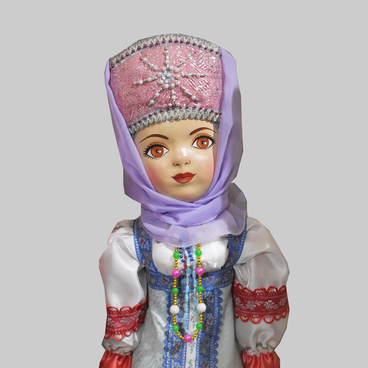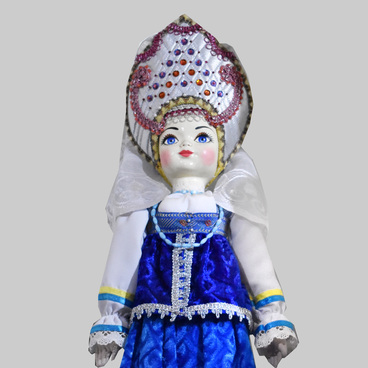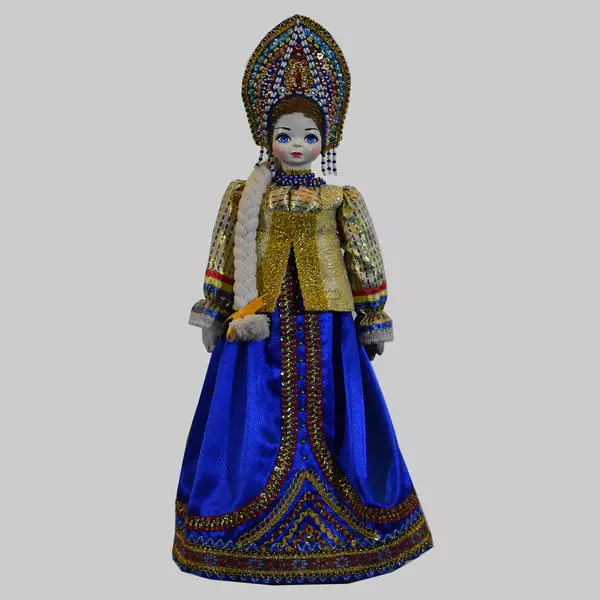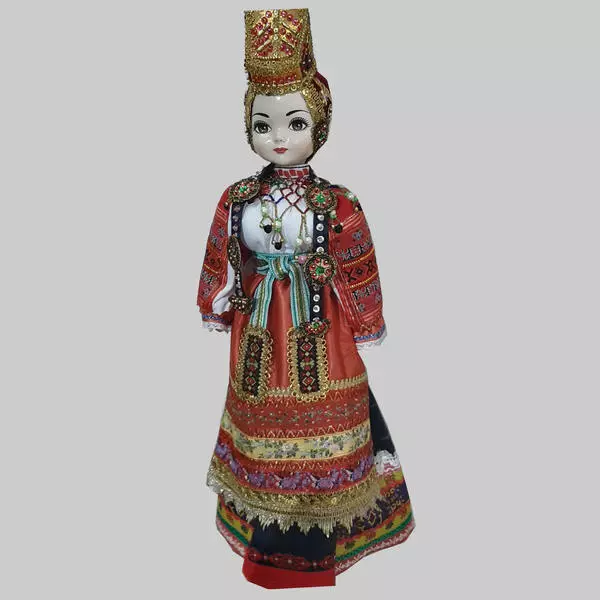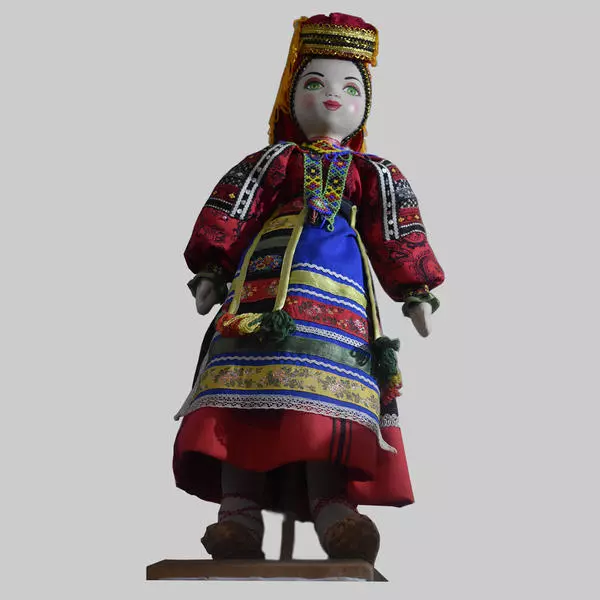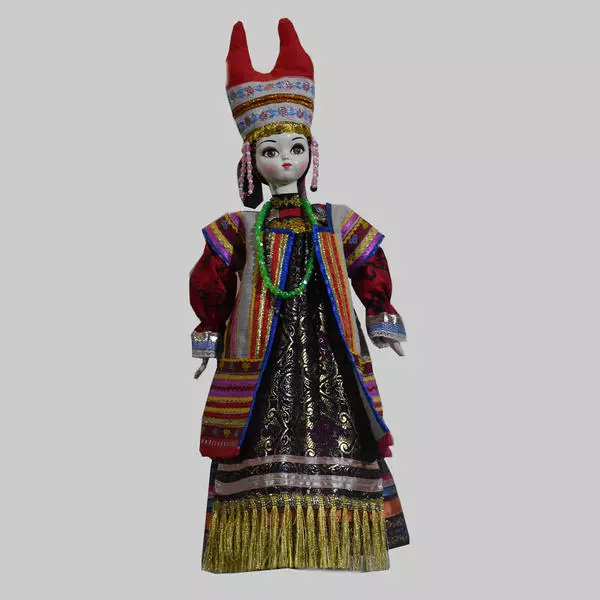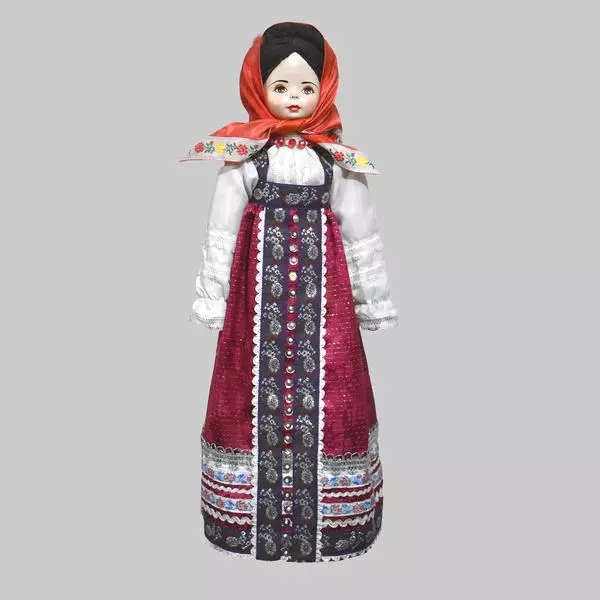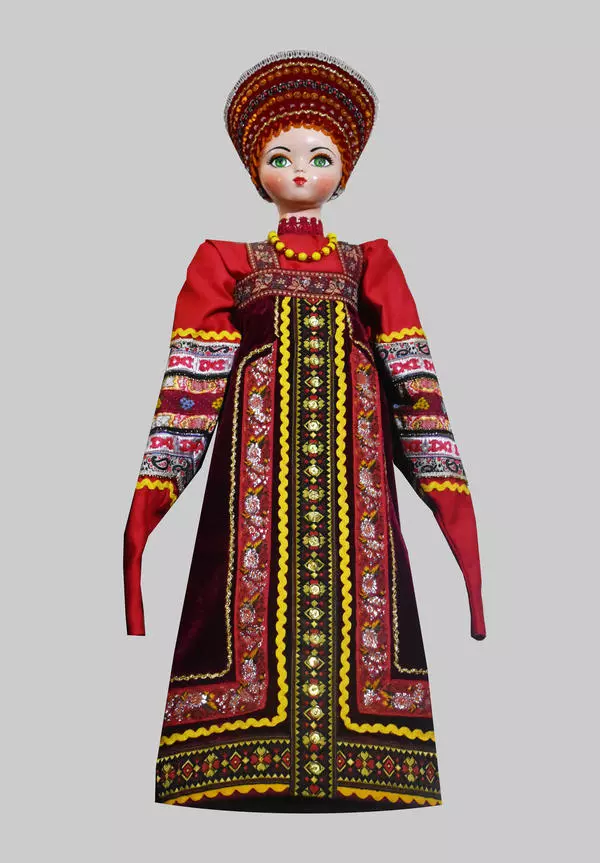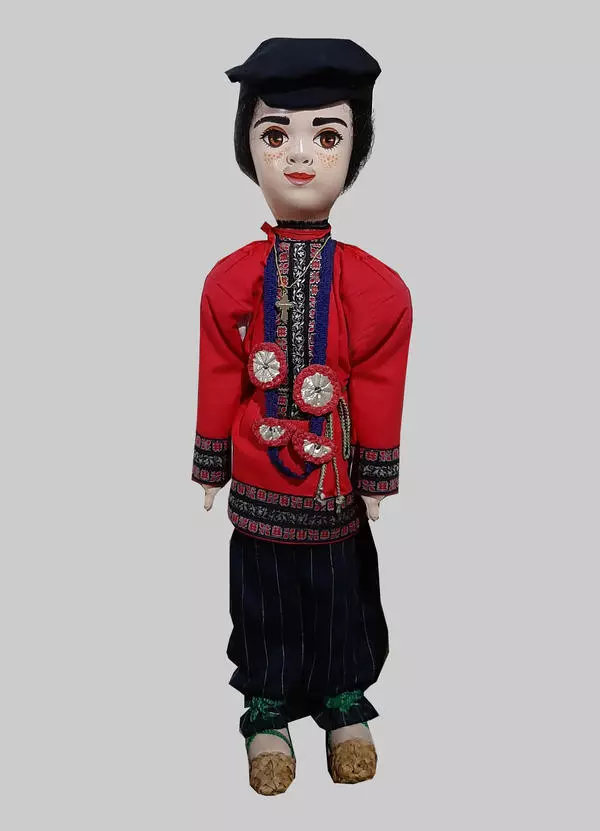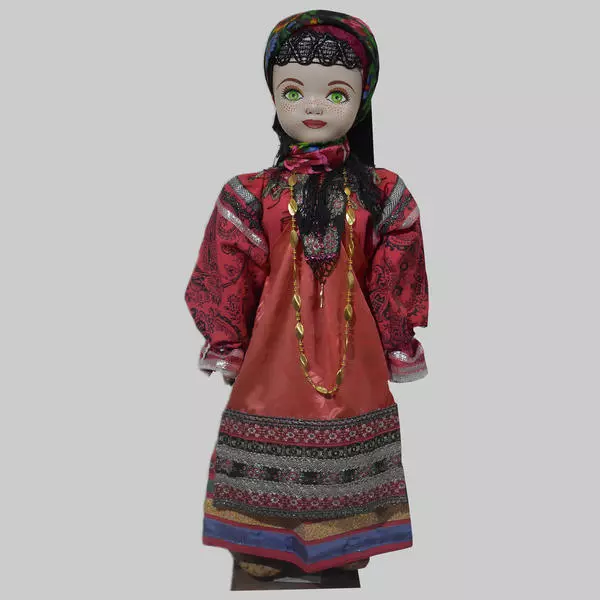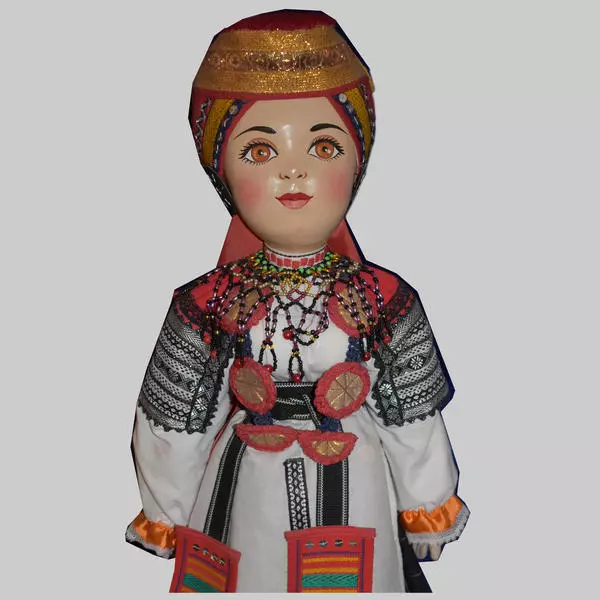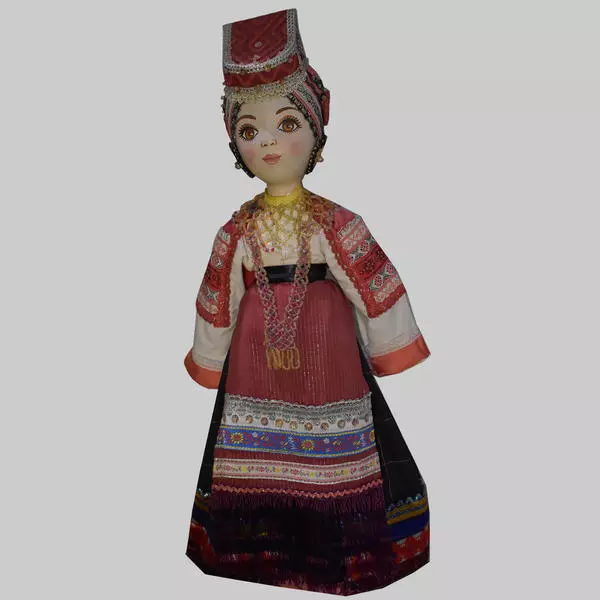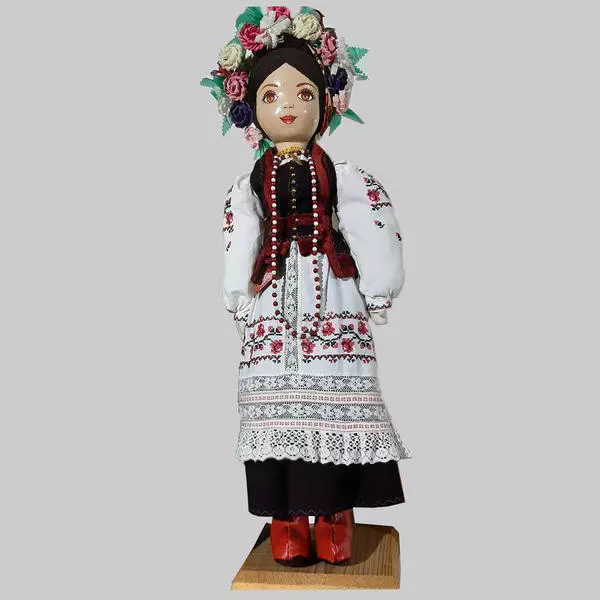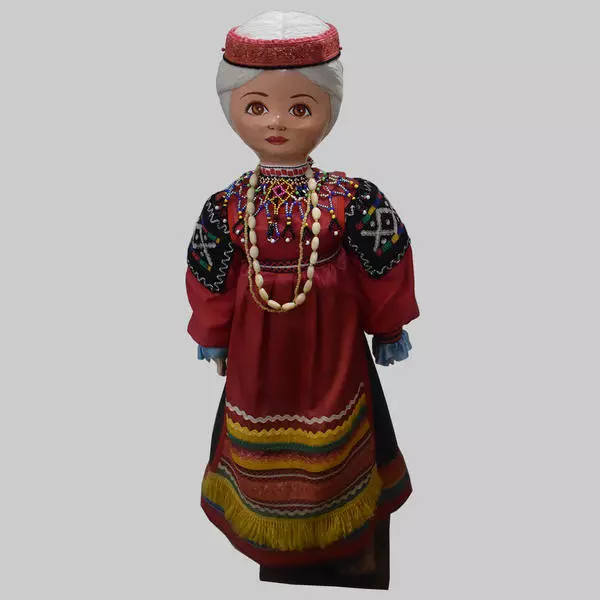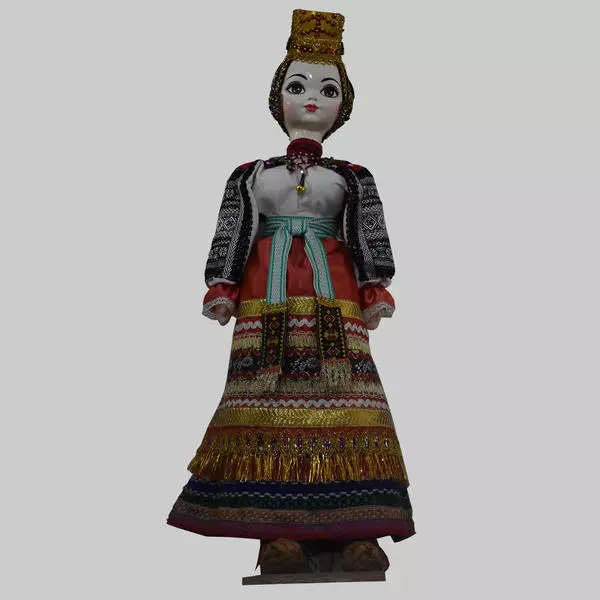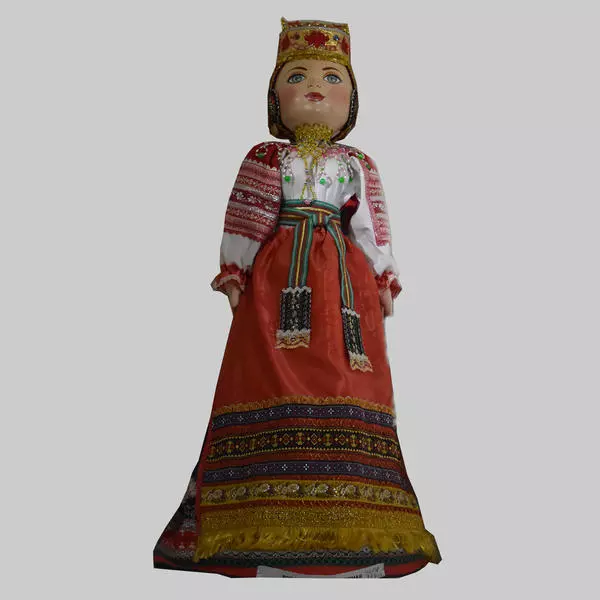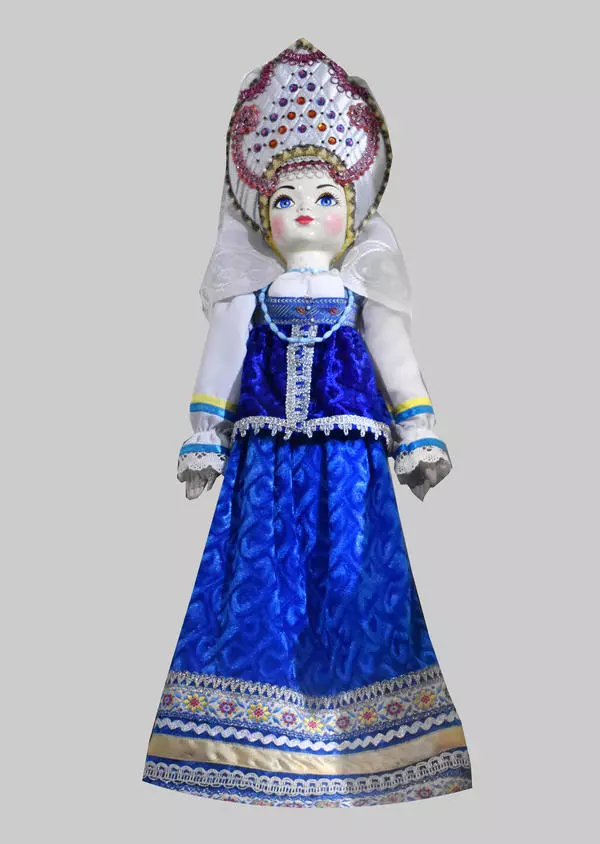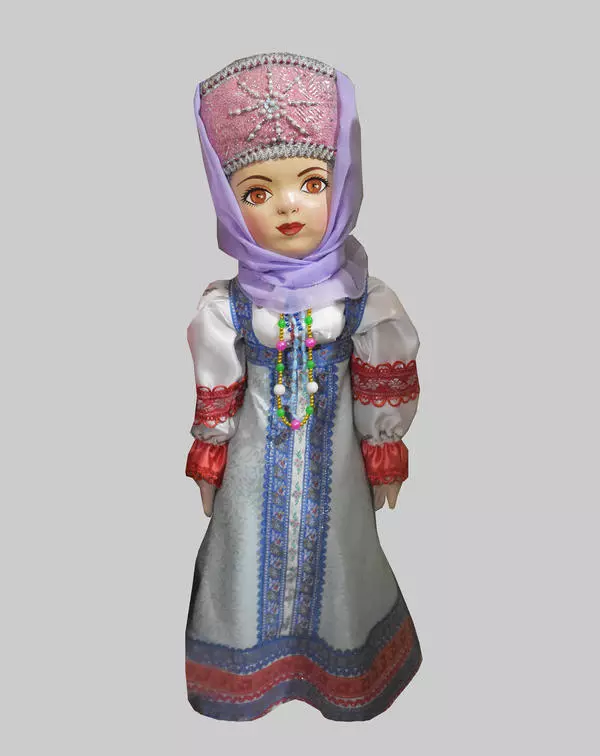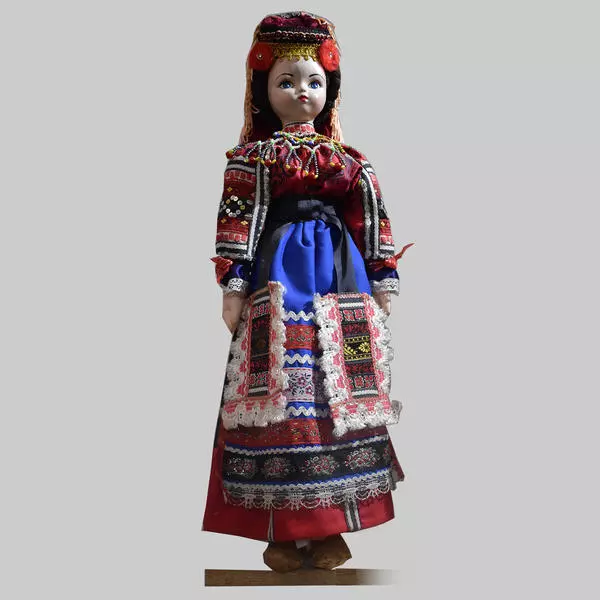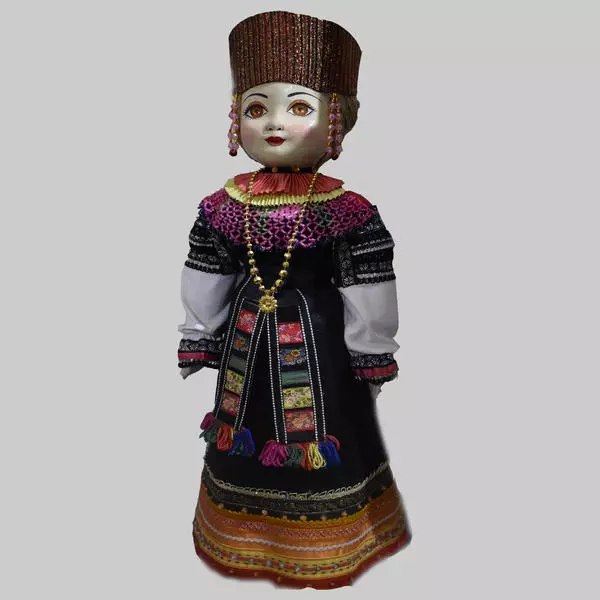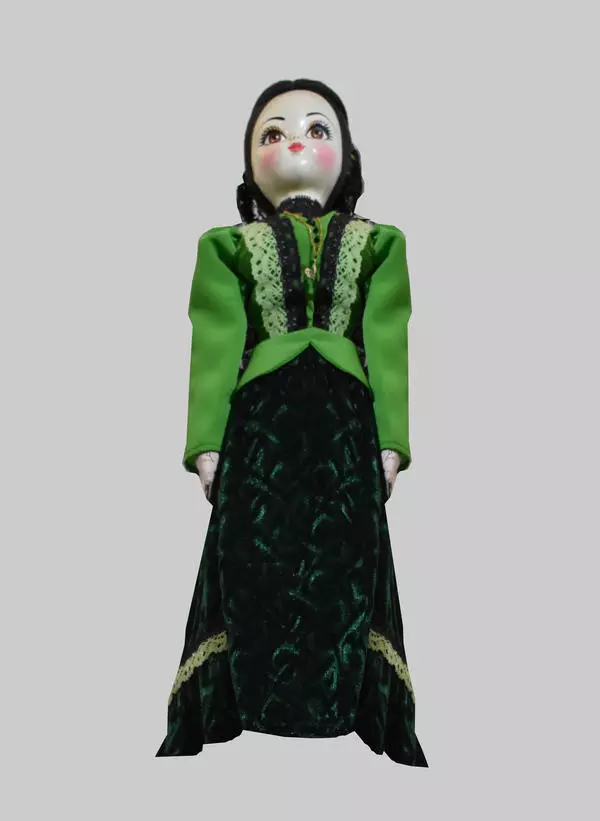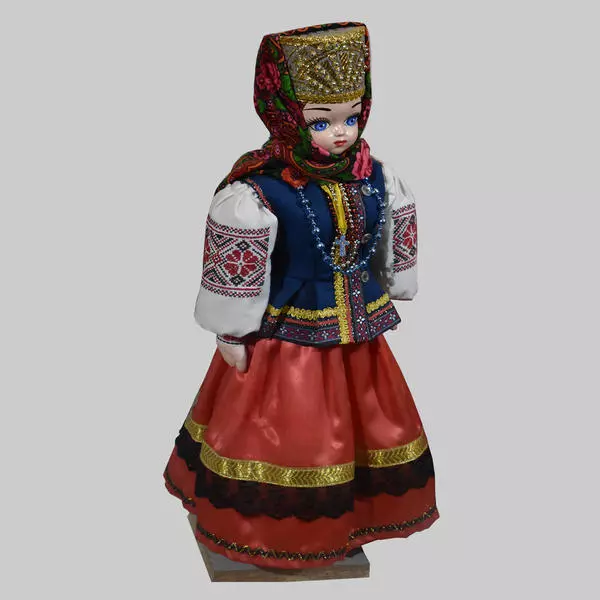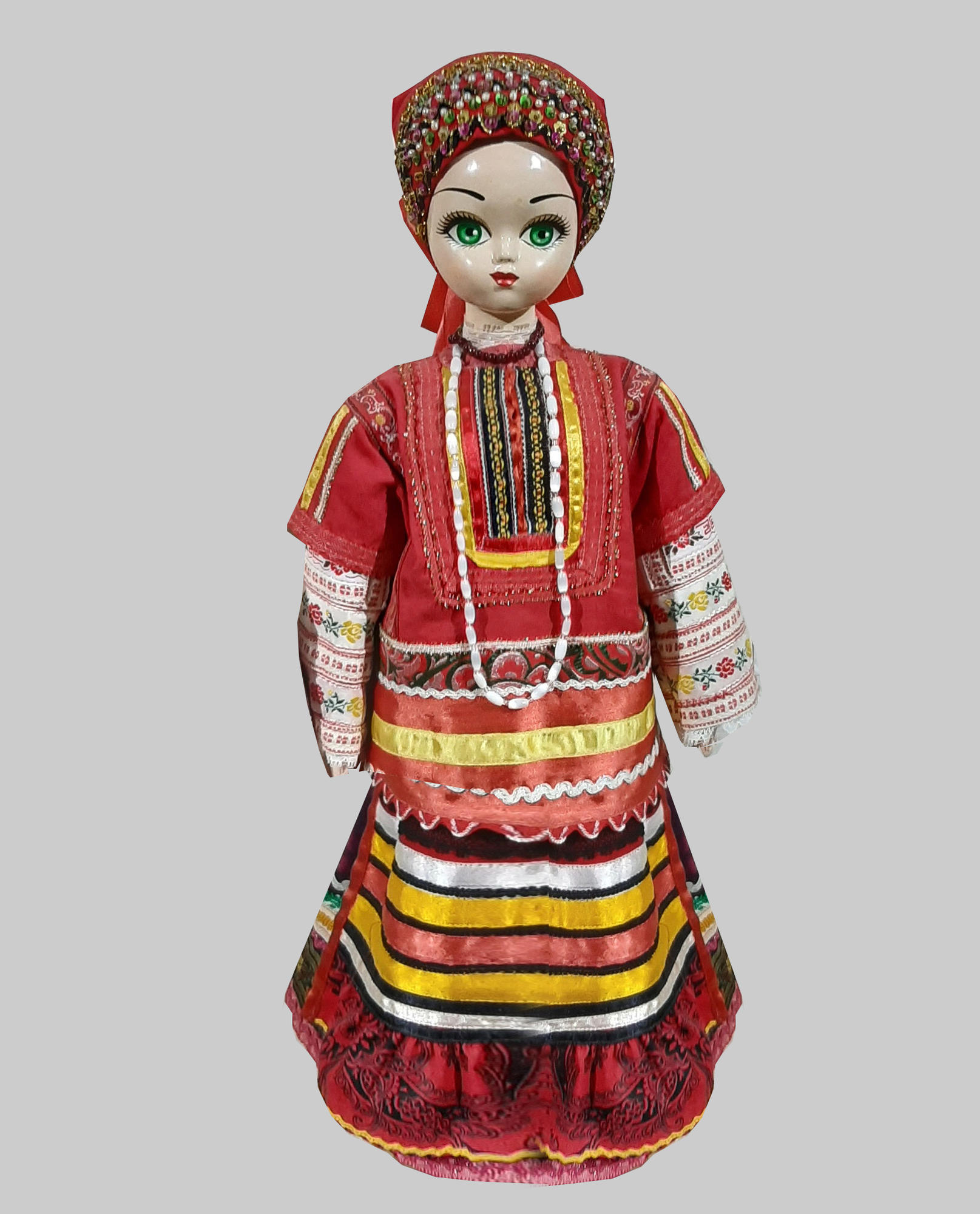


The Ryazan Province nature specifics are almost impenetrable forests. The consequent separation from the rest of the country’s territories gave an impetus to the formation of an original traditional costume, quite different from clothes worn in other regions.
The variety of Ryazan peasants’ garments is striking. Even today, there are places here, for example, some villages of the Skopin District, where people keep with care and, on holidays, wear traditional costumes. Traditional Ryazan garments combine shades of red and black. White color is much rarer, and small accents of green, blue and yellow vivify rather strict women’s garments.
This province traditional costume has some characteristic features. Usually, they are multilayered, many elements are put one on top of the other, creating a noticeable volume. The sets are very beautiful and even solemn, thanks to various patterns and specifics of the color palette.
The cut of Ryazan shirts is quite varied: with straight or beveled poliks (shoulder inserts), triangle or square gores. The collar is often gathered, though, in earlier models, a usual straight version can be found. There were so many shirt varieties in this region that just naming them presents a problem. The variations can be considered as landmarks in the history speaking of the migration of tribes that lived here in the ancient times, casting light upon events unknown to our contemporaries.
It was considered necessary to protect the legs where they were touched by the shirt hem. Women decorated the collar, the sleeves and the hem of the garment with embroidery which served as an amulet.
The variety of Ryazan peasants’ garments is striking. Even today, there are places here, for example, some villages of the Skopin District, where people keep with care and, on holidays, wear traditional costumes. Traditional Ryazan garments combine shades of red and black. White color is much rarer, and small accents of green, blue and yellow vivify rather strict women’s garments.
This province traditional costume has some characteristic features. Usually, they are multilayered, many elements are put one on top of the other, creating a noticeable volume. The sets are very beautiful and even solemn, thanks to various patterns and specifics of the color palette.
The apron is made with the “front” and the “sides” from three squares of cloth. The rims were decorated with a patterned stripe, colored ribbons, braid, gay white colored lace and red calico. A short sarafan (pinafore dress) made from four pieces of cloth, with a stripe of red calico inserted between them, was called navershnik. Red calico, in combinations with back and green braid, also decorates the article lower part and the neckline.
In ancient times, embroidered or woven ornament was imbued with a magic meaning. But, in the course of time, people forgot old beliefs, stopped attributing charming powers to the patterns, and only preserved their beauty. It was protected by women who carefully passed them over to the descendants, and it was only the names of the patterns that reminded of the ancient magic — “mouse paths”, “poleaxes”, “fur trees”, etc.