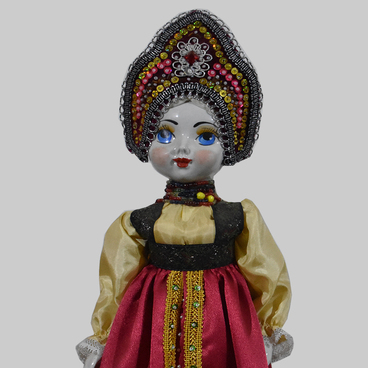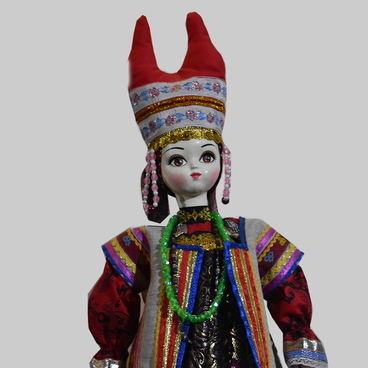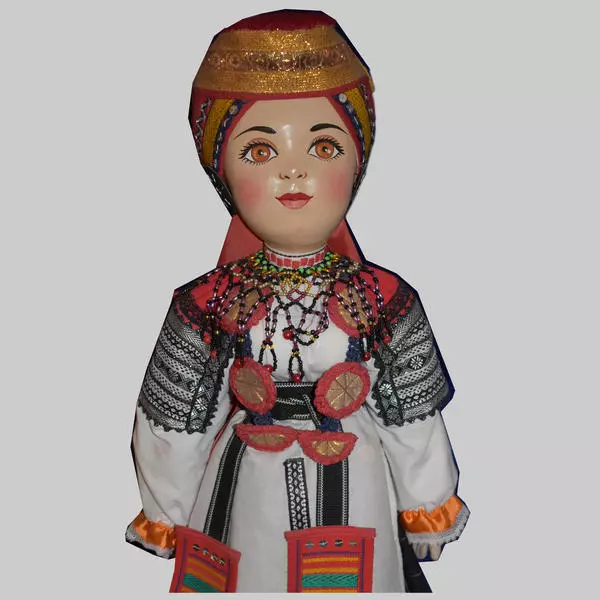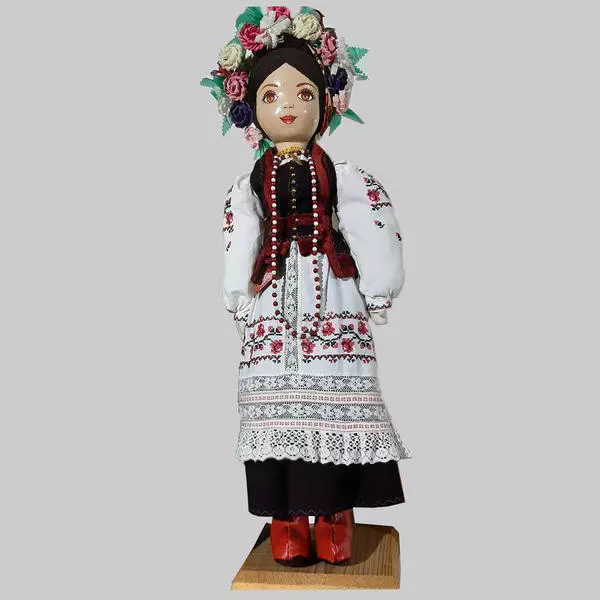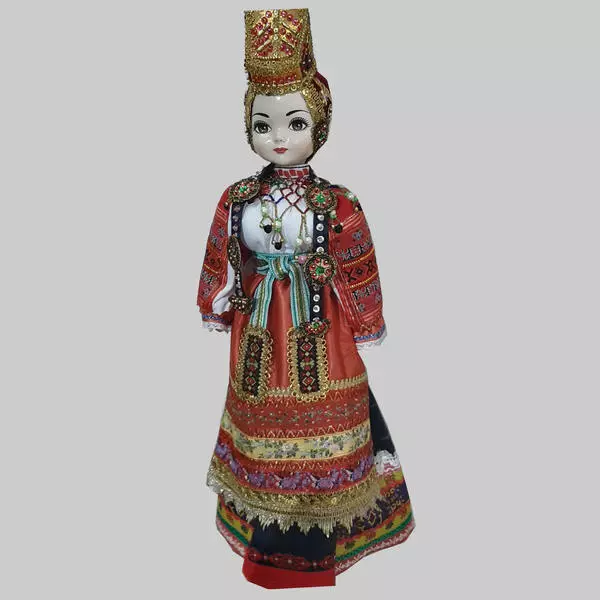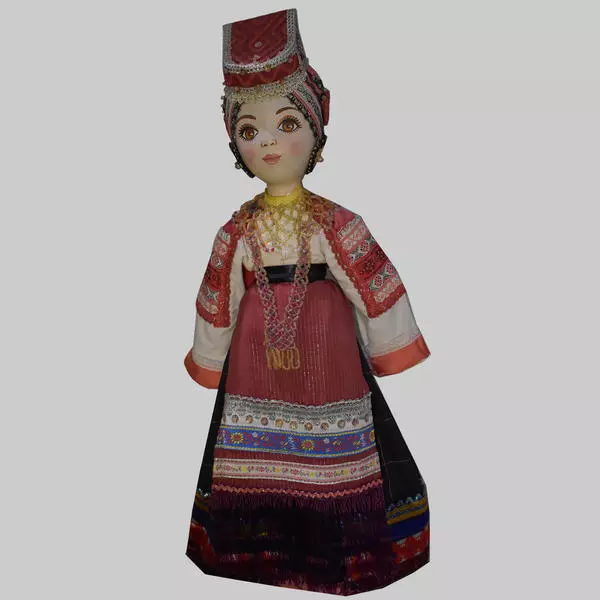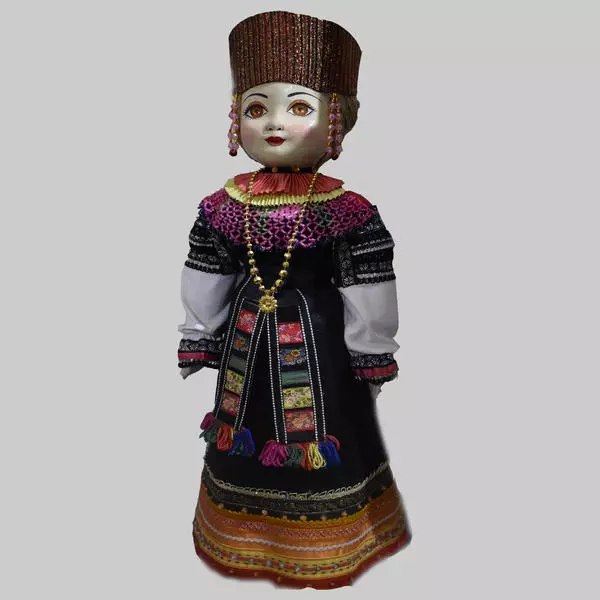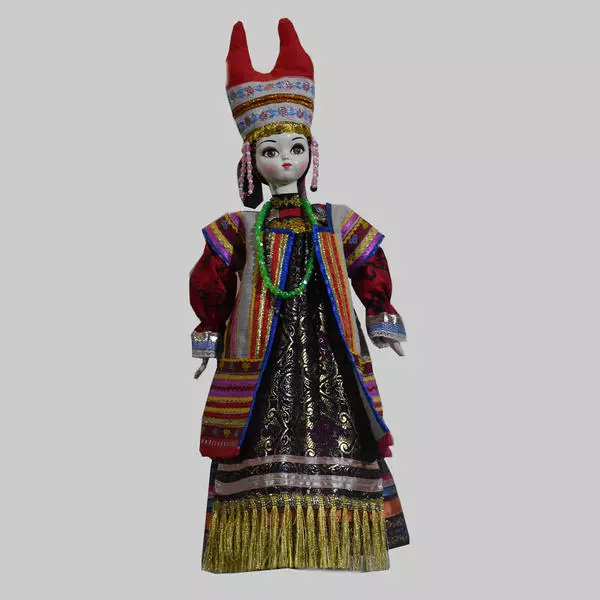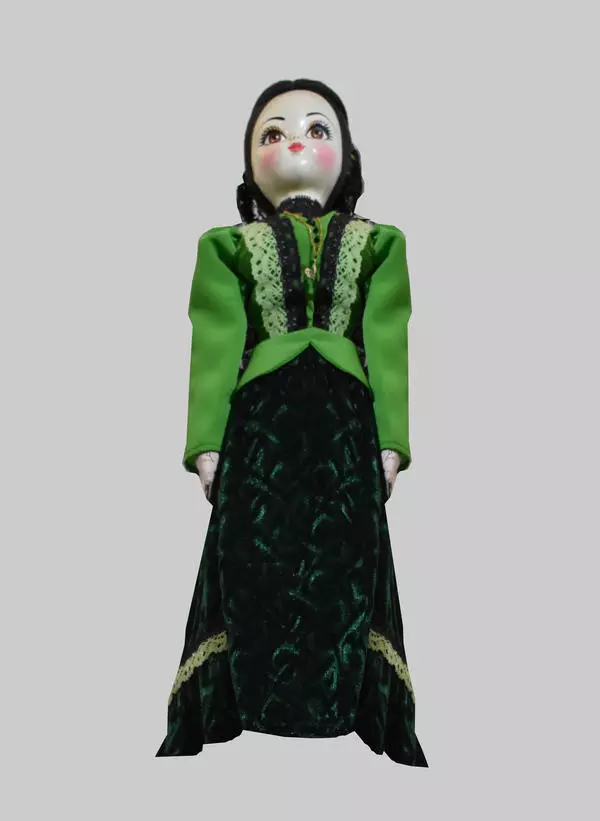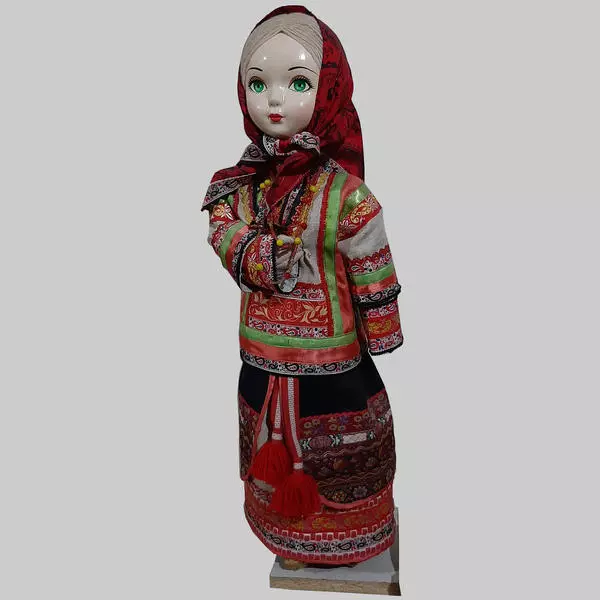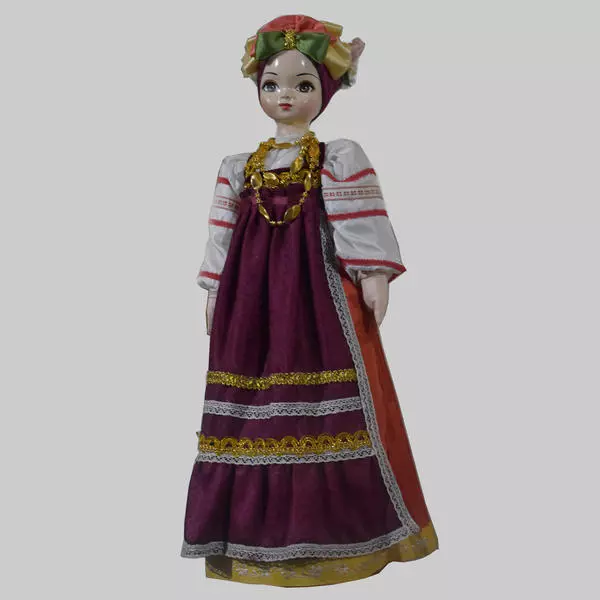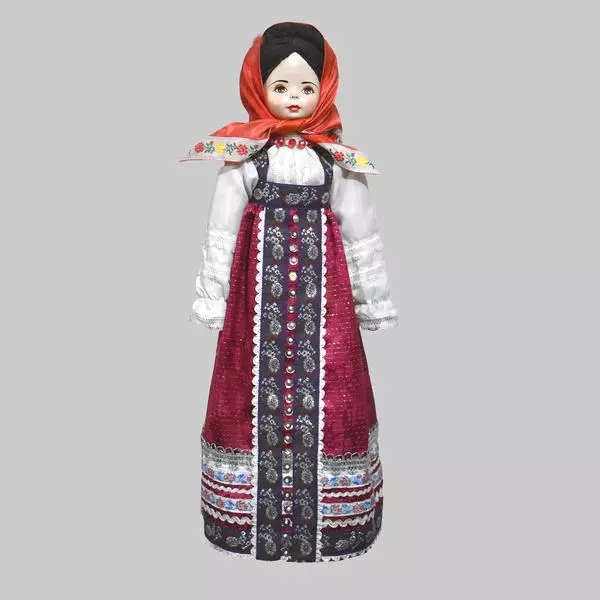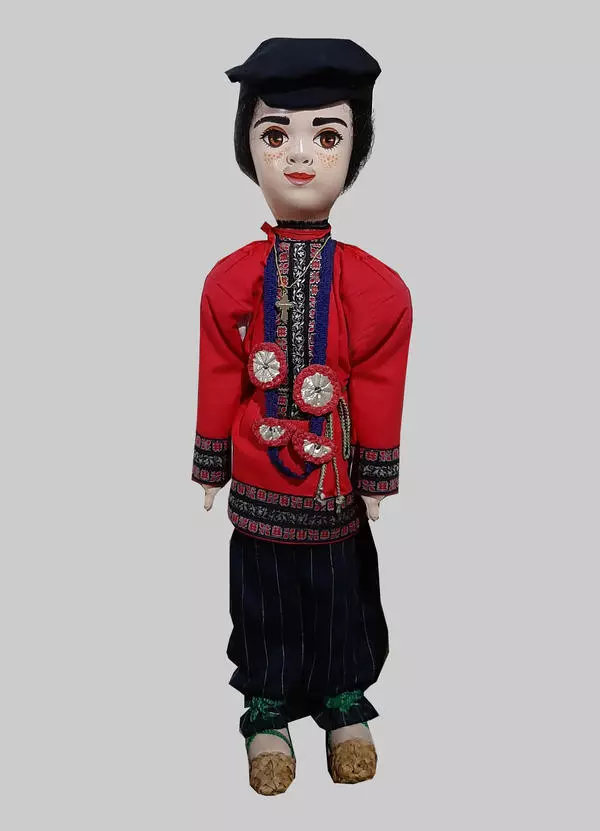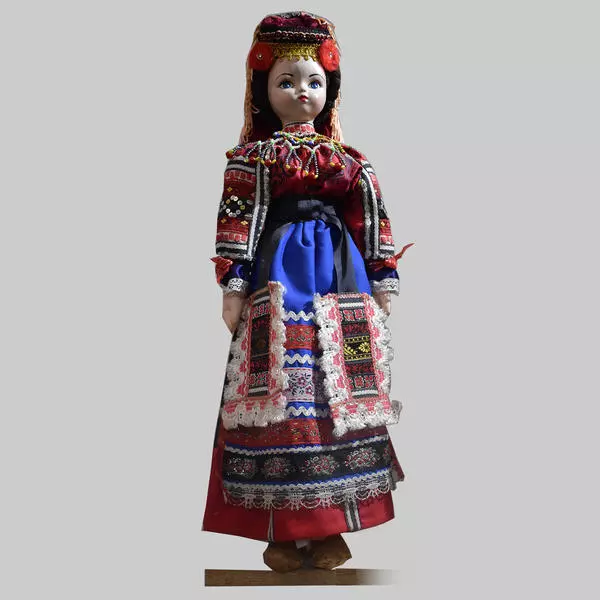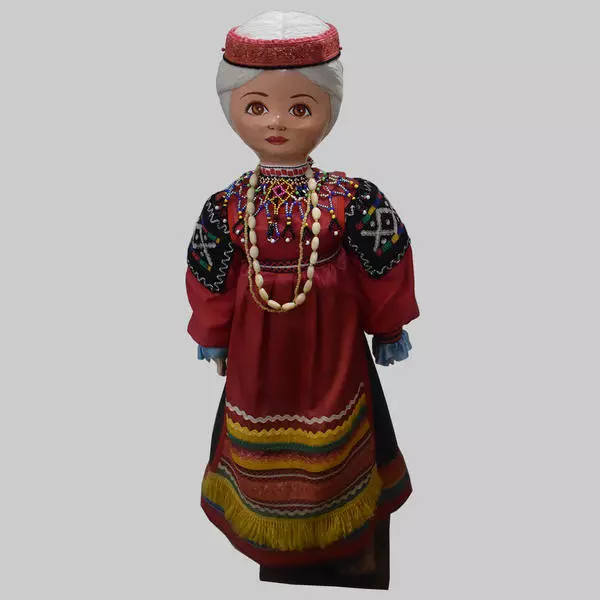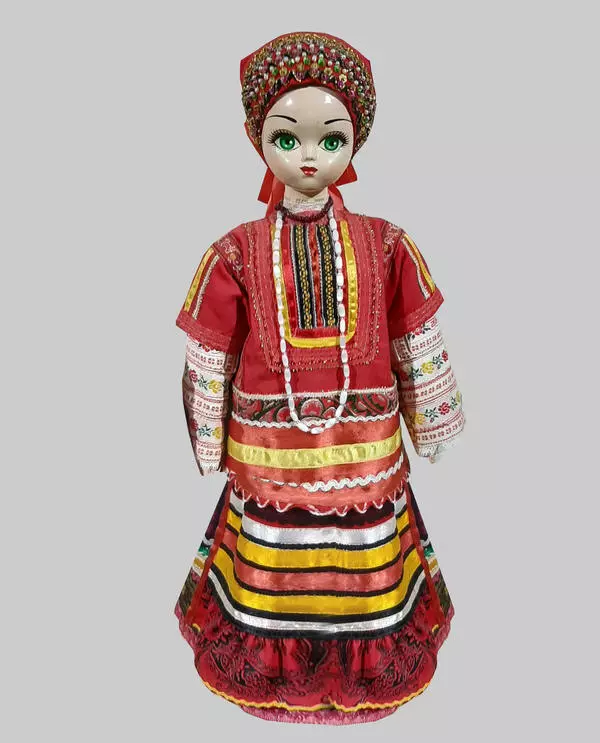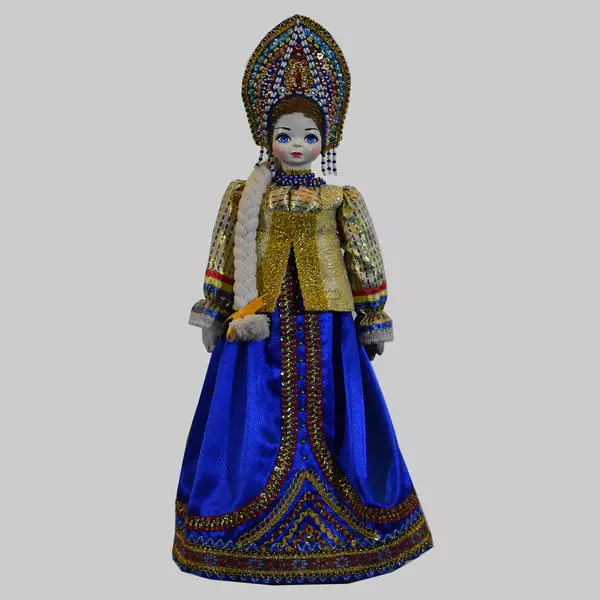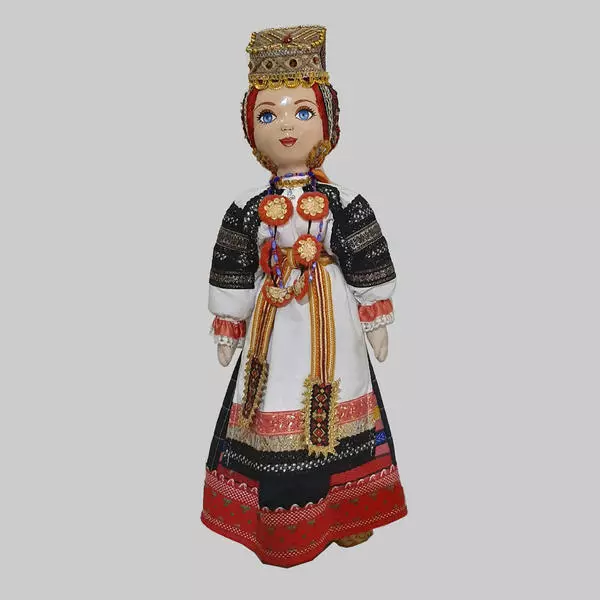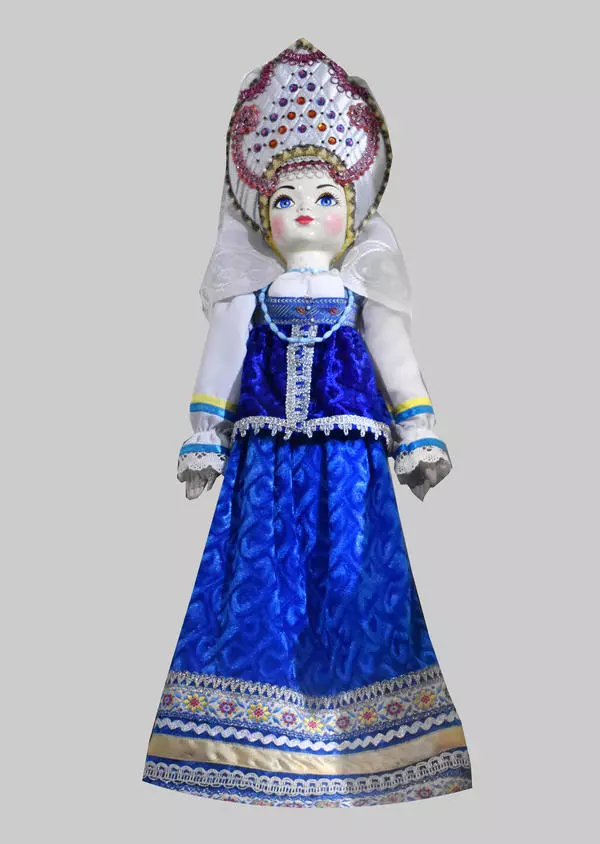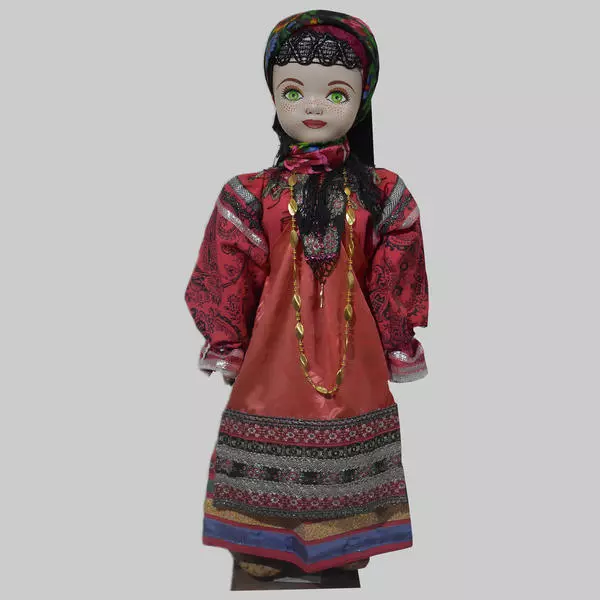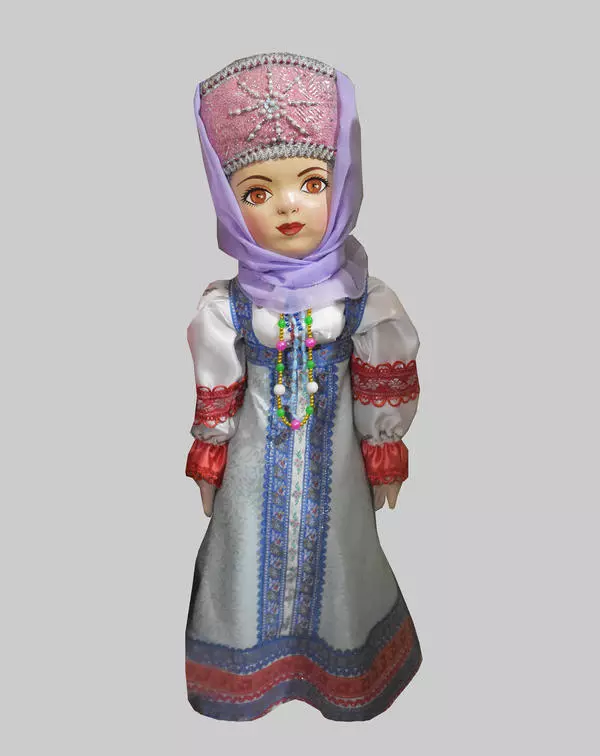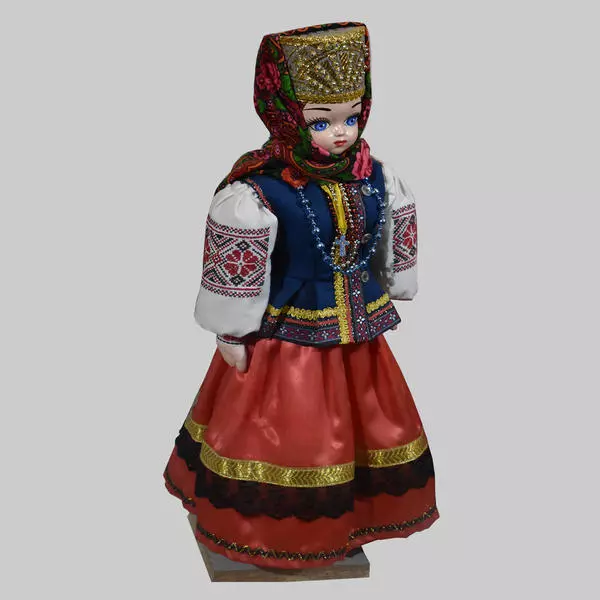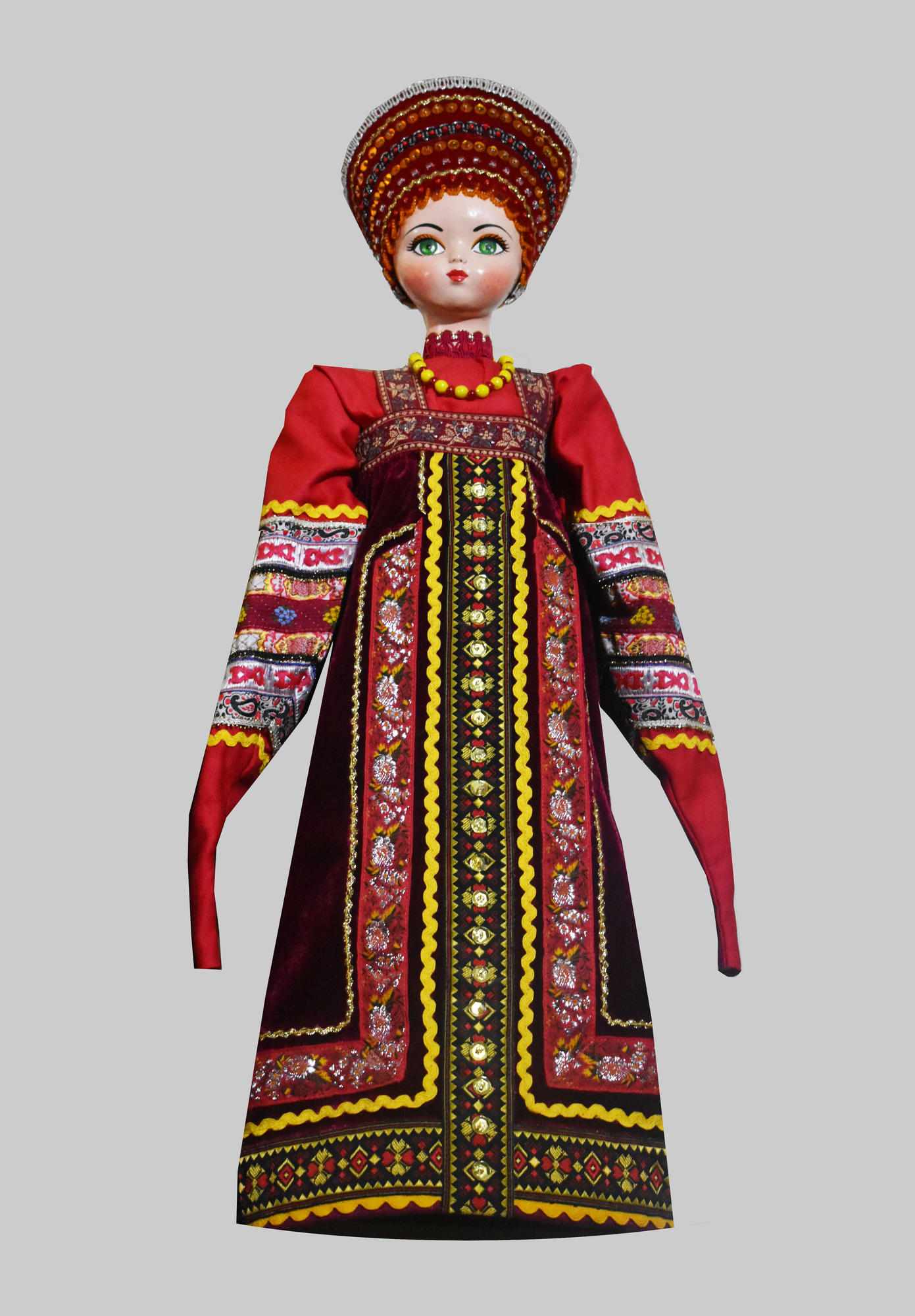


Since the dawn of time, a doll has been a favorite toy in Russia made of clay, fabrics, straw, wood, and even threads. Doll costumes reflected not only fashion trends of a certain epoch, but also traditions of different ethnic groups or regions. If you look at the doll made by artist Valentina Gorbacheva, you will see what girls and women in Smolensk Governorate wore in the 18th – 19th century.
The Smolensk region is located at the intersection of two territories having very different historical background and culture. These are Great Russians who occupied the northern and eastern territories and Belarusians located in the south-west. That is why the inhabitants of Smolensk Governorate assimilated traditions of the two peoples which also reflected in their clothing. Up to the first half of the 20th century, a classical festive women’s costume was made up of a red shirt with long sleeves that narrowed down. This style of the shirt was common for Great Russians, however, its color and fabrics were borrowed from their Belarusian neighbors. Another common garment was a red velvet sarafan with beads and lacing that also combined the traditions of the two peoples. Velvet, being a very expensive fabric for festive clothing, had long been used in northern regions. In southern territories, such sarafans were made of bleached linen while fancy lacing and beads are traditional Belarus ornaments.
A kokoshnik complementing women’s costume of Smolensk Governorate is a common headwear for Great Russians while lapti were universal shoes for the Slavs although they were different in weaving style and materials. As for a beaded necklace, this accessory was popular both in the north and in the south.
Another way of shirt sleeve decoration was embroidery that often served as a protective talisman. The fancy ornament featured trees and female figures as a symbol of fertility as well as straight and curvy lines symbolizing forces of nature. It was often decorated with geometric figures featuring flowers, sketches of people and animals.
The Smolensk region is located at the intersection of two territories having very different historical background and culture. These are Great Russians who occupied the northern and eastern territories and Belarusians located in the south-west. That is why the inhabitants of Smolensk Governorate assimilated traditions of the two peoples which also reflected in their clothing. Up to the first half of the 20th century, a classical festive women’s costume was made up of a red shirt with long sleeves that narrowed down. This style of the shirt was common for Great Russians, however, its color and fabrics were borrowed from their Belarusian neighbors. Another common garment was a red velvet sarafan with beads and lacing that also combined the traditions of the two peoples. Velvet, being a very expensive fabric for festive clothing, had long been used in northern regions. In southern territories, such sarafans were made of bleached linen while fancy lacing and beads are traditional Belarus ornaments.
A traditional costume of Smolensk Governorate has its own specific features, for example, the fit of the shirt that was often made of three or four pieces of fabric. Better fabrics was used for the sleeves and the top while rougher pieces could be used for the bottom. Moreover, this model also featured poliks, or special shoulder pads. The neck line was decorated with fine laces and fixed on a band so that it fit the neck tightly. The shirt had button fastening at the front or the back. The sleeves always featured ukrasy – lacing or beaded embroidery. Usually the sarafan was ornamented with the same ukrasy pattern.
Interestingly, a Smolensk sarafan was in a trapezoidal shape, that is, it had side gussets. The bottom of the skirt and the front part were always decorated. The bigger and the brighter the ornaments were, the more festive the sarafan.