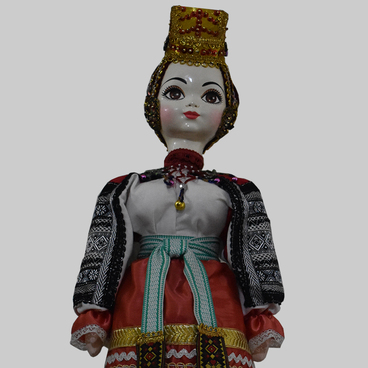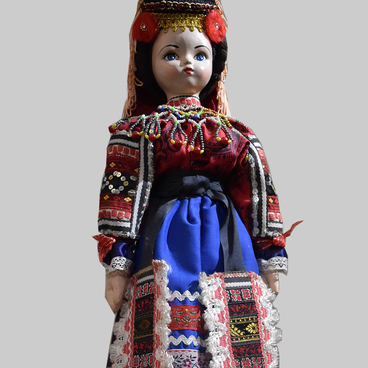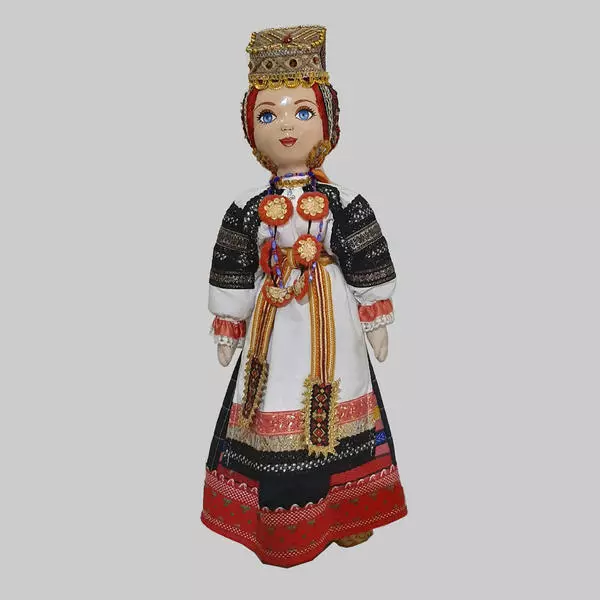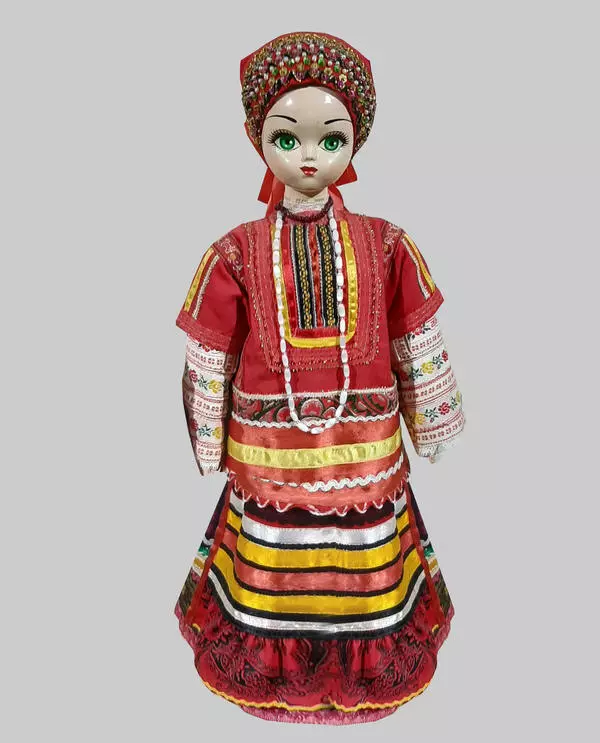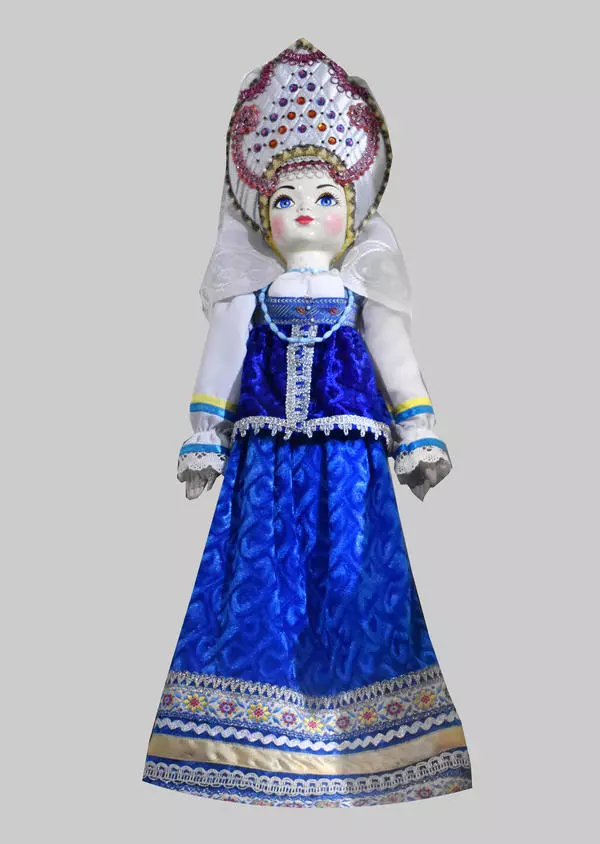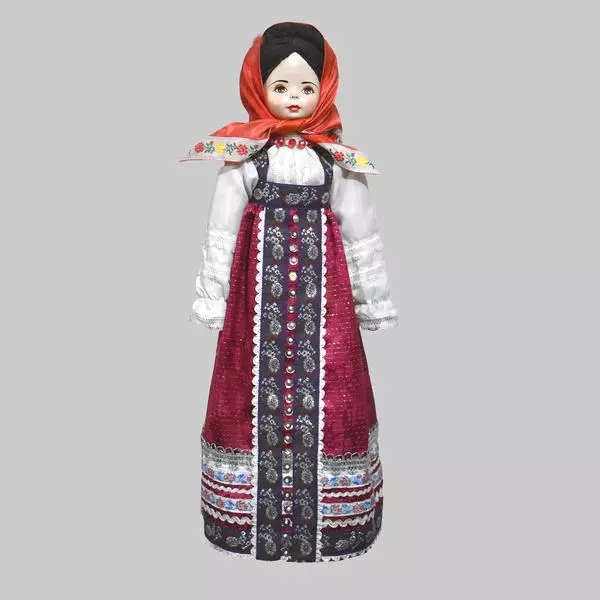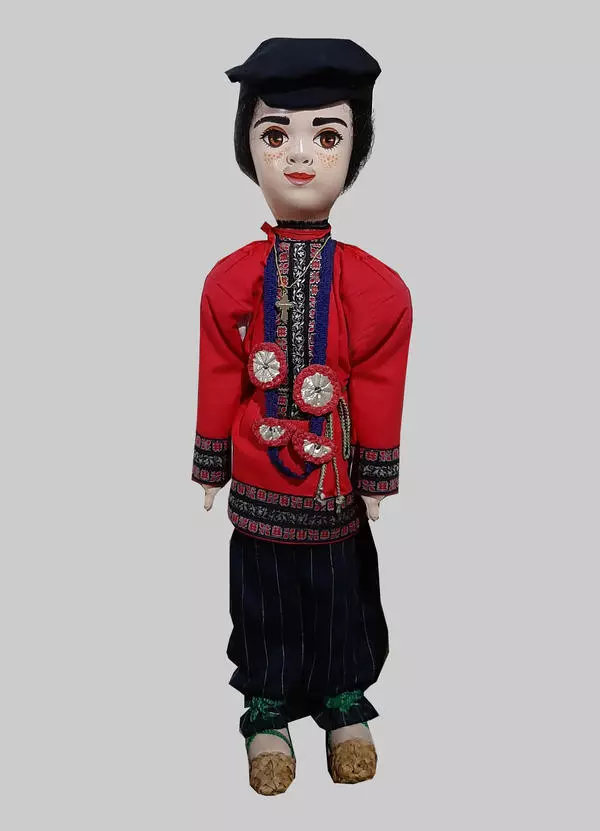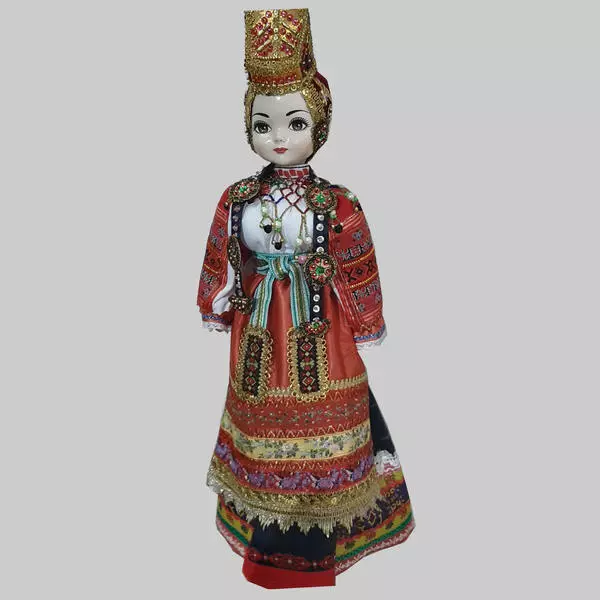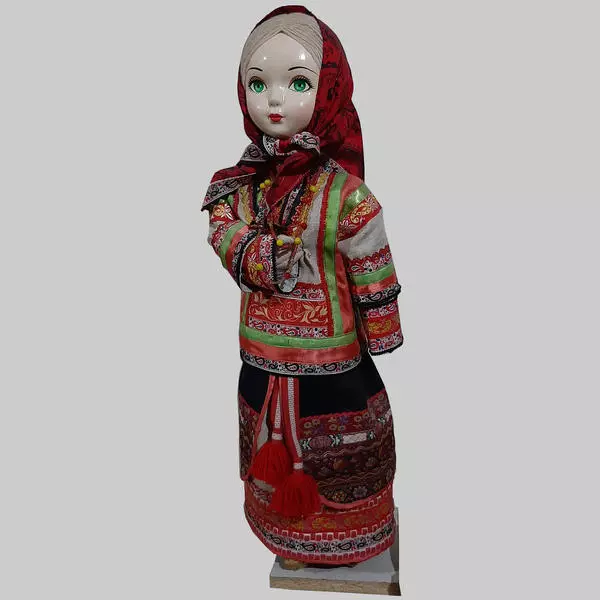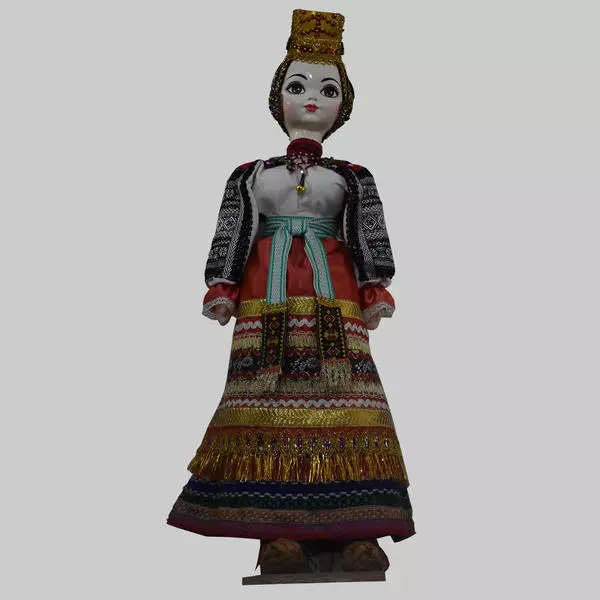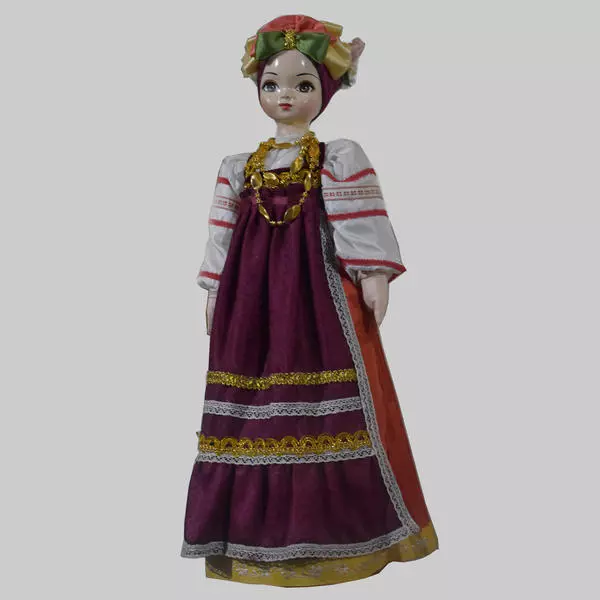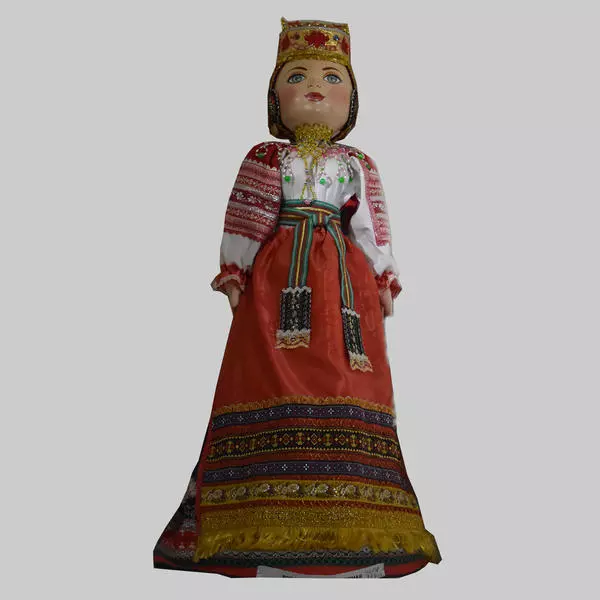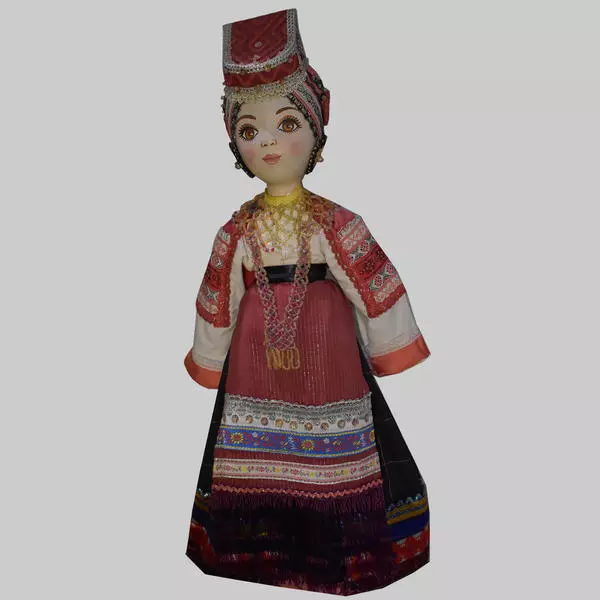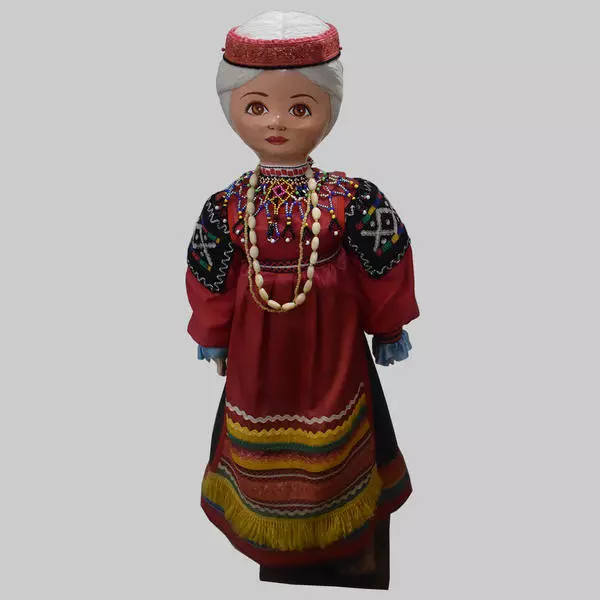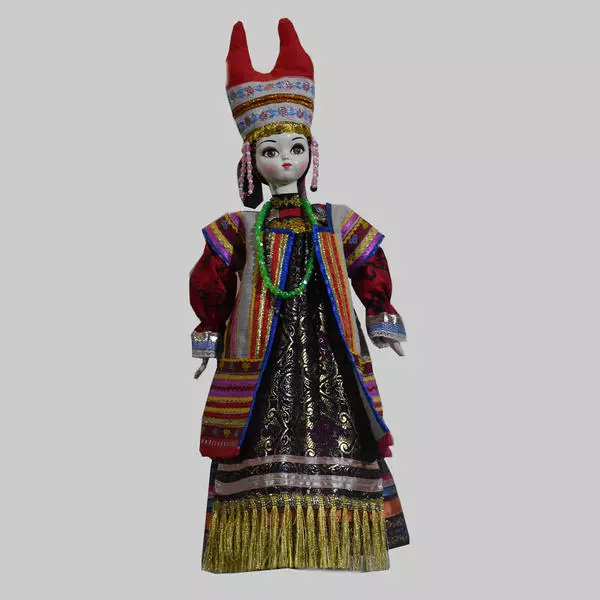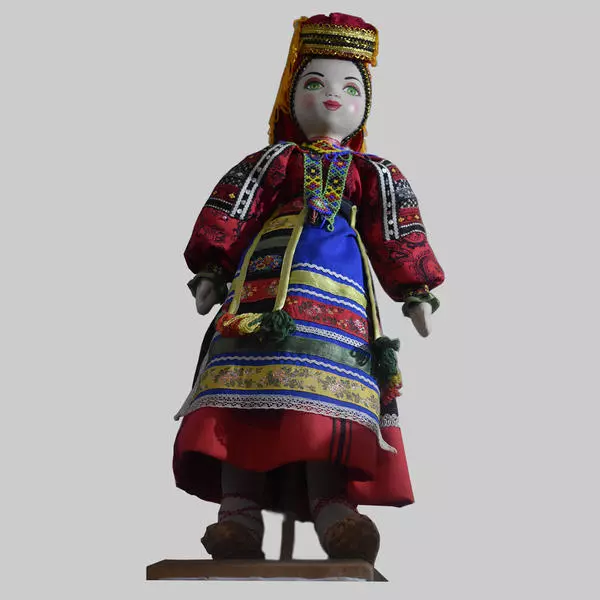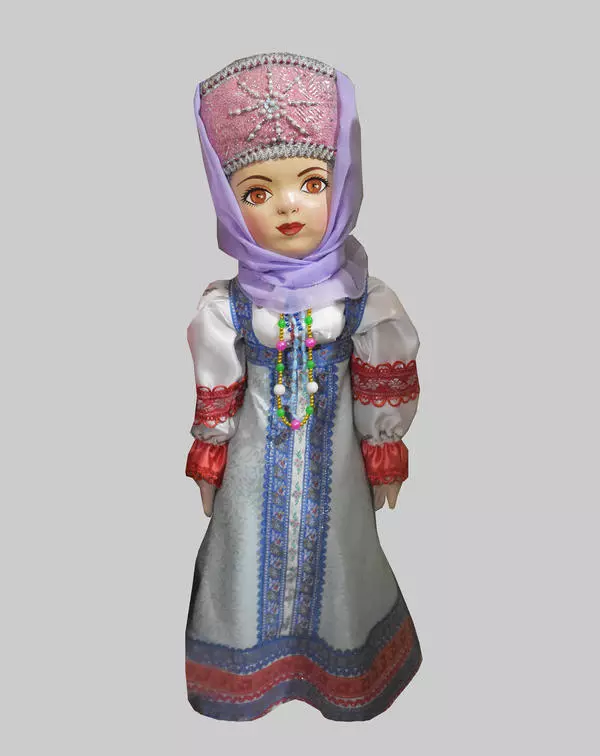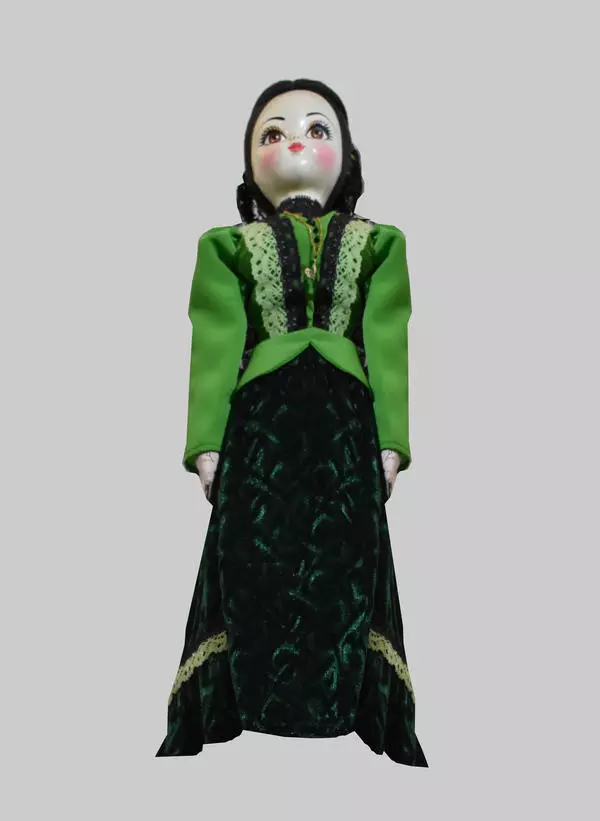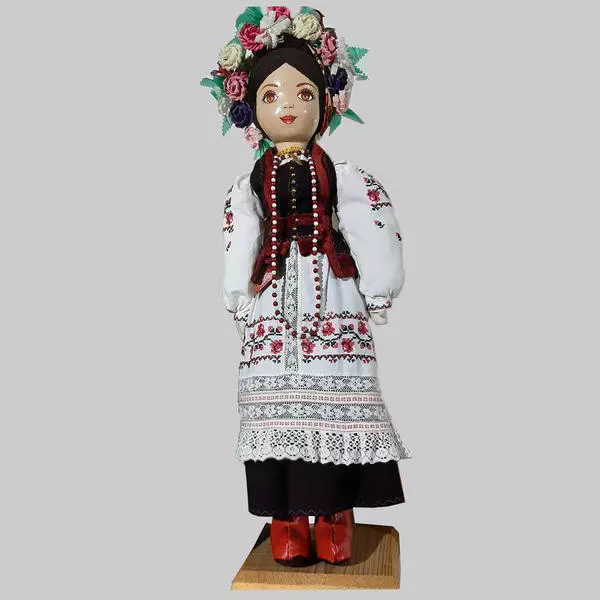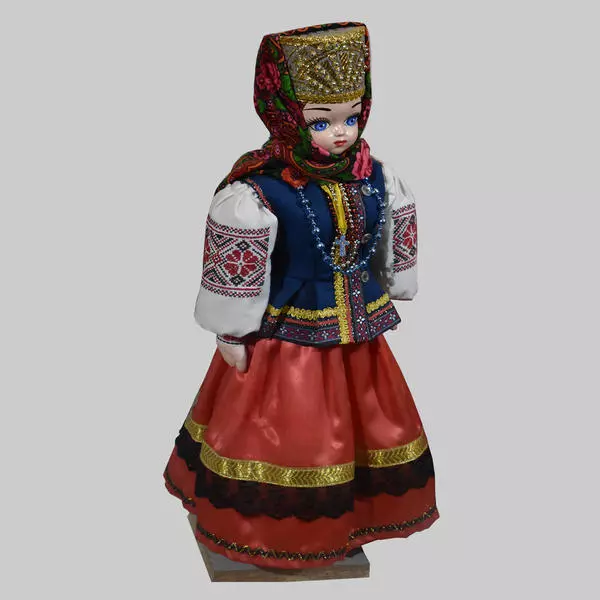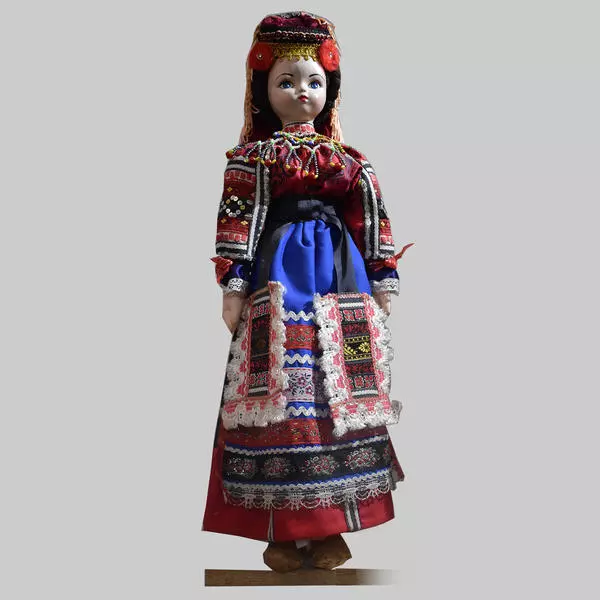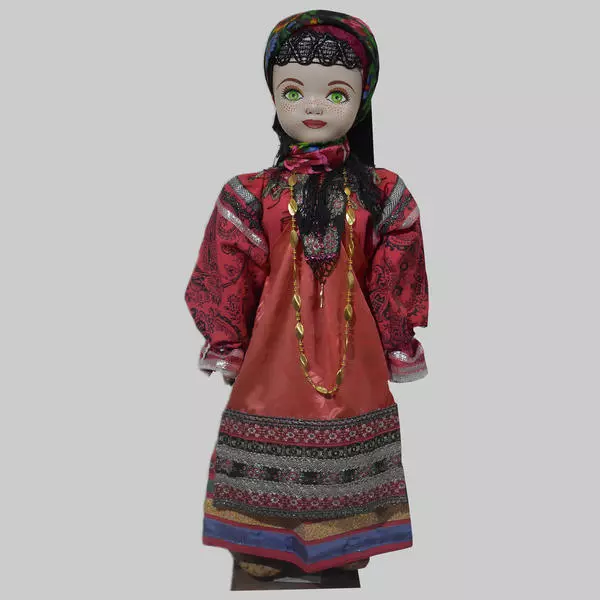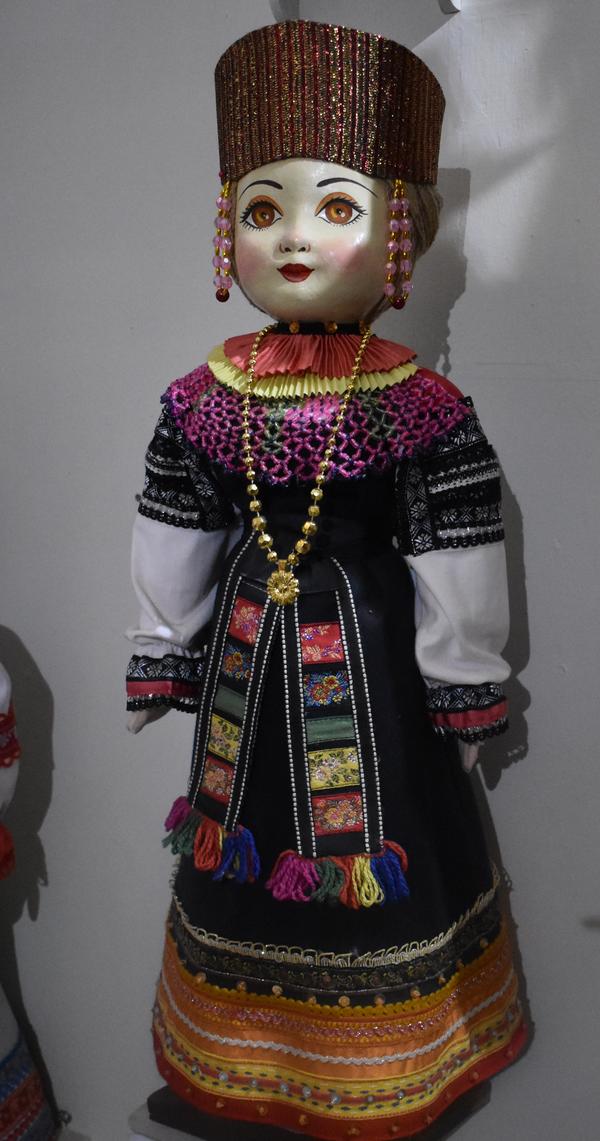
Men’s and women’s costumes in Klepovka village, Buturlinovsky district of the Voronezh region, were made using a unique technique. Special manufacturing methods were implemented while polychromic embroidery with a ‘carpet’ pattern, different kinds of décor (sequins, beads, golden threads), authentic colors were used in the costume design.
The costume was decorated in a sophisticated manner that is not common for Southern Russian culture. The embroidery was dominated by geometric elements. The main fabric colors are black, red, white, pink, orange, dark blue, light blue, and green.
A men’s shirt was made of a 40-cm wide piece of linen fabric. Its fit resembled a gored tunic. The shirt bottom was decorated with a woven band featuring one-sided hardanger embroidery and a pattern. Thanks to diamond-shaped gores stitched on under the sleeves, the shirt was loose and allowed raising arms easily. The shirt elements were sewn together manually or with a lock-stitch. The neck was always decorated with a woven band.
The shirts featured elements that are unique to the local cultural. Women’s shirts with straight poliks, or shoulder pads, were made of calico fabrics and were always decorated with a belt – a separate accessory with an ornament that was sewn to the shoulder and the beginning of the sleeve. The embroidery on the belt was also decorated with fancy sequins on top. When girls went to different celebrations and festivities, they put on a talisman-accessory: a beaded collar (round monisto) or beaded pendants (pendant monisto).
People in the village made clothes following their traditions. For example, a women’s costume from Klepovka, Gvazda, Puzevo villages included the following elements: a shirt, a poneva, a zapan (apron), a valance, worsted decorations, a monisto, a string of beads, earrings, headwear (kichka, soroka, kokoshnik), several scarves, a shawl, a kerchief under a shawl, a kerchief, a fur coat, several pairs of shoes.
The Voronezh region was populated by people from different territories that is why you could see various costumes there. Women’s and men’s folk costumes from Klepovka, Gvazda, Puzevo villages in the Buturlinovsky district united the heritage of Southern Russian and Ryazan clothing. Klepovka village and the surrounding settlements were founded by people from Skopin city of Ryazan Governorate. Similar costumes, ornaments and some speech patterns can help trace back the connection between Klepovka and Ryazan inhabitants.
The costume was decorated in a sophisticated manner that is not common for Southern Russian culture. The embroidery was dominated by geometric elements. The main fabric colors are black, red, white, pink, orange, dark blue, light blue, and green.
A men’s shirt was made of a 40-cm wide piece of linen fabric. Its fit resembled a gored tunic. The shirt bottom was decorated with a woven band featuring one-sided hardanger embroidery and a pattern. Thanks to diamond-shaped gores stitched on under the sleeves, the shirt was loose and allowed raising arms easily. The shirt elements were sewn together manually or with a lock-stitch. The neck was always decorated with a woven band.
The shirts featured elements that are unique to the local cultural. Women’s shirts with straight poliks, or shoulder pads, were made of calico fabrics and were always decorated with a belt – a separate accessory with an ornament that was sewn to the shoulder and the beginning of the sleeve. The embroidery on the belt was also decorated with fancy sequins on top. When girls went to different celebrations and festivities, they put on a talisman-accessory: a beaded collar (round monisto) or beaded pendants (pendant monisto).
People in the village made clothes following their traditions. For example, a women’s costume from Klepovka, Gvazda, Puzevo villages included the following elements: a shirt, a poneva, a zapan (apron), a valance, worsted decorations, a monisto, a string of beads, earrings, headwear (kichka, soroka, kokoshnik), several scarves, a shawl, a kerchief under a shawl, a kerchief, a fur coat, several pairs of shoes.
The Voronezh region was populated by people from different territories that is why you could see various costumes there. Women’s and men’s folk costumes from Klepovka, Gvazda, Puzevo villages in the Buturlinovsky district united the heritage of Southern Russian and Ryazan clothing. Klepovka village and the surrounding settlements were founded by people from Skopin city of Ryazan Governorate. Similar costumes, ornaments and some speech patterns can help trace back the connection between Klepovka and Ryazan inhabitants.