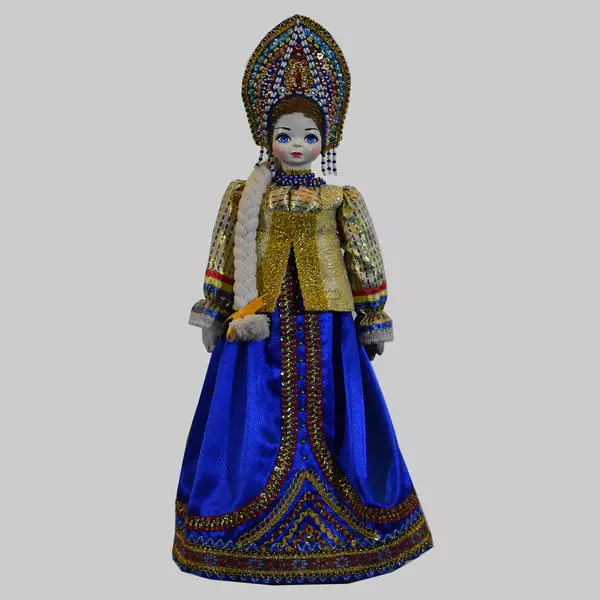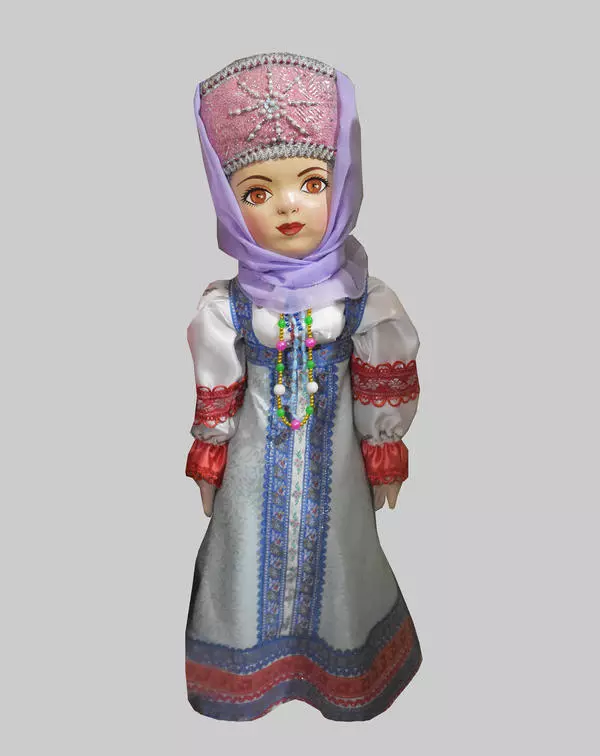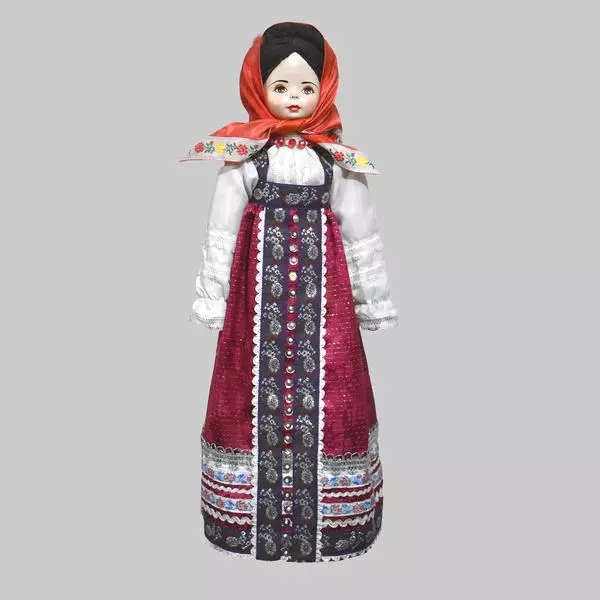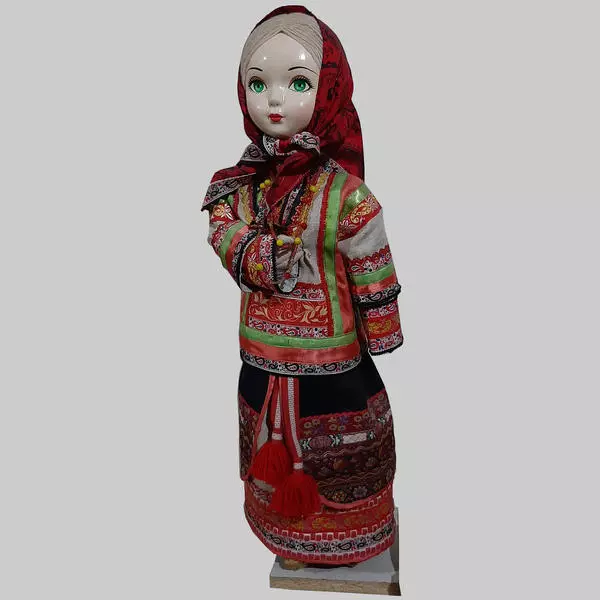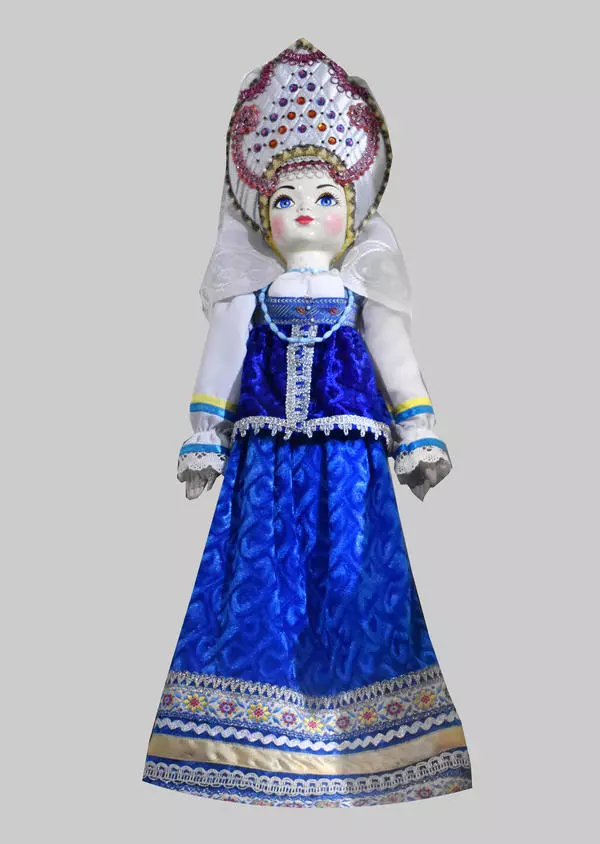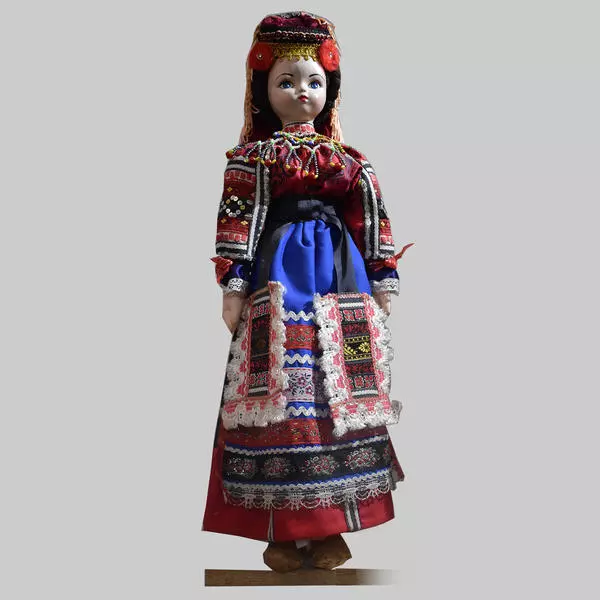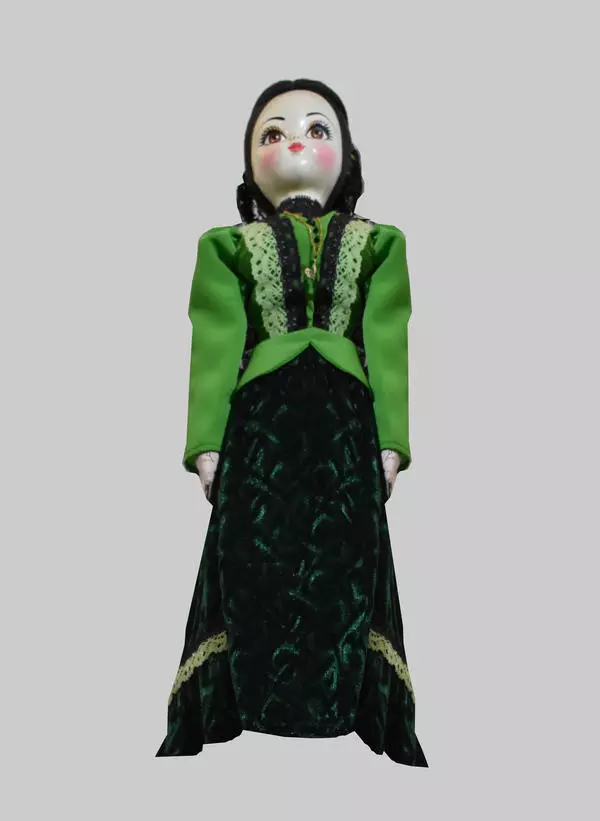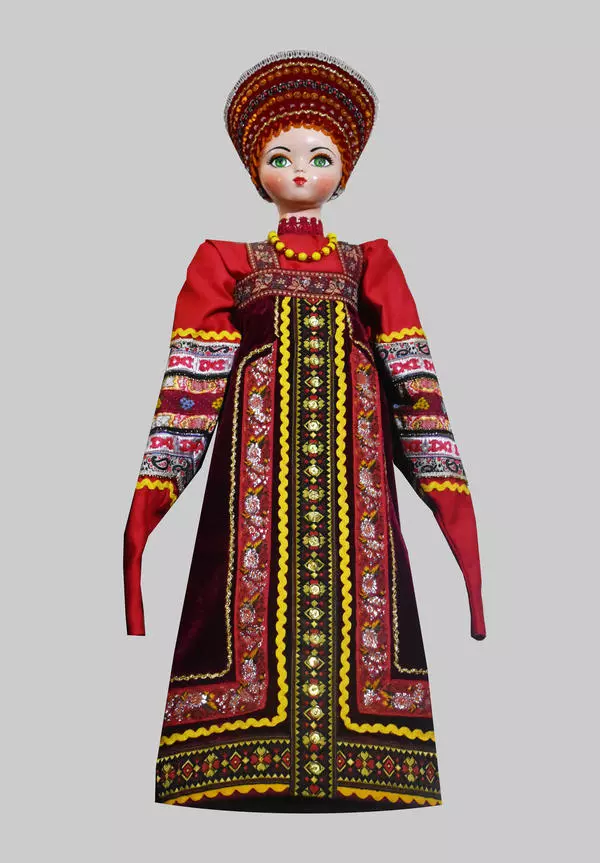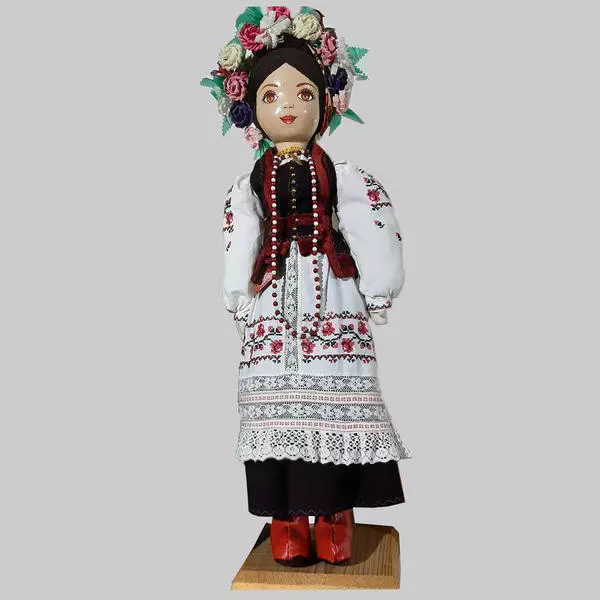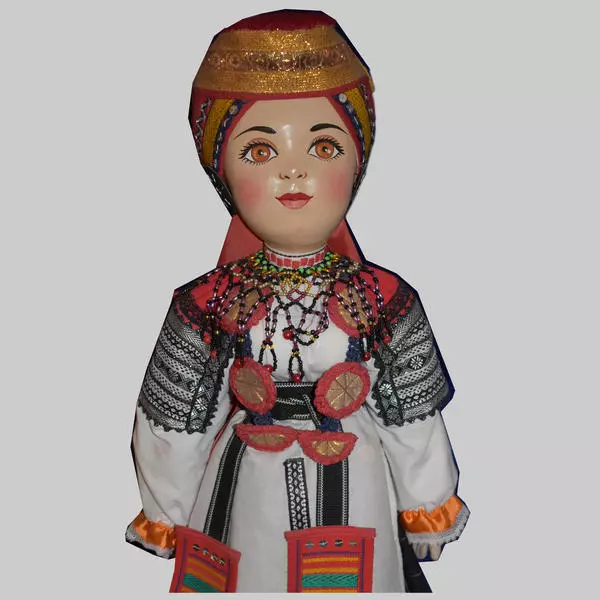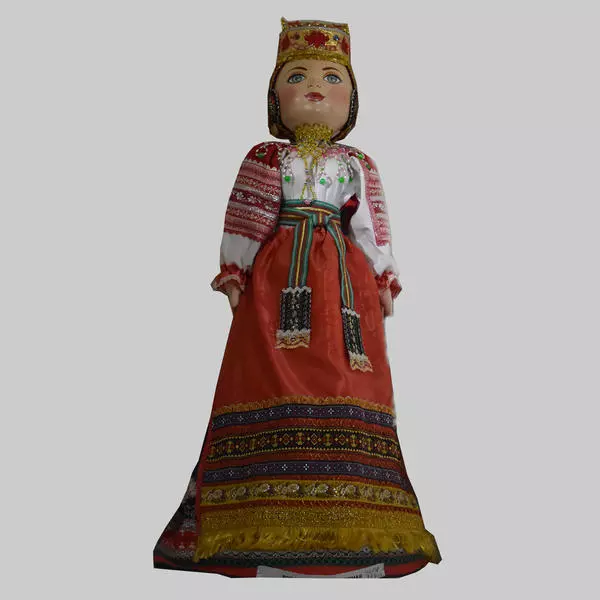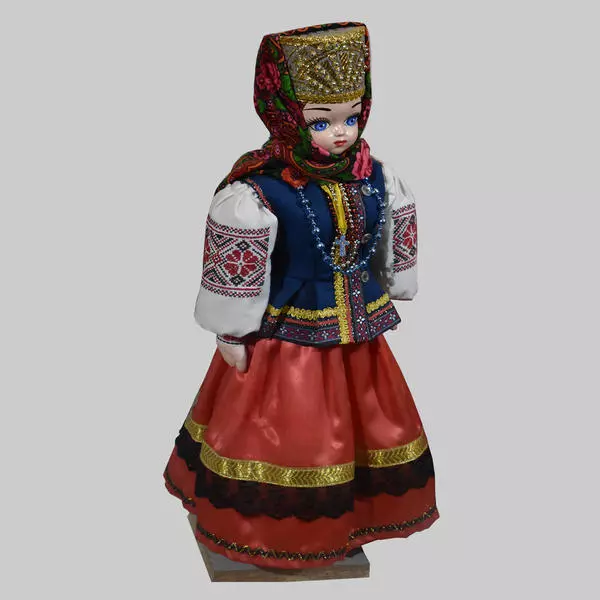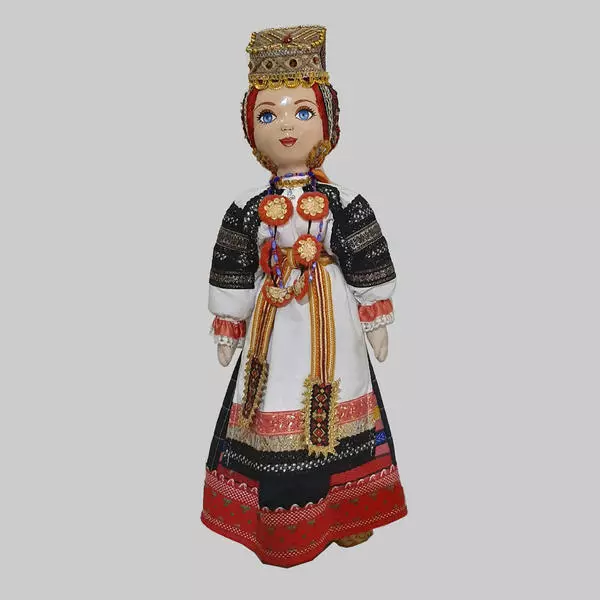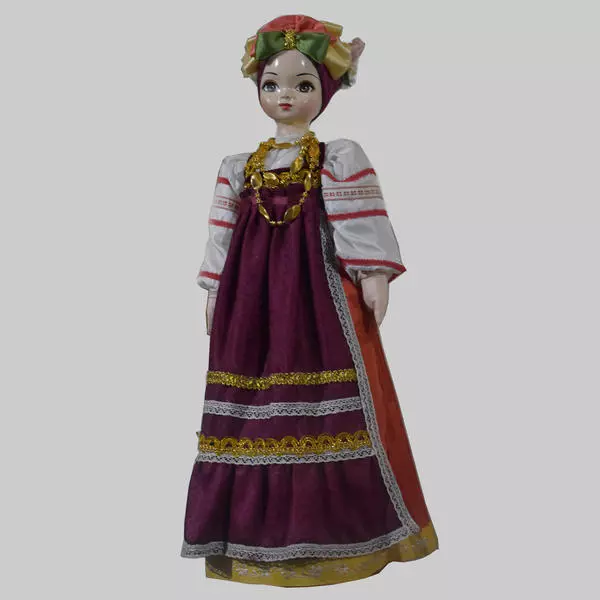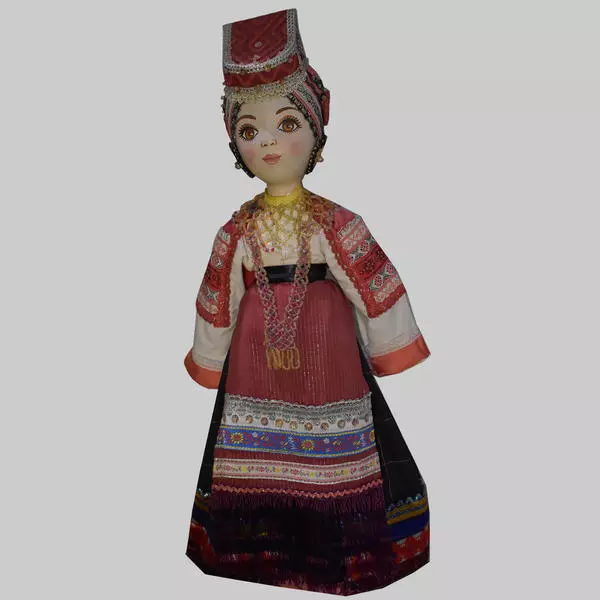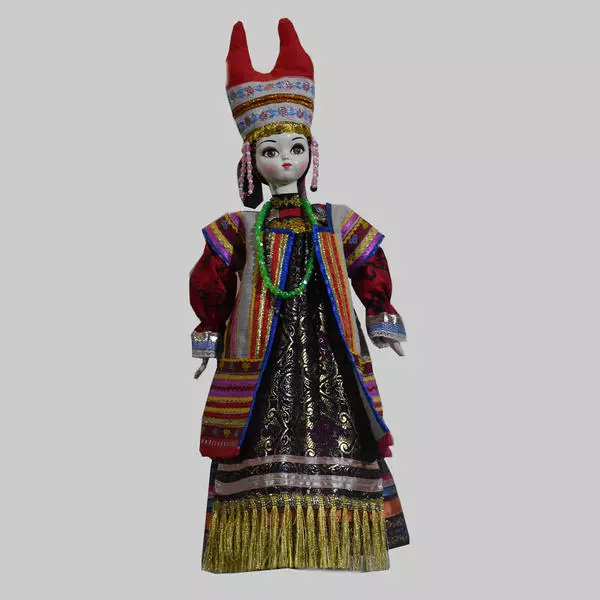
National clothes perfectly reveals people’s cultural traditions. In Russia, there were several women’s folk costumes types, characteristic of certain provinces and regions. Each women’s clothing type (complex) was distinguished by the number of objects that it contained, the silhouette, cut and the time of appearance. The North Russian and South Russian versions of costumes had the most obvious difference.
Representative of the southern Russian region, ponyova belongs to the most ancient Russian women’s clothing type. It was mentioned for the first time in the 10th century. The word ‘ponyova’ in ancient times meant a woven fabric. The modern concept of ponyova as a skirt made of dense fabric began to appear later. The literal translation of ''ponyova'' (''to understand, to embrace'') is a female loincloth. Ponyova could be both swinging / open and close, when the edges of panels touched, tied with a waist cord.
Ponyova was worn over a shirt and consisted of several panels, usually woolen. The most common fabric version was black cloth with checkworks embroidered with coloured threads. An interesting fact is that only married women wore ponyovas. Young village girls wore shirts. For them, there was a whole rite of ''jumping into ponyova'', when for one day they put on a ''woman’s'' skirt, declaring themselves brides.
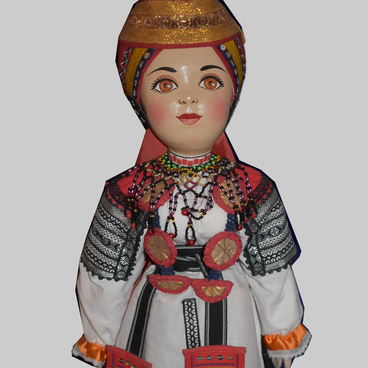
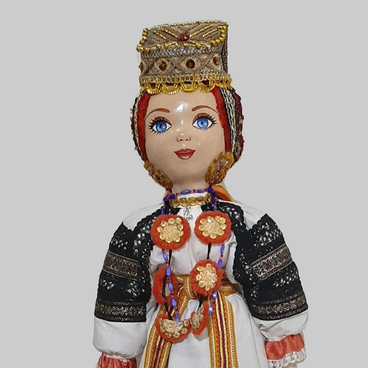
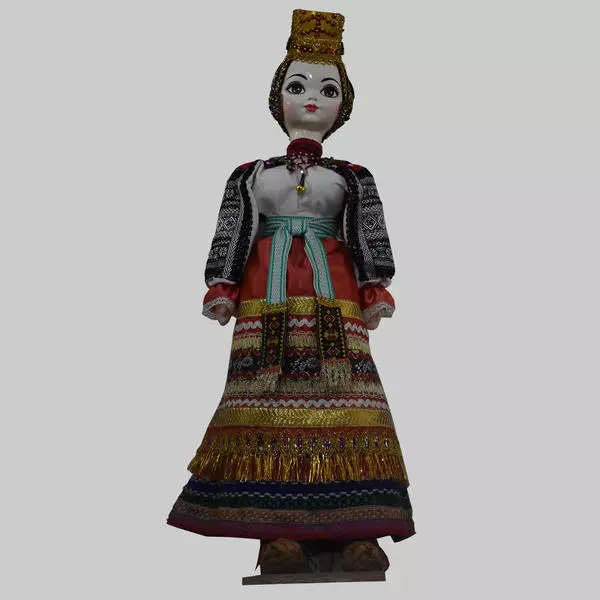
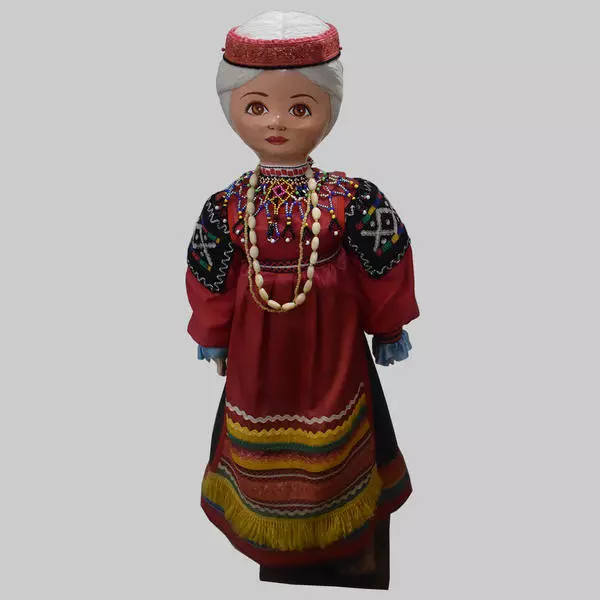
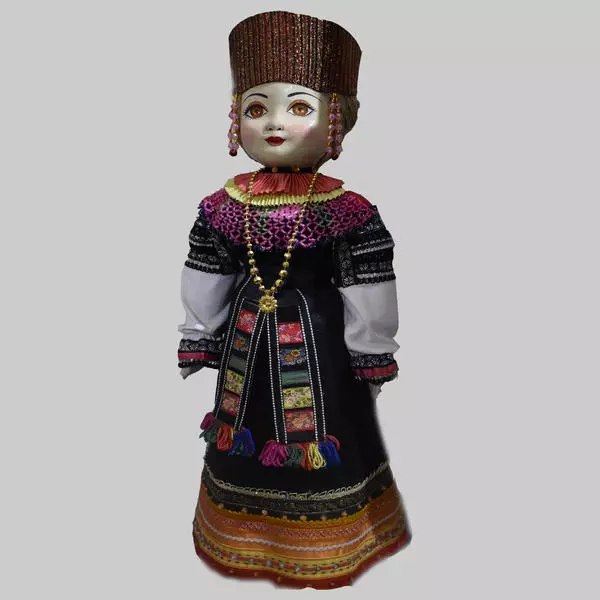
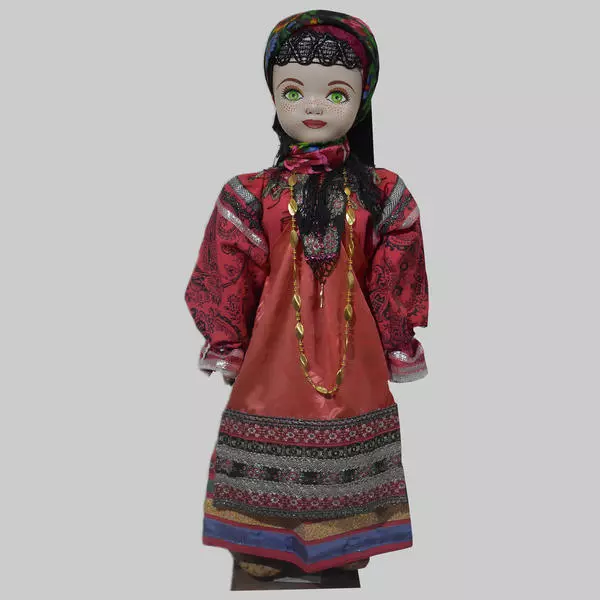
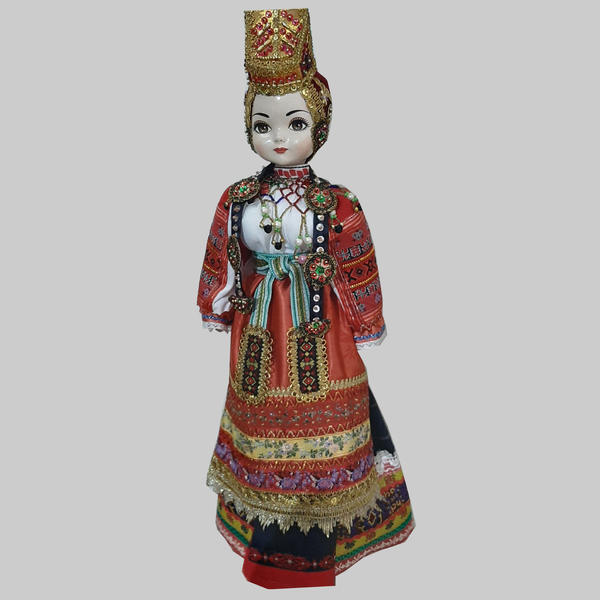
In Southern Russian provinces, in addition to ponyova, a traditional clothing set included: a shirt with decorated shoulder and sleeve parts, an apron, a belt (''pokromka'')), a breast-collar, a headwear (''soroka'', i.e. magpie), bast or leather shoes. Regular ponyovas were intended for daily wear, their decoration was not given as much time and material as ceremonial, festive versions of this clothing type.
Every region developed its own traditions of decorating ponyovas. Verkhnesosensk products were distinguished by unusual, looped threads overlapping, while Korotoyak skirts - by large folds. The Sapozhkovsky district costumes necessarily included a white woolen shushpan - a caftan-''navershnik'', and Rossoshansky ponyovas in the last century were actively used only during ceremonial events.
Festive clothes were richly decorated with embroidery, lacing, stitching stripes, lace inserts, sequins, beads. The main colours in clothing were red and white. Shades of red could range from dark to light. So, in the north of Russia, red in women’s costumes could go into deep crimson tones. In the southern regions, preference was given to orange-red shades. Ponyova-skirts were more often made of dense dark blue and black fabrics, giving its owner’s figure splendour and confidence.
The most striking decorations were ponyovas in the Belgorod region and the Voronezh province villages. From century to century, ancient ornaments were embroidered on ponyova-skirts and aprons' bottoms, on shirt sleeves, bearing a semantic load. They included magical symbols of Indo-European origin. The most expensive ponyovas were decorated with a meander - a repeating, winding ornament of a clear form.
Representative of the southern Russian region, ponyova belongs to the most ancient Russian women’s clothing type. It was mentioned for the first time in the 10th century. The word ‘ponyova’ in ancient times meant a woven fabric. The modern concept of ponyova as a skirt made of dense fabric began to appear later. The literal translation of ''ponyova'' (''to understand, to embrace'') is a female loincloth. Ponyova could be both swinging / open and close, when the edges of panels touched, tied with a waist cord.
Ponyova was worn over a shirt and consisted of several panels, usually woolen. The most common fabric version was black cloth with checkworks embroidered with coloured threads. An interesting fact is that only married women wore ponyovas. Young village girls wore shirts. For them, there was a whole rite of ''jumping into ponyova'', when for one day they put on a ''woman’s'' skirt, declaring themselves brides.
In Southern Russian provinces, in addition to ponyova, a traditional clothing set included: a shirt with decorated shoulder and sleeve parts, an apron, a belt (''pokromka'')), a breast-collar, a headwear (''soroka'', i.e. magpie), bast or leather shoes. Regular ponyovas were intended for daily wear, their decoration was not given as much time and material as ceremonial, festive versions of this clothing type.
Every region developed its own traditions of decorating ponyovas. Verkhnesosensk products were distinguished by unusual, looped threads overlapping, while Korotoyak skirts - by large folds. The Sapozhkovsky district costumes necessarily included a white woolen shushpan - a caftan-''navershnik'', and Rossoshansky ponyovas in the last century were actively used only during ceremonial events.
Festive clothes were richly decorated with embroidery, lacing, stitching stripes, lace inserts, sequins, beads. The main colours in clothing were red and white. Shades of red could range from dark to light. So, in the north of Russia, red in women’s costumes could go into deep crimson tones. In the southern regions, preference was given to orange-red shades. Ponyova-skirts were more often made of dense dark blue and black fabrics, giving its owner’s figure splendour and confidence.
The most striking decorations were ponyovas in the Belgorod region and the Voronezh province villages. From century to century, ancient ornaments were embroidered on ponyova-skirts and aprons' bottoms, on shirt sleeves, bearing a semantic load. They included magical symbols of Indo-European origin. The most expensive ponyovas were decorated with a meander - a repeating, winding ornament of a clear form.