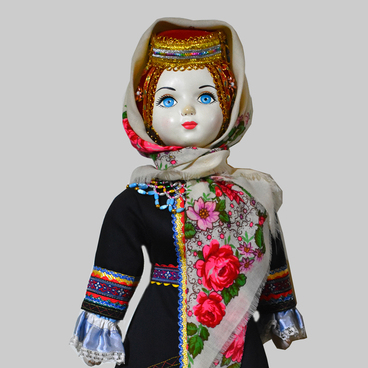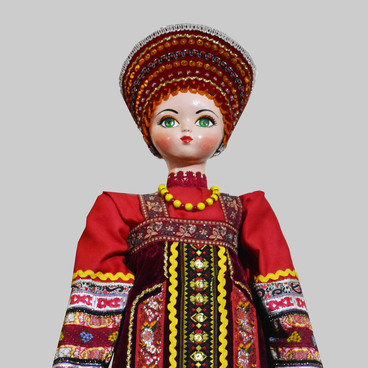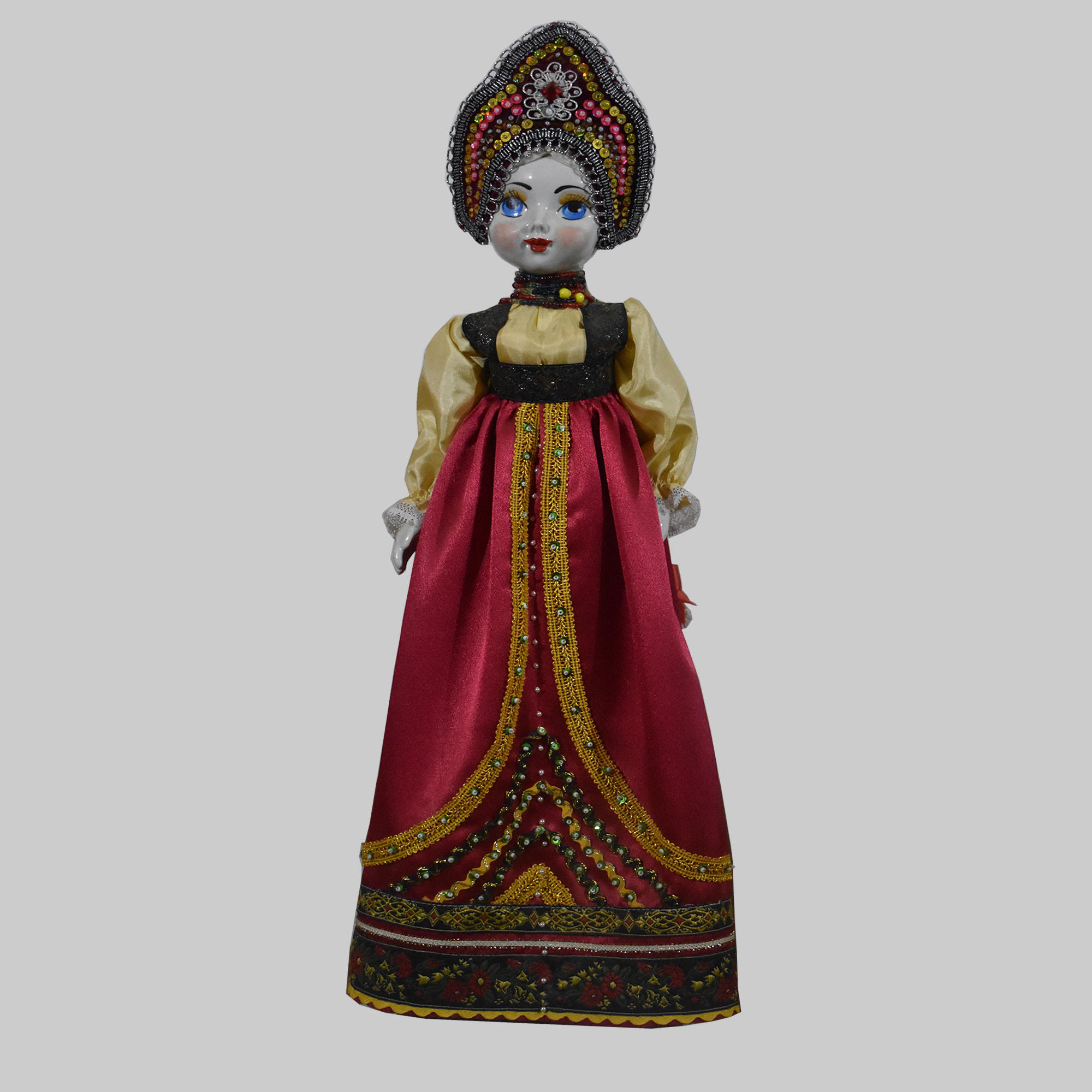


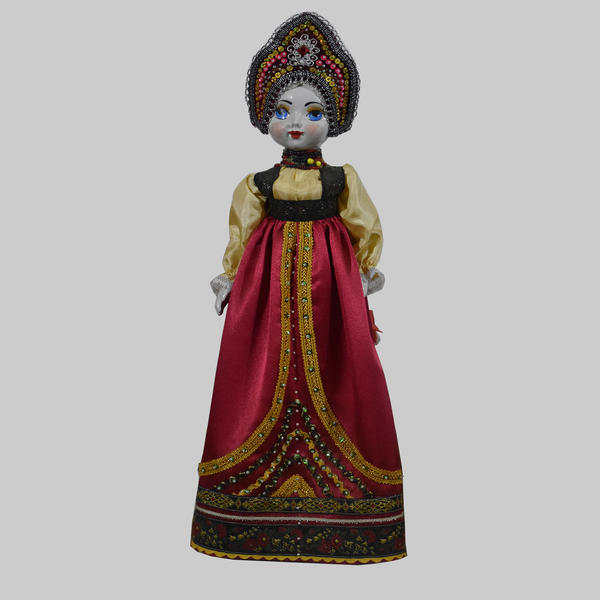
Women’s costume of Tambov Region belongs to the South Russia’s version of folk clothing, to the poneva (wrap skirt) type. Its key element was a gown - the oldest item of clothing - worn by women of all ages, from girls to old women. Gowns were decorated with embroidery and braid. A common technique of double-sided embroidery was the cross, which became a distinctive feature of the Tambov costume decoration. People paid keen attention to the collar, shoulder, sleeves and the hem. They believed that patterns with sacral motifs would help protect them from the bad influence of supernatural powers.
Girls often wore just a belted white gown, lapty (straw shoes) and headgear. They wore soft bands, kerchiefs and ochelyes (part of the headgear that covered the forehead). Unlike the women’s head dresses, they did not cover a girl’s hair. Married women wore another wardrobe element, which was not part of a girl’s outfit a poneva (a wrap skirt). A bride put one on before the wedding during a special ceremony of “jumping into the wrap skirt”. Peasant women often called it an “eternal yoke” or “woman”s bondage”.
Each village preserved its own tradition of sewing wrap skirts. Most often, chequered home-spun wool or linen was used. The favorite colours of the fabric in Tambov Region were black and indigo. The “enclosed” skirt was made of four pieces of fabric, and gathered on top by a cord. The older type consisted of three cloths of fabric: the back and two side ones. Such a skirt was called a “triple-piece skirt”.
Panevas were abundantly decorated at the back, because the front was covered with an apron which came in several designs. A tunic-like apron with sleeves or arm-holes, which a woman put on from her head down, was called a “curtain” or “veil”. The festive aprons were made of brocade or silk and were richly decorated with ribbons, fringe and lace. There were also waist-level aprons.
The top clothes of Tambov peasant women were garments resembling short gowns with long sleeves. The front part was decorated with multicolored fabric and lace. Shoulders and necklines were accentuated by stripes of cloth or embroidery.
The women looked majestic in the traditional costume. Massive footwear matched the outfit: peasant women put on several pairs of woolen stockings, so they needed large lapty. The people’s belief that thick legs were a sign of health and female beauty gave rise to the tradition.
Girls often wore just a belted white gown, lapty (straw shoes) and headgear. They wore soft bands, kerchiefs and ochelyes (part of the headgear that covered the forehead). Unlike the women’s head dresses, they did not cover a girl’s hair. Married women wore another wardrobe element, which was not part of a girl’s outfit a poneva (a wrap skirt). A bride put one on before the wedding during a special ceremony of “jumping into the wrap skirt”. Peasant women often called it an “eternal yoke” or “woman”s bondage”.
Each village preserved its own tradition of sewing wrap skirts. Most often, chequered home-spun wool or linen was used. The favorite colours of the fabric in Tambov Region were black and indigo. The “enclosed” skirt was made of four pieces of fabric, and gathered on top by a cord. The older type consisted of three cloths of fabric: the back and two side ones. Such a skirt was called a “triple-piece skirt”.
Panevas were abundantly decorated at the back, because the front was covered with an apron which came in several designs. A tunic-like apron with sleeves or arm-holes, which a woman put on from her head down, was called a “curtain” or “veil”. The festive aprons were made of brocade or silk and were richly decorated with ribbons, fringe and lace. There were also waist-level aprons.
The top clothes of Tambov peasant women were garments resembling short gowns with long sleeves. The front part was decorated with multicolored fabric and lace. Shoulders and necklines were accentuated by stripes of cloth or embroidery.
The women looked majestic in the traditional costume. Massive footwear matched the outfit: peasant women put on several pairs of woolen stockings, so they needed large lapty. The people’s belief that thick legs were a sign of health and female beauty gave rise to the tradition.