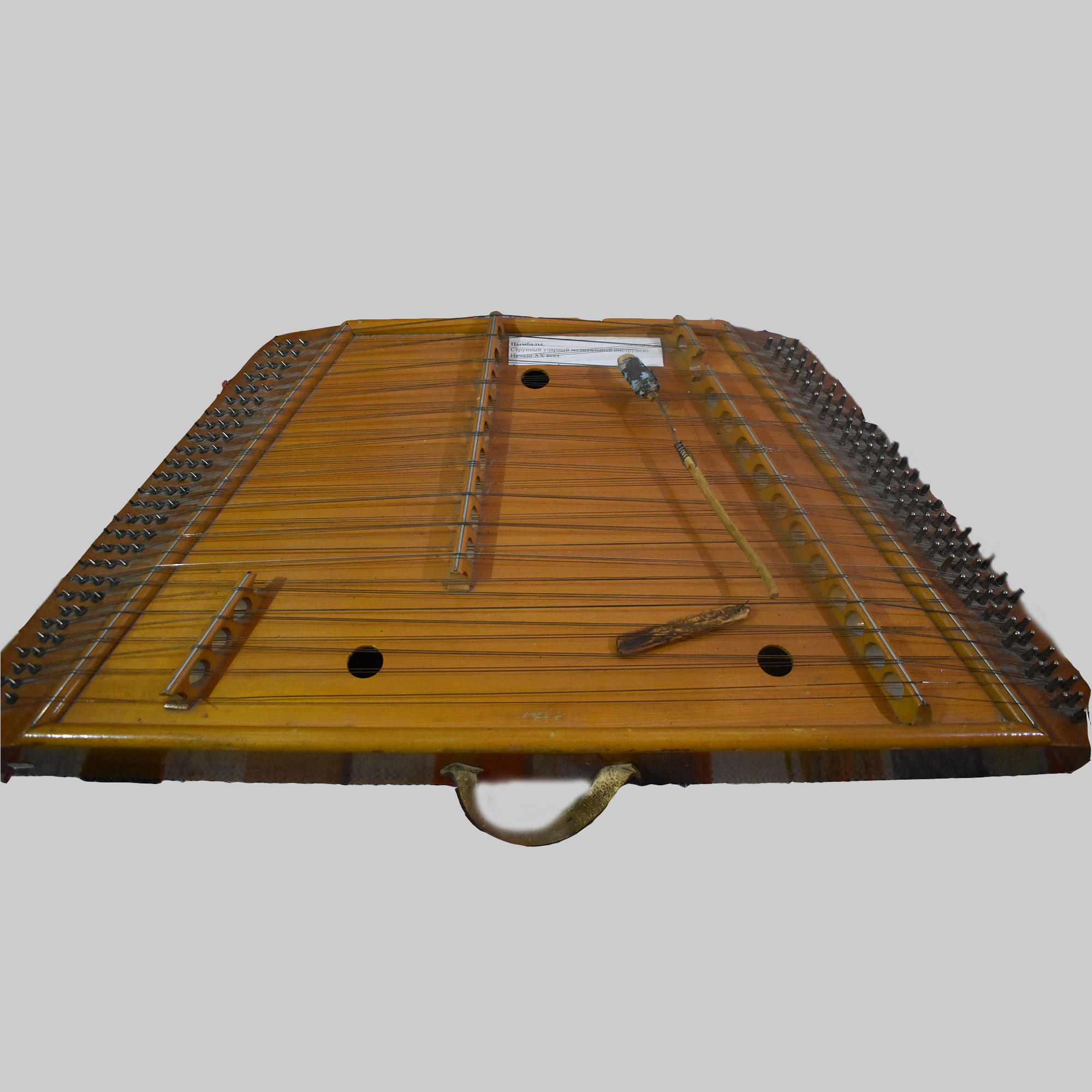
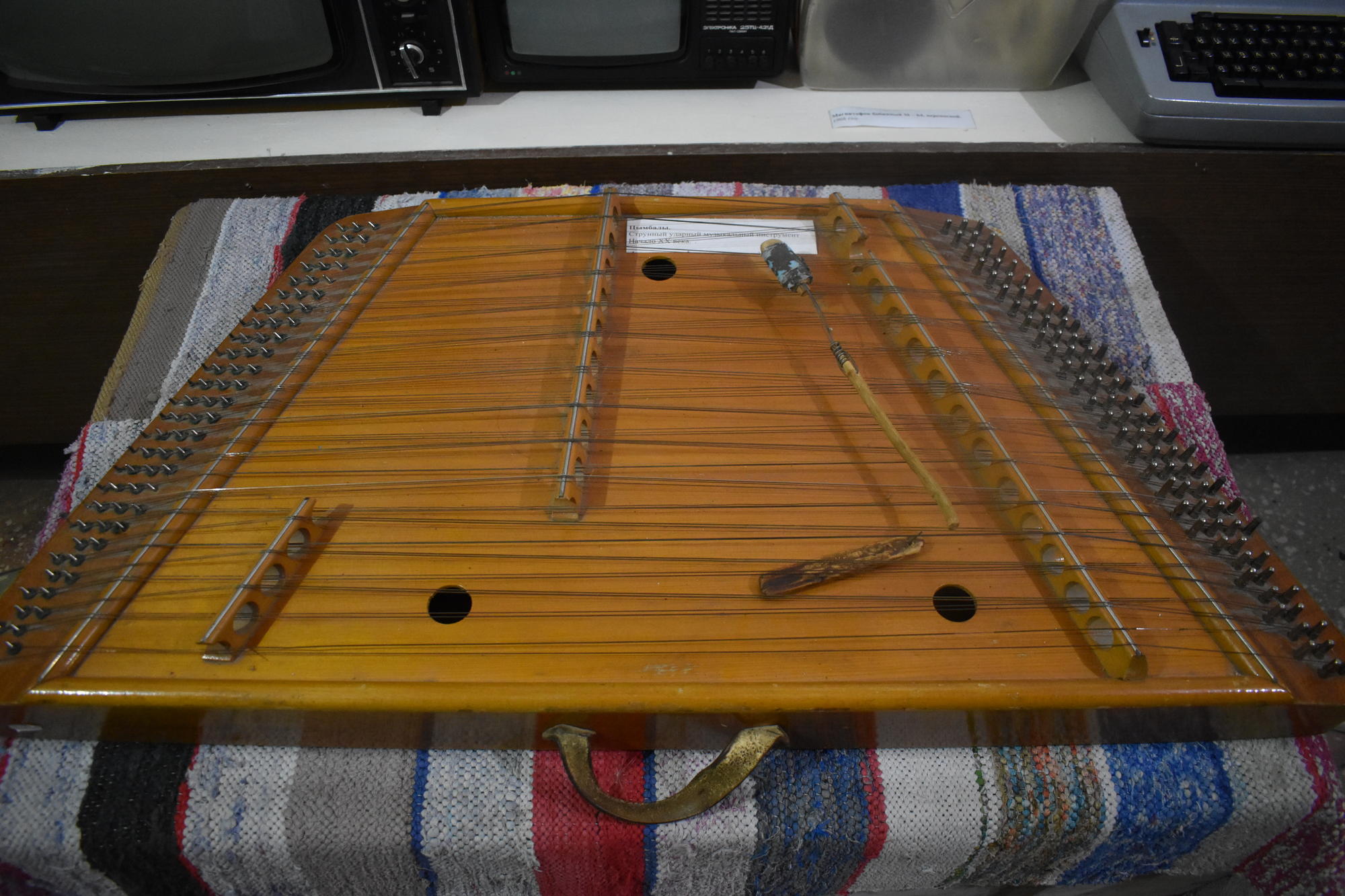


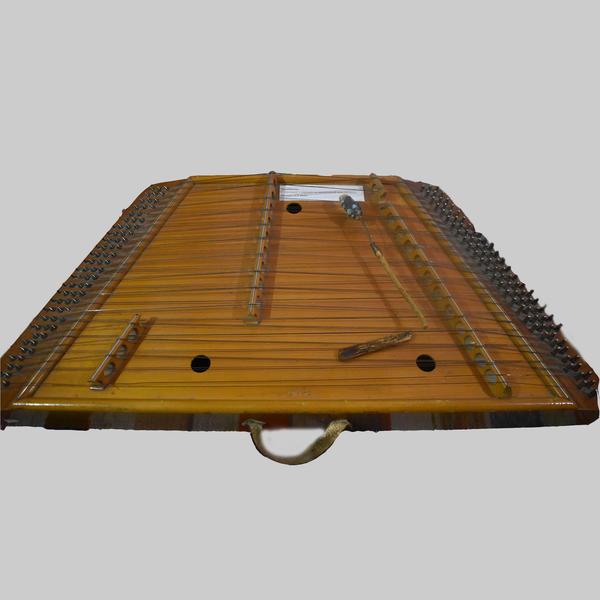
The cymbal is a stringed percussion musical instrument of a trapezoid shape. To extract sound, the performer hits the strings with wooden sticks with wide flat tips.
The cymbal is a very ancient instrument. Images of its predecessor, the chordophone were found on a Sumerian amphora dating back to 4th-3rd century BC. A drawing of a similar musical instrument was discovered by archaeologists on a bas-relief from the 9th century B.C.
Instruments similar to cymbals were found among different peoples. Thus, the Assyrians played the triganon — a nine-stringed musical instrument of a triangular shape, the ancient Greeks — the monochord and the Chinese played the chia. The santur was popular with the Indians — its strings were made from the munjdz grass and sticks made of bamboo were used to play it. According to Russian music historian Nikolai Fyodorovich Findeisen, the instrument came to Europe from India, where the Gypsies brought in the 5th century.
As the instrument continued to spread, the design of the cymbal got improved: the shape and size of the instrument, the quantity and quality of strings were changed. Until the 9th century, the strings were made of animal veins or intestines, and then the makers gradually switched to a copper alloy and metal wire.
The cymbal became incredibly popular with the nobles in the 14th century. All ladies of high society dreamed of playing the instrument in medieval Europe. Pantaleon Hebenstreit — a famous German musician of the time, made the instrument even more popular. Thanks to Louis XIV, the cymbal got a new European name of the Pantaleon. Composers began to write dedicated pieces for the cymbal in the 18th century and incorporate the instrument into the opera orchestra. One could hear them in the works of Ferenc Erkel and Ferenc Lehar.
The cymbal appeared in Russia at the end of the 15th century, when British Queen Elizabeth gave the instrument to the Russian tsarina. Irina Fyodorovna liked the gift so much that the cymbal began to sound constantly in the royal chambers and at princely feasts. The cymbal became widespread in Ukraine, becoming a truly popular instrument.
There are two types of cymbal today: the concert-academic one and the folk versions. They differ in the size of the body and design. Folk cymbals are smaller; they usually come with a strap to mount the instrument on the shoulder or the neck. The body of the concert-academic cymbal is much larger: the lower base can reach 115 cm in length and the upper one — 94 cm. In addition, the concert-academic cymbals have legs and a pedal to deaden the sound.
The cymbal is a very ancient instrument. Images of its predecessor, the chordophone were found on a Sumerian amphora dating back to 4th-3rd century BC. A drawing of a similar musical instrument was discovered by archaeologists on a bas-relief from the 9th century B.C.
Instruments similar to cymbals were found among different peoples. Thus, the Assyrians played the triganon — a nine-stringed musical instrument of a triangular shape, the ancient Greeks — the monochord and the Chinese played the chia. The santur was popular with the Indians — its strings were made from the munjdz grass and sticks made of bamboo were used to play it. According to Russian music historian Nikolai Fyodorovich Findeisen, the instrument came to Europe from India, where the Gypsies brought in the 5th century.
As the instrument continued to spread, the design of the cymbal got improved: the shape and size of the instrument, the quantity and quality of strings were changed. Until the 9th century, the strings were made of animal veins or intestines, and then the makers gradually switched to a copper alloy and metal wire.
The cymbal became incredibly popular with the nobles in the 14th century. All ladies of high society dreamed of playing the instrument in medieval Europe. Pantaleon Hebenstreit — a famous German musician of the time, made the instrument even more popular. Thanks to Louis XIV, the cymbal got a new European name of the Pantaleon. Composers began to write dedicated pieces for the cymbal in the 18th century and incorporate the instrument into the opera orchestra. One could hear them in the works of Ferenc Erkel and Ferenc Lehar.
The cymbal appeared in Russia at the end of the 15th century, when British Queen Elizabeth gave the instrument to the Russian tsarina. Irina Fyodorovna liked the gift so much that the cymbal began to sound constantly in the royal chambers and at princely feasts. The cymbal became widespread in Ukraine, becoming a truly popular instrument.
There are two types of cymbal today: the concert-academic one and the folk versions. They differ in the size of the body and design. Folk cymbals are smaller; they usually come with a strap to mount the instrument on the shoulder or the neck. The body of the concert-academic cymbal is much larger: the lower base can reach 115 cm in length and the upper one — 94 cm. In addition, the concert-academic cymbals have legs and a pedal to deaden the sound.