

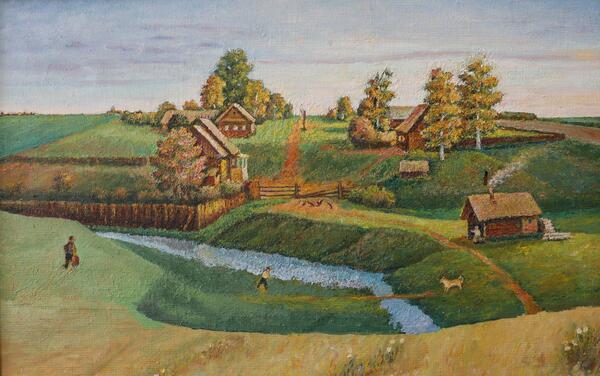
Rarely does anyone manage to achieve a great deal in several different spheres at once. Born in the Varnavino area, Mikhail Baldin happens to be a man of many talents. His painting ‘View of the Village of Zagzy, Varnavinsky district’ shows him as a distinctive painter, though he is first of all known as an outstanding historian and ethnographer, as well as the author of lots of publications on the history of the territories near the riverbanks of the Vetluga River, the Povetluzhje.
In fact, Baldin got involved in visual arts from an early age. In the late 1930s, he studied woodworking at the Semyonov Trade School and attended courses at an amateur art studio. Before the Great Patriotic War, he became a student at the Gorky School of Art, but is was disbanded during the War: Baldin had only managed to study there for a year. Despite the fact that Baldin chose another profession afterwards, he has not stopped painting for all his life. This is evidenced by the numerous paintings, drawings, and sketches put on display in the Varnavino Museum of History and Art.
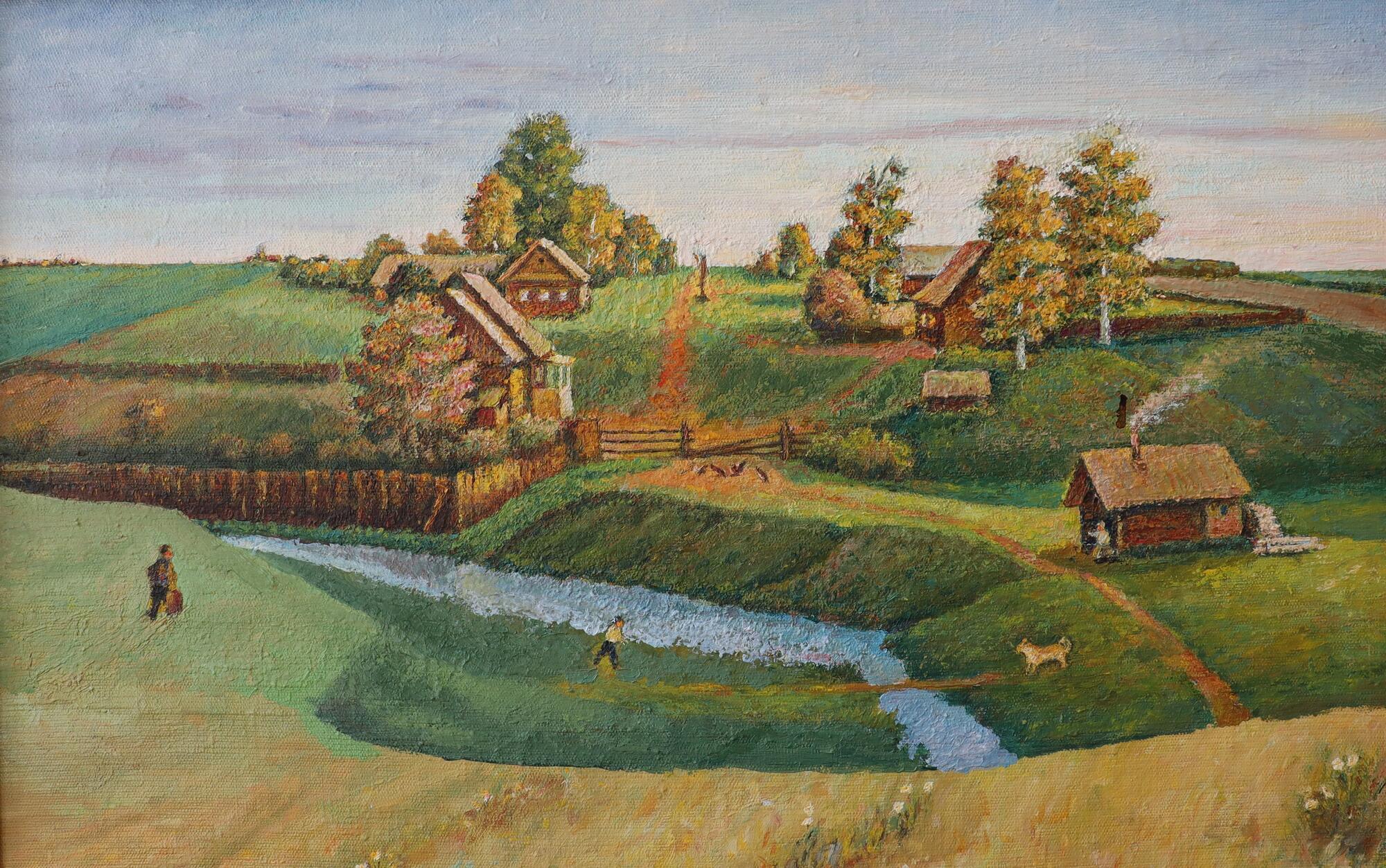
On his painting ‘View of the Village of Zagzy, Varnavinsky district’, he depicted his homeland, as he was born exactly in this village. The name of the village comes from the traditional Mari name ‘Saksay’. It is located on the riverbanks of the Lubyanka River, a tributary of the Vetluga, 9 km away from the urban-type settlement of Varnavino and 138 km away from Nizhny Novgorod.
The painting is considered unfinished. Baldin shows his home village on a sunny summer day. On the far right, his own house can be seen. Despite being somehow naive and rather simple, the painting itself can hardly be called poor or having a draft-quality: his love and admiration towards his homeland are expressed here.
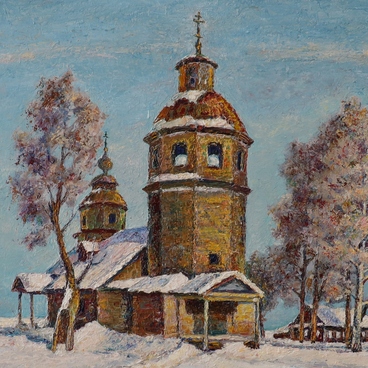
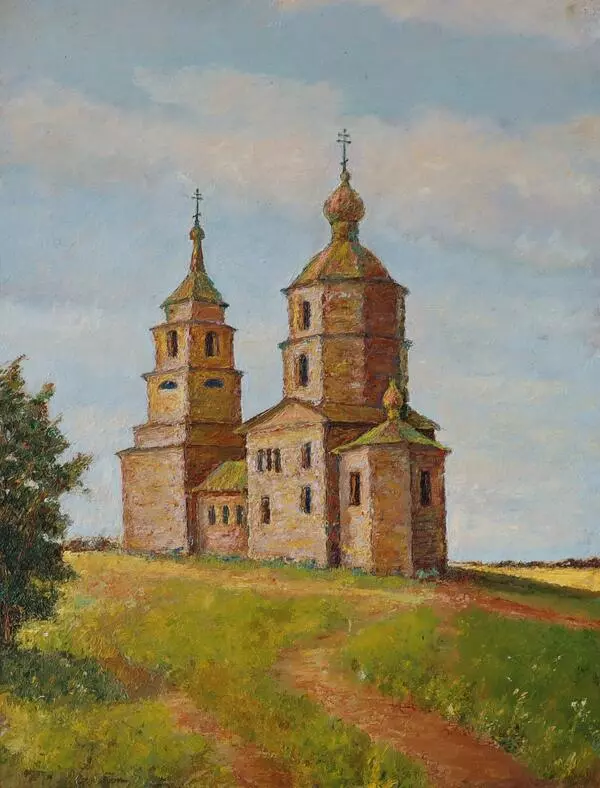
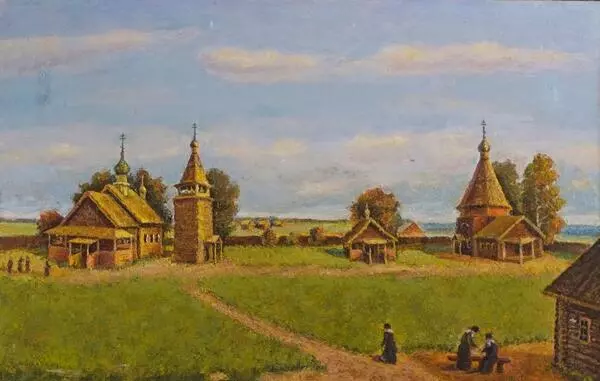
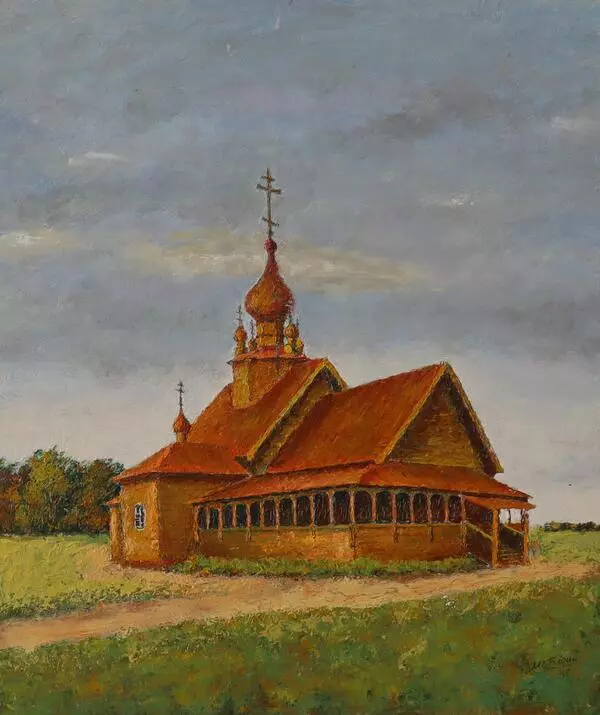
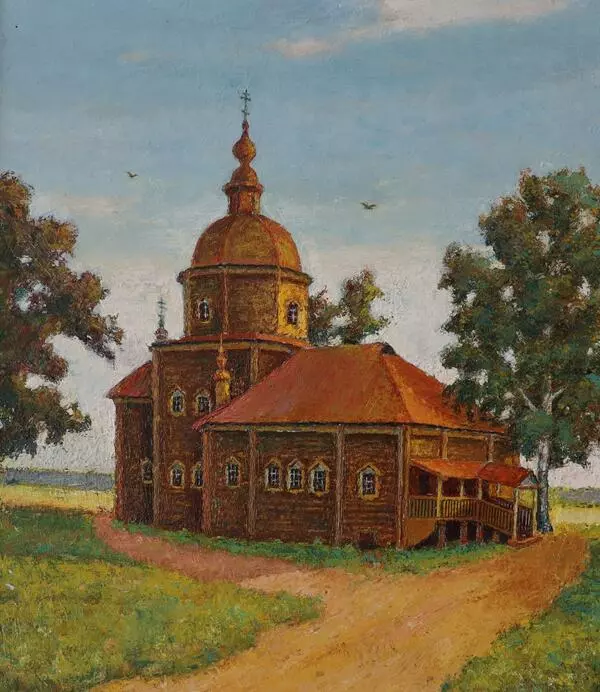
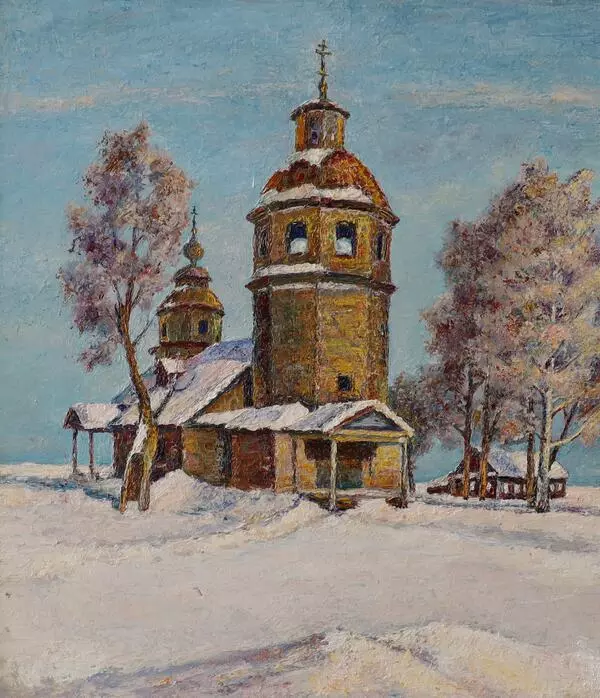
Interestingly, this is the only work painted by Baldin in oil on canvas — the rest of his works was painted on cardboard. This landscape is also unusual, because he depicted an existing place: his other works are devoted to buildings destroyed by the Soviet regime. For example, the painting ‘A View of the Church’ most likely depicts the lost wooden Trinity Church in the village of Turan, and the landscape ‘Trinity-Varnavinsky Monastery in the 17th century’ shows the monastery, sawed for firewood during the communist subbotnik by the komsomol members.
In fact, Baldin got involved in visual arts from an early age. In the late 1930s, he studied woodworking at the Semyonov Trade School and attended courses at an amateur art studio. Before the Great Patriotic War, he became a student at the Gorky School of Art, but is was disbanded during the War: Baldin had only managed to study there for a year. Despite the fact that Baldin chose another profession afterwards, he has not stopped painting for all his life. This is evidenced by the numerous paintings, drawings, and sketches put on display in the Varnavino Museum of History and Art.
On his painting ‘View of the Village of Zagzy, Varnavinsky district’, he depicted his homeland, as he was born exactly in this village. The name of the village comes from the traditional Mari name ‘Saksay’. It is located on the riverbanks of the Lubyanka River, a tributary of the Vetluga, 9 km away from the urban-type settlement of Varnavino and 138 km away from Nizhny Novgorod.
The painting is considered unfinished. Baldin shows his home village on a sunny summer day. On the far right, his own house can be seen. Despite being somehow naive and rather simple, the painting itself can hardly be called poor or having a draft-quality: his love and admiration towards his homeland are expressed here.
Interestingly, this is the only work painted by Baldin in oil on canvas — the rest of his works was painted on cardboard. This landscape is also unusual, because he depicted an existing place: his other works are devoted to buildings destroyed by the Soviet regime. For example, the painting ‘A View of the Church’ most likely depicts the lost wooden Trinity Church in the village of Turan, and the landscape ‘Trinity-Varnavinsky Monastery in the 17th century’ shows the monastery, sawed for firewood during the communist subbotnik by the komsomol members.