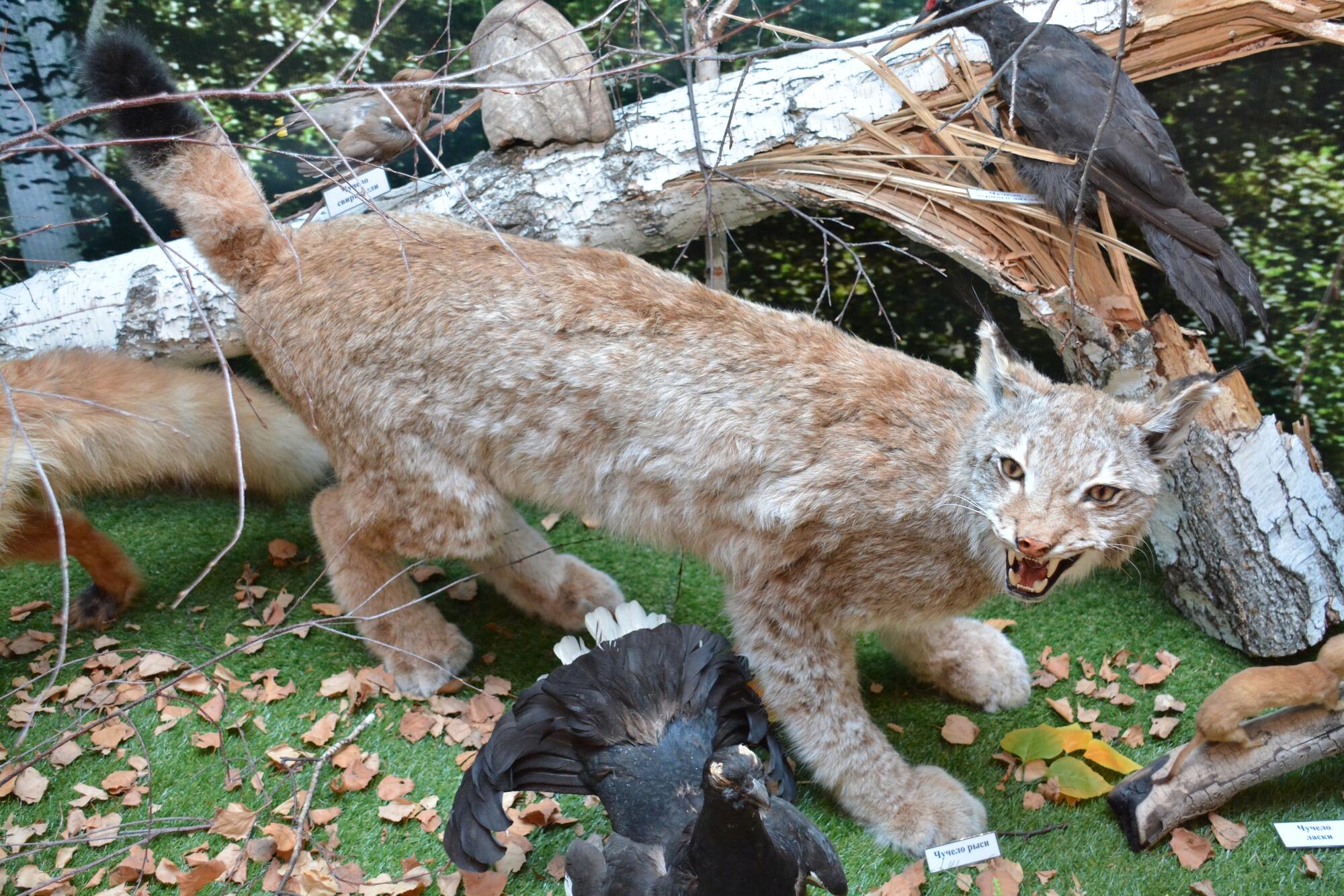


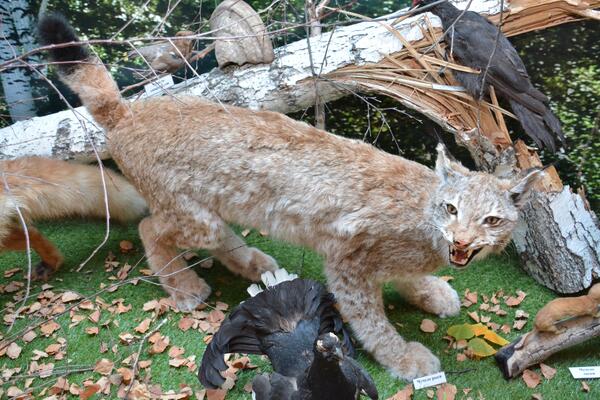
The lynx is a typical cat the size of a large dog. Its short body and long legs, also resemble those of a dog. Adult lynx males weigh between 18 and 25 kilos. It is very rare that they measure up to 30 kilos, while the average weight of a female is about 18 kilos. The lynx’s ears are adorned with long tufts. Its wide eyes have a vertical pupil, and the tail is so short it looks chopped off. The lynx has whiskers on the sides of its small, round, and very expressive snout. The lynx’s fur is very thick, long, and soft. The longest fur is on an all-white belly with occasional spots. The large furry paws allow the lynx to remain on the surface of snow without falling through in winter. The lynx molts twice a year: in spring and in winter.
It takes a lynx female between 63 and 70 days to carry two or three deaf and blind baby lynxes. A lynx family will make a den under the roots of a fallen tree, in a cavity in the soil, in a split in the rock, in a low tree hollow, or in the windfall. When its offspring reaches the age of one month, the mother starts feeding them solid food. Both parents care for the offspring.
The lynx prefers thick and dark conifers and the taiga, although it can be found in different locations, including, occasionally, mixed woodlands and the wooded tundra. The lynx is a perfect tree and rock climber and a good swimmer. It can also survive in snow above the Arctic pole by preying on fur game.
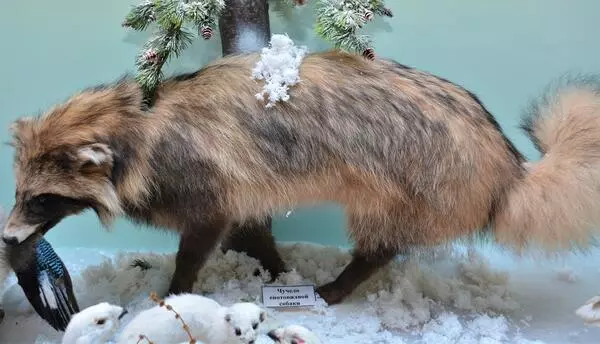
When there is enough food, the lynx is sedentary. When food is sparse, the lynx switches to nomadism—it can cover up to 30 km a day. The mountain hare is at the core of the lynx’s diet. It constantly preys on birds and small rodents. The lynx rarely pursues small hoofed animals, such as the roe deer, Siberian musk deer, spotted deer, and caribou. Even when not hungry, the lynx can occasionally attack home cats and dogs, foxes, raccoon dogs, and other small animals.
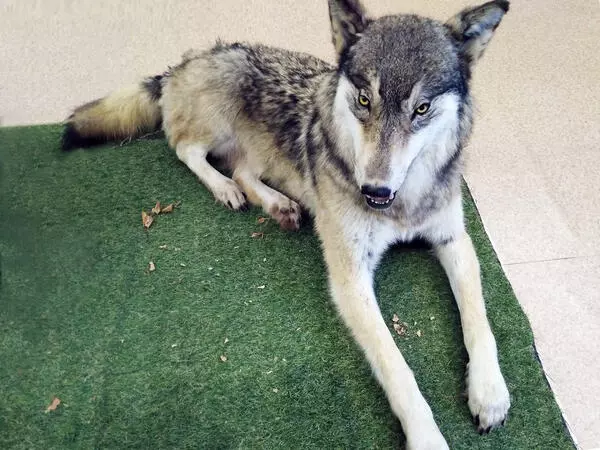
The lynx preys in twilight. Its spotty coat makes it invisible in the patchy sunlight coming through the trees, which makes it easier for the lynx to attack its prey. People believe the lynx is a pest of a predator, but it plays the same role in nature the wolf does: it feeds mostly on sick, weak, and defective animals in the taiga.
It takes a lynx female between 63 and 70 days to carry two or three deaf and blind baby lynxes. A lynx family will make a den under the roots of a fallen tree, in a cavity in the soil, in a split in the rock, in a low tree hollow, or in the windfall. When its offspring reaches the age of one month, the mother starts feeding them solid food. Both parents care for the offspring.
The lynx prefers thick and dark conifers and the taiga, although it can be found in different locations, including, occasionally, mixed woodlands and the wooded tundra. The lynx is a perfect tree and rock climber and a good swimmer. It can also survive in snow above the Arctic pole by preying on fur game.
When there is enough food, the lynx is sedentary. When food is sparse, the lynx switches to nomadism—it can cover up to 30 km a day. The mountain hare is at the core of the lynx’s diet. It constantly preys on birds and small rodents. The lynx rarely pursues small hoofed animals, such as the roe deer, Siberian musk deer, spotted deer, and caribou. Even when not hungry, the lynx can occasionally attack home cats and dogs, foxes, raccoon dogs, and other small animals.
The lynx preys in twilight. Its spotty coat makes it invisible in the patchy sunlight coming through the trees, which makes it easier for the lynx to attack its prey. People believe the lynx is a pest of a predator, but it plays the same role in nature the wolf does: it feeds mostly on sick, weak, and defective animals in the taiga.