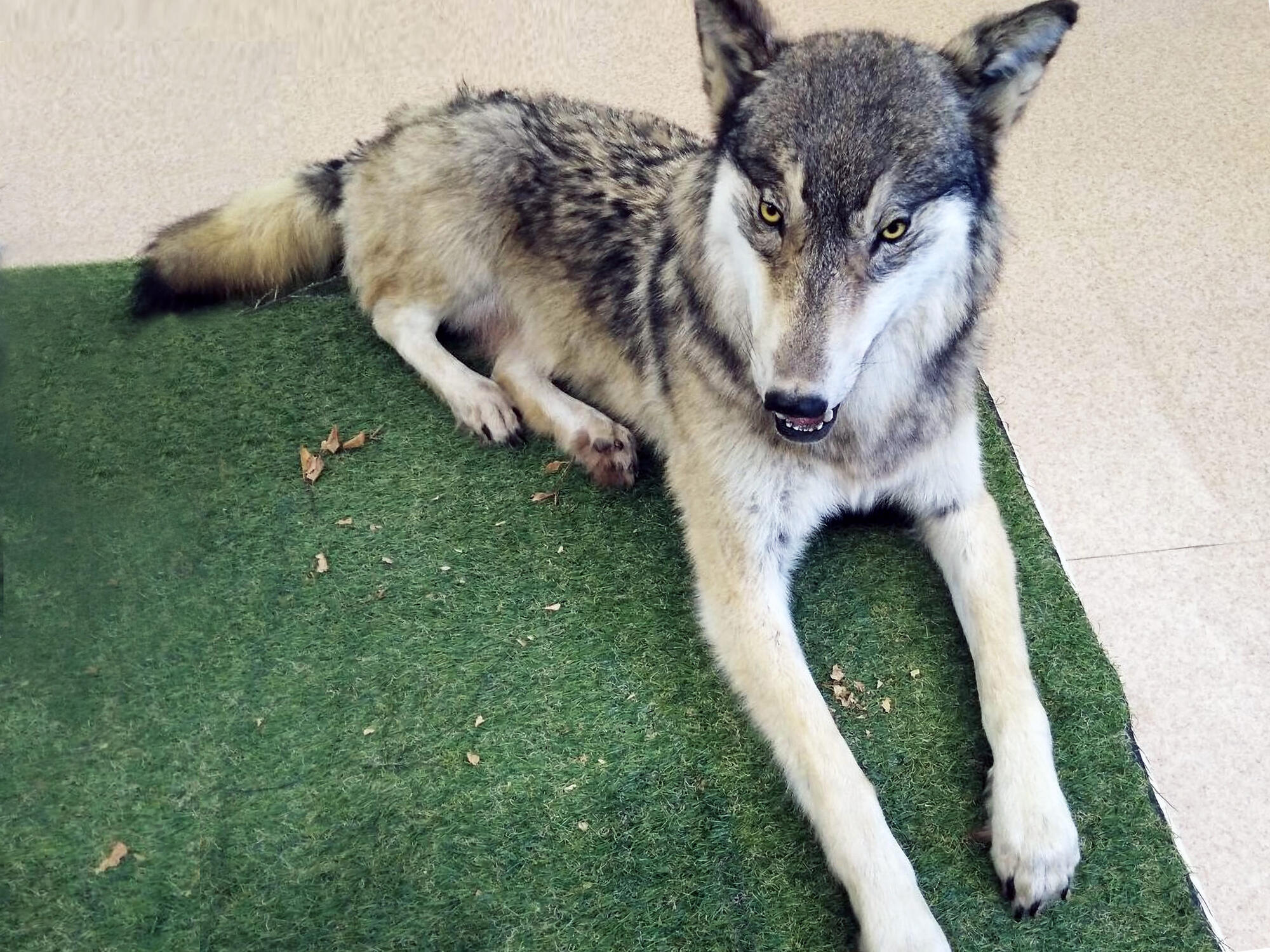


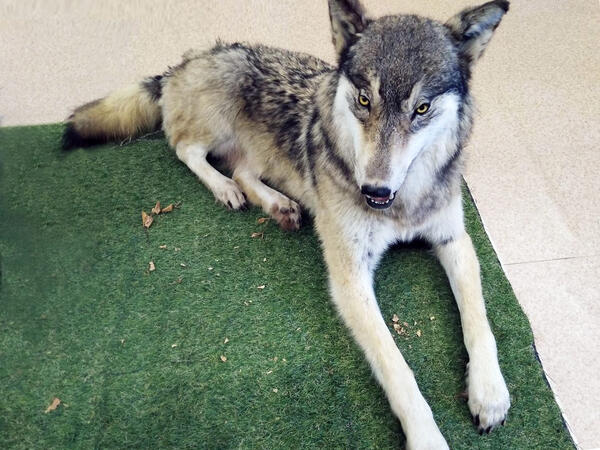
The wolf is a carnivorous mammal in the Canidae /ˈkan-ə-ˌdē/ family. In appearance, the wolf resembles a large dog with pointed ears. A total of 32 wolf species can be identified. They differ in size and coat color. In Russia, the gray wolf and the tundra wolf are the most widespread wolf species.
Most wolves are medium or large predators. Their height in shoulder measures up to 85 centimeters, while their body can reach a length of 150 to 160 centimeters. Overall, the wolf’s size and weight fully comply with Bergmann’s rule—the harsher the environment, the larger the animal. For example, large adult wolves in Siberia and Alaska can weigh more than 77 kilos.
The wolf’s massive snout helps to tell it easily from the jackal and coyote that have narrower and sharper snouts. Besides, the wolf’s face is very expressive. Scientists distinguish more than ten mimic expressions, including rage, anger, submission, affection, joy, wariness, danger, fear, calmness, etc.
The wolf’s tail is relatively long and thick. Unlike the dog’s tail, it is always kept down, and hunters call it ‘the log.’ This body part is a means of communication. Its position and movements indicate the wolf’s mood and status in the pack.
The wolf’s nose is 14 times as large as the human nose, and its sense of smell is a hundred times better. The wolf can sense prey at a distance up to three kilometers.
The wolf can make all kinds of noises, including howling, wailing, whining, growling, roaring, yapping, squealing, and barking. Each of the sounds has a vast number of variations, and the wolf reaction to these sounds is conscious. Using its voice, the wolf can transmit complex messages, including about location of other animals, people coming close, and the beginning of an attack.
The collective singing of a wolf pack is a feature of its social life. Wolves like to howl, which is emotional and allows them to feel their belongingness to the pack better. It is also a way to communicate with other packs and straggler wolves.
The wolf’s range used to cover a great part of Europe, Asia, and North America. However, its range has significantly shrunk—primarily due to human activities. In some parts of the world, the wolf has become nearly extinct.
Most wolves are medium or large predators. Their height in shoulder measures up to 85 centimeters, while their body can reach a length of 150 to 160 centimeters. Overall, the wolf’s size and weight fully comply with Bergmann’s rule—the harsher the environment, the larger the animal. For example, large adult wolves in Siberia and Alaska can weigh more than 77 kilos.
The wolf’s massive snout helps to tell it easily from the jackal and coyote that have narrower and sharper snouts. Besides, the wolf’s face is very expressive. Scientists distinguish more than ten mimic expressions, including rage, anger, submission, affection, joy, wariness, danger, fear, calmness, etc.
The wolf’s tail is relatively long and thick. Unlike the dog’s tail, it is always kept down, and hunters call it ‘the log.’ This body part is a means of communication. Its position and movements indicate the wolf’s mood and status in the pack.
The wolf’s nose is 14 times as large as the human nose, and its sense of smell is a hundred times better. The wolf can sense prey at a distance up to three kilometers.
The wolf can make all kinds of noises, including howling, wailing, whining, growling, roaring, yapping, squealing, and barking. Each of the sounds has a vast number of variations, and the wolf reaction to these sounds is conscious. Using its voice, the wolf can transmit complex messages, including about location of other animals, people coming close, and the beginning of an attack.
The collective singing of a wolf pack is a feature of its social life. Wolves like to howl, which is emotional and allows them to feel their belongingness to the pack better. It is also a way to communicate with other packs and straggler wolves.
The wolf’s range used to cover a great part of Europe, Asia, and North America. However, its range has significantly shrunk—primarily due to human activities. In some parts of the world, the wolf has become nearly extinct.