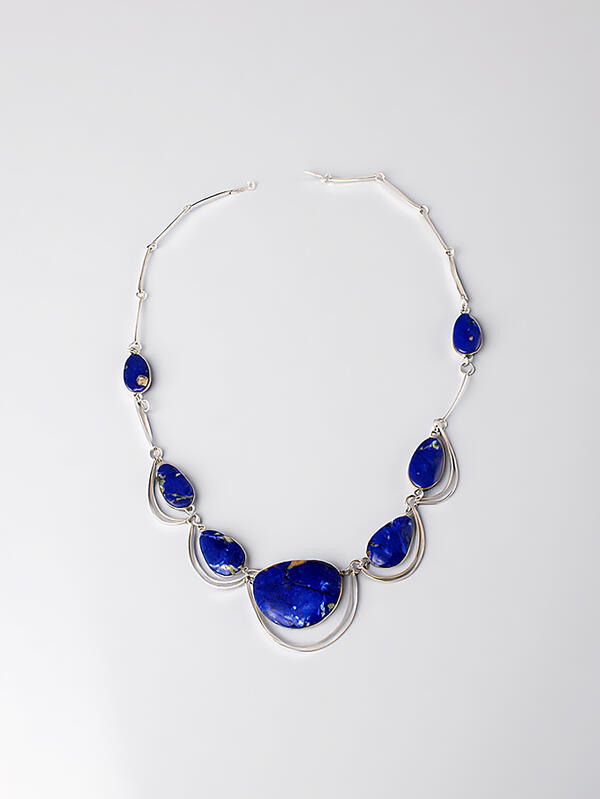
Vladimir Ulyanovich Komarov, like many Ural jewelers, often drew inspiration from nature. The “Dewdrop” necklace, created in the 1980s, is one of the pieces dedicated to this theme.
The composition features metal links shaped as rings and elongated rectangles with three small spheres aligned along the central axis. They alternate with seven rounded, transparent smoky quartz inserts of a brownish color, set in smooth bezels. The centerpiece is accentuated by a large oval pendant.
Smoky quartz, a member of the quartz family, is a beautiful gemstone. Its name comes from its characteristic smoky, often uneven coloration. This relatively transparent stone ranges in hue from light gray to deep brown — though it never reaches true black.
The intensity of color can vary from a faint, hazy tint to rich shades of coffee or chocolate. A distinctive feature of this stone is the gradual darkening from its base to the top, with small defects such as cracks and bubbles more commonly found in the lower portion. For centuries, smoky quartz has been used for making jewelry, figurines, and other decorative objects.
The transparency of smoky quartz perfectly suited Komarov’s vision of dewdrops glistening on leaves. The design of the necklace accentuates the natural beauty of these quartz “droplets”. Unlike many traditional necklaces, “Dewdrop” stands out due to the size and prominence of its central element. The focal point typically features a large stone in a bezel setting or a complex arrangement of substantial links adorned with minerals and decorative details.
In this piece, the metal setting plays a supporting role: it holds the composition together, harmoniously complements the stones, but never overshadows them. This approach reflects the artistic principles developed by Ural craftsmen, who are known for their respectful, almost trusting relationship with multicolored gemstones. In their works, the stone becomes the source of inspiration, guiding the design of the setting and all decorative elements. The gemstone takes center stage, while the setting serves to reveal and enhance its inherent beauty.