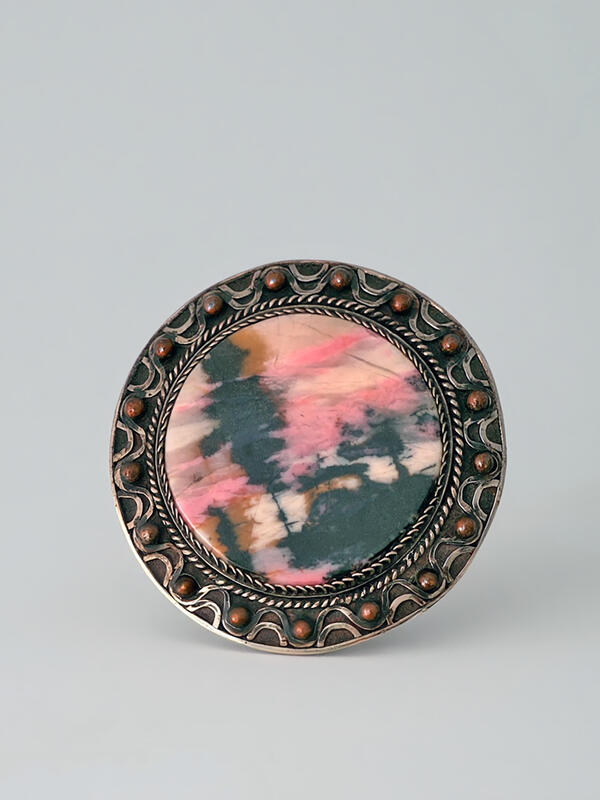
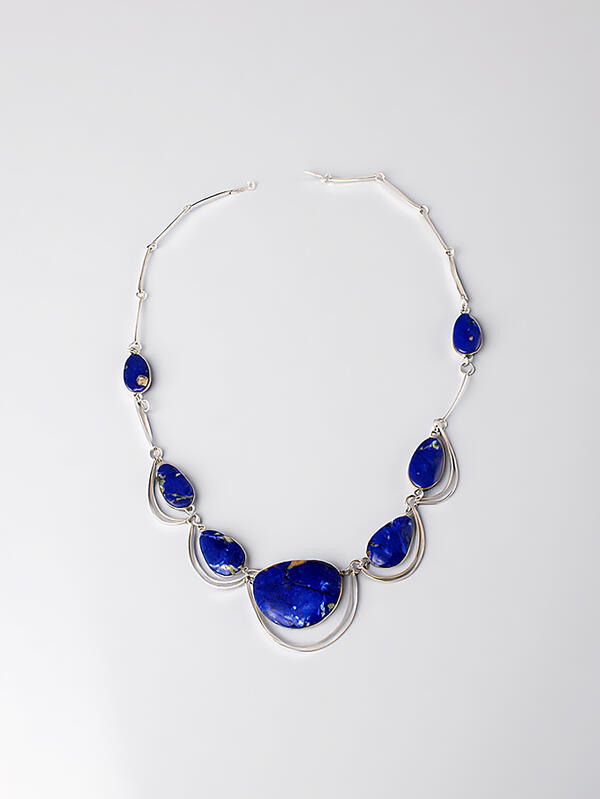
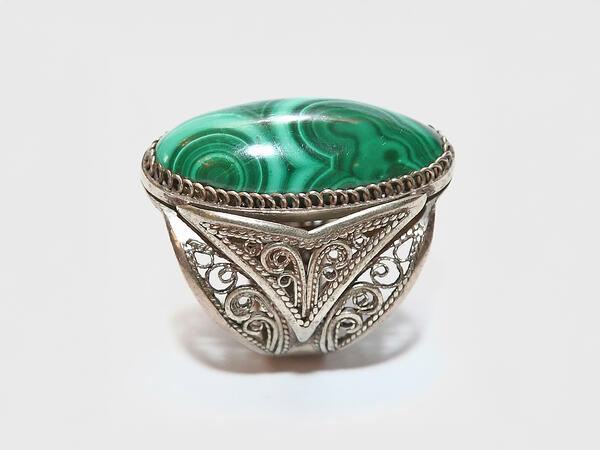
The Ural jeweler Vladimir Ulyanovich Komarov is a master of intricate and labor-intensive filigree technique. In his works, gemstones are often framed by elaborately crafted openwork patterns.
Komarov once reflected: “The tradition of Ural craftsmen is, above all, to reveal the stone as richly as possible. This is the wealth of the Urals! The ornament, in contrast, should be as delicate and fine as possible — just like in Bazhov’s fairy tales. There, handmade artistry is celebrated: skilled labor that is interesting, beautiful, and pleasant in its own right. When I studied at the art college in Tagil, I would often visit the local history museum. I was captivated by the handmade objects on display — especially the intricate knots of twigs. That was filigree work! At the time, I didn’t even know the word. But from that moment, I carried the idea: to cut metal as thinly as possible. Later, as I began my studies, I learned about the old masters and discovered that the Urals had its own renowned filigree artisans. That’s why I believe that I am continuing their legacy.”
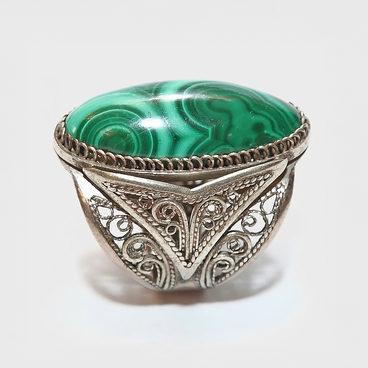
The filigree technique — known in Russia as skan — involves shaping fine threads of gold or silver into delicate openwork patterns, which are then soldered onto a metal base. Filigree motifs vary widely: rope twists, lace-like weaves, herringbone, meandering paths, and smooth “satin stitch”. Individual elements are joined with precision soldering and are often complemented by granulation — tiny metal spheres or balls.
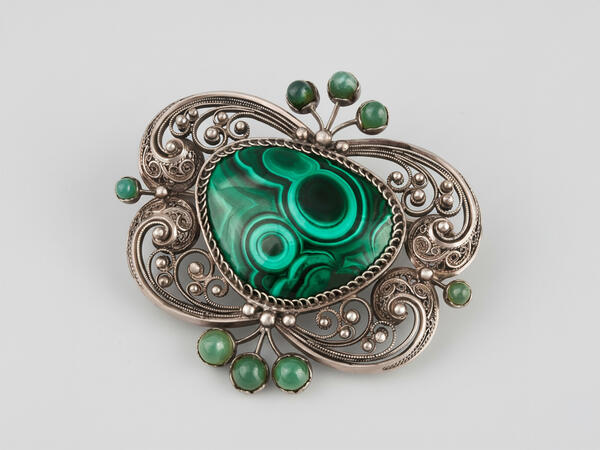
One striking example is Komarov’s “Butterfly” brooch. Symmetrical in form, it features a central cabochon of patterned malachite. The setting is an openwork composition of twisted wire, adorned with a graceful “curl” motif. Two oval elements flank the sides, while four loops rise at the top: three of them are decorated with small metal balls. Delicate curls — three simple and one curved — decorate the sides, and a single large metal ball anchors the base.
Komarov secures the richly patterned malachite in a magnificent lace-like setting. To balance the visual weight of the dense, vibrant stone, he creates a lavish, almost baroque filigree design. The interlaced wings appear to tremble with life, casting delicate, moving shadows across the gem’s green depths.
Malachite is an opaque mineral with a soft, silky luster. Its enduring appeal lies in its spectrum of green tones — from bright turquoise to deep forest green — often arranged in striking bands or “bud-shaped” patterns. Revered for its beauty and ease of carving, malachite is widely used in jewelry, lapidary art, and decorative and applied arts.