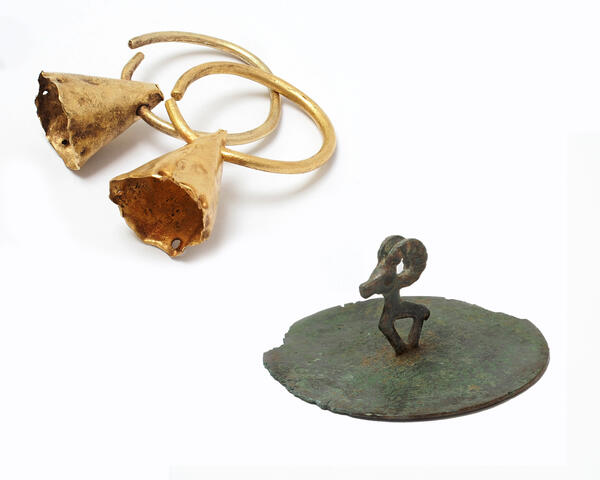
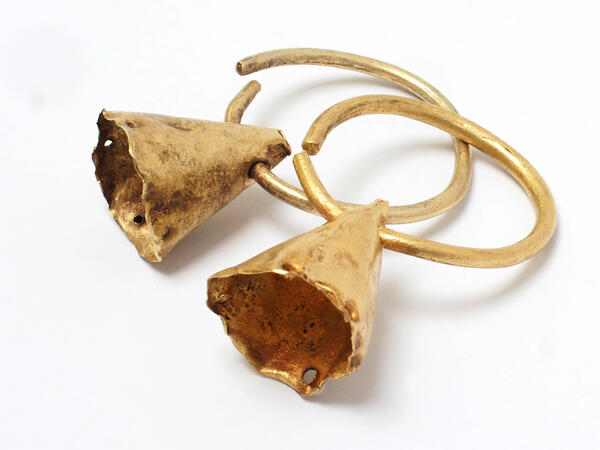
In 1993, the Seversk museum launched the excavations at the Savinsky burial mound. The Tomsk archaeologist and historian Lyudmila Pletneva led the expedition. During excavations, gold earrings in the form of a ring with a hollow cone-shaped pendant were found. Lyudmila Pletneva dated the find to the 5th — 4th century BC and attributed it to the Shelomok culture.
The mound in which the earrings were found was the largest of all. The burial belongs to the elite ones — people with high social status were buried in places like this. The grave was heavily plundered: the skeleton bones were thrown away, so when the archaeologists found them they were not put in the anatomical order.
The Shelomok archaeological culture dates back to the 7th — 3rd centuries BC. It ranged from the mouth of the Tom River in the north to the modern city of Novosibirsk in the south, and from west to east it was found along the entire interfluve of the Ob and the Tom Rivers. Peoples who spoke the Samoyedic languages, which are part of the Uralic language family, inhabited this territory.
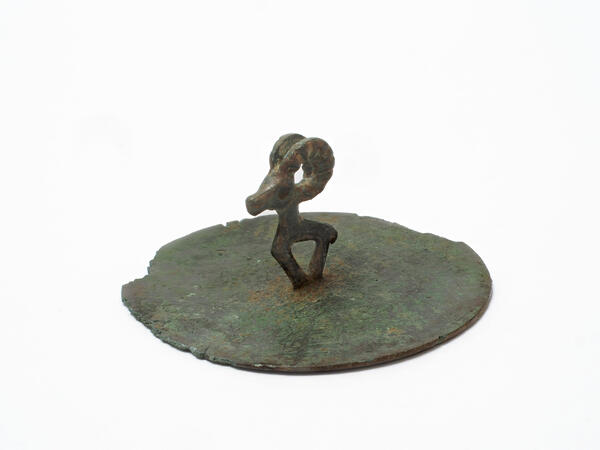
The Shelomok archaeological culture belongs to the Scythian-Siberian cultures. According to written sources, such peoples are known as the Scythians, Savromats, Sakas, and others. Researchers know about the Shelomoks only from archaeological sources. For all these cultures (nationalities), a common defining feature is the so-called Scythian triad: the Scythian-Siberian animal style in jewelry, specific weapons, and horse tack.
The Shelomok people had a variety of occupations: they hunted, fished, and raised livestock, especially horses. They also knew how to cultivate land, create cast bronze tools, and carve bone, process stone, leather, wood, and birch bark. The Shelomok people began using iron rather late — only in the 4th-3rd centuries BC.
They buried the dead in earthen mounds that were up to one meter high. According to the objects in the burials, one can distinguish the graves of the nobility, warriors, and ordinary members of the society. Gold earrings, which are housed in the museum, were found in the burial of a wealthy representative of this culture.
The mound in which the earrings were found was the largest of all. The burial belongs to the elite ones — people with high social status were buried in places like this. The grave was heavily plundered: the skeleton bones were thrown away, so when the archaeologists found them they were not put in the anatomical order.
The Shelomok archaeological culture dates back to the 7th — 3rd centuries BC. It ranged from the mouth of the Tom River in the north to the modern city of Novosibirsk in the south, and from west to east it was found along the entire interfluve of the Ob and the Tom Rivers. Peoples who spoke the Samoyedic languages, which are part of the Uralic language family, inhabited this territory.
The Shelomok archaeological culture belongs to the Scythian-Siberian cultures. According to written sources, such peoples are known as the Scythians, Savromats, Sakas, and others. Researchers know about the Shelomoks only from archaeological sources. For all these cultures (nationalities), a common defining feature is the so-called Scythian triad: the Scythian-Siberian animal style in jewelry, specific weapons, and horse tack.
The Shelomok people had a variety of occupations: they hunted, fished, and raised livestock, especially horses. They also knew how to cultivate land, create cast bronze tools, and carve bone, process stone, leather, wood, and birch bark. The Shelomok people began using iron rather late — only in the 4th-3rd centuries BC.
They buried the dead in earthen mounds that were up to one meter high. According to the objects in the burials, one can distinguish the graves of the nobility, warriors, and ordinary members of the society. Gold earrings, which are housed in the museum, were found in the burial of a wealthy representative of this culture.