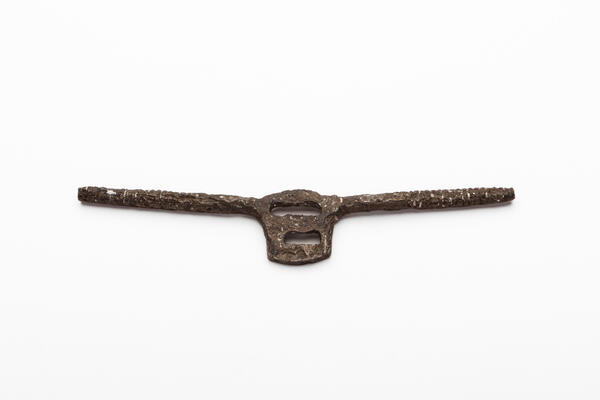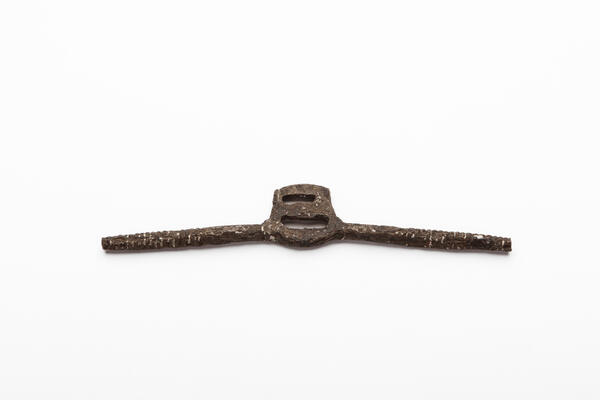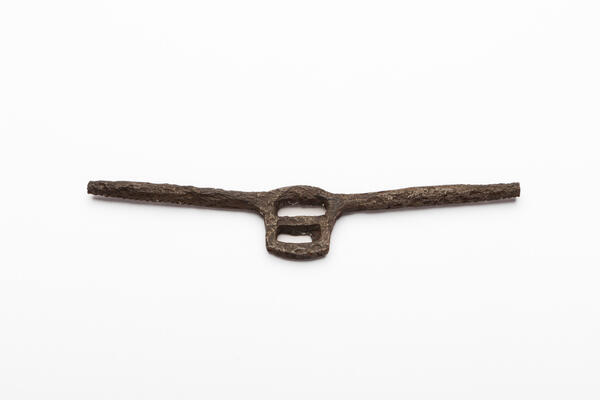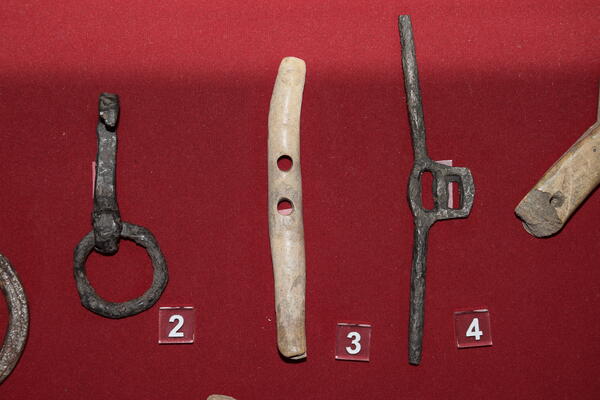
Cheekpieces are part of an ancient horse bridle, a pair of vertical rods that were attached to the curb bit. Cheekpieces have been known since ancient times; they appeared as early as 6,000 years ago. The first cheekpieces were made of bone and horn, then iron elements were added to them. Today, they are out of use because the design of the bridle has changed.
In terms of numbers, domesticated horses in Idnakar were second only to cattle — bulls and cows, which were needed as draft power in agriculture. The Prikamye cows were short and hornless. In the olden days, the Udmurts kept few sheep and rams but used their wool: special scissors and fragments of woolen fabric were found on the territory of the hillfort. Only a few pig bones were found at the site.
People of Idnakar had horses of the local forest type that were smaller and the higher steppe type. They were exchanged for furs with visiting merchants. Horses were used for riding, as evidenced by numerous finds of bits, cheekpieces, stirrups, harness buckles and jewelry.
The worship of the two main domestic animals — cows and horses — is clearly evident in the items found at the site of the Idnakar hillfort. Some hilts of bone one-sided combs are shaped like bulls’ heads. The image of a horse can be found on bronze noise-making pendants, awls, ear picks, combs, bone jewelry, parts of horse harness and clothing patterns.
Since ancient times, the worldview of the Finno-Ugric tribes was based on the unity of nature and man. They lived and thought in images, living in harmony with the world around them. Their folklore and mythology were based on totems.
In Finno-Permian mythology, the horse is a symbol of light, joy, strength and good luck. This is a sacred animal of the sun, so it is often depicted alongside solar signs. The Indo-European origin of the horse image helps to explain its connection with the cult of the sun and fire on Prikamye monuments. In Vedic mythology, the solar deity, who gave people fire, turns into a horse — this mythical horse lives in the light and brings the sun to mortals.