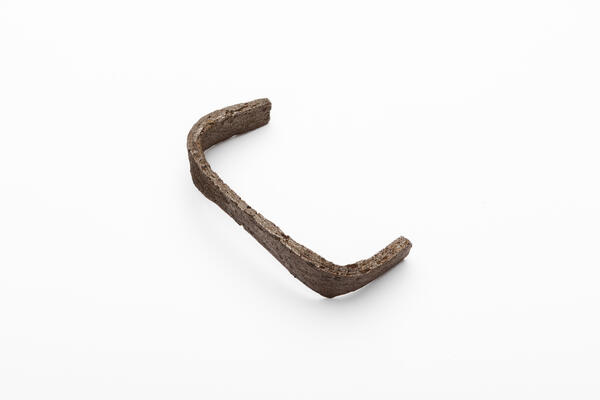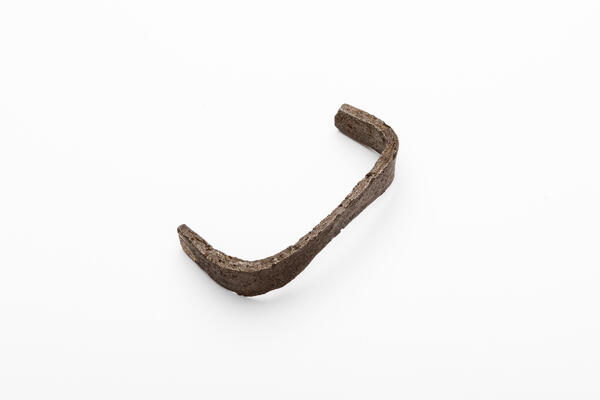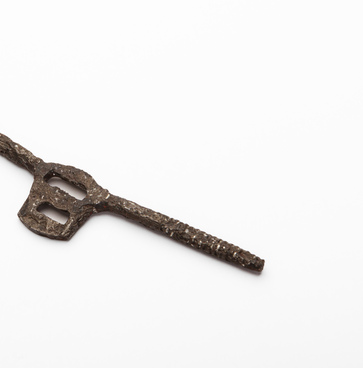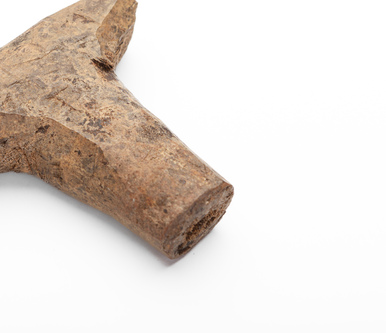
A drawknife is one of the basic woodworking tools; it is used to strip bark from logs and shape wood by removing shavings. A classic drawknife has a curved blade and two handles on the sides. After using the drawknife, the wood becomes clean and light and has no traces of bark. The drawknife is also known as a drawing knife, scraper and shaving knife.
Woodworking tools also include special tools for carving spoons. They are conventionally classified as blades due to their resemblance to knives. Many modern craftsmen view the spoon-carving tools as a separate group of chisels, and some — as a type of scraper. The sharp bend on the working part of the tool helps make hollows in spoon scoops and other wooden utensils.
Wood, the most widespread natural material, was among the first ones that primitive people started to use. Wood is available and easy to process, it has good buoyancy and durability. Traditionally, wood was used to carve dishware, hollow out boats and build houses.
Objects made of wood are rarely found in the Chepetsk cultural deposits, since this material cannot withstand the influence of soil and moisture. The excavations of medieval settlements usually reveal some destroyed fragments and decayed remains of wooden objects, as well as charcoal.
Archaeologists find more solid wooden items in burial grounds: this is associated with the pagan ritual of burying the deceased with their possessions. The deceased people were laid to rest with a set of objects they used during their lifetime so that they had them in the afterlife.
Numerous objects made of metal are found in Chepetsk burial grounds. When in contact with organic matter, the material acts as a preservative. Most often, fragments of coffin boards and dishware (spoons, ladles, bowls and bowls) are preserved, as well as parts of tools and weapons, including arrow shafts. The “afterlife sets” might also include wooden combs and other things made of wood, such as various containers and tuyes boxes.
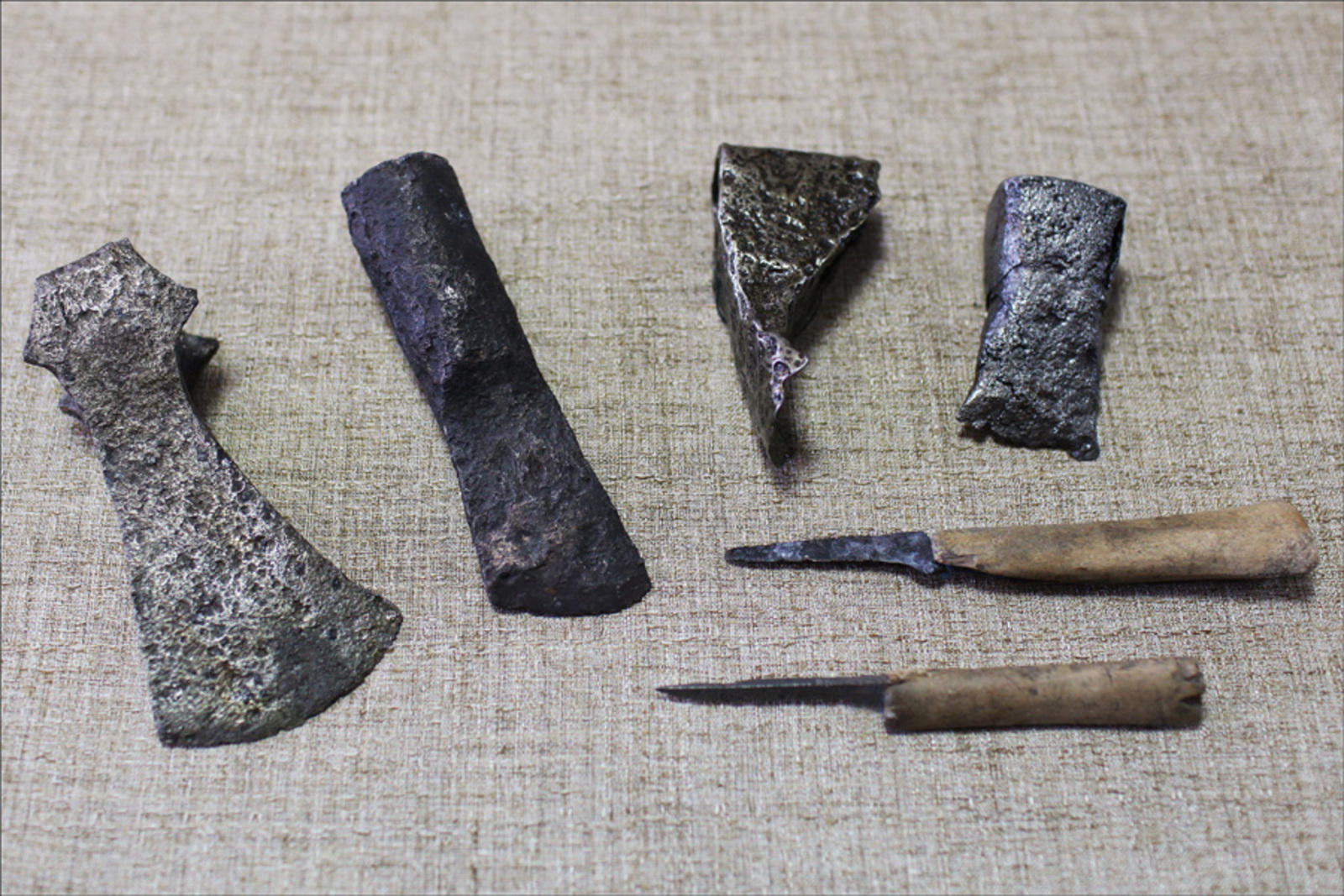
Old craftsmen had their own woodworking secrets, which have hardly been preserved. The state of woodworking can be judged from the tools that were found at the site: eyed and socketed axes, adzes, simple and socketed chisels, plows, drawknives and forged nails. Most of these items can still be used, even after a thousand years.