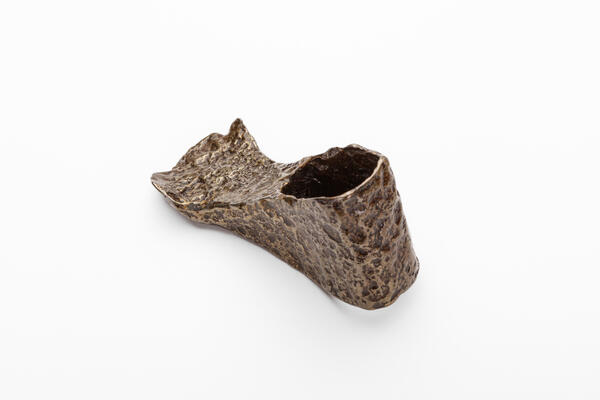
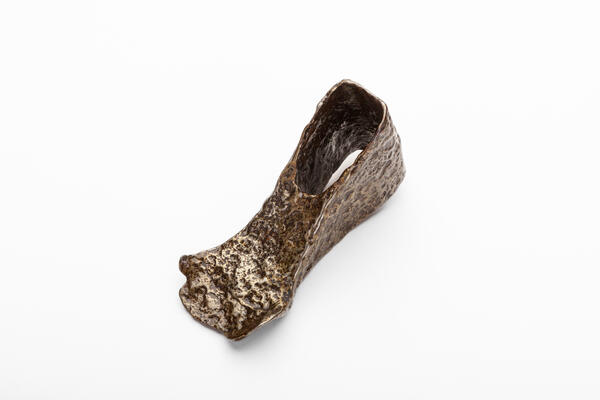
An adze is a stone or metal woodworking tool. It is similar to an ax but with the cutting edge perpendicular to the handle rather than parallel. The adze is one of the few ancient tools that are still used by carpenters.
Historically, wood was the main material in Udmurtia for building houses, fortresses and towns. The medieval hillfort of Idnakar on the Soldyr hill was built over a thousand years ago.
People of Idnakar were engaged in agriculture, animal husbandry and pottery. There were also professional blacksmiths and jewelers. Their life and culture can be studied from individual finds of metal and ceramics since the hillfort itself was built completely of wood and therefore decayed.
The busiest craftsmen in medieval Idnakar were carpenters. Houses, boats, tools, furniture, dishes — almost everything was built from wood. High-quality woodworking tools were made by Idnakar blacksmiths. The skill of Prikamye carpenters can be judged from the rich variety and quality of the tools they worked with: eyed and socketed axes, adzes, chisels, planes and drawknives.
Adzes were necessary for building houses: they were used to make grooves in logs. A typical Idnakar dwelling was a log building without a foundation. All dwellings were rectangular and approximately equal in size — six by eight meters. Log houses were low, about ten rows of logs high, but inside, houses seemed more spacious because they had no ceiling.
A hearth made of dry puddle clay was placed in the center of the log house. To prevent it from crumbling, it was reinforced with a wooden frame, and a simple conical oven was made of stones. Smoke came out through holes in the roof, which was covered with splint logs, bark and bast.
Along one of the walls of the house were plank beds. The house also had either a rectangular or round storage pit for supplies, which sometimes was located near the hearth and could be up to one meter deep. The walls of the pit were lined with boards, frames made of splint logs, bast or birch bark, which were reinforced with stakes in the corners.