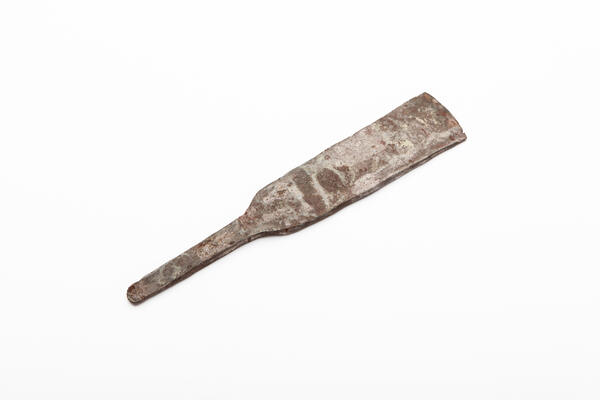
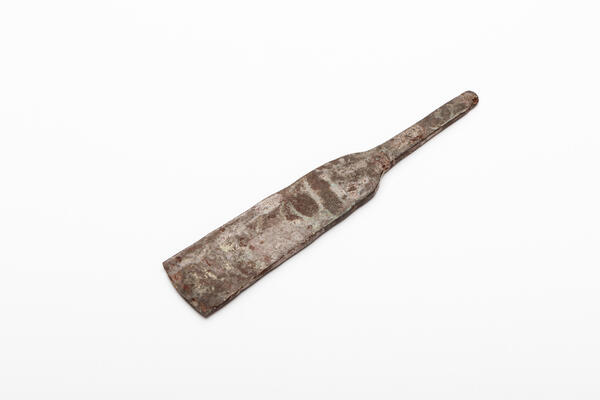
An iron U-shaped plane was found during excavations at the Idnakar site in 1980. A plane, or planer, is a carpentry tool that was used for planing wood. Idnakar carpenters preferred planes with a straight blade, sharpened on one side, and U-shaped bent shanks for wooden handles.
The plane can be compared to a hand plane. With this tool, it is easy to control the thickness of shavings. The plane is a tool for primary wood processing, and craftsmen successfully sanded logs with it. Similar equipment is also called a scraper or drawknife.
High-quality woodworking tools were made by Idnakar blacksmiths. They were forged from high-quality iron and equipped with two comfortable wooden handles. The owner could put family marks, that signified the value of the item, on these handles.
A thousand years later, all wooden handles of tools and wooden structures found in the cultural deposits of the Chepetsk region were decayed. Some insignificant fragments have survived to this day in pagan burial grounds due to their proximity to metal products. Most often, these are fragments of coffin boards, small personal items, dishware (spoons, ladles, bowls and cups), as well as parts of tools and weapons, including arrow shafts.
The skill of Prikamye carpenters can be judged from the rich variety and quality of the tools they worked with: eyed and socketed axes, adzes, simple and socketed chisels, plows, drawknives and forged nails. Most of these items can still be used.
Wood was and still is the main material in Udmurtia. It is used to make log houses, partitions, rafters, floors, furniture and boats. In the Middle Ages, wood was the only raw construction material in the Cheptsa River basin. The most common types of carpentry timber were pine and spruce. These species were used in all categories of buildings in fortified and unfortified villages, furniture, vehicles and household utensils.