

#1
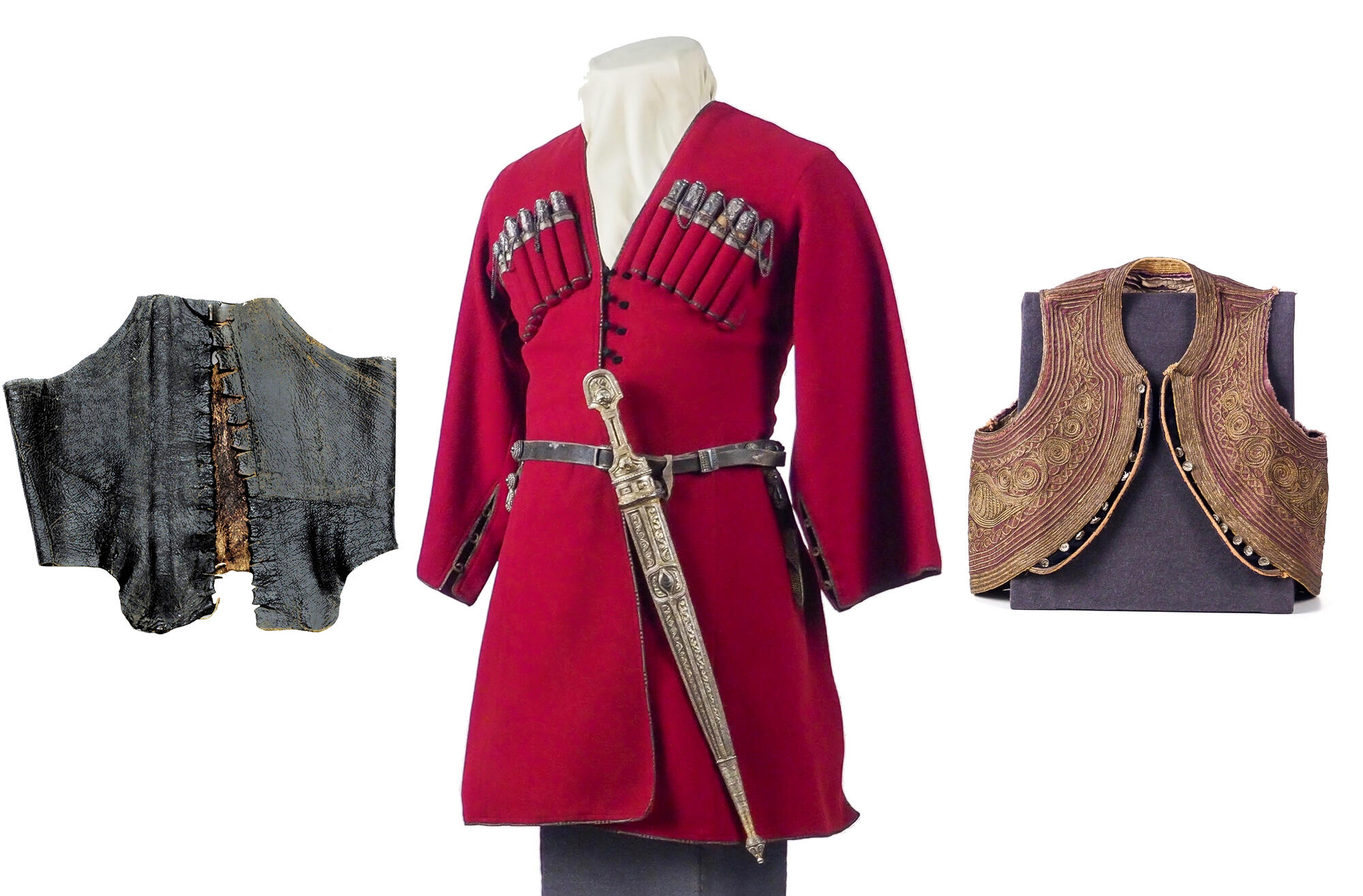
Child’s vest, Maiden corset, Child’s chokha
#16
#17
#2
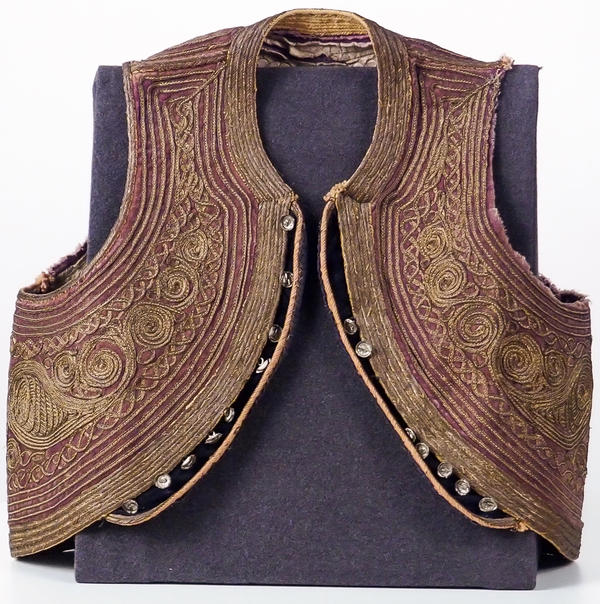
The presented children’s vest - nybal – is made from purple velvet. The whole vest is decorated with an oriental colour motif not typical of traditional Adyghe ornaments. The decoration is done with a gold-brocade soutache.
A soutache is a narrow decorative braid of silk threads. Originally it was used to fringe clothes with precious stones. Later soutache embroidery began to be perceived as a separate element which seamstresses used to decorate dresses in accordance with their taste and design, and soutache turned into a decoration in its own right.
Embroidered on the back of the vest is the Tree of Life with paisley shoots on either side. The ornament on the front develops into exquisite whorls. The ornament of the whole vest is skirted with parallel soutache lines repeating the contour of the vest.
Many ornate articles of clothes were brought to Russia from the Ottoman Empire. For many centuries, beginning from the middle ages, the Circassians had had good contacts with merchants from the Mediterranean and Middle Eastern states and empires. In the 17th - early 19th century, the Ottoman-Circassian relations were based on mutually beneficial cooperation despite the fact that the Ottomans had only 5-7 coastal fortresses along the Circassian borders (Adyghe ethno-political space) to trade with the Adyghes from.
According to different sources which describe Ottoman-Circassian trade, the value of goods from the Ottoman Empire that landed in Circassia could reach up to 600,000 silver roubles. Of special demand in Circassia were monochrome silk fabrics, primarily velvet, and various textile items – golden threads, cannetille, etc.
Having analysed the ornament on the vest, the experts made a suggestion that it had come to Circassia from the Ottoman Empire in the 19th century. By that time the techniques of the Turkish seamstresses had reached such heights that their embroidery was perceived as true art, even when it was used to decorate everyday things – clothes, underwear, headdresses, belts and handkerchiefs. The most popular types of goldwork in Turkey were raised cording, soutache and cannetille (thin metal thread) embroidery.
The ornament on the vest belongs to the Turkish rococo style which appeared in the Ottoman Empire in the 19th century. Flower garlands, big acanthus leaves, paisley shoots and various whorls were characteristic of it. Exquisite decoration of this nybal goes to show that it was part of a set of children’s festive clothes.
A soutache is a narrow decorative braid of silk threads. Originally it was used to fringe clothes with precious stones. Later soutache embroidery began to be perceived as a separate element which seamstresses used to decorate dresses in accordance with their taste and design, and soutache turned into a decoration in its own right.
Embroidered on the back of the vest is the Tree of Life with paisley shoots on either side. The ornament on the front develops into exquisite whorls. The ornament of the whole vest is skirted with parallel soutache lines repeating the contour of the vest.
Many ornate articles of clothes were brought to Russia from the Ottoman Empire. For many centuries, beginning from the middle ages, the Circassians had had good contacts with merchants from the Mediterranean and Middle Eastern states and empires. In the 17th - early 19th century, the Ottoman-Circassian relations were based on mutually beneficial cooperation despite the fact that the Ottomans had only 5-7 coastal fortresses along the Circassian borders (Adyghe ethno-political space) to trade with the Adyghes from.
According to different sources which describe Ottoman-Circassian trade, the value of goods from the Ottoman Empire that landed in Circassia could reach up to 600,000 silver roubles. Of special demand in Circassia were monochrome silk fabrics, primarily velvet, and various textile items – golden threads, cannetille, etc.
Having analysed the ornament on the vest, the experts made a suggestion that it had come to Circassia from the Ottoman Empire in the 19th century. By that time the techniques of the Turkish seamstresses had reached such heights that their embroidery was perceived as true art, even when it was used to decorate everyday things – clothes, underwear, headdresses, belts and handkerchiefs. The most popular types of goldwork in Turkey were raised cording, soutache and cannetille (thin metal thread) embroidery.
The ornament on the vest belongs to the Turkish rococo style which appeared in the Ottoman Empire in the 19th century. Flower garlands, big acanthus leaves, paisley shoots and various whorls were characteristic of it. Exquisite decoration of this nybal goes to show that it was part of a set of children’s festive clothes.
#18
Maiden corset
#11
#6
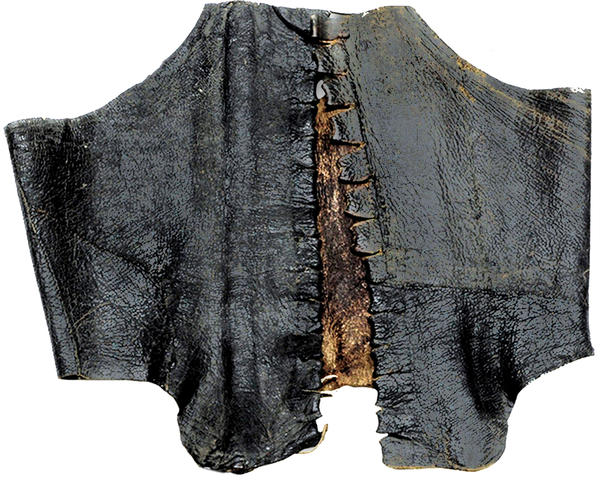
The corset – ‘shokhta’ – was part of the traditional costume of Adyghe girls. They wore it only in girlhood. A girl received her first corset when she turned 9 or 10. Before putting it on for the first time she had to clasp her index finger and thumb around her wrist. If she did not manage to do that, then the girl was left without a corset, until she spent some time on a strict diet.
It was not customary to take off the corset: this could be done only during bathing or in order to replace torn or broken parts.
The Adyghes’ beauty ideal was an elegant, slender girl with a thin waist and flat chest. This distinguished them from other peoples who preferred plumper women with rounded shapes. In 1724, the French consul in Crimea Xaverio Glavani mentioned in his notes about “the famous Circassian custom of putting girls” waists in Morocco leather to make the figure slim and delay the development of breasts, for it is considered indecent for a girl to have an ample bust’.
The corset started from the collarbones and ended below the waist. It was laced up and tightened from behind. It was not intended to hide the flaws of the figure, but rather to form it in accordance with the ideas on beauty and health. Thin wooden strips were sewn into the corset at the front, which limited the breast growth. Another plate was placed behind, along the spine: with it, girls learned to maintain an upright posture.
Maiden corsets were made of Morocco leather — finely dressed sheep or goat skin, which was usually dyed in bright colours.
Married women did not wear such corsets. Under the dress, they wore a small corsage that fitted the waist and helped maintain a slim figure.
The Adyghe women’s costume, in addition to the corset, included an undershirt made of white fabric, spacious sirwal, a small caftan sewn after the male chokha, and a long oversized dress worn over it. The outerwear would be richly decorated with gold and silver embroidery. On the head girls always wore small caps of various shapes — orb, tall or in the form of a truncated cone. Such items could be casual or festive, decorated with embroidery and silver toppers. Married women from noble families covered their heads with a shawl over the caps.
It was not customary to take off the corset: this could be done only during bathing or in order to replace torn or broken parts.
The Adyghes’ beauty ideal was an elegant, slender girl with a thin waist and flat chest. This distinguished them from other peoples who preferred plumper women with rounded shapes. In 1724, the French consul in Crimea Xaverio Glavani mentioned in his notes about “the famous Circassian custom of putting girls” waists in Morocco leather to make the figure slim and delay the development of breasts, for it is considered indecent for a girl to have an ample bust’.
The corset started from the collarbones and ended below the waist. It was laced up and tightened from behind. It was not intended to hide the flaws of the figure, but rather to form it in accordance with the ideas on beauty and health. Thin wooden strips were sewn into the corset at the front, which limited the breast growth. Another plate was placed behind, along the spine: with it, girls learned to maintain an upright posture.
Maiden corsets were made of Morocco leather — finely dressed sheep or goat skin, which was usually dyed in bright colours.
Married women did not wear such corsets. Under the dress, they wore a small corsage that fitted the waist and helped maintain a slim figure.
The Adyghe women’s costume, in addition to the corset, included an undershirt made of white fabric, spacious sirwal, a small caftan sewn after the male chokha, and a long oversized dress worn over it. The outerwear would be richly decorated with gold and silver embroidery. On the head girls always wore small caps of various shapes — orb, tall or in the form of a truncated cone. Such items could be casual or festive, decorated with embroidery and silver toppers. Married women from noble families covered their heads with a shawl over the caps.
#19
Children’s chokha
#12
#9
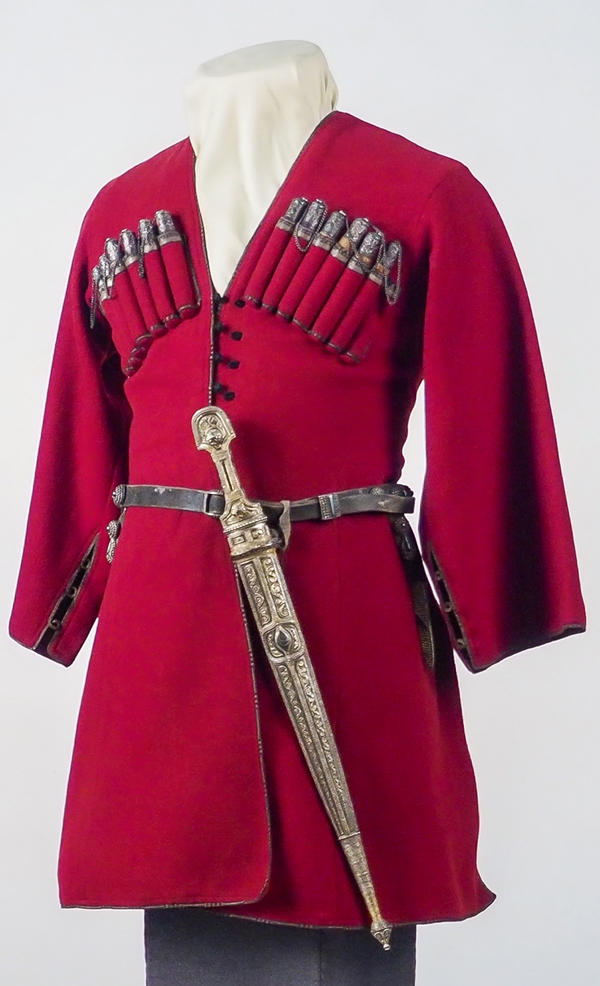
The children’s chokha (tsyy) in this exhibition looks exactly like the traditional clothes of adult Adyghe men, but is much smaller in size. The Circassian used to bring up their boys as warriors, and that is why they, from a very young age, had to get used to genuine men’s clothes and its essential attributes: cases for bullets, daggers, etc.
Circassian men’s national clothes were rather conservative. No decorations were allowed on them; the chokhas looked like military uniform. The Circassian men wore them all the time: at home, at work, in military campaigns and even on festive days.
Circassian men’s national clothes were rather conservative. No decorations were allowed on them; the chokhas looked like military uniform. The Circassian men wore them all the time: at home, at work, in military campaigns and even on festive days.
#13
Сorrespondent of the English newspaper The Times J.A. Longworth, who came to Circassia in 1839 and spent about a year there, wrote:
But the circumstance which particularly deserves attention is, the very uniform character of their costume, not only in the tout ensemble, but in its most trifling details and adjustment, which, while giving them the appearance of one family, are the outward signs of the congeniality of sentiments and customs which makes them so in reality.
#14
The shabbier a chokha was, the more respected was its owner. Baron and Major General Karl Staal, in his Ethnographic Review of the Circassian People, noted:
…Wearing shabby clothes is not in the least shameful, neither for the rich nor for the poor. The neglect for dandyism is even seen as an attribute of a genuine chevalier.
#15
The new chokha profusely decorated with galloons (bands made from golden threads) did not produce a good impression upon the Adyghes, regardless of the fact that many travelers called Circassian national clothes the finest and most elegant clothes in the Caucasus.
Famous Adyghe writer Khan Girey wrote: It should be noted that excessively sumptuous clothes is seen by the Circassians as something to be frowned upon, so they try to show off their good taste rather than their clothes.
Traditional chokhas were mostly made from homespun cloth. That is why their colors are the same as natural shades of wool: black, grey or brown. To create colored chokhas, artisans used various natural colorants. White chokhas were rare: they could only be worn by Adyghe princes, and only on festive days.
Famous Adyghe writer Khan Girey wrote: It should be noted that excessively sumptuous clothes is seen by the Circassians as something to be frowned upon, so they try to show off their good taste rather than their clothes.
Traditional chokhas were mostly made from homespun cloth. That is why their colors are the same as natural shades of wool: black, grey or brown. To create colored chokhas, artisans used various natural colorants. White chokhas were rare: they could only be worn by Adyghe princes, and only on festive days.
read morehide
00:00
00:00
1x
Child’s vest, Maiden corset, Child’s chokha
Exhibition
2
 Point your smartphone camera to open in the app
Open in app
Share