Font
Color
Graphics
Изображение точки

To see AR mode in action:

1. Install ARTEFACT app for iOS or Android;

2. Find the exhibition «Culture and Way of Life of the Adyghes»

3. Push the «Augmented reality» button and point your phone's camera at the exhibit;

Скрыть точки интересаПоказать точки интереса
Показать в высоком качестве

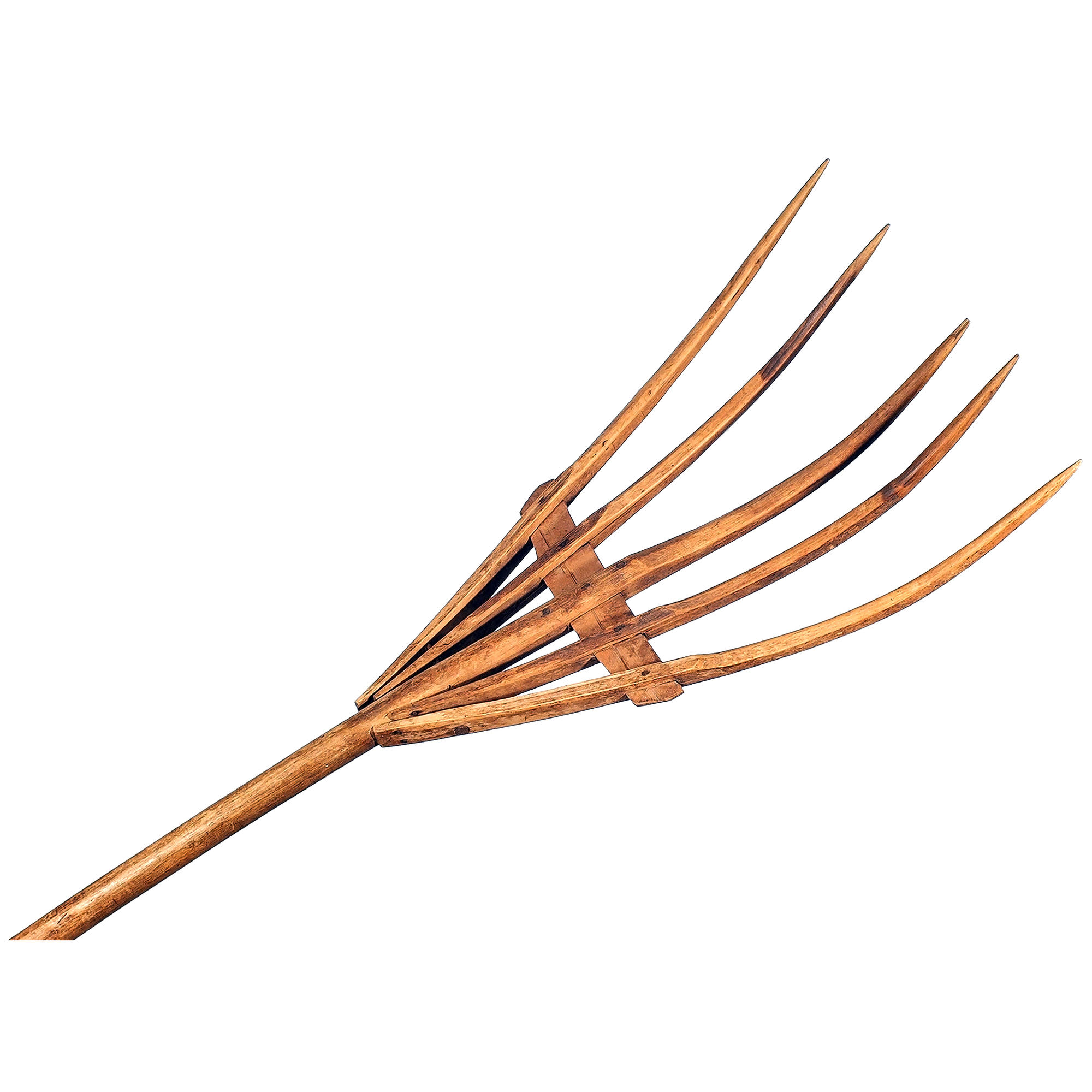
Wooden fork

Creation period
Early 20th century
Dimensions
182x45 cm
Length 182 cm, width 45 cm
Technique
Wood
11
Open in app
#1
Wooden fork
#2
In order to do good quality work in the field, the Adyghes used different implements the oldest and most universal of which was a wooden fork. Different forks were used for different agricultural purposes – a spading fork to dig the soil, and make beds, or loosen the ground after winter, a piercing fork to penetrate the ground and improve gas exchange in the soil, a hayfork to move hay, etc. Various types of forks differed from one another by specific features of the design. 

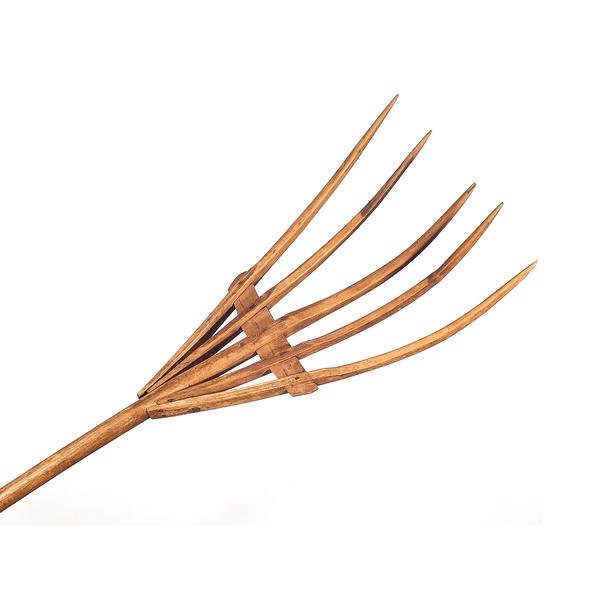
The fork similar to the one presented in the museum was called by Adyghes ‘kuah’jo’. Usually they were made entirely of wood. A fork like that consisted of a staff, the length of which could exceed 1.5 meters, and of three to seven slightly curved teeth. The teeth were held together with a crossbar to distribute the load evenly and to prevent the instrument from bending, cracking and breaking when working.

#5
The Adyghes have known efficient and well developed farming techniques since very old times. Even foreigners were amazed at the level of their tillage skills. For example, there is a record of the first impression of Circassia made by explorer Edmund Spencer in early 19th century:
“From the first moment I entered the valleys of the Caucasus, the aspect of the country and the population far surpassed my most sanguine expectations. Instead of finding it a mountain desert inhabited by hordes of savages, it proved to be, for the most part, a succession of fertile valleys and cultivated hills… there was hardly an uncultivated spot to be seen; immense herds of goats, sheep, horses, and oxen were browsing in every direction among herbage …”.
#7
Circassians cultivated land both in flat and mountainous territories and the rules of land use in those regions were markedly different. In plains and partly in foothills, they followed the land rotation system. A crop would only be grown once. Every year farmers rotated seeding plots. They ploughed with wooden ploughs and iron-tipped ploughs drawn by oxen. 

In mountainous areas, it was slash-and-burn agriculture. Farmers cut and burned trees and bushes and created artificial terraces with complex soil irrigation and protection systems. They tilled the land manually with the help of hoes. 

The main grain cultures in the life of the Adyghe people were millet and barley. The latter usually served as cattle fodder, for horses in particular. Millet was the staple food of Circassians themselves. They cooked millet kasha in cauldrons; brewed millet beer bouza, or mead. They grew bread cereals not only for their families but also to sell. Apart from cereals, Circassians grew pumpkin and beets, beans and onions, cabbages and other vegetables.
read morehide
00:00
00:00
1x

Wooden fork

Creation period
Early 20th century
Dimensions
182x45 cm
Length 182 cm, width 45 cm
Technique
Wood
11
Point your smartphone camera to open in the app
Share
VkontakteOdnoklassnikiTelegram
Share on my website
Copy linkCopied
Copy
Open in app
To see AR mode in action:
  1. Install ARTEFACT app for 
  2. iOS or Android;
  3. Find and download the «Paintings in Details» exhibition
  4. Push the «Augmented reality» button and point your phone's camera at the painting;
  5. Watch what happens on your phone screen whilst you flip through the pictures.
 
We use Cookies
Cookies on the Artefact Website. We use cookies to ensure that we give you the best experience on our website. If you continue without changing your settings, we'll assume that you are happy to receive all cookies on the Artefact website. However, if you would like to, you can change your cookie settings at any time.
Learn more about useHide
Content is available only in Russian

X

Нашли опечатку?...

%title%%type%