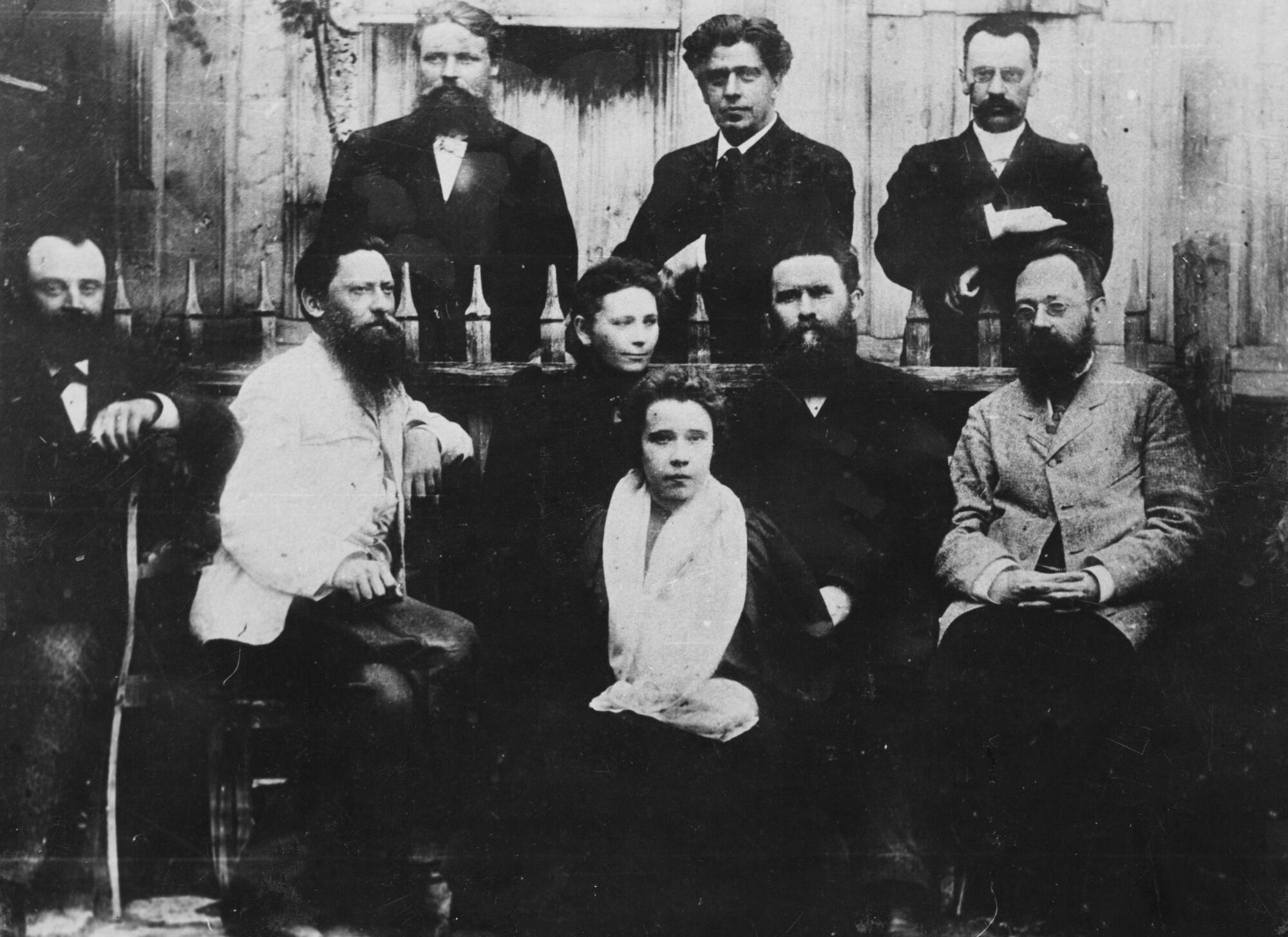


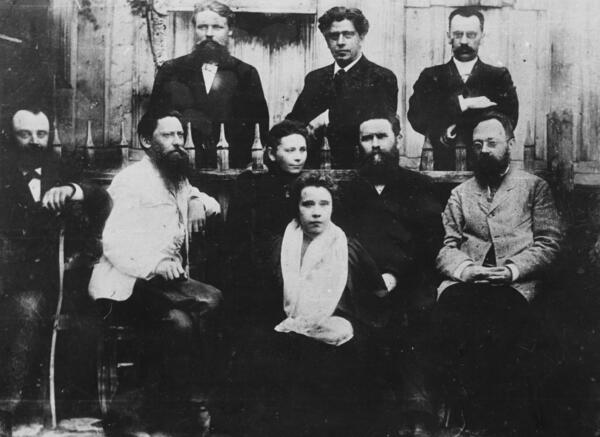
The photo shows the participants of the final court session on the consideration of the ‘Multan case, ” which took place from May 28 to June 4, 1896. Writer Vladimir Korolenko took on the role of the defender of Udmurts at the trial; Grigory Vereshchagin—a scientist, ethnographer, educator, and an ethnic Udmurt—helped him make his case.
In the early 1890s, a typhus epidemic hit the Vyatka Governorate, endangering the lives of the entire working population of the region. Prior to this, the governorate experienced two lean years. The events of the spring of 1892 left their mark on the history of Russian criminal science. On May 5th, one of the residents of the Anyk village went to visit her relative. The weather was hot, and instead of circling around the forest between her and her destination, the young woman decided to cut through the forest. Just outside of her village the peasant girl noticed a man lying in the swampy patch on the trail. She did not see his face - his kaftan was thrown over his head.
She thought that the man was a drunkard who fell asleep on the road and moved on. When she was coming back the same way, she noticed that the “drunkard” was still lying on the trail. Young woman approached him and saw that his head was missing. She ran back home and told her father, who called the police. This event was the inciting incident of the Multan case — one of the most notorious trials in pre-revolutionary Russia.
The case accusing the Udmurts from the Stary Multan village (Malmyzh Uyezd (administrative territorial unit) of the Vyatka Governorate) of bringing human sacrifice to the pagan gods lasted more than four years. It lasted from the day the corpse of the peasant Konon Matyunin was discovered in May of 1892 until June 6, 1896.
In December of 1894, a guilty verdict was passed. This decision sparked backlash in the progressive society of Russia at the time — people came out in support of the Udmurts. To make sense of this complex case, the writer Vladimir Korolenko and a lawyer from the capital Anatoly Koni came down to the village. After reviewing the case file, they found that the investigation was carried out with gross errors and violations; the sentence was canceled and the case was sent for re-trial.
Scientists — doctors, historians, ethnographers — proved the inconsistency of the indictment on the basis of factual and documentary material, including irrefutable results of scientific and medical expertise, which led to an acquittal. All the Udmurts accused in this case were found not guilty.
In 1939, at the request of the residents of Stary Multan, the village was renamed into the village of Korolenko, in the Kizner district of Udmurtia, as a token of gratitude of the Udmurt people to the writer. The Multan process was reflected in later works of art: artist Valentin Belykh created the paintings “Arrest of Multan residents” in 1998. Udmurt poet and writer MikhaIl Petrov wrote the novel “Vuzh Multan” in 1954. Petrov’s novel inspired the Udmurt composer Gennady Korepanov-Kamsky to create the opera ‘Conspiracy’ and the symphony ‘Stary Multan’.
In the early 1890s, a typhus epidemic hit the Vyatka Governorate, endangering the lives of the entire working population of the region. Prior to this, the governorate experienced two lean years. The events of the spring of 1892 left their mark on the history of Russian criminal science. On May 5th, one of the residents of the Anyk village went to visit her relative. The weather was hot, and instead of circling around the forest between her and her destination, the young woman decided to cut through the forest. Just outside of her village the peasant girl noticed a man lying in the swampy patch on the trail. She did not see his face - his kaftan was thrown over his head.
She thought that the man was a drunkard who fell asleep on the road and moved on. When she was coming back the same way, she noticed that the “drunkard” was still lying on the trail. Young woman approached him and saw that his head was missing. She ran back home and told her father, who called the police. This event was the inciting incident of the Multan case — one of the most notorious trials in pre-revolutionary Russia.
The case accusing the Udmurts from the Stary Multan village (Malmyzh Uyezd (administrative territorial unit) of the Vyatka Governorate) of bringing human sacrifice to the pagan gods lasted more than four years. It lasted from the day the corpse of the peasant Konon Matyunin was discovered in May of 1892 until June 6, 1896.
In December of 1894, a guilty verdict was passed. This decision sparked backlash in the progressive society of Russia at the time — people came out in support of the Udmurts. To make sense of this complex case, the writer Vladimir Korolenko and a lawyer from the capital Anatoly Koni came down to the village. After reviewing the case file, they found that the investigation was carried out with gross errors and violations; the sentence was canceled and the case was sent for re-trial.
Scientists — doctors, historians, ethnographers — proved the inconsistency of the indictment on the basis of factual and documentary material, including irrefutable results of scientific and medical expertise, which led to an acquittal. All the Udmurts accused in this case were found not guilty.
In 1939, at the request of the residents of Stary Multan, the village was renamed into the village of Korolenko, in the Kizner district of Udmurtia, as a token of gratitude of the Udmurt people to the writer. The Multan process was reflected in later works of art: artist Valentin Belykh created the paintings “Arrest of Multan residents” in 1998. Udmurt poet and writer MikhaIl Petrov wrote the novel “Vuzh Multan” in 1954. Petrov’s novel inspired the Udmurt composer Gennady Korepanov-Kamsky to create the opera ‘Conspiracy’ and the symphony ‘Stary Multan’.