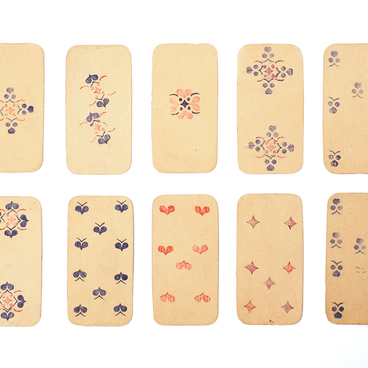
Main Camp Administration (Gulag) provided Soviet construction sites with workers, ranging from plasterers to engineers. The most numerous category of builders in the first years of Seversk were prisoners of correctional labor camps.
The Siberian Chemical Combine was established in 1949 — the facility employed the majority of the town’s population. Initially, plywood and panelized barracks were built for the construction workers. Later, the first factory settlements appeared there. The rest of those coming to the construction site were accommodated in apartments in the Chekist, Iglakovo, and the Beloborodovo villages.
Forests and swamps occupied most land in the construction zone, so roads were the first priority. During the clear-cutting of the areas allocated to build the future town streets (Lesnaya, Komsomolskaya, Pervomayskaya), the workers literally drowned in the mud. Temporary roads were the only means to deliver building materials and tools — these roads were made of felled trees and connected the construction sites with the sawmill, warehouses, and quarries.
The roads were made of logs, which were fastened with driftbolts and secured with thick wire, and then they were covered with boards. The construction workers called them the “roads of life”. They sagged under the weight of cargo, and the vehicles could move only in one direction — therefore, special platforms were built at the crossroads.
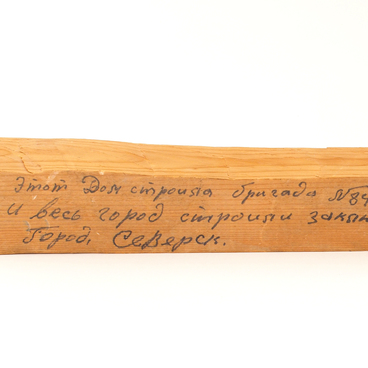
Nowadays, when renovating their apartments, people often find notes written by prisoners — they are hidden in the window sills, walls, under the old wallpaper and pipes. The messages are similar to each other. The convicts did not reveal their names, but mentioned the city’s secret name and emphasized that it was built by convicts and ‘their brothers’, i.e. by military engineers.
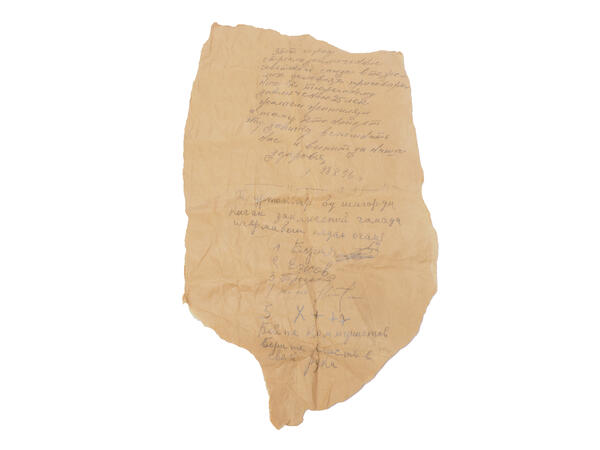
The museum houses several letters of this kind. One of them was found in a switchboard box hidden in a wooden window frame. The prisoner had written a note on a small piece of a cement bag. The text was written with an indelible pencil in Russian and Uzbek languages.
Another letter is dated 1955. The author ironically signed the message with the name of Gogol’s character who was a judge. The note reads as follows,
The Siberian Chemical Combine was established in 1949 — the facility employed the majority of the town’s population. Initially, plywood and panelized barracks were built for the construction workers. Later, the first factory settlements appeared there. The rest of those coming to the construction site were accommodated in apartments in the Chekist, Iglakovo, and the Beloborodovo villages.
Forests and swamps occupied most land in the construction zone, so roads were the first priority. During the clear-cutting of the areas allocated to build the future town streets (Lesnaya, Komsomolskaya, Pervomayskaya), the workers literally drowned in the mud. Temporary roads were the only means to deliver building materials and tools — these roads were made of felled trees and connected the construction sites with the sawmill, warehouses, and quarries.
The roads were made of logs, which were fastened with driftbolts and secured with thick wire, and then they were covered with boards. The construction workers called them the “roads of life”. They sagged under the weight of cargo, and the vehicles could move only in one direction — therefore, special platforms were built at the crossroads.
Nowadays, when renovating their apartments, people often find notes written by prisoners — they are hidden in the window sills, walls, under the old wallpaper and pipes. The messages are similar to each other. The convicts did not reveal their names, but mentioned the city’s secret name and emphasized that it was built by convicts and ‘their brothers’, i.e. by military engineers.
The museum houses several letters of this kind. One of them was found in a switchboard box hidden in a wooden window frame. The prisoner had written a note on a small piece of a cement bag. The text was written with an indelible pencil in Russian and Uzbek languages.
Another letter is dated 1955. The author ironically signed the message with the name of Gogol’s character who was a judge. The note reads as follows,