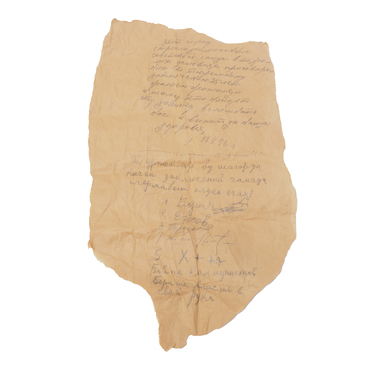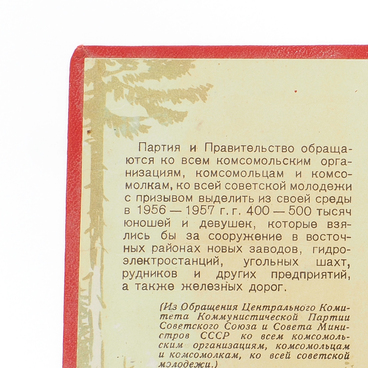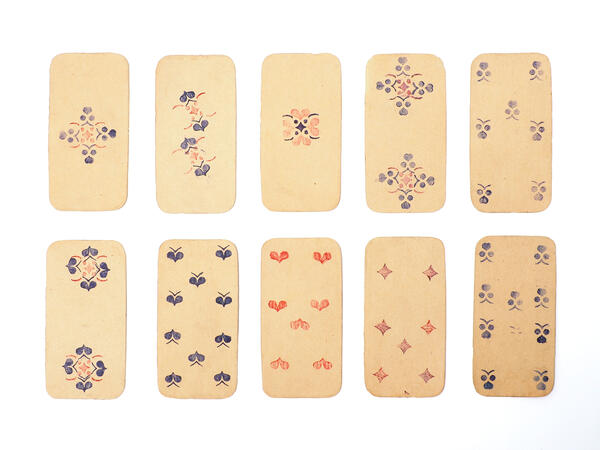
The museum houses many things that belonged to former prisoners, who built the Siberian Chemical Combine and the city of Seversk together with military builders, Komsomol members, and other workers. During the renovation, the townspeople find notes, knives, trowels, and other items hidden in the windowsills. Homemade playing cards are one of these finds. The deck was found during repairs in an apartment at the address: 18, Lenin street, apartment 9. It was made in the mid-1950s.
The cards are rectangular with rounded corners. A stencil, a red and a chemical pencil were used to apply the designation of the suit and drawings to the front side of the cards. The reverse side was left plain white.
The deck that has remained contains 31 cards in four classic suits: hearts, diamonds, clubs, and spades. There are no eight of clubs and sixes of all suits. The eight was most likely lost, but the absence of sixes in the deck is not accidental: in the prison world, even this very word was considered indecent. Therefore, all cards with this name were excluded from the deck.
Card games were the main entertainment of the prisoners. However, the cards were strictly forbidden, so they were made secretly and carefully hidden from the overseers. There were many unwritten rules and nuances in card games played at camps that one had to know well.
In the early years of the construction of the Siberian Chemical Combine and Seversk, prisoners were the largest category of workers. It was necessary to build the main facilities in the shortest time possible. In July 1949, the first part of prisoners arrived at the construction site — more than 4,000 people. They were placed in camp department No. 1, which consisted of barracks for the residence of prisoners and separate facilities designated for the guards.
Many facilities in the city were built by the prisoners. They not only erected buildings but also paved the first streets, manually uprooted stumps, cut down areas of the forest, made sites for the passage of heavy machinery. Since the prisoners participated in the construction work, the pace of construction increased at all sites in the third quarter of 1949.
As of November 20, 1952, there was the maximum number of inmates at the Construction Correctional Labor Camp No. 601 — 35,934 people. However, in 1953, the Presidium of the Supreme Soviet of the USSR passed the Decree on amnesty for prisoners. This deprived the construction site of most of the labor force. The last camp on the territory of Seversk was liquidated in 1976.
The cards are rectangular with rounded corners. A stencil, a red and a chemical pencil were used to apply the designation of the suit and drawings to the front side of the cards. The reverse side was left plain white.
The deck that has remained contains 31 cards in four classic suits: hearts, diamonds, clubs, and spades. There are no eight of clubs and sixes of all suits. The eight was most likely lost, but the absence of sixes in the deck is not accidental: in the prison world, even this very word was considered indecent. Therefore, all cards with this name were excluded from the deck.
Card games were the main entertainment of the prisoners. However, the cards were strictly forbidden, so they were made secretly and carefully hidden from the overseers. There were many unwritten rules and nuances in card games played at camps that one had to know well.
In the early years of the construction of the Siberian Chemical Combine and Seversk, prisoners were the largest category of workers. It was necessary to build the main facilities in the shortest time possible. In July 1949, the first part of prisoners arrived at the construction site — more than 4,000 people. They were placed in camp department No. 1, which consisted of barracks for the residence of prisoners and separate facilities designated for the guards.
Many facilities in the city were built by the prisoners. They not only erected buildings but also paved the first streets, manually uprooted stumps, cut down areas of the forest, made sites for the passage of heavy machinery. Since the prisoners participated in the construction work, the pace of construction increased at all sites in the third quarter of 1949.
As of November 20, 1952, there was the maximum number of inmates at the Construction Correctional Labor Camp No. 601 — 35,934 people. However, in 1953, the Presidium of the Supreme Soviet of the USSR passed the Decree on amnesty for prisoners. This deprived the construction site of most of the labor force. The last camp on the territory of Seversk was liquidated in 1976.