Font
Color
Graphics
Изображение точки

To see AR mode in action:

1. Install ARTEFACT app for iOS or Android;

2. Find the exhibition «Life of Sami People in the 18th–19th Centuries»

3. Push the «Augmented reality» button and point your phone's camera at the exhibit;

Скрыть точки интересаПоказать точки интереса
Показать в высоком качестве

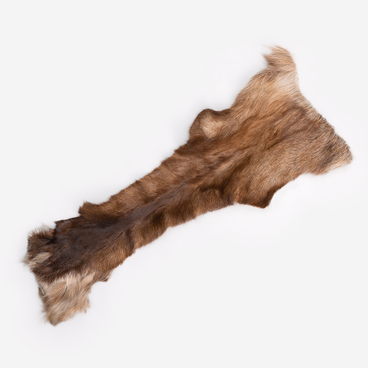
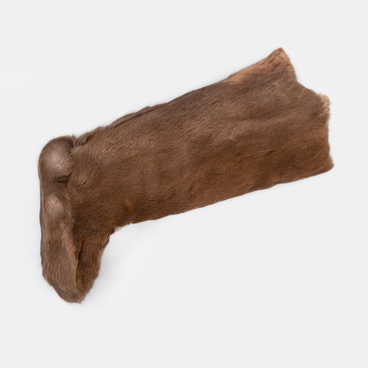
Sami men’s yary boots with pants

Creation period
the 1920s
Place of сreation
the Kola Peninsula, RSFSR
Dimensions
100x32 cm
Technique
deer fur, leather; embroidery
2
Open in app
#2

Yary with pants are winter Sami footwear in the form of long boots made of the skin of young reindeer with fur outside, and with pointed toes raised upwards.

When traveling across the tundra, the Kola Sami wore yary with pants sewn to them. The upper part of the pants was made of two layers of leather. At the waist the pants had a belt, which was tied at the back with straps (a kind of lacing), and at the front there were two straps, one of which had a loop and the other had a button.

Yary were worn by men, women and children alike; their design was similar, with a slight difference in the color of the koyba and the cloth covering. Women’s yary were made mainly of white koyba, men’s yary were made of white lengthwise strips with black or brown inserts.

In her book “Spiritual Culture of the Sami and its Reflection in the Language” Victoria Borisovna Bakula explains how such shoes were worn,

#6

Yary with pants were worn over narrow cloth or fur pants ˂…˃ In cold weather, short (up to the knee) fur shoes — ‘tobry’ were worn over yary.

#7

In order to retain heat, dry grass was put inside the boots. A kanga boot or a boot liner made from the skin of a newborn calf aged from a few days to a month (pyzhik), fur inside, was put on the foot.

Yary retained heat well, substituting for pants and preventing snow from getting in. But at the same time, they had significant disadvantages: they restricted movements when walking fast on skis, and it was hard to dry them. All reindeer footwear quickly gets wet from snow and, not being dried well, ceases to protect from cold.

The shoes were dried from the inside, for which they inevitably had to be turned inside out. This method of drying created great difficulties when hunting, gathering reindeer in herds, and when traveling for days or weeks.

Traditionally, women were in charge of making clothes and shoes, and they also dressed the hides. Shoemaking was a very laborious and complicated process and required great skill on the part of the Sami woman. The Sami people said that the girl who could sew yary was the most desirable bride.

With the arrival of the Izhma-Komi people, Sami yary with pants were replaced by a new type of footwear — the pimy decorated with multicolored cloth.

Nowadays, yary with pants as part of the national dress can be seen only during folk festivals.

#3
View in the State Catalogue
read morehide
00:00
00:00
1x

Sami men’s yary boots with pants

Creation period
the 1920s
Place of сreation
the Kola Peninsula, RSFSR
Dimensions
100x32 cm
Technique
deer fur, leather; embroidery
2
Point your smartphone camera to open in the app
Share
VkontakteOdnoklassnikiTelegram
Share on my website
Copy linkCopied
Copy
Open in app
To see AR mode in action:
  1. Install ARTEFACT app for 
  2. iOS or Android;
  3. Find and download the «Paintings in Details» exhibition
  4. Push the «Augmented reality» button and point your phone's camera at the painting;
  5. Watch what happens on your phone screen whilst you flip through the pictures.
 
We use Cookies
Cookies on the Artefact Website. We use cookies to ensure that we give you the best experience on our website. If you continue without changing your settings, we'll assume that you are happy to receive all cookies on the Artefact website. However, if you would like to, you can change your cookie settings at any time.
Learn more about useHide
Content is available only in Russian

X

Нашли опечатку?...

%title%%type%