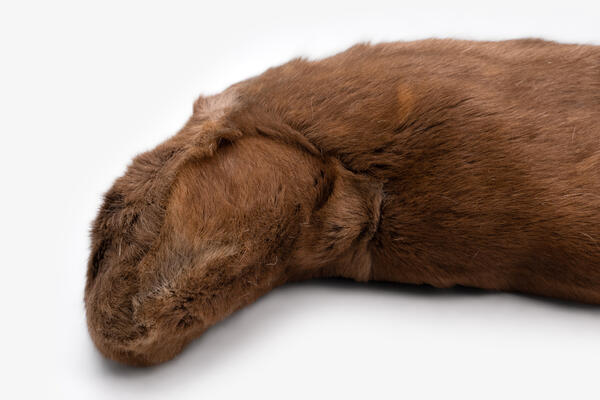
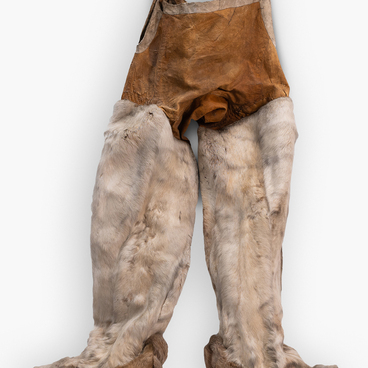
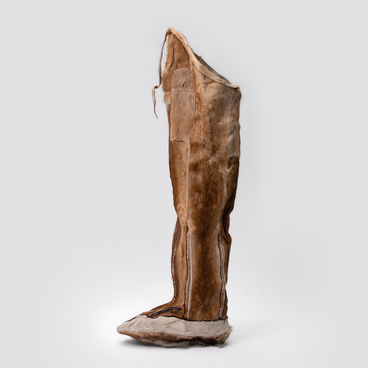
Volpimy are reindeer herder’s footwear made of reindeer skins with the fur on the outside. They were sewn mainly from dark-colored fur. Volpimy and pimy were worn over fur liners — lipty.
Volpimy were made from a type of reindeer hide, called “postel” (bedding), which is the skin of an adult reindeer taken off in winter. Postel was also used for sewing sleeping bags, soviks, while the trimmed hides were used to make fur boot liners, the inside of slippers and felt boots.
There are other varieties of reindeer hides, which the Sami people use for making clothes. Pyzhik is the skin of a newborn calf under one month of age. It was used for sewing headdresses. Nebluy is the skin of a calf aged three months. It was used for sewing upper winter clothes, such as a pechok and malitsa. Vyrostok is the skin of a deer from 6 to 12 months old. It was used to make first-class suede. Kamus, or koyba, is a part of the hide removed from the legs of a reindeer. It is used to sew winter shoes, mittens, and fur mats. Lobashi, or lby (foreheads), is a part of the hide removed from the head of a deer. It is used for sewing the soles of fur shoes, mats, and travel bags. Feathers are part of the hide removed from the underside of the joints of the deer’s legs, around the hooves. It is used for sewing the soles of fur footwear.
The size of the exhibit presented in the Murmansk Museum of Local History corresponds to size 45 of the foot. The volpimy were donated by the reindeer breeding enterprise “Tundra” in 1954.
The “Tundra” agricultural cooperative is the oldest reindeer breeding enterprise in the Murmansk region, one of the first such enterprises in the USSR and the largest in Russia. It is the main employer in the village of Lovozero with such core activities as reindeer breeding, dairy farming, poultry farming, fishing, crop farming, mechanization of production and construction.
The profession of a reindeer herder is still
relevant today. Reindeer mean transportation, food, clothing, culture, customs
and beliefs for reindeer herding families. The Northern National College in the
village of Lovozero provides training in the profession of a “reindeer herder
and machinery operator.”