In the Soviet Union, workers in various fields were awarded a pennant — it was received by those who distinguished themselves in socialist competitions: in industry, agriculture, cultural construction and other sectors.
The first labor competitions between collectives arose back in the 1920s: then mass subbotniks were popular. In 1935, the era of the Stakhanov movement began. In 1958, the communist labor brigade movement was born in the USSR — the highest form of socialist competition. The movement was held under the motto ‘Study, live and work in a communist way.’ Participants in the competition sought early fulfillment of plans, set an example in personal behavior: study, joint cultural recreation, a high level of labor discipline and norms of behavior outside of production.
In the 1970s–1980s, competitions in honor of some events were widespread: for the 100th anniversary of V.I. Lenin, to the 60th anniversary of October. In 1982, the Soviet Union widely celebrated the 60th anniversary of its founding. In the cities and regions of the country, plans were drawn up for a worthy meeting of this anniversary, including the organization of the All-Union Socialist Competition. All enterprises of the city took part in the competition, on the pages of the city newspaper they daily reported on the labor successes of production teams. The course of the competition was recorded in a colorfully designed relay album.
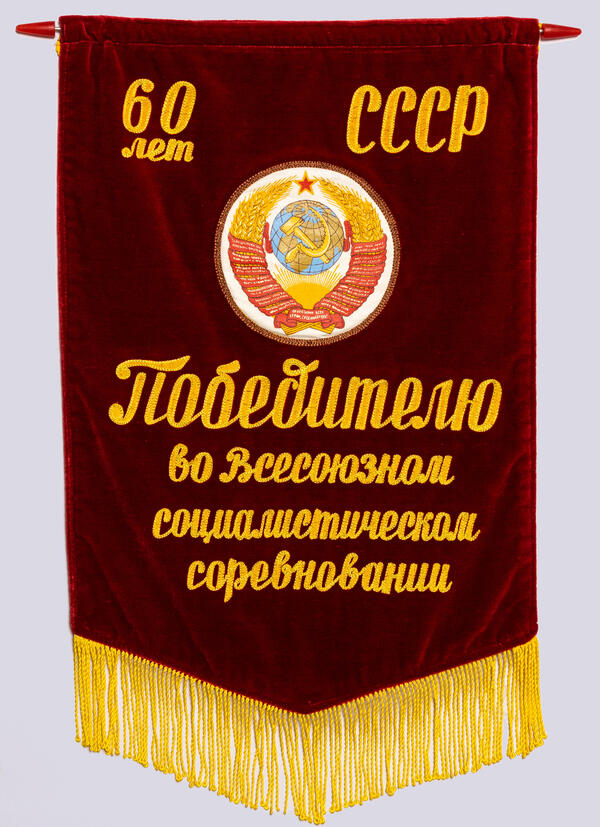
The winner of the All-Union socialist competition among builders in the city of Severodvinsk in 1982 was a team of masons of Construction and Installation Department-5 under the leadership of foreman Nikolai Esaulenko. The brigade was solemnly presented with a pennant, as well as cash prizes and valuable gifts. The name of Nikolai Esaulenko and his advance brigade did not leave the newspaper pages. The brigade took part in the construction of multi-storey brick houses, schools and other social and cultural facilities. In the 1980s, Nikolai Esaulenko donated his working tool and pennant ‘60 years of the USSR. To the winner in the All-Union socialist competition’.
The first labor competitions between collectives arose back in the 1920s: then mass subbotniks were popular. In 1935, the era of the Stakhanov movement began. In 1958, the communist labor brigade movement was born in the USSR — the highest form of socialist competition. The movement was held under the motto ‘Study, live and work in a communist way.’ Participants in the competition sought early fulfillment of plans, set an example in personal behavior: study, joint cultural recreation, a high level of labor discipline and norms of behavior outside of production.
In the 1970s–1980s, competitions in honor of some events were widespread: for the 100th anniversary of V.I. Lenin, to the 60th anniversary of October. In 1982, the Soviet Union widely celebrated the 60th anniversary of its founding. In the cities and regions of the country, plans were drawn up for a worthy meeting of this anniversary, including the organization of the All-Union Socialist Competition. All enterprises of the city took part in the competition, on the pages of the city newspaper they daily reported on the labor successes of production teams. The course of the competition was recorded in a colorfully designed relay album.
The winner of the All-Union socialist competition among builders in the city of Severodvinsk in 1982 was a team of masons of Construction and Installation Department-5 under the leadership of foreman Nikolai Esaulenko. The brigade was solemnly presented with a pennant, as well as cash prizes and valuable gifts. The name of Nikolai Esaulenko and his advance brigade did not leave the newspaper pages. The brigade took part in the construction of multi-storey brick houses, schools and other social and cultural facilities. In the 1980s, Nikolai Esaulenko donated his working tool and pennant ‘60 years of the USSR. To the winner in the All-Union socialist competition’.