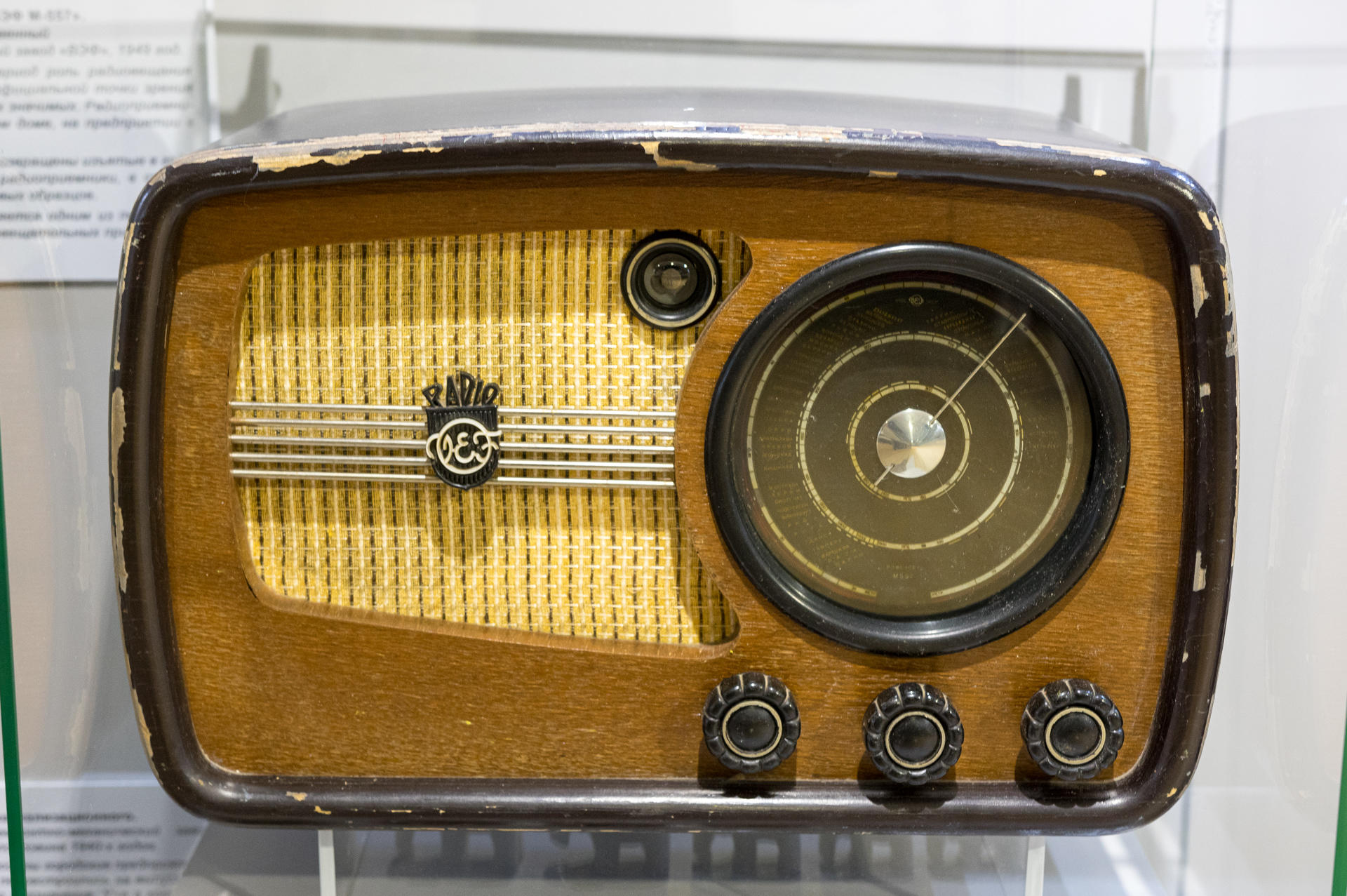


One of the symbols of Soviet post-war life is a tube radio. During the war years, people lost the habit of using radios: then they were widely practiced by the authorities of the People’s Commissariat for Communications. Newspaper articles testify that in Molotovsk (as Severodvinsk was then called) the last radios were returned to their owners by 1946. At the same time, at the enterprises of the country, the production of tube radio of new samples began — unlike simple loudspeakers, they caught several radio stations.
In 1945, the Riga Electrotechnical Plant VEF mastered the production of the VEF M-557 radio broadcasting receiver. Finishing of precious woods, unusual design made the device stand out from the background of products of other enterprises. This radio worked in places where a 110, 127 or 220 V AC network was installed. “VEF M-557” was not cheap, it appeared on the free sale infrequently, and in the first post-war years it was usually used not by private individuals, but was purchased for the red corners of hostels, trade union committees of enterprises and organizations. A lamp radio could have been awarded to a production leader.
Using the device at home was difficult. In 1945–1946, the supply of electricity in the city was strictly limited. In the rooms of communal apartments in wooden houses in Molotovsk, sockets were not originally provided. The local policeman had to be notified of the appearance of the radio in the property. He gave the outfit to the fitter to install the outlet — thus, the exact number of radios could be monitored and controlled.
Gradually, radio broadcasting devices appeared in every Soviet family. Over the years, bulky tube radios have been replaced by compact transistor radios. Before the beginning of the television era, one of the favorite forms of leisure was tuning and listening to the voices of various radio stations, and the flickering “eye” of the radio was a symbol of family comfort. In the view of official ideology, the role of Soviet radio broadcasting was one of the most important in the education of a citizen.
In 1945, the Riga Electrotechnical Plant VEF mastered the production of the VEF M-557 radio broadcasting receiver. Finishing of precious woods, unusual design made the device stand out from the background of products of other enterprises. This radio worked in places where a 110, 127 or 220 V AC network was installed. “VEF M-557” was not cheap, it appeared on the free sale infrequently, and in the first post-war years it was usually used not by private individuals, but was purchased for the red corners of hostels, trade union committees of enterprises and organizations. A lamp radio could have been awarded to a production leader.
Using the device at home was difficult. In 1945–1946, the supply of electricity in the city was strictly limited. In the rooms of communal apartments in wooden houses in Molotovsk, sockets were not originally provided. The local policeman had to be notified of the appearance of the radio in the property. He gave the outfit to the fitter to install the outlet — thus, the exact number of radios could be monitored and controlled.
Gradually, radio broadcasting devices appeared in every Soviet family. Over the years, bulky tube radios have been replaced by compact transistor radios. Before the beginning of the television era, one of the favorite forms of leisure was tuning and listening to the voices of various radio stations, and the flickering “eye” of the radio was a symbol of family comfort. In the view of official ideology, the role of Soviet radio broadcasting was one of the most important in the education of a citizen.


