

Underwater archaeological research includes exploring missions and information gathering, hydrological and cartographic studies of the water area, scanning of the bottom using special optical devices, marking of the future excavation, raising of the artifacts and their subsequent study.
According to Sergey Fokin, the director of the Underwater Research Center of the Russian Geographical Society, divers work “in pairs or trios, relieving each other during the daylight hours.”
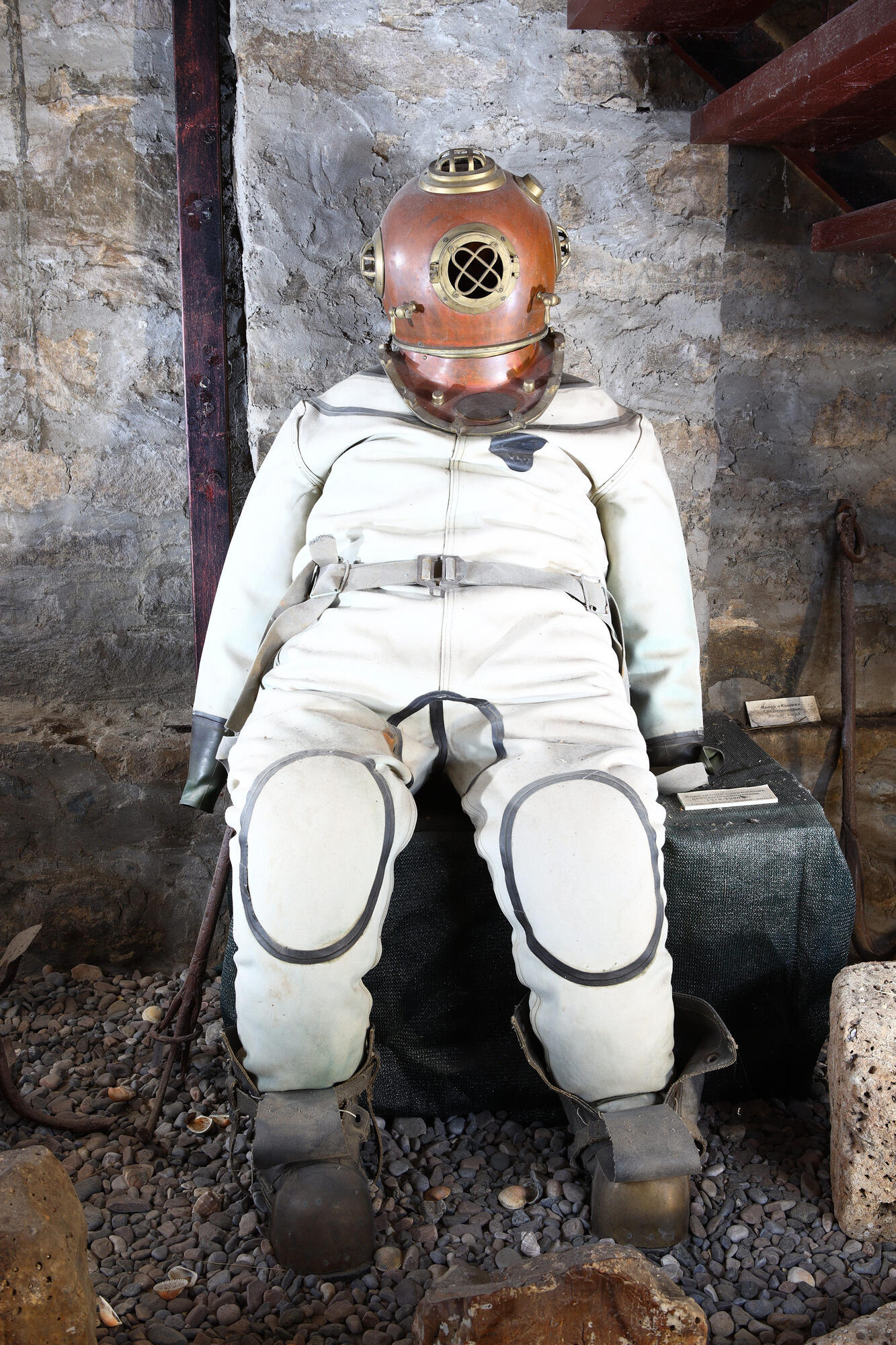
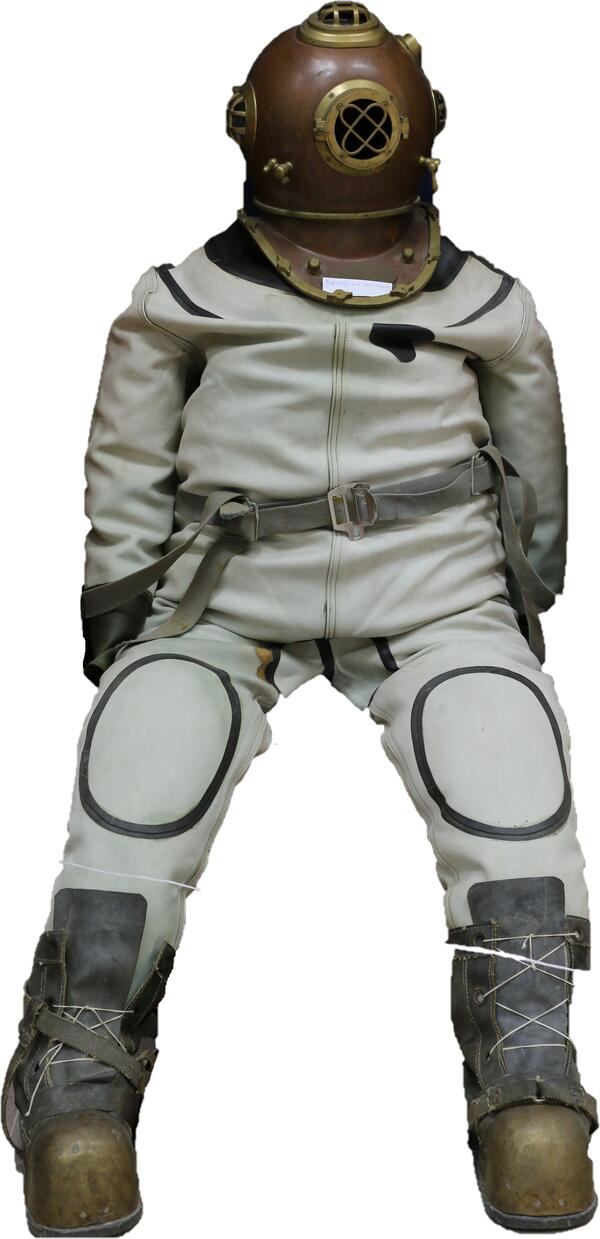
The safety of working underwater can only be ensured with special equipment, first and foremost a diving suit. The presented set is called a three-bolt suit and consists of a copper helmet, a diving “shirt” suit and overshoes with weights.
The front of the helmet is equipped with a viewport. The air is supplied by an electromechanical pump: it is usually powered by an electric motor, but, if necessary, it can be switched to manual control at a speed of 32 revolutions per minute. The helmet’s lifetime is nine years.
The overall shirts come in three sizes and two types. The first type is made of rubberized three-layer fabric, the other one uses fabric based on nylon-6. Apart from the shirt, divers also wear woolen tights and a high-neck sweater. The helmet is fastened to the corselet with three bolts, and that is why this set of equipment is called three-bolt. Both the helmet and the suit have safety valves for venting the excess air.
Divers use a number of weights to increase their stability on the seabed. There are two cast iron or lead castings weighing 16 or 18 kilograms that are placed over the suit on the back and chest; there are also copper or lead diving boots (overshoes) weighing 21 or 23 kilograms.
The rear weight is placed slightly lower than the front one: it helps the diver to keep an inclined position underwater and makes it easier to move. The weights are attached with the use of shoulder straps and a lower brace, which is weaved between the diver’s legs and fixed with a buckle.