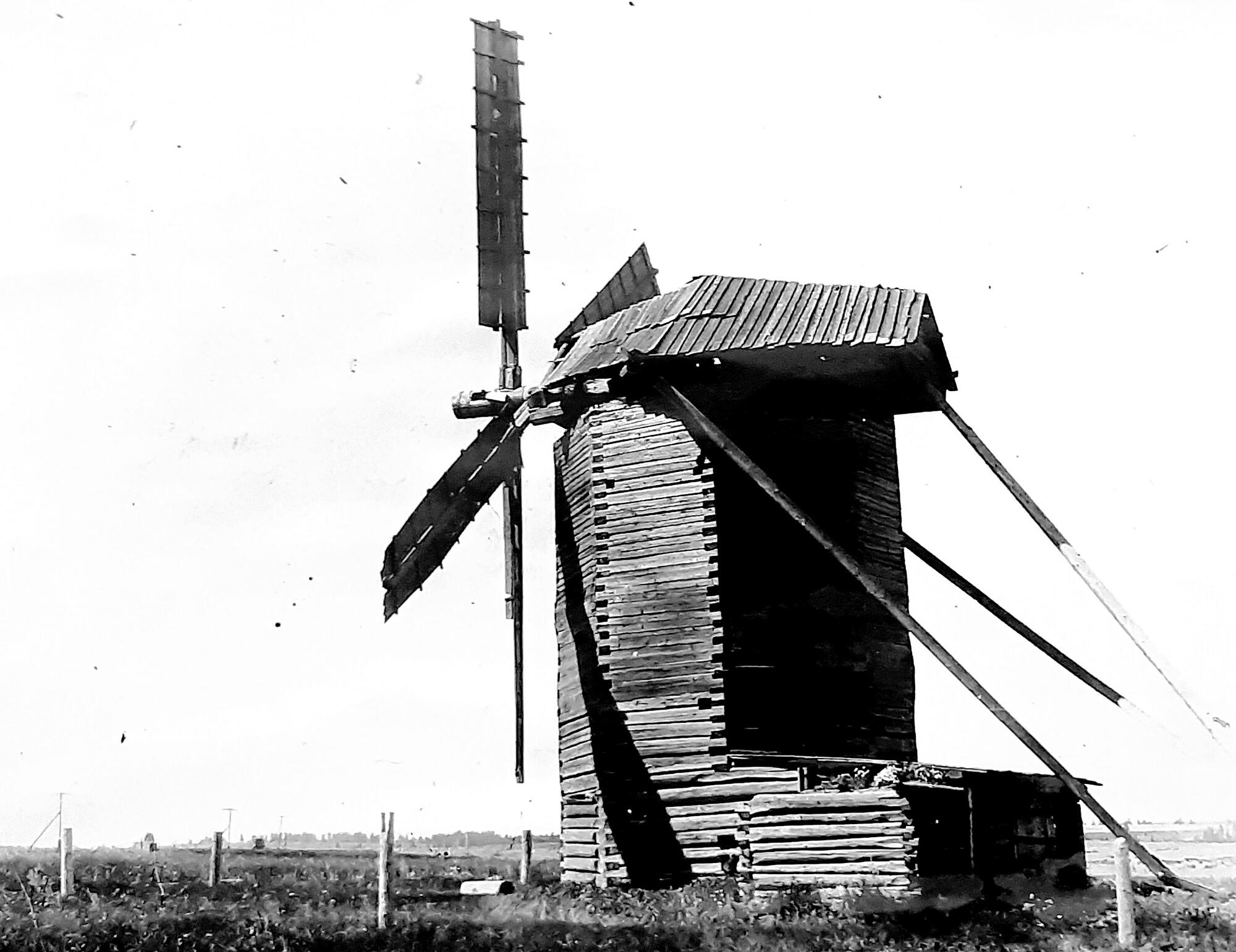


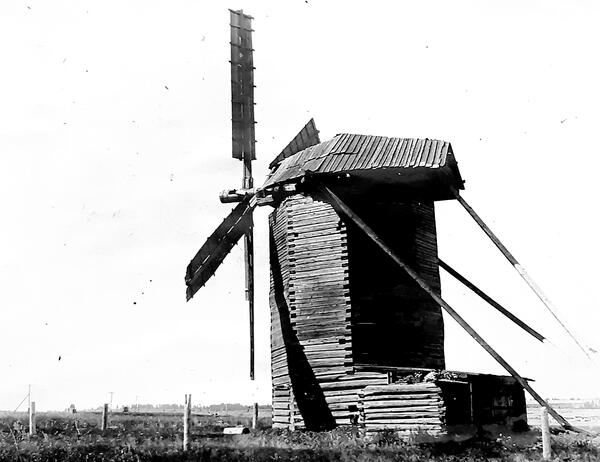
The windmill shown in the photo is of the tent type. One of the most interesting objects of wooden architecture was built by Fyodor DragomIrov in the village of Chem-Kuyuk in Yelabuzhsky Uyezd in 1912. Currently, it sits within the Alnash District of Udmurtia. In 1992, the mill was transported to the territory of the Ludorvay architectural and ethnographic museum-reserve. This object is the only mill that has survived to the present time in good condition in Udmurtia.
Windmills spread throughout Udmurtia in late 19th — early 20th century. Such a late spread of windmills can be explained by the fact that many rivers flow through the region, and therefore most of the mills were water mills. In addition, most of the territory was covered with dense coniferous forests.
On the high right bank of the Kama River, windmills came in handy. Each village had several mills; in the village of Byrgynda in Karakulinsky district, for isntance, there were seven of them. In the Izhevsk plant, where water mills stood on the rivers Izh, Podborenka, and Pozim, there was a place for five windmills on the open hills.
A windmill is an aerodynamic mechanism that converts wind energy captured by the windmill’s wings into mechanical force. Windmills were most commonly used to grind grain into flour. There are vertical and horizontal windmills.
Tent-like vertical windmills were mostly constructed in the south of the Vyatka Governorate, and in the north, watermills were more commonplace. Both windmills and watermills have been used to grind grain for centuries. Windmills and watermills were gradually phased out with introduction of heat-powered and electrical machines in the 19th century.
Vukochi — miller — was the person who operated the mill. Quality and quantity of flour obtained from grain depended on the professional knowledge and skills of the miller, as well as the durability of the mill itself. The peasants believed that evil spirits helped the miller in his work; that the owners of water mills conspired with a vodyanoy [water spirit], and those working at windmills conspired with a leshiy [forest spirit] or a whirlwind spirit. The millers were dispossessed from their mills during the Russian Revolution due to their elevated class status, and the mills were given to the collective farms.
Windmills spread throughout Udmurtia in late 19th — early 20th century. Such a late spread of windmills can be explained by the fact that many rivers flow through the region, and therefore most of the mills were water mills. In addition, most of the territory was covered with dense coniferous forests.
On the high right bank of the Kama River, windmills came in handy. Each village had several mills; in the village of Byrgynda in Karakulinsky district, for isntance, there were seven of them. In the Izhevsk plant, where water mills stood on the rivers Izh, Podborenka, and Pozim, there was a place for five windmills on the open hills.
A windmill is an aerodynamic mechanism that converts wind energy captured by the windmill’s wings into mechanical force. Windmills were most commonly used to grind grain into flour. There are vertical and horizontal windmills.
Tent-like vertical windmills were mostly constructed in the south of the Vyatka Governorate, and in the north, watermills were more commonplace. Both windmills and watermills have been used to grind grain for centuries. Windmills and watermills were gradually phased out with introduction of heat-powered and electrical machines in the 19th century.
Vukochi — miller — was the person who operated the mill. Quality and quantity of flour obtained from grain depended on the professional knowledge and skills of the miller, as well as the durability of the mill itself. The peasants believed that evil spirits helped the miller in his work; that the owners of water mills conspired with a vodyanoy [water spirit], and those working at windmills conspired with a leshiy [forest spirit] or a whirlwind spirit. The millers were dispossessed from their mills during the Russian Revolution due to their elevated class status, and the mills were given to the collective farms.