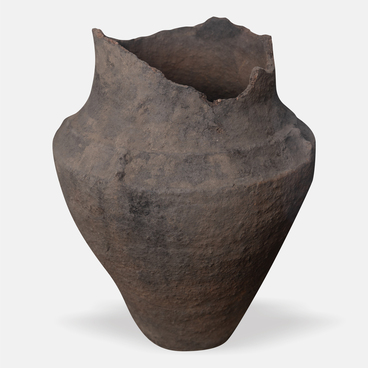
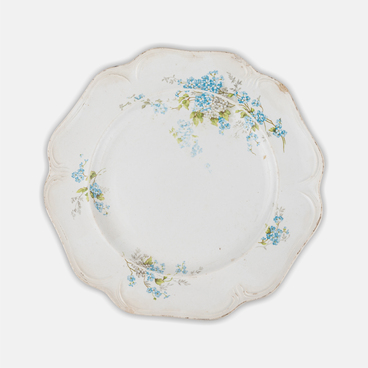
The first plates appeared in the Neolithic period and looked more like bowls: they had unstable bottoms and uneven sides. Having discovered that firing makes objects harder and stronger, people started firing plates in kilns to protect them from mechanical damage. Ancient Greek and Roman craftsmen almost simultaneously developed a pigment that, combined with resin, formed a useful substance with a texture that was unusual for that time. They used it to paint clay plates before firing them in a kiln, thus inventing ceramics. Later, ceramic plates began to be decorated with paintings that depicted figures of people and animals, and floral patterns.
In the early 14th century, porcelain was introduced to the world when thin, almost transparent, and strong plates were brought from China to Europe. The Chinese had been producing porcelain since the early 7th century. In Europe, porcelain wares were quite expensive, affordable only to aristocrats, so they were mostly used as interior décor. The decorative function of plates remained dominant, and they were used only to serve the main dishes during the most important and significant celebrations. As the price of materials gradually decreased, plates became widespread.
The décor of plates was further developed at the end of the 19th century when collecting came into fashion. Soon, they also gained popularity as souvenirs. They could feature images of beautiful views and masterpieces of art.
Some time ago, the museum received a call from
Arkhangelsk. It was a very excited and emotional collector who spoke about an
interesting find — a small decorative plate with views of Cranz. A discussion began,
and the collector sent photos. After two weeks of anticipation, the museum received
a new valuable exhibit. The story of how the souvenir plate with the famous
views of Cranz ended up in the north of Russia is quite simple. According to a
decree of the State Defense Committee, soldiers were allowed to send home parcels
of a certain weight once a month. That is how the plate came to Arkhangelsk and
for many years adorned the apartment of a local resident who received a present
from a loved one at the end of the war.