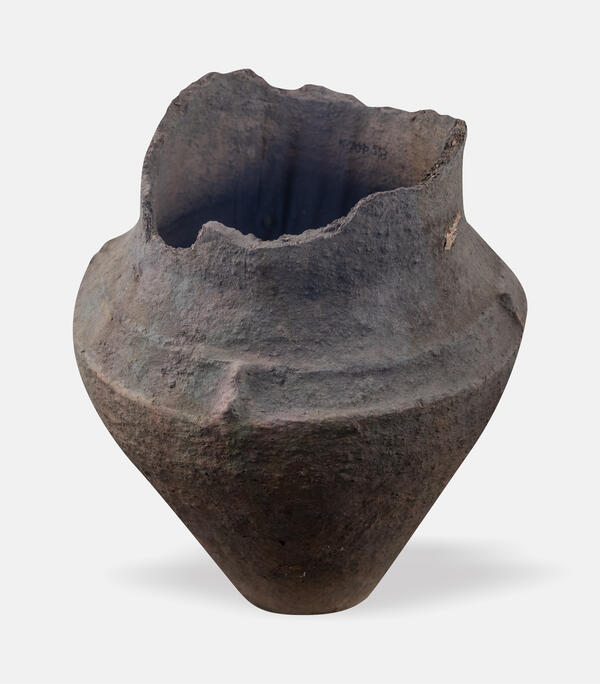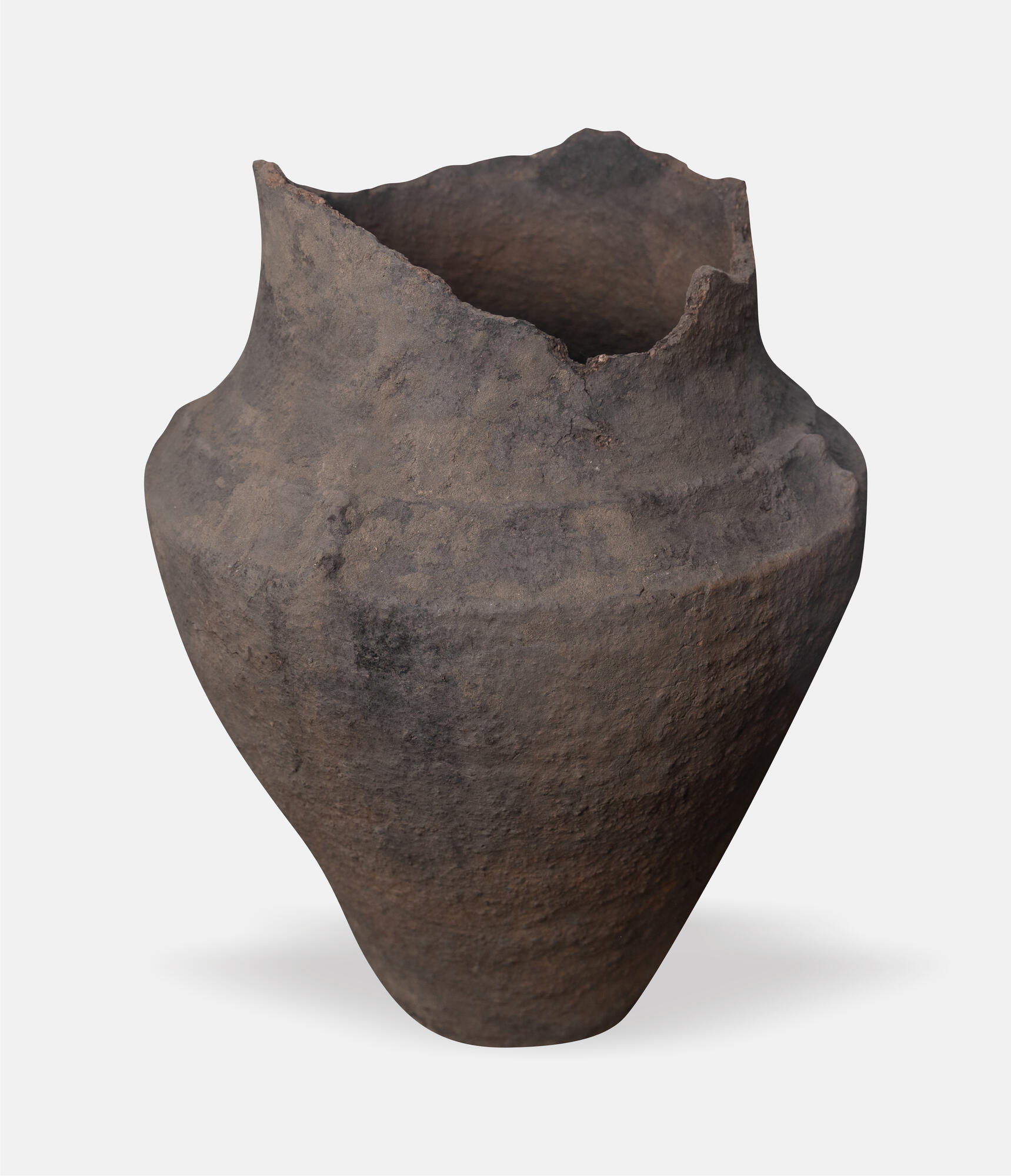


The exhibition of the Zelenogradsk Museum of Local Lore includes a unique funeral urn of the Grebieten type which was widespread on the Sambia Peninsula (now the western part of the Kaliningrad Region).
Analysis of Prussian funerary antiquities of the Early Middle Ages shows that urns of this type were used for cremated ashes in the second half of the 5th century.
In one version of a funeral rite, cremation was accompanied by storing the ashes in a large burial urn with a height of up to 60 centimeters. The burial urns were usually lightly fired and decorated with fingerprints on the lip or along the side in the upper part of the body. Some of the urns, including the one from the museum’s collection, were equipped with molded rollers. In archaeological literature, such urns are referred to as “urns of the Grebieten type”.
The urn with the ashes was placed in a rounded pit. The bones that remained after cremation were placed in the urn, often together with the burned accessories, including weapons, jewelry, and other possessions considered useful for their owner in the afterlife. Since such accessories sometimes ended up between the urn and the sides of the grave, archaeologists find pieces of burned bones and accessories not only in the urn itself but also nearby. Most often, the burial pit was covered with stones or masonry.
Sometimes, a piece of wood was placed under the stone covering the urn. After the wood decayed, the stone would fall inside the urn, destroying the urn’s lip. This also happened to the displayed urn. This is the earliest type of a funeral rite in Prussian culture. Later, urns were no longer used, and calcified remains and parts of accessories were placed directly in the grave.
In another type of the
described rite, no urn was used, and a horse was buried to the west of the
master’s grave. Sometimes the grave of this type overlapped with the horse’s
grave along its western edge.