During the Great Patriotic War, food supplies suffered a dramatic decrease, so it was important to rationally distribute those left. To achieve this, the Soviet Union had to introduce a food rationing system.
The amount of food per person was limited. The norms strictly depended on a social status and the degree of importance of the production that individuals were engaged in. The population was divided into four groups (workers, employees, dependents, and children up to 12 years old) that were supplied with the amount of food based on the importance of their national economy sector to the war economy.
The first rationing category included workers of the defense, coal, oil, and chemical industries, metallurgy, and other enterprises. They received from 800 to 1200 grams of bread per day. Employees of the same enterprises also belonged to this category and received 500 grams of bread; their children and dependents — 400 grams each. Workers and employees of other sectors and the rest of the citizens fell into the second category and received food in smaller portions.
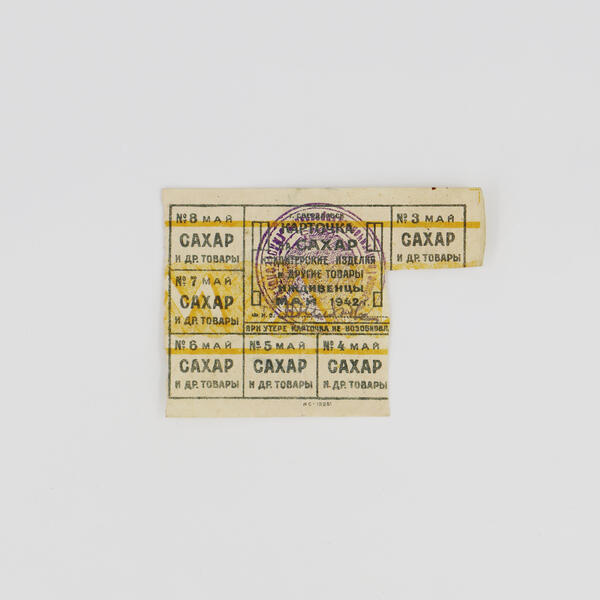
On August 15, 1941, a rationing ticket system for bread, sugar and confectionery was introduced in the city of Sverdlovsk. Three months later, there were also tickets for meat, fish, cereals, fats and pasta.
The nutrition for children in day care and kindergartens was increased. Cooked breakfasts were introduced in urban schools, which included 50 grams of bread and 10 grams of sugar per day. There were also special canteens for those children who required a more nourishing diet.
In February 1942, the rationing system was extended to manufactured goods. The items that were sold according to strict rules included all types of fabrics, shoes made of leather, felt, or rubber, sewn products, knitwear, watches, soap and some other everyday items.
The rationing card owner had to exchange a certain number of coupons to buy a necessary item. For example, a coat for an adult was worth 80 coupons, a pair of shoes — 50. Workers had a card that included 124 coupons, while for employees, dependents and children the number of coupons was regulated according to their status.
The amount of food per person was limited. The norms strictly depended on a social status and the degree of importance of the production that individuals were engaged in. The population was divided into four groups (workers, employees, dependents, and children up to 12 years old) that were supplied with the amount of food based on the importance of their national economy sector to the war economy.
The first rationing category included workers of the defense, coal, oil, and chemical industries, metallurgy, and other enterprises. They received from 800 to 1200 grams of bread per day. Employees of the same enterprises also belonged to this category and received 500 grams of bread; their children and dependents — 400 grams each. Workers and employees of other sectors and the rest of the citizens fell into the second category and received food in smaller portions.
On August 15, 1941, a rationing ticket system for bread, sugar and confectionery was introduced in the city of Sverdlovsk. Three months later, there were also tickets for meat, fish, cereals, fats and pasta.
The nutrition for children in day care and kindergartens was increased. Cooked breakfasts were introduced in urban schools, which included 50 grams of bread and 10 grams of sugar per day. There were also special canteens for those children who required a more nourishing diet.
In February 1942, the rationing system was extended to manufactured goods. The items that were sold according to strict rules included all types of fabrics, shoes made of leather, felt, or rubber, sewn products, knitwear, watches, soap and some other everyday items.
The rationing card owner had to exchange a certain number of coupons to buy a necessary item. For example, a coat for an adult was worth 80 coupons, a pair of shoes — 50. Workers had a card that included 124 coupons, while for employees, dependents and children the number of coupons was regulated according to their status.