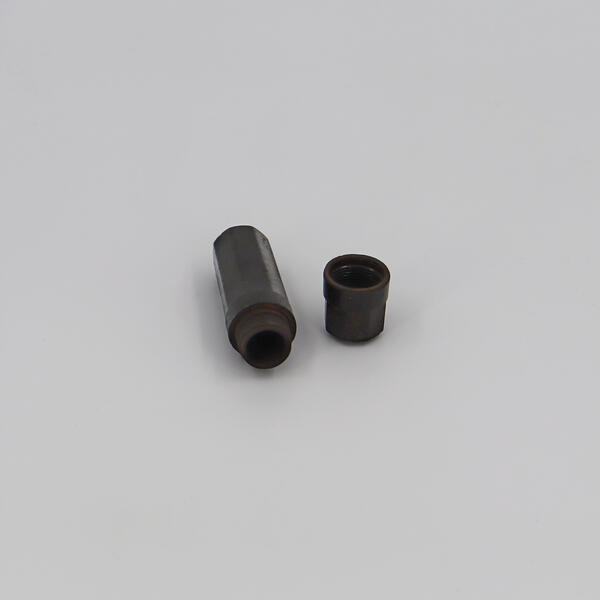
A dog tag was designed to identify a soldier who died on the battlefield. The exhibit was used in the Workers’ and Peasants’ Red Army during the Great Patriotic War.
The first dog tags were designed in 1925. They looked like a flat metal box, containing a piece of paper for the soldier’s personal information, and were worn around the neck.
Over time, it turned out that the tag design did not provide the necessary protection from the elements to the paper inside. In the spring of 1941, an order was issued according to which each soldier was to receive a new type of dog tag. However, by the beginning of the war, this idea was still not implemented in full, so some soldiers had to find other ways to store their personal information.
The new tag was designed as a durable small ebonite capsule with a screw cap. Inside, it could fit two copies of the form with the soldier’s personal details. The papers indicated the name of the Red Army soldier, as well as his rank, blood type, place of residence, family address, and the district draft board that mobilized the soldier. At the same time, it was forbidden to mention any information about the military unit where the soldier served. The ebonite capsule was usually kept in a special pocket on the outside of the belt.
In the event of the soldier’s death, the identity was established using the information from the capsule. In this case, one copy of the form was removed and transferred to the unit headquarters or the medical institution, if the soldier died there. The other copy remained with the soldier’s body.
During the war, the general attitude toward dog tags was not all positive. Some Red Army soldiers left the forms blank out of superstition and fear of bringing misfortunes upon themselves. Others, who were not provided with the official tags, on the contrary, made their own similar identification capsules, using wood or cartridge cases. The most popular cartridges came from Mosin-Nagant rifles.
The first dog tags were designed in 1925. They looked like a flat metal box, containing a piece of paper for the soldier’s personal information, and were worn around the neck.
Over time, it turned out that the tag design did not provide the necessary protection from the elements to the paper inside. In the spring of 1941, an order was issued according to which each soldier was to receive a new type of dog tag. However, by the beginning of the war, this idea was still not implemented in full, so some soldiers had to find other ways to store their personal information.
The new tag was designed as a durable small ebonite capsule with a screw cap. Inside, it could fit two copies of the form with the soldier’s personal details. The papers indicated the name of the Red Army soldier, as well as his rank, blood type, place of residence, family address, and the district draft board that mobilized the soldier. At the same time, it was forbidden to mention any information about the military unit where the soldier served. The ebonite capsule was usually kept in a special pocket on the outside of the belt.
In the event of the soldier’s death, the identity was established using the information from the capsule. In this case, one copy of the form was removed and transferred to the unit headquarters or the medical institution, if the soldier died there. The other copy remained with the soldier’s body.
During the war, the general attitude toward dog tags was not all positive. Some Red Army soldiers left the forms blank out of superstition and fear of bringing misfortunes upon themselves. Others, who were not provided with the official tags, on the contrary, made their own similar identification capsules, using wood or cartridge cases. The most popular cartridges came from Mosin-Nagant rifles.