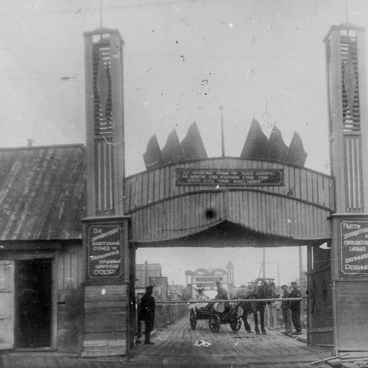


Figuratively, the entire exposition about the post-war history of the city can be called ‘From cards to cards’ — from the abolition of the card system in 1947 to the introduction of coupons for food and clothing in the conditions of commodity and food shortages in the early 1990s.
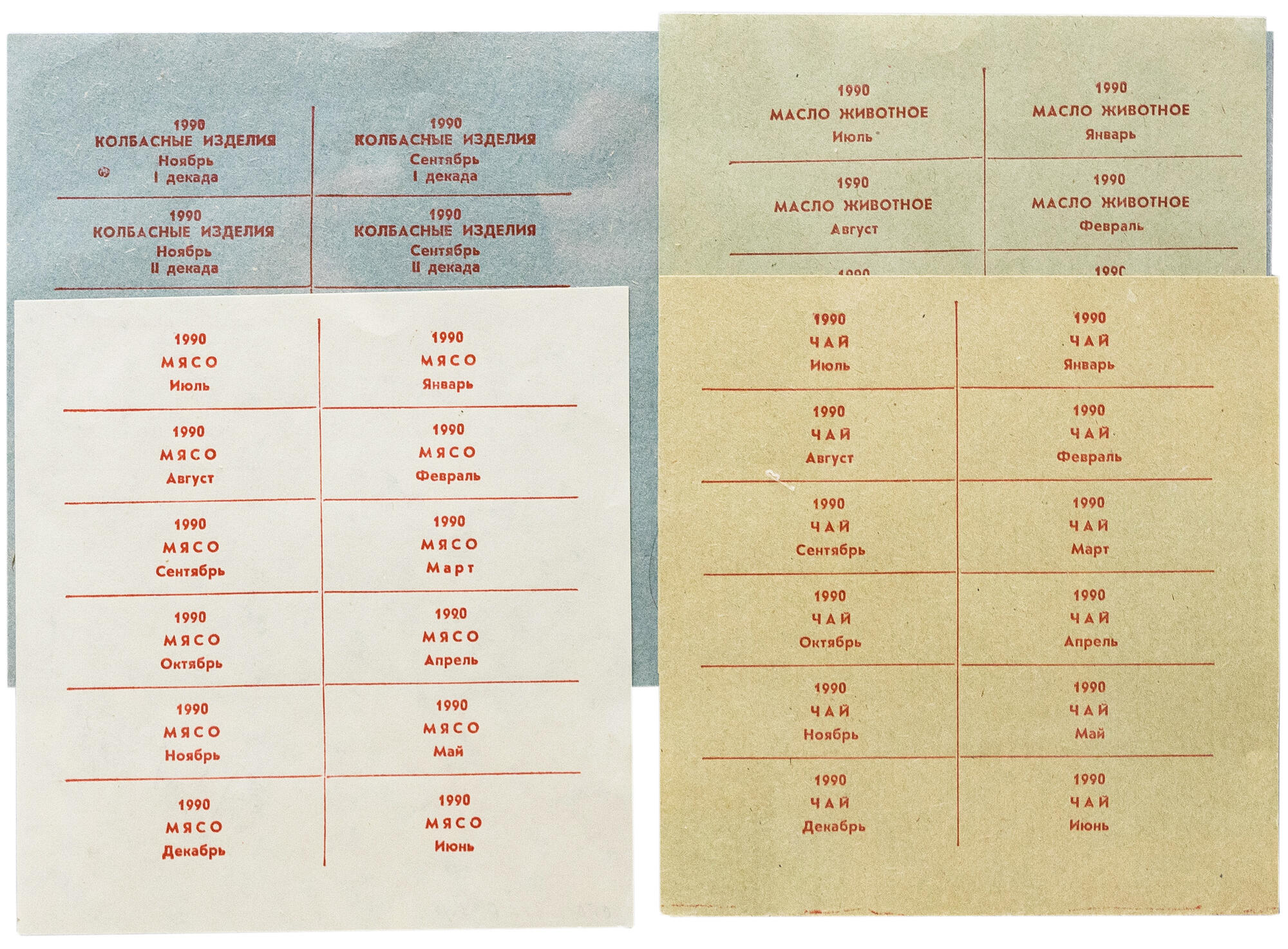
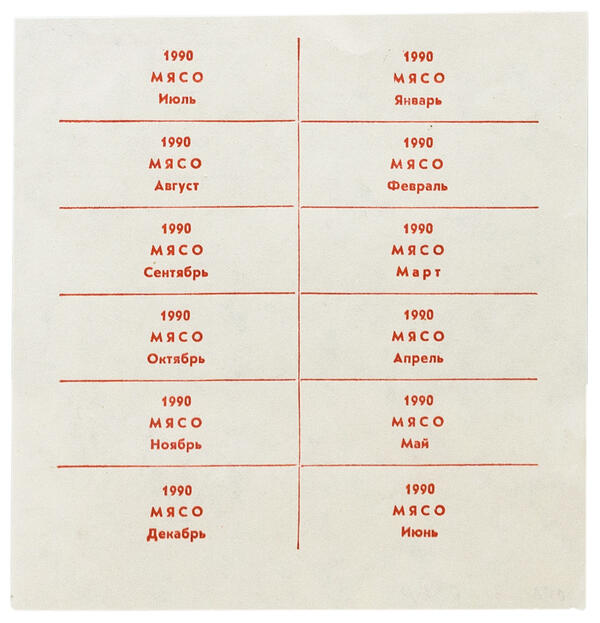
Despite the improved supply of Severodvinsk as a closed city, ordinary consumer goods were in short supply. Local industrial enterprises in difficult times also ceased to cope with the production of goods to meet the demands of the townspeople. In Severodvinsk, as well as throughout the country, coupons for the release of food and manufactured goods were introduced. Vacation rates varied depending on the season. For example, in the summer months, large limits were allocated for granulated sugar, and for the New Year — for alcoholic products. So, in August 1991, the following vacation rates were introduced for one person: animal oil — 300 grams, tea — 50 grams, eggs — 10 pieces, tobacco products — 4 packs, vodka and alcoholic beverages — 1 bottle, sausages — 300 grams per ten days, meat (pork) — 500 grams. Thus, a family of four had sufficient limits to provide themselves with food for a month.
In the 1990s, unofficial exchange also became widespread: for example, a non-smoking family could exchange cigarettes from friends or relatives for granulated sugar for jam. Simultaneously with the advent of coupons, ‘commercial’ stores appeared, where products could be purchased at higher market prices.
The rationing system in the late USSR existed until January 1, 1992, when market prices were introduced. Groceries and manufactured goods appeared in stores without restriction. However, in the context of the collapse of the economy, state-owned enterprises began many months of non-payment of wages. New food ration cards entered the life of workers at Severodvinsk enterprises for a long time, according to which it was possible to get bread or feed a family in the factory canteen against wages.
Despite the improved supply of Severodvinsk as a closed city, ordinary consumer goods were in short supply. Local industrial enterprises in difficult times also ceased to cope with the production of goods to meet the demands of the townspeople. In Severodvinsk, as well as throughout the country, coupons for the release of food and manufactured goods were introduced. Vacation rates varied depending on the season. For example, in the summer months, large limits were allocated for granulated sugar, and for the New Year — for alcoholic products. So, in August 1991, the following vacation rates were introduced for one person: animal oil — 300 grams, tea — 50 grams, eggs — 10 pieces, tobacco products — 4 packs, vodka and alcoholic beverages — 1 bottle, sausages — 300 grams per ten days, meat (pork) — 500 grams. Thus, a family of four had sufficient limits to provide themselves with food for a month.
In the 1990s, unofficial exchange also became widespread: for example, a non-smoking family could exchange cigarettes from friends or relatives for granulated sugar for jam. Simultaneously with the advent of coupons, ‘commercial’ stores appeared, where products could be purchased at higher market prices.
The rationing system in the late USSR existed until January 1, 1992, when market prices were introduced. Groceries and manufactured goods appeared in stores without restriction. However, in the context of the collapse of the economy, state-owned enterprises began many months of non-payment of wages. New food ration cards entered the life of workers at Severodvinsk enterprises for a long time, according to which it was possible to get bread or feed a family in the factory canteen against wages.