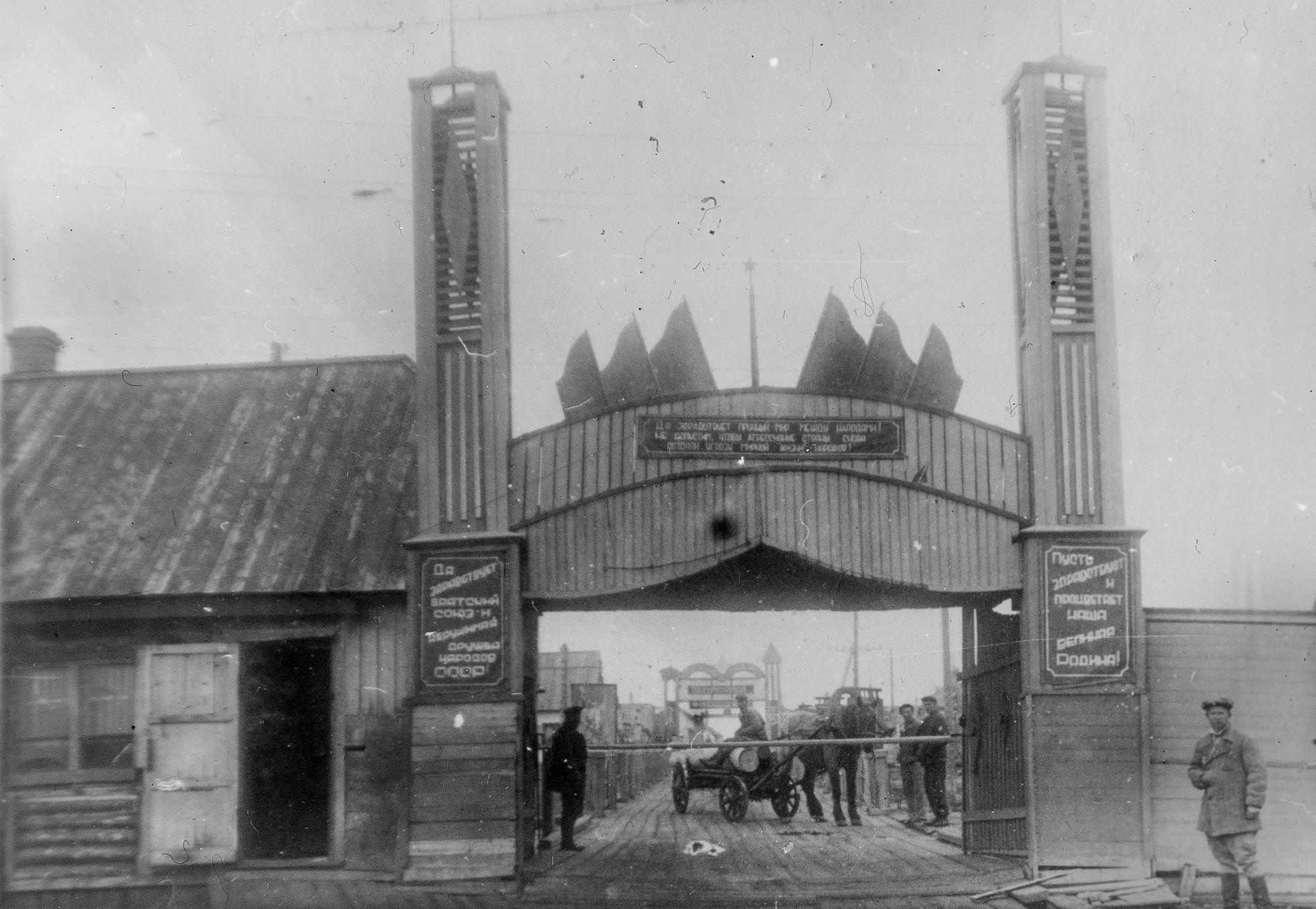


The photo shows a general view of the department of the camp point of the Yagrinsk forced labor camp in the late 1940s. The camp had several departments, the first and the second were numerous, they were located near the main construction site - shipbuilding yard No. 402.
At the time of the photograph, the camp on the territory of Molotovsk (as Severodvinsk was then called) had already existed for about seven years - it was organized on April 13, 1938. The camp and construction No. 203 were subordinate to the NKVD GULAG. The construction of the city and the plant was transferred to their jurisdiction. In 1938, there were more than 20 thousand prisoners in the camp, while the number of ordinary residents of Molotovsk reached 25 thousand people. When columns of prisoners went to work in the morning, ordinary townspeople could not cross the street. In 1942, most of the prisoners were sent to the construction of the Bogoslovsk aluminum smelter. Those who remained in Molotovsk were engaged in excavation and other preparatory work.
In addition to the men’s detachments, there was a women’s department and a baby house in Yagrinlag. In 1945, a detachment was created where German prisoners of war were kept. For a long time, a dairy farm, greenhouses, and a sewing industry worked as part of the camp.
After the Great Patriotic War, there were five main divisions in the structure of Yagrinlag. All were in Molotovsk, but each of them also had sub-missions, sometimes many kilometers from the city. The number of prisoners dropped to just over 10 thousand people. It was the main labor force for the construction and improvement of urban facilities. In 1953, Yagrinlag was closed, and a camp department was organized in its place. In 1961, this department was also liquidated.
The camp administration reported annually on its activities. Illustrative material of the reports was published in several photo albums. In the 1990s, museum staff managed to obtain copies of these albums from the archives of the Ministry of Internal Affairs. Later, with the advent of new technologies, the negatives of the images were digitized and published.
At the time of the photograph, the camp on the territory of Molotovsk (as Severodvinsk was then called) had already existed for about seven years - it was organized on April 13, 1938. The camp and construction No. 203 were subordinate to the NKVD GULAG. The construction of the city and the plant was transferred to their jurisdiction. In 1938, there were more than 20 thousand prisoners in the camp, while the number of ordinary residents of Molotovsk reached 25 thousand people. When columns of prisoners went to work in the morning, ordinary townspeople could not cross the street. In 1942, most of the prisoners were sent to the construction of the Bogoslovsk aluminum smelter. Those who remained in Molotovsk were engaged in excavation and other preparatory work.
In addition to the men’s detachments, there was a women’s department and a baby house in Yagrinlag. In 1945, a detachment was created where German prisoners of war were kept. For a long time, a dairy farm, greenhouses, and a sewing industry worked as part of the camp.
After the Great Patriotic War, there were five main divisions in the structure of Yagrinlag. All were in Molotovsk, but each of them also had sub-missions, sometimes many kilometers from the city. The number of prisoners dropped to just over 10 thousand people. It was the main labor force for the construction and improvement of urban facilities. In 1953, Yagrinlag was closed, and a camp department was organized in its place. In 1961, this department was also liquidated.
The camp administration reported annually on its activities. Illustrative material of the reports was published in several photo albums. In the 1990s, museum staff managed to obtain copies of these albums from the archives of the Ministry of Internal Affairs. Later, with the advent of new technologies, the negatives of the images were digitized and published.