

In the 19th century, printed images of saints were in great demand among the common people. Such inexpensive printed products made of paper and tin were produced at specialized factories that appeared in Russia in 1890–1894. The factory of Jacquot and Bonacœur in Moscow had monopoly on producing such tin images.
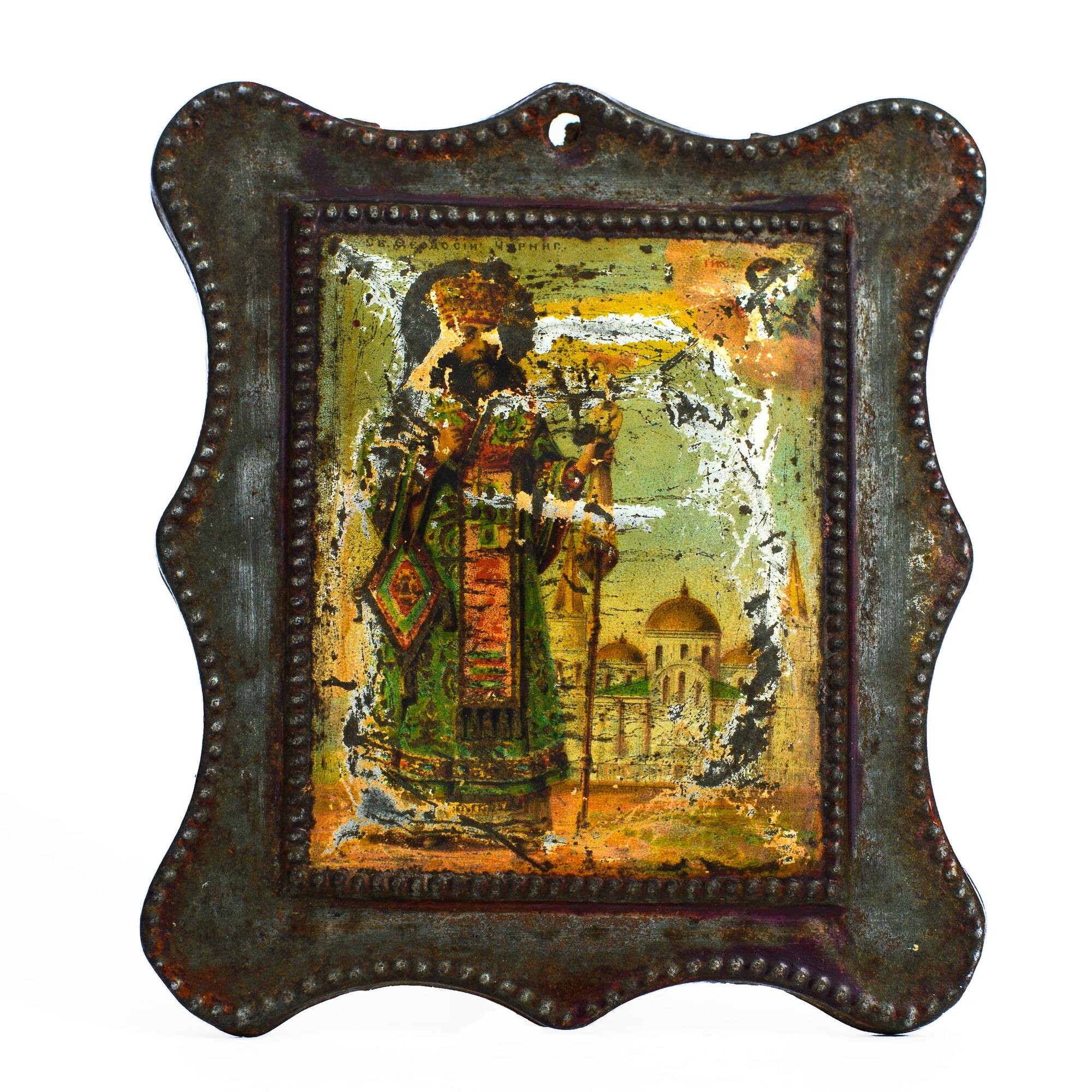
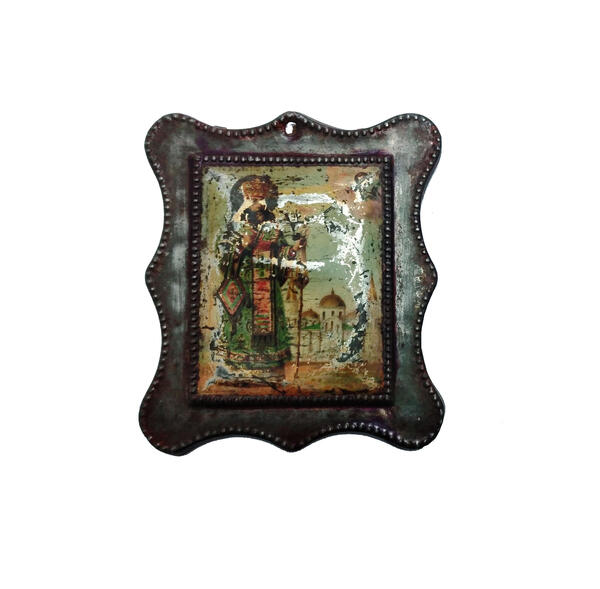
The Museum Complex of Kuybyshev houses one of the icons produced by this company — “St. Theodosius of Chernihiv”. The icon is made of thin sheet metal with the help of printed plates, on which paint of different colors was applied. In its convex center part is the image of Theodosius, Archbishop of Uglich.
Theodosius of Chernihiv is especially revered as a defender and zealot of Orthodox Christianity in the lands of Little Russia. He actively participated in the process of reunification of the Kyiv and Moscow branches of the Russian Orthodox Church and advocated for the protection of the faith from the influence of Catholicism.
People turn to the Chernihiv saint with prayer, asking to heal diseases, protect from slander, hatred and solve family problems or issues related to children. It is believed that the bishop of Uglich especially helps pupils of theological schools. Therefore, they also appeal to him with requests to strengthen the mind of the children.
In the icon, Theodosius of Chernihiv is depicted full-length, in episcopal vestments, on his head is a miter. In his right hand he holds a cross — a symbol of martyrdom, and in his left — a staff that indicates his episcopal rank.
The image from the museum’s collection is of a small size. Its title is printed in dark brown in the upper left corner. The edges of the icon are made in the form of a curly wavy frame; along the perimeter is a convex pattern of dots. A round through hole is made in the center from above to hang the image by a nail or cord.
Such icons quickly rusted and deteriorated, so people threw them away and bought new ones. On January 1, 1903, the Holy Synod banned the production of tin images in order to avoid such a disparaging attitude to the relics.
However, in 1909, the Commission of the Holy Synod stated that the icons produced at the factory of Jacquot and Bonacœur still continued to appear. They have been preserved to our days in great numbers.
The Museum Complex of Kuybyshev houses one of the icons produced by this company — “St. Theodosius of Chernihiv”. The icon is made of thin sheet metal with the help of printed plates, on which paint of different colors was applied. In its convex center part is the image of Theodosius, Archbishop of Uglich.
Theodosius of Chernihiv is especially revered as a defender and zealot of Orthodox Christianity in the lands of Little Russia. He actively participated in the process of reunification of the Kyiv and Moscow branches of the Russian Orthodox Church and advocated for the protection of the faith from the influence of Catholicism.
People turn to the Chernihiv saint with prayer, asking to heal diseases, protect from slander, hatred and solve family problems or issues related to children. It is believed that the bishop of Uglich especially helps pupils of theological schools. Therefore, they also appeal to him with requests to strengthen the mind of the children.
In the icon, Theodosius of Chernihiv is depicted full-length, in episcopal vestments, on his head is a miter. In his right hand he holds a cross — a symbol of martyrdom, and in his left — a staff that indicates his episcopal rank.
The image from the museum’s collection is of a small size. Its title is printed in dark brown in the upper left corner. The edges of the icon are made in the form of a curly wavy frame; along the perimeter is a convex pattern of dots. A round through hole is made in the center from above to hang the image by a nail or cord.
Such icons quickly rusted and deteriorated, so people threw them away and bought new ones. On January 1, 1903, the Holy Synod banned the production of tin images in order to avoid such a disparaging attitude to the relics.
However, in 1909, the Commission of the Holy Synod stated that the icons produced at the factory of Jacquot and Bonacœur still continued to appear. They have been preserved to our days in great numbers.