Potshards are the most numerous finds at archaeological excavations of any ancient site. Clay was an accessible, traditional and easy-to-handle material that people learned to work with several thousand years ago.
In the Middle Ages, Udmurt craftsmen used local red clay to make pottery. If it was too heavy, admixtures were added into it to make it less so. These could be organic and inorganic substances, such as wood ash, wool, freshwater mollusk shells and eggshells. They helped to reduce the shrinkage of clay during drying and firing. Most often, Prikamye potters used crushed shells of bivalve mollusks, sand, animal bones, sometimes bird droppings and manure.
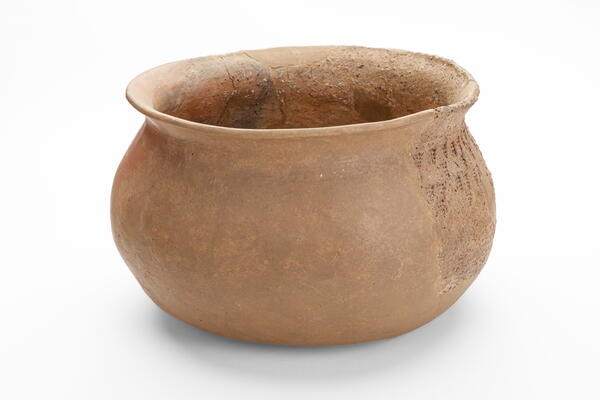
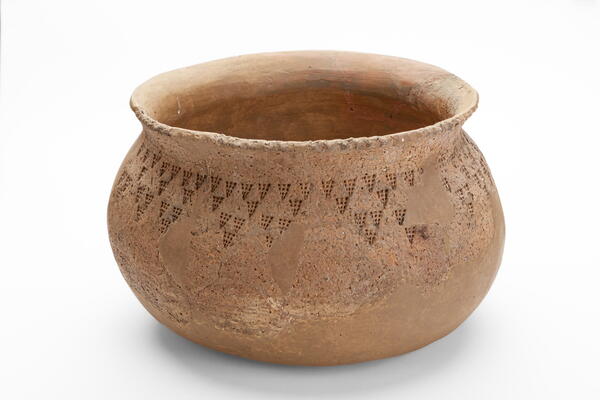
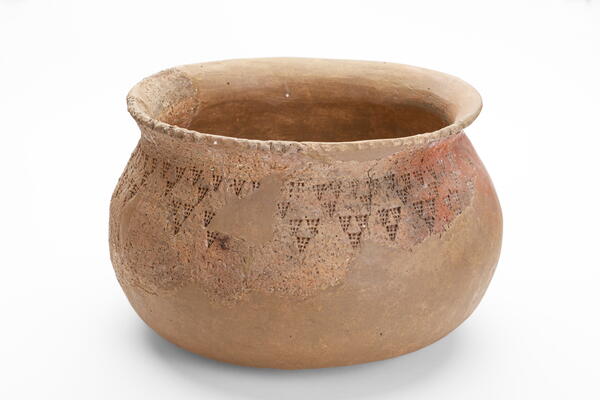
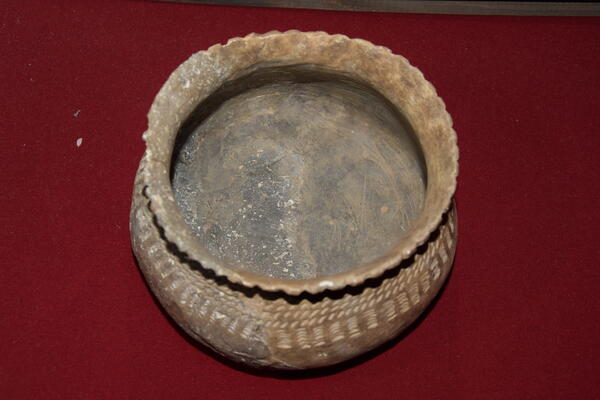
The finds from the Polom-Chepetsk sites mostly consist of fragments of molded vessels with characteristic rope-stamped decorative patterns, which were traditional in the Prikamye region. These products are attributed to Polom ceramics since their characteristic features were common for the Polom archaeological culture of the 5th–9th centuries.
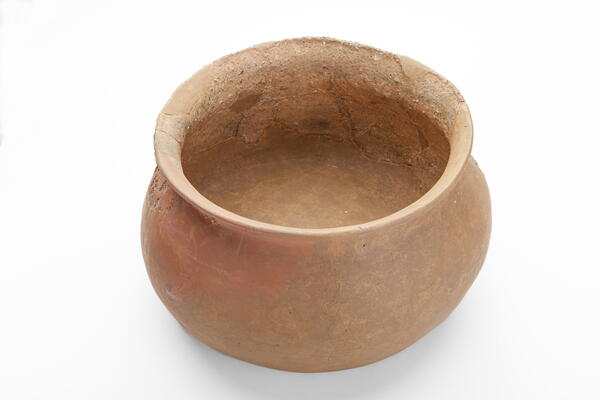
The collection of medieval ceramic dishware, presented in the permanent exhibition of the museum, was restored in the State Hermitage workshop with the missing fragments being replaced. Idnakar potters used the coiling technique of making pottery: that is, prepped clay was rolled into coils and then they were used to build the “walls” of the future piece, which were then gradually built up upon one another, carefully covering the joints. The finished clay vessel was sometimes polished or glazed. This happened in two steps — one a few hours after production and another after complete drying. Vessels were polished with special tools, pebbles, leather or fur.
A small percentage of the pottery found in Idnakar was brought during the trade exchange and belongs to the Bulgarian type of ceramics made on a potter’s wheel. Local vessels were decorated with impressions of a comb stamp and wrapped with a cord to obtain impressions; the rims were decorated with finger and nail impressions. Later, in the 12th century, ceramics without patterns appeared, sometimes with handles.