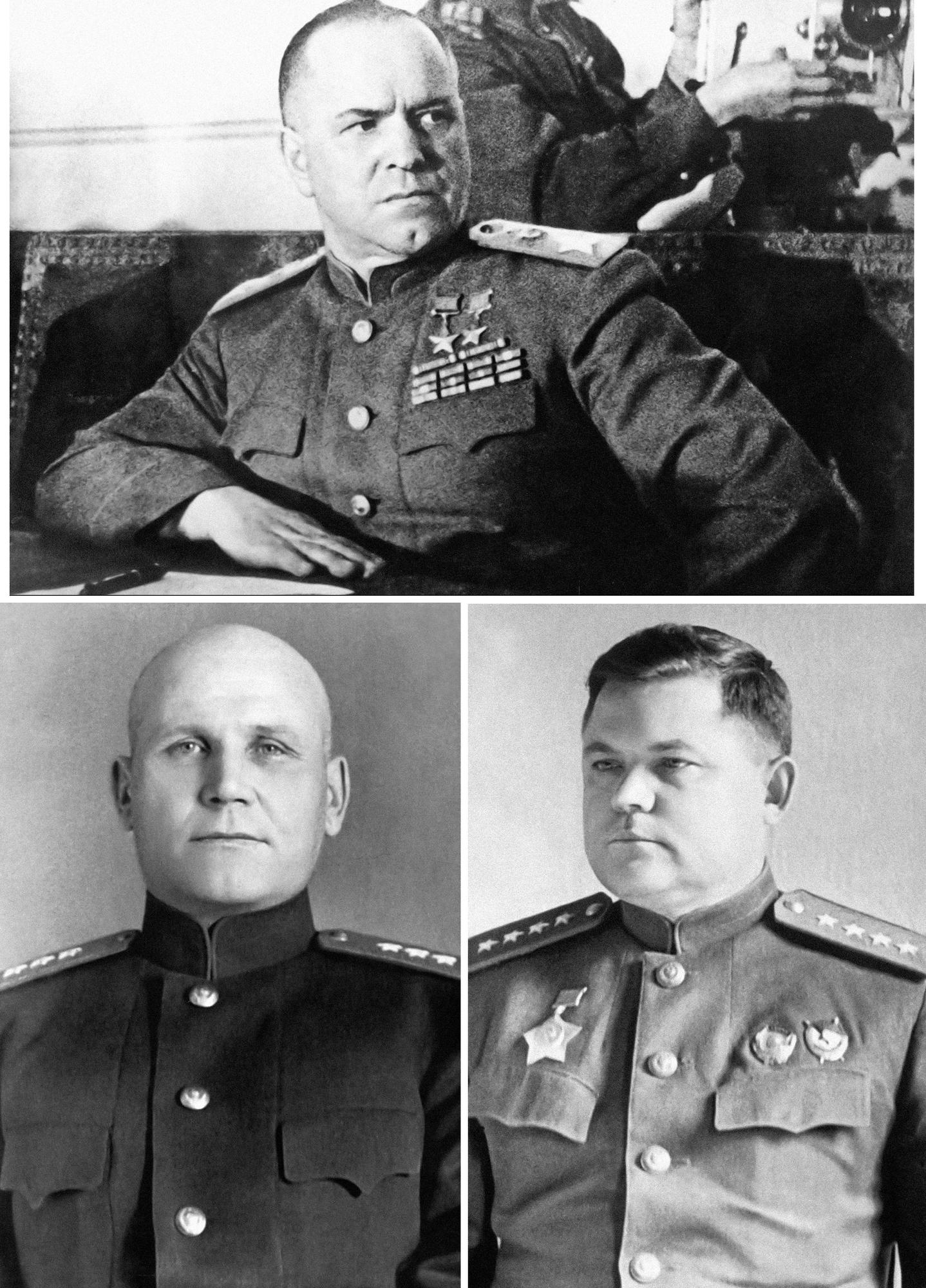


The Supreme High Command General Headquarters was established by a separate joint decree by the USSR Council of People’s Commissars and the Central Committee of the All-Union Communist Party of the Bolsheviks on June 23, 1941, as the National Defense Emergency Agency. Joseph Stalin was appointed Chairman, on the board there were Marshals Semen Timoshenko and Boris Shaposhnikov, Georgy Zhukov, Kliment Voroshilov, Semen Budyonny, Vyacheslav Molotov. In the spring of 1943, an agency meeting was held, where the short-term warfare strategy was discussed.
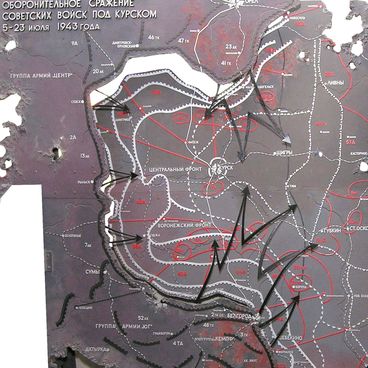
By that time, British mathematical analysts had managed to interpret German Q-messages codes and the findings were communicated to Moscow. The info matched the secret intelligence and front-line reconnaissance data. In the General Staff’s view, an all-out summer attack by Wehrmacht at the Kursk Salient was the likeliest scenario. The Kursk Salient is a bulge at the interface between the Central and the Voronezh Fronts, enveloped by the German armies from up north and from down south. Their combined strike spelled full envelopment and a defense breakthrough.
At the suggestion of the Chief of General Staff Alexander Vasilevskiy, the strategic defensive operation at Kursk was adopted. The ranks of the units defending the southern leg of the Kursk Salient were filled and reinforced with new equipment. They were opposed in the Belgorod direction by Wehrmacht 10 armored and 7 infantry divisions reinforced by SS armored units. Deployed with them were brand-new tanks, Panzer Tiger and Panther, self-propelled guns Ferdinand. To counter them, multi-layered defense was organized by digging-in kilometers of trenches and constructing numerous pillboxes and log emplacements. The reserve Steppe Front under the command of Ivan Konev was moved out to the rear of the fighting troops.
The front-line reconnaissance managed to pinpoint the date and time of the German attack. 2 hours in advance, the Soviet artillery and air force launched a powerful preemptive strike onto the Wehrmacht positions taken up by the units ready for assault, degrading enemy forces. This bombing campaign was waged by the decision of the Supreme High Command General Headquarters. This led to Germans’ failure to fulfil their battle plan, the defense held out and the SS armored divisions were cut to pieces near Prokhorovka. Wehrmacht assumed a defensive, the Supreme High Command General Headquarters ordered up the Steppe Front to finish off the whole contingent.
By that time, British mathematical analysts had managed to interpret German Q-messages codes and the findings were communicated to Moscow. The info matched the secret intelligence and front-line reconnaissance data. In the General Staff’s view, an all-out summer attack by Wehrmacht at the Kursk Salient was the likeliest scenario. The Kursk Salient is a bulge at the interface between the Central and the Voronezh Fronts, enveloped by the German armies from up north and from down south. Their combined strike spelled full envelopment and a defense breakthrough.
At the suggestion of the Chief of General Staff Alexander Vasilevskiy, the strategic defensive operation at Kursk was adopted. The ranks of the units defending the southern leg of the Kursk Salient were filled and reinforced with new equipment. They were opposed in the Belgorod direction by Wehrmacht 10 armored and 7 infantry divisions reinforced by SS armored units. Deployed with them were brand-new tanks, Panzer Tiger and Panther, self-propelled guns Ferdinand. To counter them, multi-layered defense was organized by digging-in kilometers of trenches and constructing numerous pillboxes and log emplacements. The reserve Steppe Front under the command of Ivan Konev was moved out to the rear of the fighting troops.
The front-line reconnaissance managed to pinpoint the date and time of the German attack. 2 hours in advance, the Soviet artillery and air force launched a powerful preemptive strike onto the Wehrmacht positions taken up by the units ready for assault, degrading enemy forces. This bombing campaign was waged by the decision of the Supreme High Command General Headquarters. This led to Germans’ failure to fulfil their battle plan, the defense held out and the SS armored divisions were cut to pieces near Prokhorovka. Wehrmacht assumed a defensive, the Supreme High Command General Headquarters ordered up the Steppe Front to finish off the whole contingent.