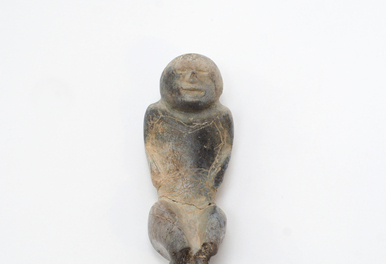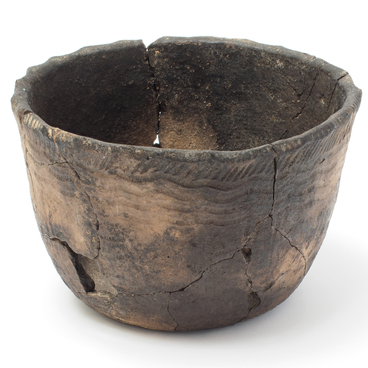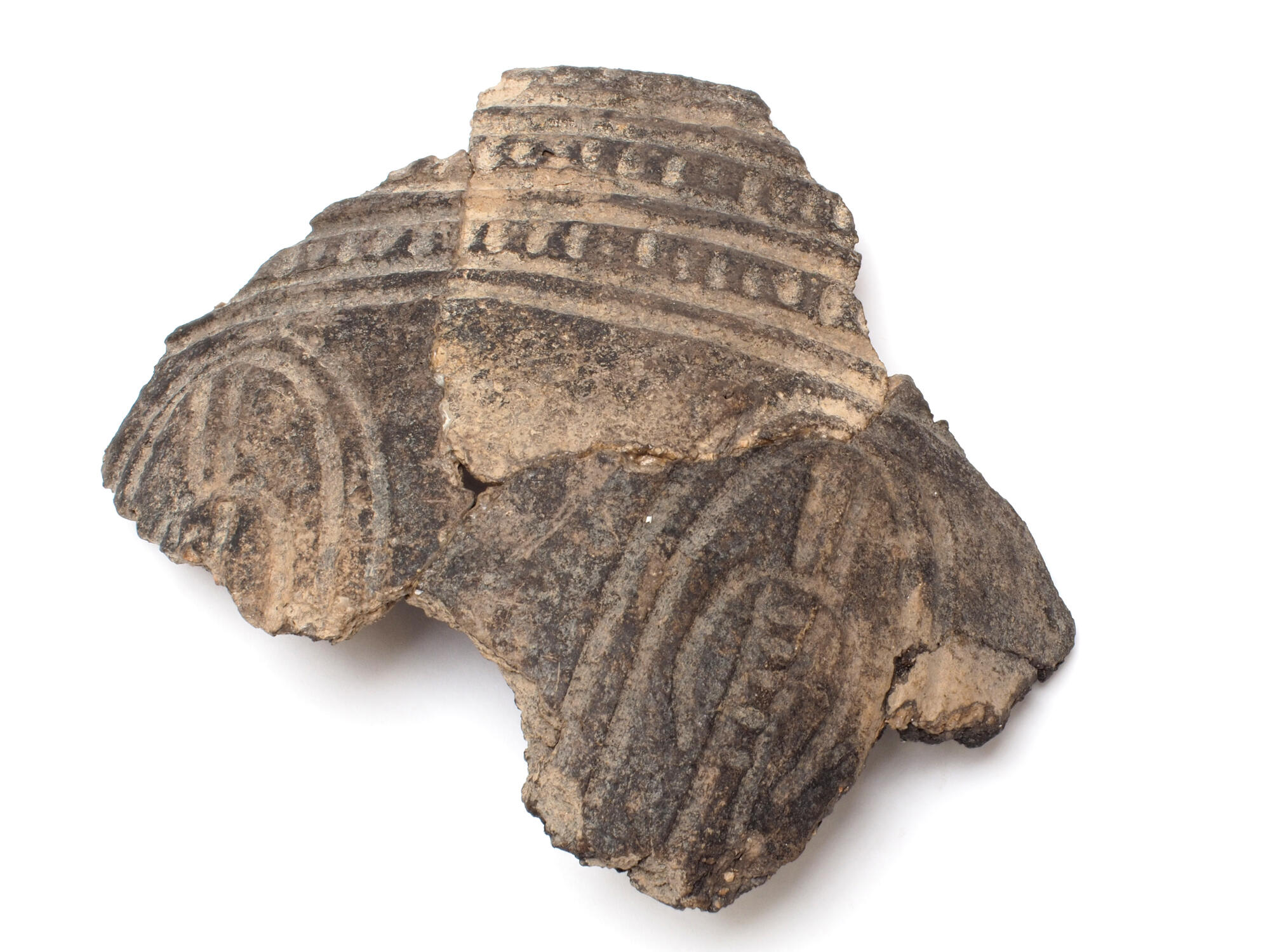


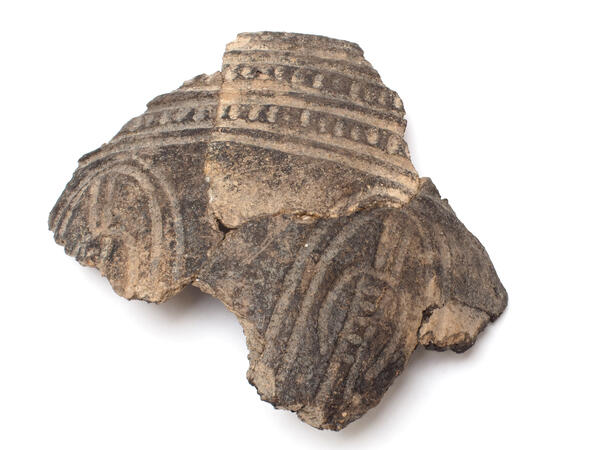
Vessels with anthropomorphic (human-like) drawings make up a special group of cult vessels of the Samus culture. Most of them are found only in the settlement Samus IV.
Anthropomorphic figures on the vessel fragments are made in the style that was typical for the Samus culture: anthropomorphic images are enclosed in a circle or oval.
The vessel walls were decorated with images of human-like figures, and signs of the solar disk were placed on the bottom. Almost all anthropomorphic figures are made in the same style. They were depicted in different versions but several requirements had to be met. The ‘person’ was usually depicted from the front view. His arms were arched and lowered to hips, or bent at the elbows and raised. The ‘person’s’ legs were stretched out to the bottom of the vessel and slightly bent at the knees. The head was rendered schematically by two or three short vertical lines. The body was usually covered with short transverse hatching.
Currently, researchers are trying to find out what these “little men” that are depicted on the surface of Samus pots symbolize. Perhaps the ancient artists depicted patron spirits in masks and a stylized headdress. This hypothesis is confirmed by other drawings that exist in the Siberian culture: they depicted shamans in hats with feathers. These drawings gradually became simpler and they had only one characteristic feature that brought them closer to the Samus images: two or three stylized feathers.
According to some scientists, the Samus images reflect the view of ancient people and the origin of Siberian shamanism. In this case, circles and ovals could symbolize tambourines. Cult ceramics were used during religious ceremonies and rituals, they were dedicated to various agricultural works and the smelting of bronze tools.
The ancient representatives of the Samus culture had a lot of occupations: they hunted, fished, raised cattle, collected fruits and roots, and presumably were engaged in agriculture. In addition, the Samus people created various crafts, among which a special place was taken by bronze casting. The forms of the tools that the Samus people made were new for that time, and the symbolic drawings on the ceramic vessels reflected a complex system of their ideas about the world. Therefore, researchers distinguish Samus art into a separate and original cultural and consider it to be one of the most striking phenomena in the history of North Asia.
Anthropomorphic figures on the vessel fragments are made in the style that was typical for the Samus culture: anthropomorphic images are enclosed in a circle or oval.
The vessel walls were decorated with images of human-like figures, and signs of the solar disk were placed on the bottom. Almost all anthropomorphic figures are made in the same style. They were depicted in different versions but several requirements had to be met. The ‘person’ was usually depicted from the front view. His arms were arched and lowered to hips, or bent at the elbows and raised. The ‘person’s’ legs were stretched out to the bottom of the vessel and slightly bent at the knees. The head was rendered schematically by two or three short vertical lines. The body was usually covered with short transverse hatching.
Currently, researchers are trying to find out what these “little men” that are depicted on the surface of Samus pots symbolize. Perhaps the ancient artists depicted patron spirits in masks and a stylized headdress. This hypothesis is confirmed by other drawings that exist in the Siberian culture: they depicted shamans in hats with feathers. These drawings gradually became simpler and they had only one characteristic feature that brought them closer to the Samus images: two or three stylized feathers.
According to some scientists, the Samus images reflect the view of ancient people and the origin of Siberian shamanism. In this case, circles and ovals could symbolize tambourines. Cult ceramics were used during religious ceremonies and rituals, they were dedicated to various agricultural works and the smelting of bronze tools.
The ancient representatives of the Samus culture had a lot of occupations: they hunted, fished, raised cattle, collected fruits and roots, and presumably were engaged in agriculture. In addition, the Samus people created various crafts, among which a special place was taken by bronze casting. The forms of the tools that the Samus people made were new for that time, and the symbolic drawings on the ceramic vessels reflected a complex system of their ideas about the world. Therefore, researchers distinguish Samus art into a separate and original cultural and consider it to be one of the most striking phenomena in the history of North Asia.