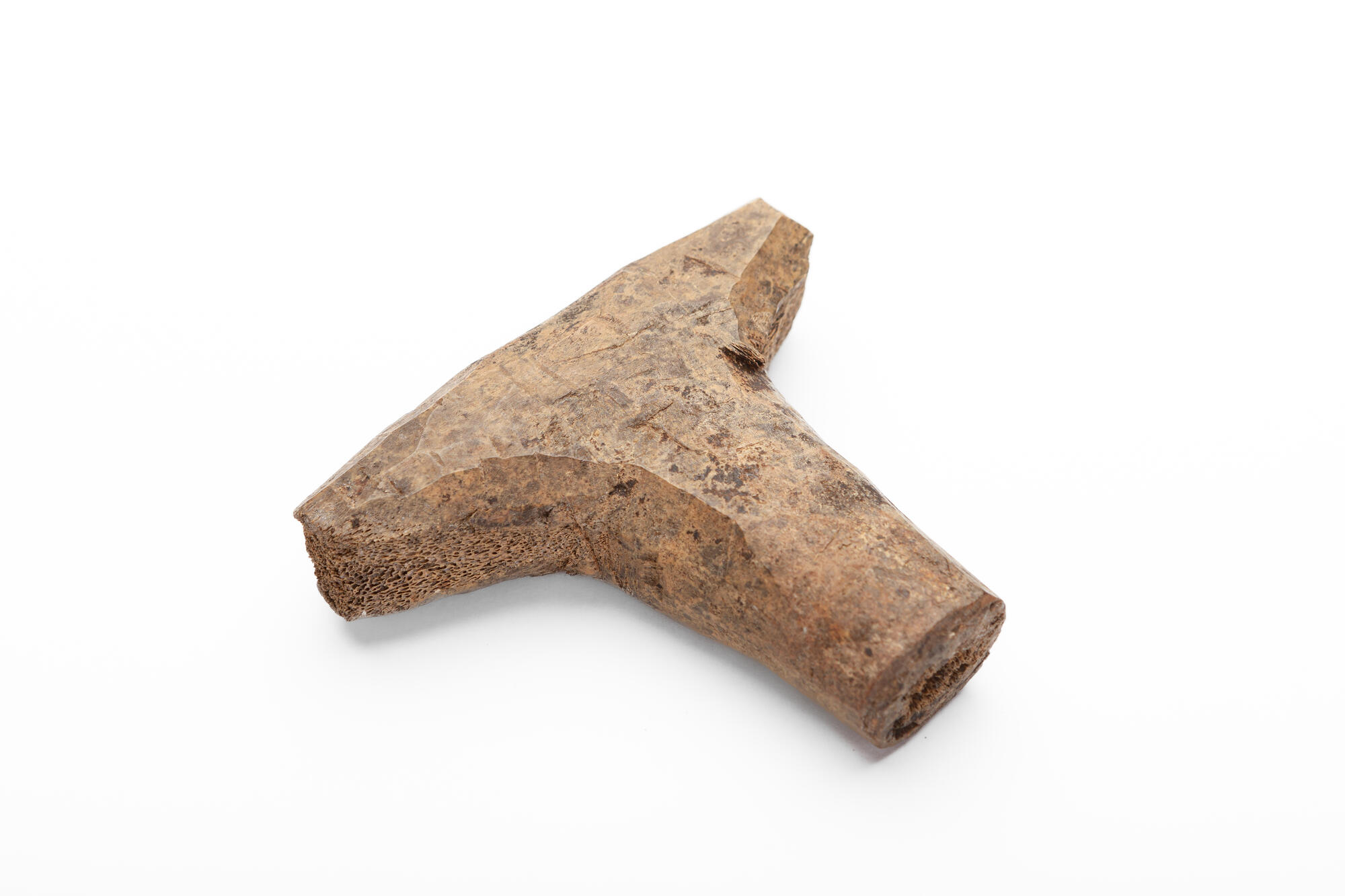


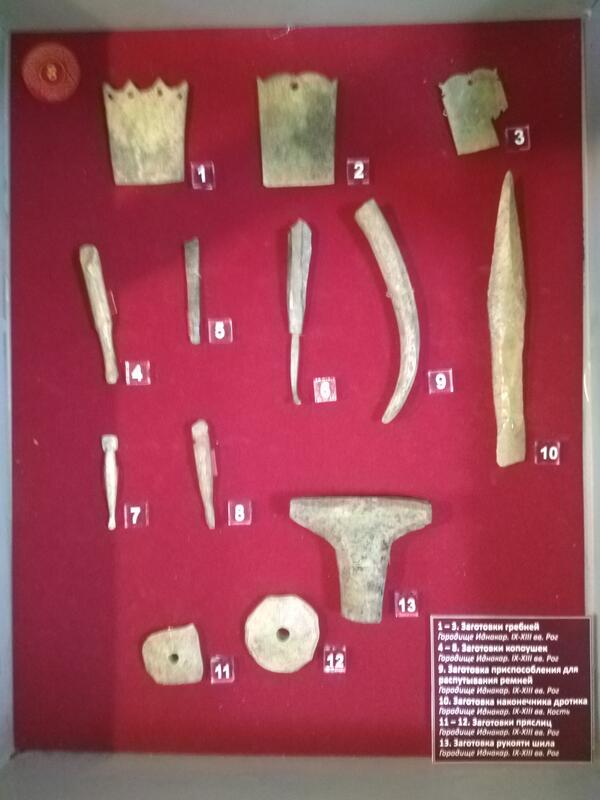
An awl is one of the basic tools used by makers of clothes, shoes, and leather belts. It could be used in carpentry, animal husbandry and pottery for applying patterns to the clay surface.
All awls discovered during archaeological excavations at medieval sites in the north of Udmurtia have a square cross-section. They have one pointed working end, while the other is extended to form a triangular or round handle.
Most awl handles were made of wood and, except for some isolated cases, have not been preserved in the ground to this day. The sides of the handles are concave to make them more convenient to hold. The handle could also be made of another accessible and popular material — bone or horn.
Bone handles were often decorated with geometric or dotted patterns. This was done for aesthetic, as well as practical reasons: the hand slid less if the surface was relief. Family marks that indicated the name of the owner and designated the tool as a valuable personal item could also be carved on awl handles.
The advent of awls dates back more than 20,000 years and is inextricably linked with sewing, needles and early clothes made from leather and animal fur. Back then people pierced pelts with a simple version of awl made of thorns, sharpened stones or bones. Animal tendons were threaded through the holes; the pierced pelts were also used to make capes.
It was not easy to pierce a thick pelt with a bone needle. Moreover, in the process, the fingers could be seriously injured, and the needle could break. Awls were invented to make the needle’s path easier. They pierced holes in a pelt and then stitched it together with a thinner needle.
Archaeologists find eyed bone needles in cultural deposits of the 15th–17th centuries BC. About a thousand years ago, people of Idnakar still used bone needles, despite the rapid development of metallurgy and commodity exchange with foreign merchants. Interestingly, many indigenous peoples still use threads made from deer tendons: they are durable, natural and very strong.




