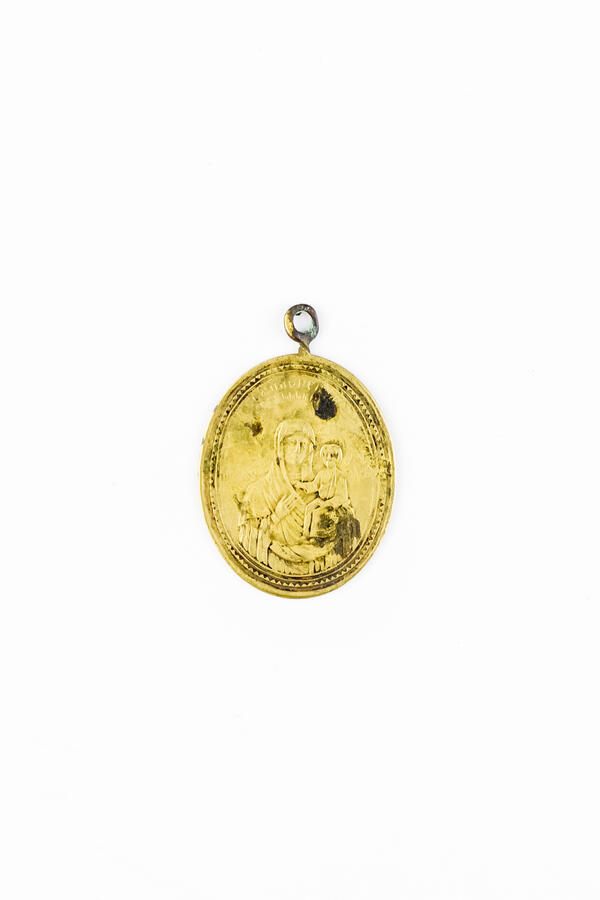
The 19th century brass medallion features one of the most revered images in Russia — the Smolensk Icon of the Mother of God.
In Orthodox art, it is customary to create copies called “lists” from the most important icons. Therefore, many images can have the same name. The copies can be painted with oil or tempera, cast from copper and other metals. Some of them are no less ancient than the originals, and are also famous for their miracles.
Various icons depicting the Mother of God and the Christ Child are usually divided into special types. Those images where the cheeks of the Mother and Son are pressed against each other are called “Eleusa” or “Tenderness.” Icons where the Mother of God raises her hands to the sky are called “The Sign.” And the Smolensk icon belongs to the type of “Hodegetria”, which is translated from Greek as “She Who Points the Way.”
In images of this type, the Mother of God and the Child are not drawn to each other. With her left hand, the Virgin Mary supports Christ, and with her right hand, she points to Him as the Savior of humankind. He solemnly blesses believers with his right hand, and with his left hand holds a scroll or a book.
There are many versions of the origin of the name “Hodegetria”. One of them says that the oldest image of the Virgin of this type was kept in the temple of the Odigon convent in Constantinople. There was a spring near the monastery — its water cured of blindness. Blind people found their way to it with the help of nuns, so the area was called “the place of guides”. Therefore, the monastery itself was called “Odigon” or “Guide”, and its main relic was the “Hodegetria”. According to another version, the icon was kept in the Blachernae church, and once the Mother of God herself led two blind men to it and healed them.
Many priests explain the spiritual meaning of this name in a different way: the Mother of God here points with her right hand to Christ as the only path to Salvation, and therefore she herself shows the path like a guide.
The very first Smolensk icon of the Mother of God was an ancient relic. It is known that it was brought to Russia from Byzantium, but there is no exact information as to when and how this happened. It is claimed to have happened no later than the middle of the 11th century. One of the legends says that the Byzantine emperor Constantine Porfirorodny blessed his daughter Princess Anna with this icon when she married the Chernigov prince Vsevolod Yaroslavich.
When Vsevolod died, the icon was inherited by his son, Vladimir Monomakh. At the end of the 11th century, he brought the miraculous image from Chernigov to Smolensk. The icon was kept there for many centuries, so it got the “Smolensk” indication in its name. The relic is credited with many miracles, including protection from the attack of Batu’s troops. Unfortunately, it disappeared during the Great Patriotic War, and today only its copies are left.
In Orthodox art, it is customary to create copies called “lists” from the most important icons. Therefore, many images can have the same name. The copies can be painted with oil or tempera, cast from copper and other metals. Some of them are no less ancient than the originals, and are also famous for their miracles.
Various icons depicting the Mother of God and the Christ Child are usually divided into special types. Those images where the cheeks of the Mother and Son are pressed against each other are called “Eleusa” or “Tenderness.” Icons where the Mother of God raises her hands to the sky are called “The Sign.” And the Smolensk icon belongs to the type of “Hodegetria”, which is translated from Greek as “She Who Points the Way.”
In images of this type, the Mother of God and the Child are not drawn to each other. With her left hand, the Virgin Mary supports Christ, and with her right hand, she points to Him as the Savior of humankind. He solemnly blesses believers with his right hand, and with his left hand holds a scroll or a book.
There are many versions of the origin of the name “Hodegetria”. One of them says that the oldest image of the Virgin of this type was kept in the temple of the Odigon convent in Constantinople. There was a spring near the monastery — its water cured of blindness. Blind people found their way to it with the help of nuns, so the area was called “the place of guides”. Therefore, the monastery itself was called “Odigon” or “Guide”, and its main relic was the “Hodegetria”. According to another version, the icon was kept in the Blachernae church, and once the Mother of God herself led two blind men to it and healed them.
Many priests explain the spiritual meaning of this name in a different way: the Mother of God here points with her right hand to Christ as the only path to Salvation, and therefore she herself shows the path like a guide.
The very first Smolensk icon of the Mother of God was an ancient relic. It is known that it was brought to Russia from Byzantium, but there is no exact information as to when and how this happened. It is claimed to have happened no later than the middle of the 11th century. One of the legends says that the Byzantine emperor Constantine Porfirorodny blessed his daughter Princess Anna with this icon when she married the Chernigov prince Vsevolod Yaroslavich.
When Vsevolod died, the icon was inherited by his son, Vladimir Monomakh. At the end of the 11th century, he brought the miraculous image from Chernigov to Smolensk. The icon was kept there for many centuries, so it got the “Smolensk” indication in its name. The relic is credited with many miracles, including protection from the attack of Batu’s troops. Unfortunately, it disappeared during the Great Patriotic War, and today only its copies are left.