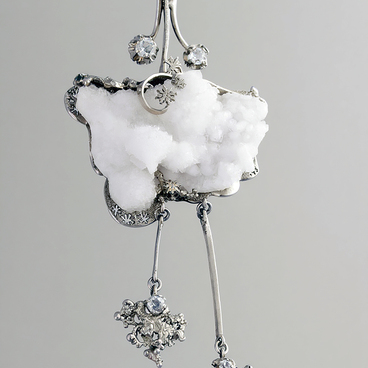
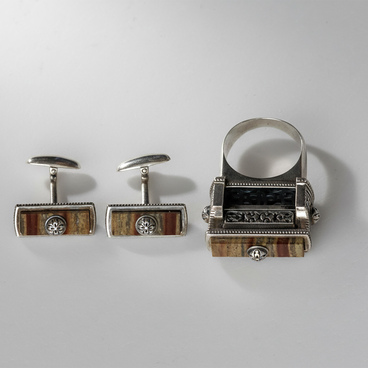
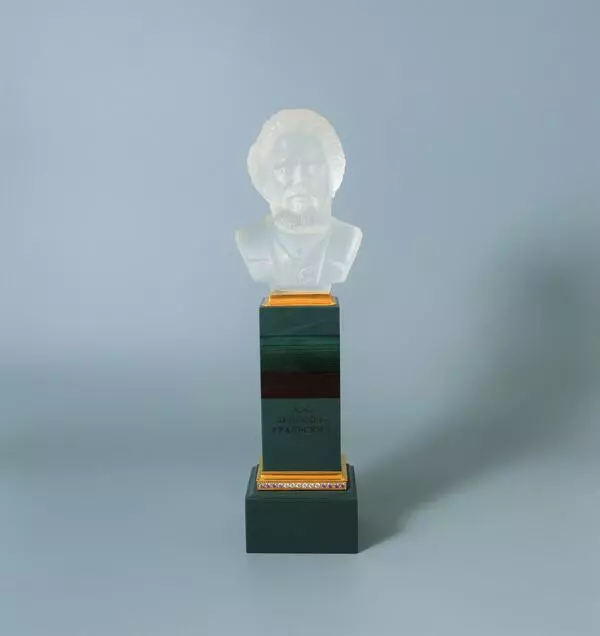
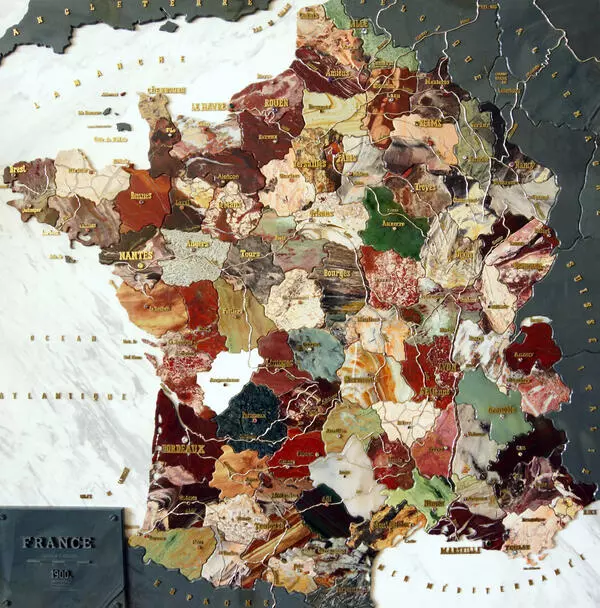
Anatoly Ivanovich Zhukov is a Yekaterinburg-based stone carver, a master of lapidary art, and a restorer of the highest grade. Honored Worker of the Stone-Cutting Industry and recipient of the Order of Alexey Denisov-Uralsky, he embodies the enduring legacy of Ural craftsmanship.
His first encounter with stone occurred during his school years. Vladimir Petrovich Shevalyov, director of the educational institution Zhukov attended, established a geological museum complete with a stone-cutting workshop on the school grounds — laying the foundation for the young artist’s future path. In 1982, after graduating from the Sverdlovsk Architecture Institute, Anatoly Zhukov began his professional career as a designer and stone carver at the “Uralkvartsamotsvety” association, a major Ural enterprise for quartz and ornamental stone processing.
Reflecting on his journey, Zhukov says, “I entered the profession by accident — though they say nothing happens by chance. I graduated from the architecture institute, and my thesis was dedicated to stone. Afterward, I was assigned to an enterprise where I first worked as a designer. But soon, I felt a deep desire to work directly with stone.”
Since 1996, Zhukov has served as a restorer at the Museum of Stone-Cutting and Jewelry Art History in Yekaterinburg. He has meticulously restored dozens of historical works by masters of past centuries — pieces that now enrich the museum’s collection.
True to the deep traditions of Ural stone-cutting, Zhukov does not force the material to conform to his vision. Instead, he seeks to “tune in” to the stone’s inherent character, allowing its natural beauty to guide the creative process. His goal is not to dominate the material, but to reveal and emphasize its inner qualities. Zhukov has mastered a wide range of lapidary genres and techniques: mineralogical hills (thin, polished slices of colorful stones are arranged in graduated rows), Florentine mosaic, Russian mosaic, three-dimensional inlay, cameos, intaglios, and sculpture.
Small-scale sculpture holds a central place in his artistic practice. The genre of animalism is especially dear to him, as seen in his numerous statuettes depicting creatures of land, water, and air. The sculpture “Owl” is a prime example. Owls — birds of prey with large heads and eyes, short curved beaks, and sharp talons — are creatures of the night. Their soft plumage enables silent flight.
In working with rock crystal, Zhukov skillfully contrasts smooth, polished surfaces with finely carved, textured details, capturing the distinctive features of the bird. To accentuate the eyes of his creatures, he often incorporates transparent cabochon beads made from precious or semi-precious stones.