In the show-case, a skobel (scraper-knife) is exhibited, a tool made of metal and wood in the first half of the 20th century. Structurally, it has a bent or strait blade with wooden handles at its ends. There are several types of skobels in use. Their main difference lies in the blade length and in shape.
The skobel is one of the most ancient tools of carpenters and joiners. An article of Great Soviet Encyclopedia maintains that skobels were used as early as the Epoch of Middle Paleolithic: ancient people made stone scrapers to work with wood. Tools made of iron entered in use approximately in the first half of the first millennium B.C.
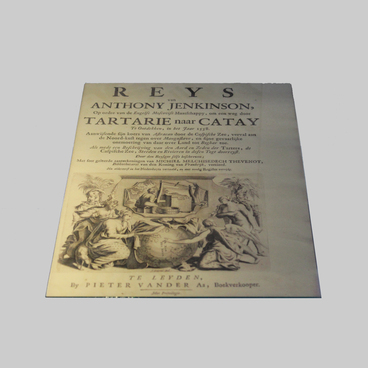
The oldest tool found by archeologists is referred to the Viking epoch and dates from the tenth century A.C. Today this artifact is kept in the State History Museum of Sweden And in the written form skobel is mentioned in a book by Moxon published in London in 1677 (section on joinery fixtures), as well as in a book by Diderot published in Paris in 1763 (section on cooperage tools).
It is interesting that from the Iron Age onward the design of this carpenter tool has not changed. For example, big cooperage skobels with straight long (up to 40 cm) blades, found in the territory of Ancient Novgorod, are practically no different from their modern analogues. Skobels of craftsmen of the early Middle Ages are also nearly identical to those made for expert woodworkers today.
The skobel has been and is actively used to this day in many trades related to wood processing including shipbuilding. Other names for this tool – nastrug, koroder, strug – make its intended purpose clear (in the Russian language): skobel was used for debarking and whittling tree trunks and branches. Apart from that, it was used for rounding semi-finished trunks, cutting off ribbings and warts, and trimming.
Prior to the work, the blank had to be held in a workbench or in a frame, or was just pressed by bosom to the working surface and then scraped. It is interesting that tanners also used a variation of skobel with bent S-shaped blade in their work. This tool was used for crude treatment of seal, deer and other skins.
The skobel is one of the most ancient tools of carpenters and joiners. An article of Great Soviet Encyclopedia maintains that skobels were used as early as the Epoch of Middle Paleolithic: ancient people made stone scrapers to work with wood. Tools made of iron entered in use approximately in the first half of the first millennium B.C.
The oldest tool found by archeologists is referred to the Viking epoch and dates from the tenth century A.C. Today this artifact is kept in the State History Museum of Sweden And in the written form skobel is mentioned in a book by Moxon published in London in 1677 (section on joinery fixtures), as well as in a book by Diderot published in Paris in 1763 (section on cooperage tools).
It is interesting that from the Iron Age onward the design of this carpenter tool has not changed. For example, big cooperage skobels with straight long (up to 40 cm) blades, found in the territory of Ancient Novgorod, are practically no different from their modern analogues. Skobels of craftsmen of the early Middle Ages are also nearly identical to those made for expert woodworkers today.
The skobel has been and is actively used to this day in many trades related to wood processing including shipbuilding. Other names for this tool – nastrug, koroder, strug – make its intended purpose clear (in the Russian language): skobel was used for debarking and whittling tree trunks and branches. Apart from that, it was used for rounding semi-finished trunks, cutting off ribbings and warts, and trimming.
Prior to the work, the blank had to be held in a workbench or in a frame, or was just pressed by bosom to the working surface and then scraped. It is interesting that tanners also used a variation of skobel with bent S-shaped blade in their work. This tool was used for crude treatment of seal, deer and other skins.