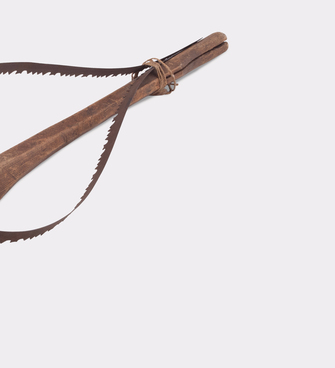
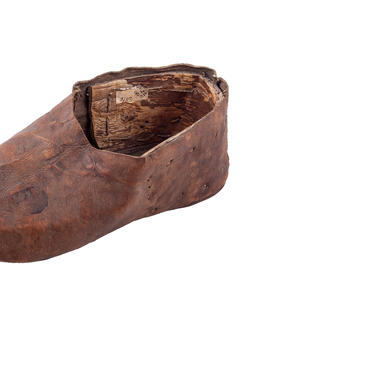
Shor men wore homemade “uduk” boots made of rawhide both in summer and winter.
Until the 16th century, the concept of “rawhide” was unknown in Rus. Instead, people used animal hides, cleared of hair and dried without additional processing. Rawhide material differs from this type by being more durable, elastic, and strong. At the same time rawhide does not lose its natural properties, unlike after the tanning process. The Shors have long possessed the secret of such tanning.
If necessary, rawhide could be used as food. Leonid Pavlovich Potapov cites the story of the Shor old man Sofron Tepchegeshev that hunters, who had run out of food they had taken from home, “even cooked leather bags for talkan, which were sewn from rawhide.”
The Shors tanned hides since ancient times, and so did other peoples of Siberia. Fresh hides of domestic cows (bulls) or horses were used as raw materials. They soaked the skins in water with aspen ash, shaved the hair off the skins with a sharp knife, rubbed them with charcoal (usually fir) powder, moistened with a decoction of bones until blackened and thoroughly greased on both sides with horse fat.
For a month the hides were dried and ventilated, lubricated again (greased), crushed in a “talyk” log with notches, and held over smoke for two days. Then they rolled and kneaded them again, until completely soft. At the final stage, greasing was repeated — they moistened the hides with bone broth with soot or ash.
Rawhide has never been dyed. The Shors sewed bags for storing grain, flour (talkan) and nuts, and made uduk (oduk) boots, which the men wore in winter and summer.
Rawhide was afraid of “neither heat nor frost, but
could not stand dampness, ” so a kind of foot wraps made of soft azagat sedge
were put under the shoes, and the boots themselves were made spacious. Soles
without heels were also cut out of leather. Wealthier Shors wore uduk boots
with leather tops, poor people — with burlap ones, securing them under the knee
with ropes or straps. In this case, the upper edge of the boot was bent down,
and a garter was put in place. A small piece of leather was sewn onto the back
of the boot so that it would be easier to put it on.