The uniquely shaped porcelain napkin holder from the museum’s collection was created in Thuringia. It is a forested region in eastern Germany that is rich in natural resources. The first porcelain factory appeared there as early as the mid-18th century.
Legend has it that Thuringian craftsmen mastered porcelain production independently of the already existing Meissen manufactory. However, like most porcelain manufacturers of that time, Thuringian enterprises inevitably strove to imitate Meissen’s products. Like the famous manufactory, they produced not only tableware but also vases and elegant porcelain figurines.
Thuringian porcelain manufactories mainly targeted middle-class customers. Their products were distinguished by high quality and unique style. Being beautiful and affordable, they enjoyed great demand.
The Sitzendorf Porcelain Factory was founded in 1850 and was famous not only for its porcelain figurines but also for the invention of porcelain lace in the 1880s. The technique consisted of immersing lace into liquid porcelain. Precise tools were used to give the desired shape to the fabric, gather it into folds and attach it to the porcelain product. During firing, the fabric burned, leaving only delicate ceramic lace behind.
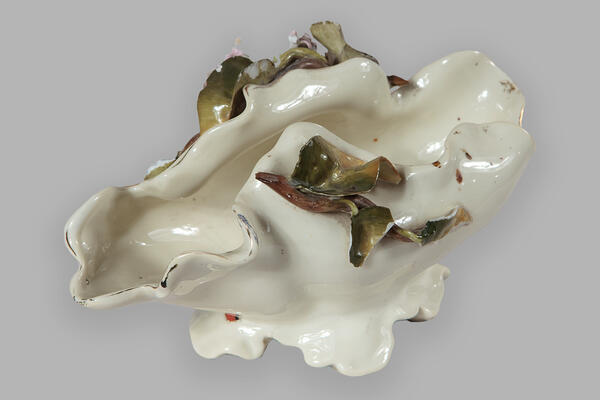
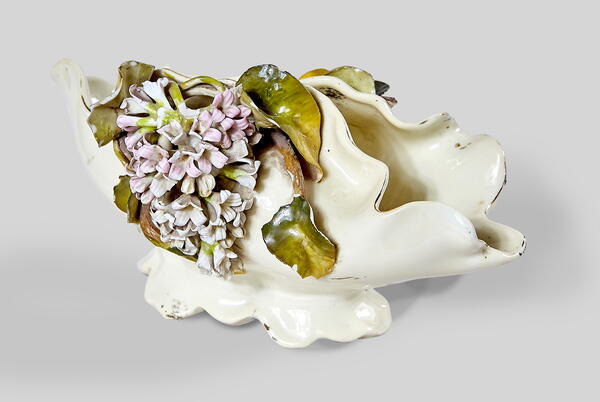
Judging by the stamp, the napkin holder from the museum’s collection was created at the Sitzendorf Porcelain Factory. It attracts attention with its unusual sculpture-like design. Its asymmetrical outlines and figured base resemble a shell, which is in line with both the Baroque aesthetics and the Art Nouveau style popular at the turn of the 20th century.
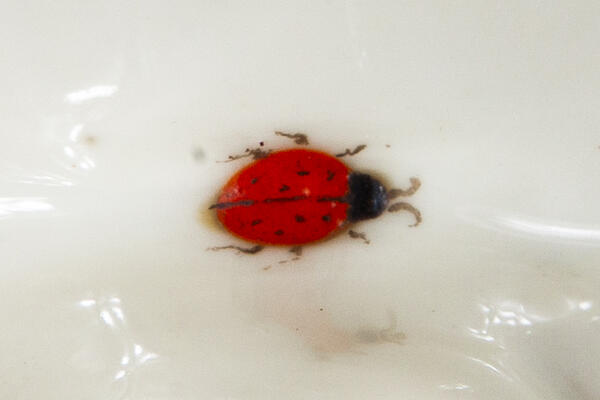
The wavy walls were covered with a glaze of a warm cream color. This background emphasizes the effect of a large bunch of purple lilacs. The artist made it look like real flowers. On the other side of the napkin holder, there is a curved branch with green leaves. The base of the napkin holder features a bright and unexpected painted detail — a barely noticeable red ladybug.
Legend has it that Thuringian craftsmen mastered porcelain production independently of the already existing Meissen manufactory. However, like most porcelain manufacturers of that time, Thuringian enterprises inevitably strove to imitate Meissen’s products. Like the famous manufactory, they produced not only tableware but also vases and elegant porcelain figurines.
Thuringian porcelain manufactories mainly targeted middle-class customers. Their products were distinguished by high quality and unique style. Being beautiful and affordable, they enjoyed great demand.
The Sitzendorf Porcelain Factory was founded in 1850 and was famous not only for its porcelain figurines but also for the invention of porcelain lace in the 1880s. The technique consisted of immersing lace into liquid porcelain. Precise tools were used to give the desired shape to the fabric, gather it into folds and attach it to the porcelain product. During firing, the fabric burned, leaving only delicate ceramic lace behind.
Judging by the stamp, the napkin holder from the museum’s collection was created at the Sitzendorf Porcelain Factory. It attracts attention with its unusual sculpture-like design. Its asymmetrical outlines and figured base resemble a shell, which is in line with both the Baroque aesthetics and the Art Nouveau style popular at the turn of the 20th century.
The wavy walls were covered with a glaze of a warm cream color. This background emphasizes the effect of a large bunch of purple lilacs. The artist made it look like real flowers. On the other side of the napkin holder, there is a curved branch with green leaves. The base of the napkin holder features a bright and unexpected painted detail — a barely noticeable red ladybug.