One of Russia’s private porcelain producers was the factory founded by the merchant Alexey Popov in 1811. It was located in the Gorbunovo village, Dmitrov District, Moscow Governorate (nowadays known as the town of Khotkovo, Sergiyev Posad District), not far from the Gardner Manufactory in the Verbilki village of the same district.
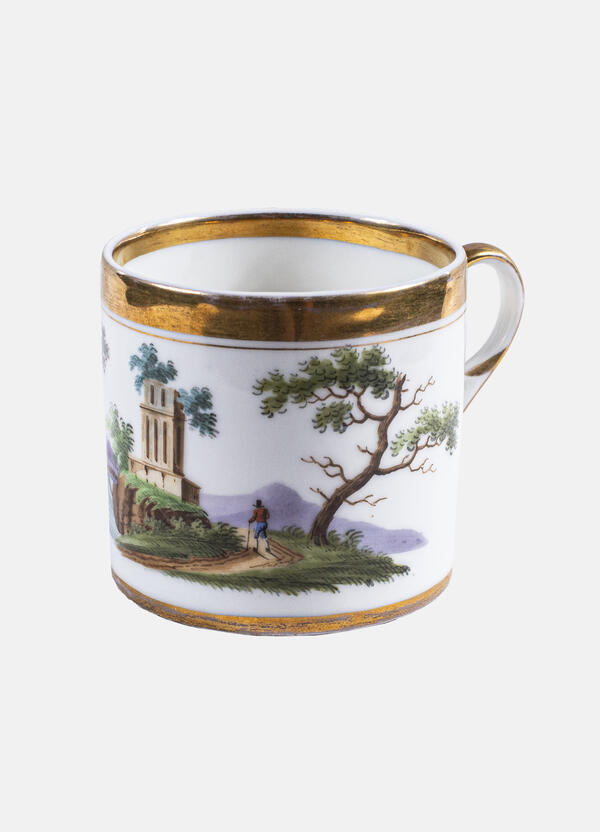
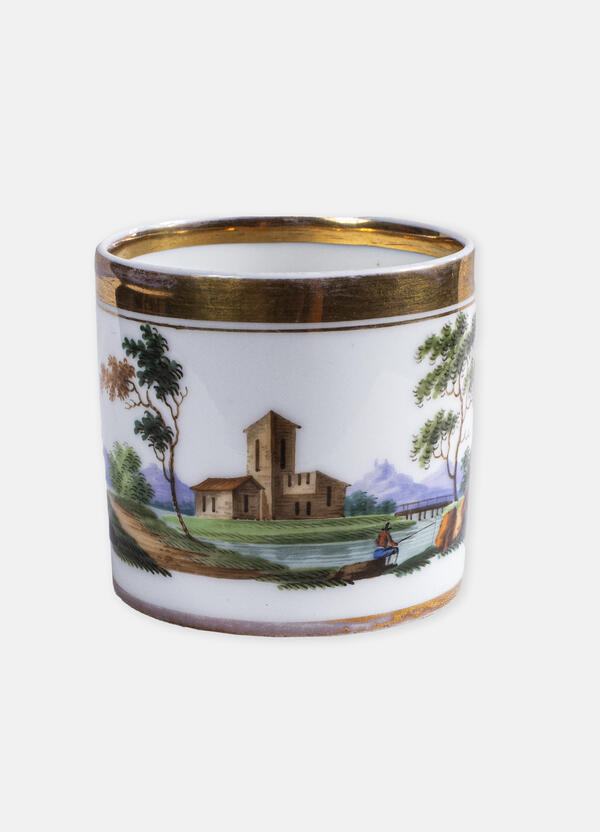
During the early period of the factory’s operation, its craftsmen aspired to imitate the works of European porcelain artists. In the early 19th century, landscapes with castles, ruins, and bodies of water were among the prevailing subjects. Such motifs were used to decorate the cup and saucer set of two from the museum’s collection.
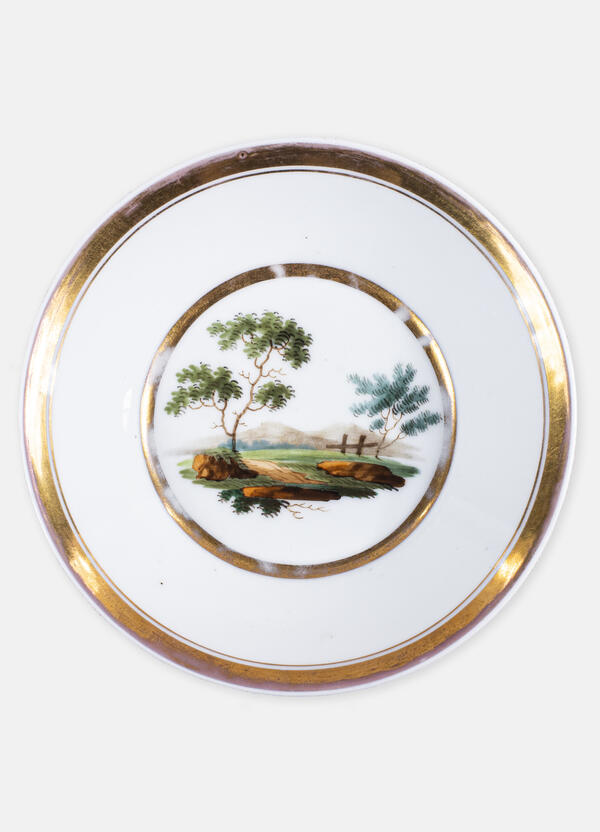
The shapes of the cups and saucers are typical of that period. The small cylindrical cups are equipped with elegant handles. The rather deep saucers have tall straight sides.
There is a reason why the saucers were shaped that way: in the early 19th century, drinking tea from saucers was quite common. The saucers were made deep enough so that the entire cup of tea could be poured into them.
The cups and saucers are adorned with exquisite hand-painted motifs. The images depict landscapes with trees, buildings, a bridge across the river, and mountains in the background. The landscape also features a lonely wanderer on one cup and a fisherman with a fishing rod on the lake shore on the other. The images were painted in natural colors. The artist used shades of green, brown, blue, and yellow. The gilded bands add elegance to the products.
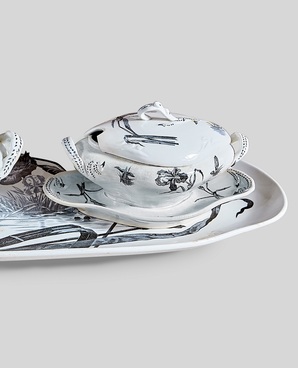
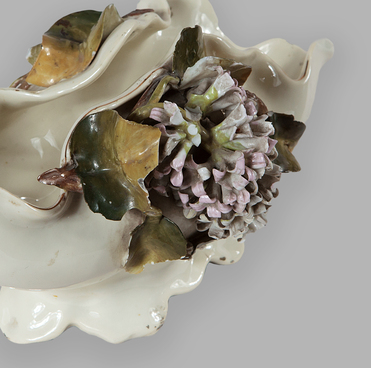
Over time, the Popov factory developed its own distinctive style. Its craftsmen produced both high-end luxury chinaware and mass-market products. Particularly popular was affordable but high-quality tavern tableware: the bright and colorful dishes, teapots, and cups decorated with floral motifs.
Like the Gardner Manufactory, Popov’s factory produced a variety of porcelain figurines. The factory also housed a school for artists and a laboratory for making paints. Legend has it that Alexey Popov was personally involved in all the subtleties of production. After his death, his heirs were unable to maintain the same high level of quality, and in the 1870s, the factory was closed.
During the early period of the factory’s operation, its craftsmen aspired to imitate the works of European porcelain artists. In the early 19th century, landscapes with castles, ruins, and bodies of water were among the prevailing subjects. Such motifs were used to decorate the cup and saucer set of two from the museum’s collection.
The shapes of the cups and saucers are typical of that period. The small cylindrical cups are equipped with elegant handles. The rather deep saucers have tall straight sides.
There is a reason why the saucers were shaped that way: in the early 19th century, drinking tea from saucers was quite common. The saucers were made deep enough so that the entire cup of tea could be poured into them.
The cups and saucers are adorned with exquisite hand-painted motifs. The images depict landscapes with trees, buildings, a bridge across the river, and mountains in the background. The landscape also features a lonely wanderer on one cup and a fisherman with a fishing rod on the lake shore on the other. The images were painted in natural colors. The artist used shades of green, brown, blue, and yellow. The gilded bands add elegance to the products.
Over time, the Popov factory developed its own distinctive style. Its craftsmen produced both high-end luxury chinaware and mass-market products. Particularly popular was affordable but high-quality tavern tableware: the bright and colorful dishes, teapots, and cups decorated with floral motifs.
Like the Gardner Manufactory, Popov’s factory produced a variety of porcelain figurines. The factory also housed a school for artists and a laboratory for making paints. Legend has it that Alexey Popov was personally involved in all the subtleties of production. After his death, his heirs were unable to maintain the same high level of quality, and in the 1870s, the factory was closed.